
Reviewed · MāORI CULTURAL TOURS
Rotorua: Whakarewarewa Village Guided Tour
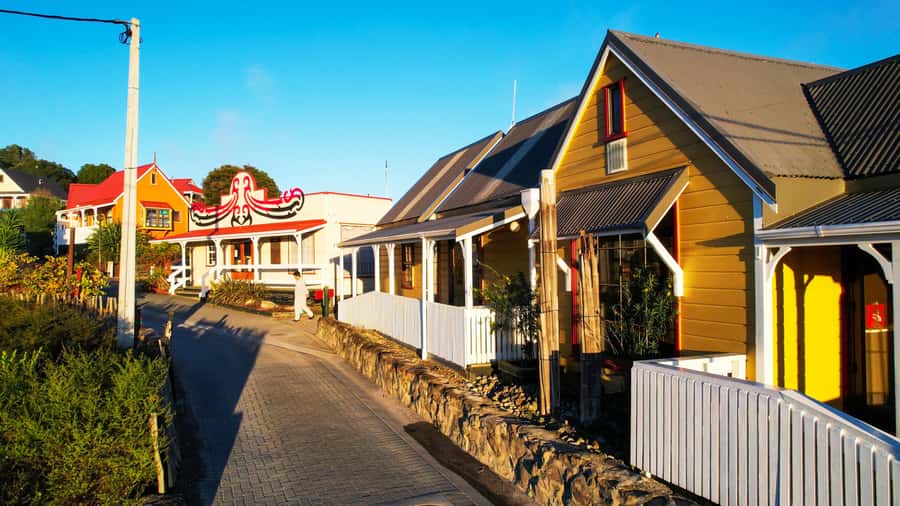
Whakarewarewa is a living Māori village built around geothermal heat, not a staged collection of buildings. In one hour, you can watch steam rise beside homes, see hot pools used for cooking and bathing, and look across to Pōhutu geyser with a guide whose family ties reach back through generations of local tourism.
I like the family connection of the guides, especially when people such as Daniel, Faye, and Teeao explain the village from personal experience. I also like the sweetcorn cooked in a thermal pool, a small but memorable taste of daily life here. The main drawback is the short running time: one hour gives you a strong introduction, but not much room to linger.
Key points at a glance
- Geothermal life in action: See how hot pools and steam vents have helped local families cook, bathe, and heat their homes for centuries.
- Pōhutu from village lookouts: The route offers broad views toward one of Rotorua’s best-known geysers.
- Guides with family ties: Guides including Daniel, Faye, and Teeao bring personal knowledge and a clear sense of cultural pride.
- Sweetcorn from a mineral pool: The included corn is cooked on site and served hot during the visit.
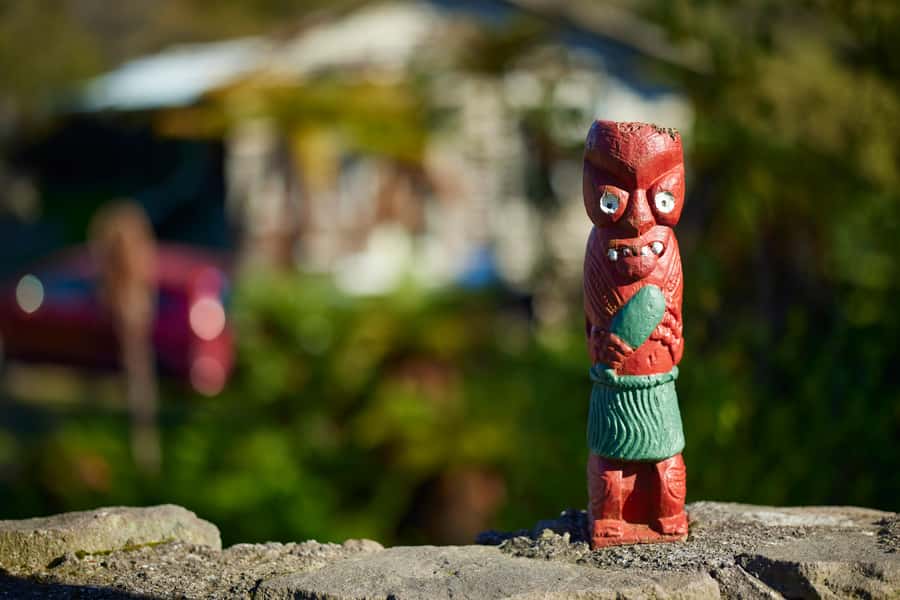
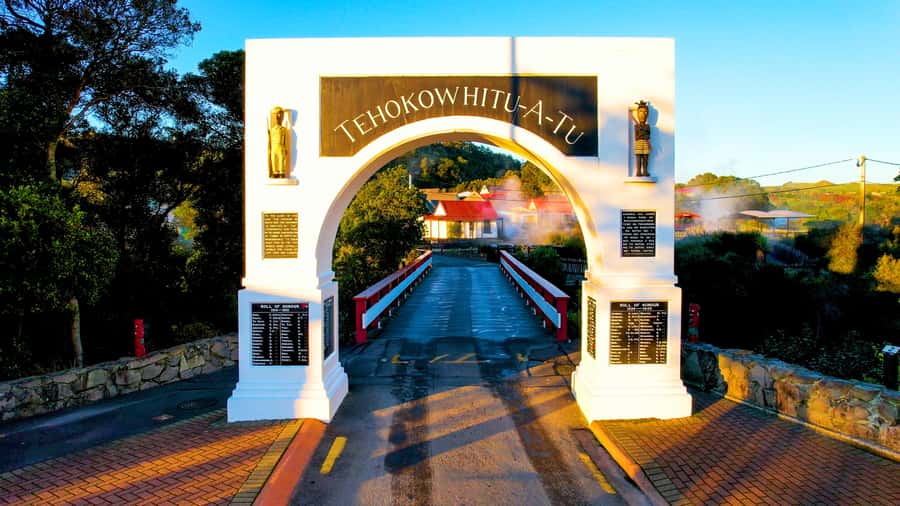
- Historic Māori landmarks: See an active marae, a WWII memorial archway, churches, and sacred burial grounds.
- A one-hour outdoor tour: Wear comfortable shoes and prepare for sun, rain, steam, and changing conditions.
Why Whakarewarewa feels different from a standard geothermal stop
Rotorua has several places where you can view geysers and bubbling mud. Whakarewarewa adds something those viewing areas cannot provide as easily: you see geothermal activity as part of community life.
The village is still a home for Māori families. Hot ground is not simply an attraction here. It has practical uses. Cooking takes place in bubbling pools and steam vents, bathing can take place in warm therapeutic waters, and geothermal heat has shaped the way people live on this difficult plateau.
That distinction matters. You are not only looking at a geyser and taking a photograph. You are being shown how people have adapted to a place where the earth is constantly active underfoot.
The tour also gives you a cultural setting for what you see. An active marae, or meeting ground, remains a focal point for Māori community life. Historic churches, a WWII memorial archway, and tapu burial grounds add layers to the visit. The result is more personal than a simple walk through a geothermal reserve.
More Māori Cultural Tours in Rotorua
- Mitai Maori Village: Cultural Experience and Dinner Buffet
★ 4.7 · 3,575 reviews - Cultural Experience & Seasonal Māori Cuisine at Te Pā Tū
★ 5.0 · 1,546 reviews - Mitai Maori Village Cultural Experience in Rotorua
★ 4.5 · 1,294 reviews
Starting at the Geyser Café
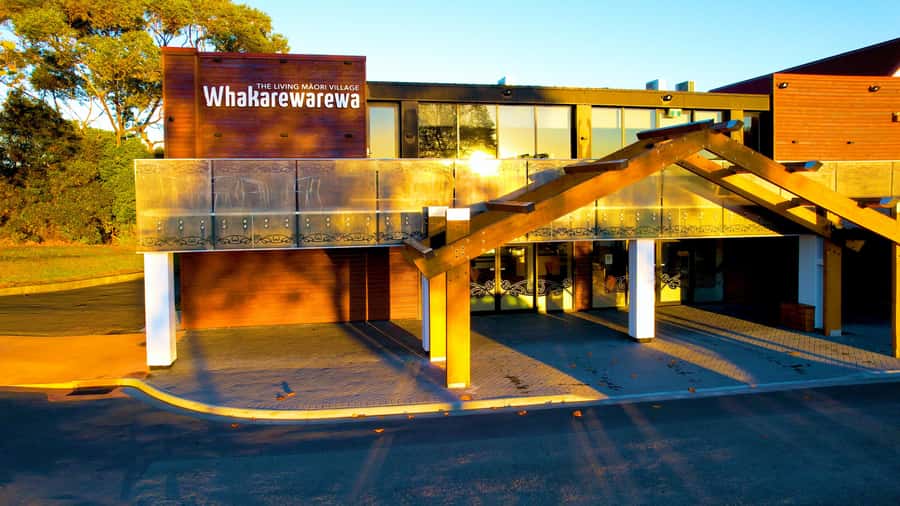
Your visit begins at the Geyser Café area. Arrive 15 minutes before the scheduled start so you have time to exchange your voucher at the admissions building. This is a small practical step, but it matters because the guided walk begins from the village entrance, not from a separate city meeting point.
The café and admissions area also give you a chance to get ready for an outdoor hour. Wear shoes that feel secure on walking surfaces, bring a camera, and check the weather before setting out. The tour operates in all weather, so a clear morning is not a requirement for booking.
You may also find clothing and other items for sale around the centre. The important point is to avoid arriving at the last minute. The tour itself is short, and losing even ten minutes to ticket collection cuts into the time you have with the guide.
The first five minutes: safety around hot ground
The Whakarewarewa visit begins with a safety briefing of about five minutes. This is not filler. You are walking through an area with boiling pools, steam vents, hot ground, and moving geothermal water.
Stay with the group and follow the guide’s instructions. Steam can affect visibility, and the surfaces around geothermal features need respect. The briefing helps you understand why barriers, paths, and viewing points matter.
This is also a useful introduction to the unusual setting. At many attractions, safety information separates you from the natural feature. Here, safety and daily life are connected because the same heat that creates danger also provides food, warmth, and bathing water.
Pōhutu geyser and the geothermal valley
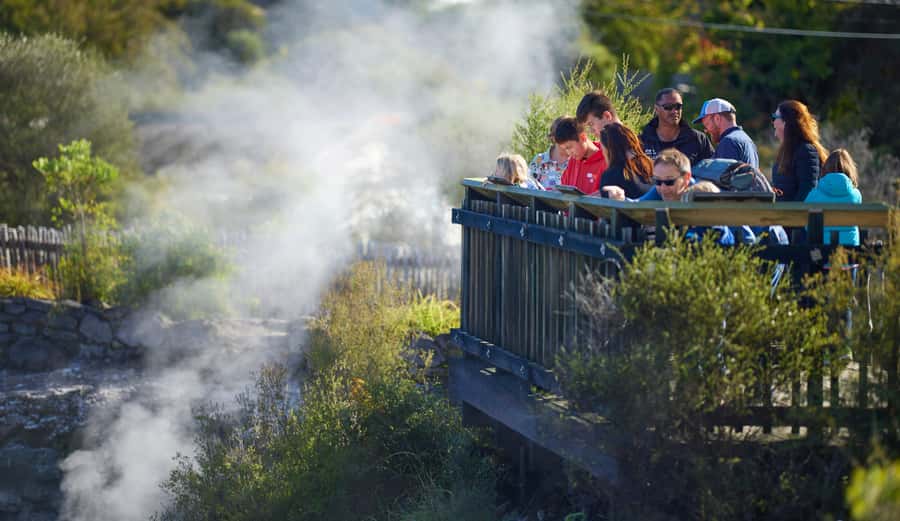
The central visual draw is the geothermal valley. From the village lookouts, you can take in views toward Pōhutu geyser, along with steam vents, bubbling pools, boiling mud, and silica formations created by mineral-rich water.
Pōhutu is especially important to the sense of scale. From a lookout, you can see the geyser as part of the wider geothermal area rather than as an isolated burst in front of a viewing platform. Steam may drift across the scene, and the exact view can change, but that is part of the appeal of an active geothermal site.
One useful comparison is distance. A separate Rotorua attraction may let you get closer to a geyser, but a closer position does not always mean a clearer view. Steam can block the feature from one angle. Whakarewarewa’s lookouts offer a broader perspective, which can help you understand how the village sits beside the geothermal activity.
The silica formations deserve attention too. They are easy to treat as background scenery, but they show how minerals carried by hot water build up over time. Ask your guide about the formations and the nearby pools, since the hour is most rewarding when you connect the shapes and colours to the forces producing them.
Conditions can change the presentation. On one visit, a geyser may be the star. On another, steam, bubbling water, or the unusual ground itself may hold your attention. The site is active and natural, not a show running to a fixed script.
More Māori cultural evenings and village visits:
- Rotorua: Te Pa Tu Māori Cultural Experience with Dinner
★ 4.8 · 1,193 reviews - Whakarewarewa Village Guided Tour
★ 4.5 · 477 reviews - Te Puia: Te Rā Guided Day Tour
★ 4.6 · 396 reviews - Te Puia: Te Rā Guided Experience
★ 4.5 · 332 reviews
Cooking, bathing, and the taste of sweetcorn
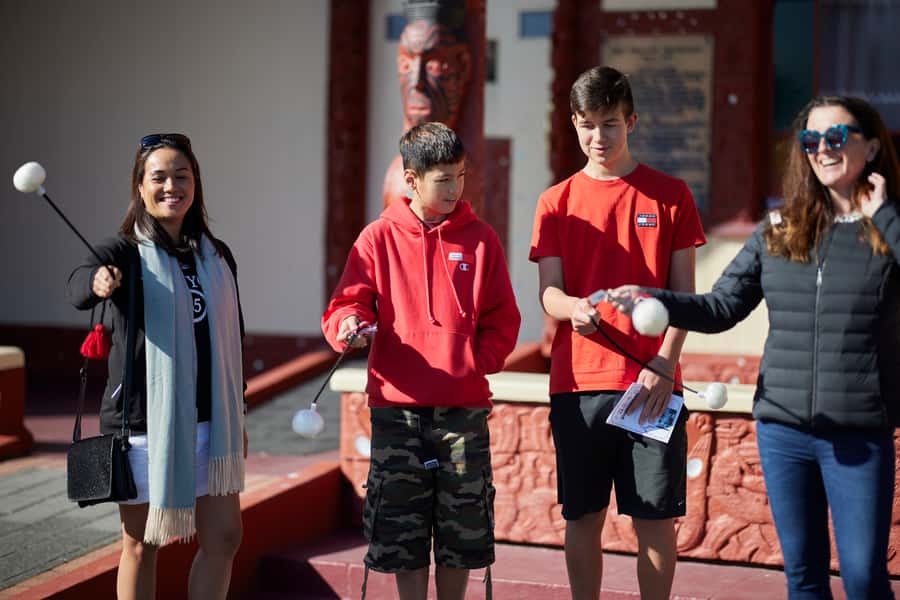
The most charming part of the experience is the explanation of how geothermal resources support ordinary tasks. Cooking in a boiling pool sounds dramatic, but it is presented as a practical tradition. You learn how food can be prepared with the heat already present beneath the village.
The included corn on the cob makes this idea concrete. Guides pull the corn from a mineral pool and serve it hot, giving you a direct taste of geothermal cooking. Several visitors singled out the sweetcorn as a highlight, and I can understand why. It is more memorable than simply hearing that geothermal pools are used for food.
You also learn about bathing in refreshing, therapeutic waters. This helps you see the hot pools as part of a pattern of daily life, not only as dangerous natural features. The village’s relationship with geothermal water includes comfort and usefulness as well as risk.
Do not expect a full meal. The corn is a welcome sample included with the tour, not a replacement for lunch. If you are choosing between this tour and a longer food-focused cultural experience, keep that difference in mind.
Historic places along the village route
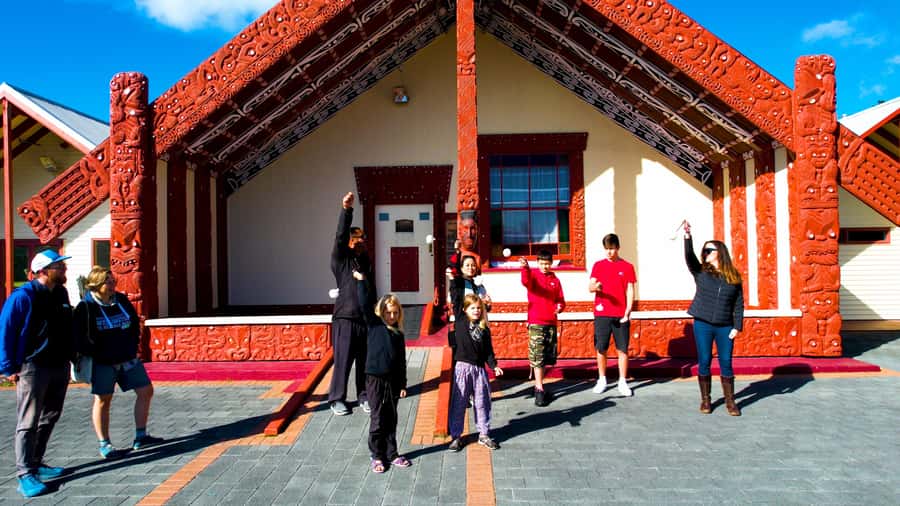
The guided walk is not limited to pools and geysers. You pass several landmarks that give the village a human and community focus.
The active marae is particularly important. It is a meeting place and a centre of Māori community life, so it helps explain how the village functions beyond its geothermal features. Your guide provides the context, and you should treat the area with the respect expected at an active cultural site.
The WWII Memorial Archway connects the village to the wider story of its people and their service. Historic churches add another visible layer, while tapu burial grounds show why some areas carry sacred meaning and require care.
These stops are brief, since the full tour lasts only an hour. Still, they prevent the experience from becoming a sequence of photographs. You see a community with memory, faith, family ties, and responsibilities, not simply houses placed beside hot pools.
The guides make or break the hour
The strongest feature of this experience is the guiding. The village describes its guides as direct descendants of early Māori guides who helped shape tourism in New Zealand. That background gives the tour a personal quality that a recorded commentary could not match.
Daniel is repeatedly described as warm, energetic, and clear. He has stepped in at short notice and still delivered a confident tour, and he is praised for answering questions and explaining the village in an approachable way. Faye is also noted for her humour and passion, with the added value of living in the village and answering questions from personal experience.
Teeao is praised for careful, detailed explanations, while Keighly has been described as passionate about her heritage and culture. Another guide, a 19-year-old described as the youngest chief in his family, made an impression by explaining communal thermal cooking and serving corn taken from the pool.
You may not receive one of these named guides on your date, and the exact style will vary. That is worth knowing. The tour depends heavily on the person leading it, but the pattern is clear: expect a spoken, interactive experience rather than a silent walk between marked points.
Good questions improve the hour. Ask about the geothermal cooking process, how bathing works, the history of the marae, or what it is like to grow up in the village. The guides are there to explain, not just point.
What the one-hour format does well
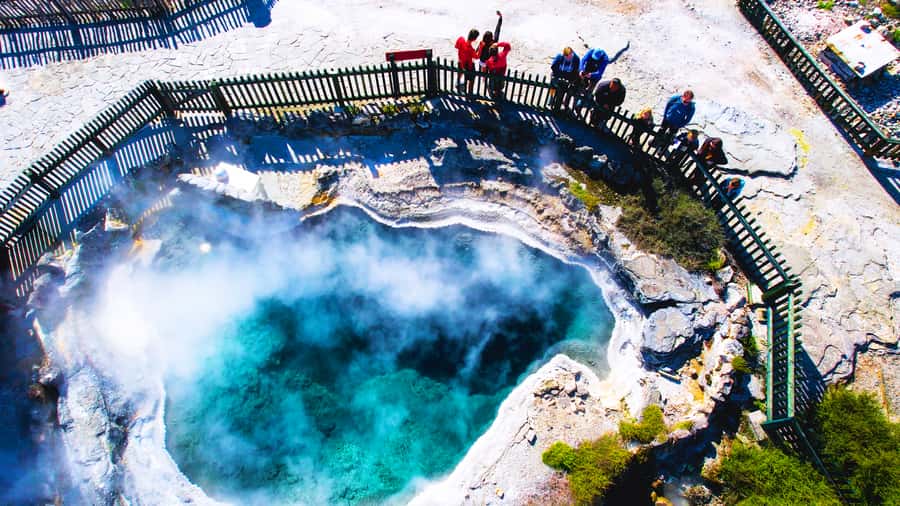
A one-hour duration works well if you want a focused Rotorua activity between other plans. You get an introduction to the village, a safety briefing, geothermal views, cultural landmarks, and a food sample without giving up half a day.
It is also a good choice for families. The geysers provide visual drama, the guide keeps the pace moving, and the corn gives children something tangible to remember. The walking time is limited, though you should still wear comfortable shoes and be ready for outdoor conditions.
The limitation is depth. You cannot fully explore the village, pause at every pool, and spend extended time asking questions in sixty minutes. One person described wanting to meet a local family and see a dance during the visit. Those are reasonable hopes, but they are not guaranteed parts of this guided tour.
Some bookings may be paired with a cultural performance, and one visitor particularly enjoyed music and dance. Treat that as a separate addition unless your reservation specifically includes it. The guided tour itself focuses on the village, geothermal features, landmarks, and corn.
Price, timing, and practical value
At $28 per person, this is a fairly easy activity to fit into a Rotorua day. The value comes from the combination of admission, a live English-language guide, access to the village setting, and the included corn. You are paying for interpretation as much as for scenery.
If you only want to see geothermal features, a viewing-only site might offer a different balance of time and access. If you want to understand how Māori families use the geothermal setting, the guide gives this tour a stronger reason to choose it.
The short duration also keeps the cost from feeling heavy. You can schedule it alongside other Rotorua plans, though you should leave enough time before the start to exchange your voucher and enough flexibility afterward in case you want to browse the centre or reflect on the visit.
Free cancellation is available up to 24 hours before the start for a full refund, and you can reserve now and pay later. The activity is listed as wheelchair accessible, but the tour is outdoors and conditions can vary, so check your own mobility needs against the venue before booking.
Weather, clothing, and comfort
This is an outdoor activity in every season and operates in all weather. Comfortable shoes are essential. Bring a camera if you want photographs of the geysers, pools, steam, and silica formations, but do not let the camera distract you from the guide.
A face mask or protective covering is listed among the recommended items. Steam and geothermal smells are part of the setting, and weather can affect how comfortable you feel during the hour.
Dress for conditions rather than for a polished indoor attraction. Rain will not automatically cancel the tour, and changing weather can alter the visibility around the geysers. The experience is strongest when you accept that the geothermal valley will not present itself in exactly the same way every time.
Who should book the Whakarewarewa tour?
I would choose this tour if you want culture and geothermal activity together. It suits first-time visitors to Rotorua who want a clear introduction, families looking for a manageable outing, and anyone more interested in how people live with hot ground than in simply collecting geyser photographs.
It is also a good fit if you value personal guiding. The family connections of the guides add meaning to the stories, and the best moments come from listening, asking questions, and noticing how daily routines have developed around the pools.
I would hesitate only if you want a long, unhurried cultural program or a guaranteed dance performance. In that case, confirm exactly what your booking includes or consider adding a separate performance. If you have one hour and want a useful, memorable introduction to Māori village life in Rotorua, the $28 admission offers solid value.
FAQ
How long does the Whakarewarewa Village guided tour last?
The guided tour lasts one hour, including a safety briefing of about five minutes.
What is included in the price?
Admission, the guided tour, and corn on the cob are included.
Where does the tour begin?
The starting point is the Geyser Café. You must exchange your voucher at the admissions building before the tour begins.
How early should I arrive?
Arrive 15 minutes before the scheduled start time so you can exchange your voucher and get ready.
Is the tour offered in English?
Yes. The tour has a live English-speaking guide.
Does the tour operate in bad weather?
Yes. The tour takes place outdoors and operates in all weather conditions.
Is the activity wheelchair accessible?
Yes, the activity is listed as wheelchair accessible.
Can I cancel the booking?
You can cancel up to 24 hours in advance for a full refund. You can also reserve your place and pay later.
Just added around Rotorua
- Thrilling Riverbug Adventure on the Rangitāiki River★ 5.0 · 4 reviews
- Te Puia: Te Pō Combo: Te Rā, Dinner, and Haka Performance★ 4.6 · 5 reviews
- Te Puia: Te Rā Guided Day Tour and Haka Performance★ 5.0 · 4 reviews
- Rotorua: Waimangu Volcanic Valley Ticket & Self-Guided Walk★ 4.8 · 104 reviews
- Rotorua: White Island, Mount Tarawera & Waimangu Volcanic …★ 4.4 · 5 reviews
- Rotorua: Velocity Valley – Two Ride Pass★ 4.6 · 8 reviews
- Rotorua: Wai Ariki Hot Springs & Spa 1hr Restorative Bathing★ 4.8 · 16 reviews
- Rotorua: Velocity Valley – NEW Vertigo 43m drop★ 5.0 · 3 reviews
Māori Cultural Tours, compared.
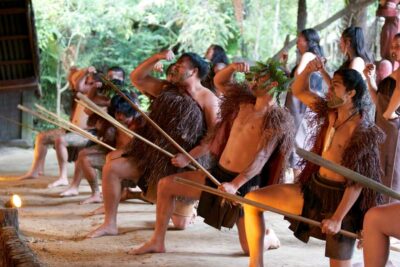
Mitai Maori Village: Cultural Experience and Dinner Buffet
Read our review →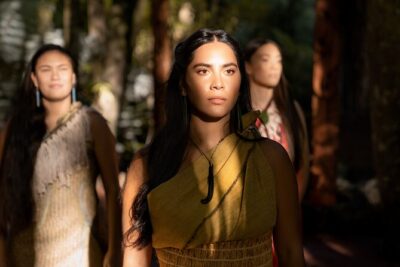
Cultural Experience & Seasonal Māori Cuisine at Te Pā Tū
Read our review →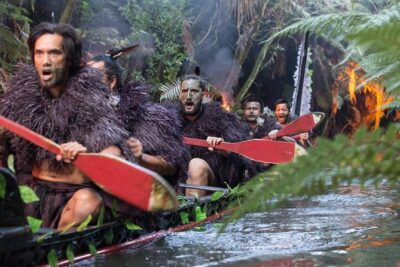
Mitai Maori Village Cultural Experience in Rotorua
Read our review →
Te Pa Tu Māori Cultural Experience with Dinner
Read our review →
Lake Taupo: Sailboat Trip to the Maori Rock Carvings
Read our review →
Lake Taupō Māori Rock Carvings Scenic Cruise aboard Ernest Kemp
Read our review →
Waitomo Caves & Rotorua – Te Puia Small-Group Tour from Auckland
Read our review →Browse the lists this tour appears in