
Reviewed · WHALE WATCHING
Auckland: Whale and Dolphin Watching Half-Day Eco Cruise
The best part of this Auckland cruise is that it pairs close wildlife viewing with real marine research. From the 65-foot Dolphin Explorer, you may watch dolphins under the hull, Bryde’s whales offshore, blue penguins, gannets, shearwaters, or even a shark, while the crew explains what you are seeing. I especially like the easy departure from the city and the chance to see Rangitoto and North Head from the water. I also like that one dollar from every ticket supports the Hauraki Gulf Guardians fund.
The catch is simple: the gulf is wild, and whales are never guaranteed. The boat is comfortable but the ride can be windy, rainy, or rough, and the vessel has stairs and narrow doorways. Still, if no marine mammals appear, you receive a free second cruise, which makes the $130 price easier to accept.
Key points at a glance
- Marine scientists join the crew: Expect commentary on whales, dolphins, birds, plankton, geography, and ongoing research.
- Dolphins are the most reliable reward: Sightings have included large pods, mothers with young, and animals swimming close to or beneath the boat.
- Whales are a bonus, not a promise: Bryde’s whales have been seen, sometimes several at once, but some trips see only birds or no mammals.
- Auckland’s landmarks come early: The route gives you fine water views of North Head, Devonport, Rangitoto Island, and the city waterfront.
- The boat is a good size for viewing: It offers seating and open sightlines without feeling like a huge ferry, though children and crowd noise can affect how well you hear.
- Conservation is part of the ticket: The vessel supports marine research, and a dollar from each fare goes to the Hauraki Gulf Guardians fund.
Leaving Auckland from the Eastern Viaduct
The trip begins at Berth 9, Eastern Viaduct Marina, opposite the Maritime Museum. The boat is at the western end of Quay Street, so this is one of Auckland’s easiest wildlife excursions to reach if you are staying near the central waterfront.
You need to check in 30 minutes before departure. The crew waits at the top of the boarding ramp, and check-in closes 15 minutes before the sailing time. I would not cut this close. Auckland’s waterfront is easy to reach, but finding the correct berth and walking from nearby streets can take longer than expected.
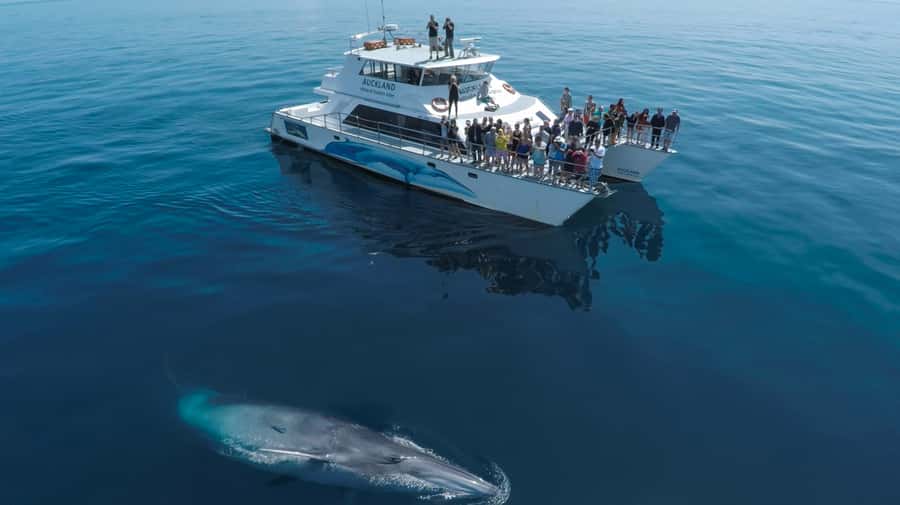
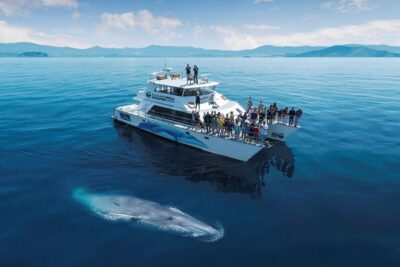
The Dolphin Explorer is a 65-foot luxury catamaran. That matters because you are not boarding a small open boat, yet you are also not joining a giant vessel where the animals become distant specks. The size gives you indoor shelter, seating, and several places to look out over the rail.
The boat is not wheelchair accessible. Stairs and narrow doorways make this trip unsuitable for wheelchair users, and it is not designed for unaccompanied minors. Children under five may go only with close supervision from a parent or guardian.
More Boat Tours in Auckland
- Auckland Dolphin and Whale Watching Eco-Safari Cruise
★ 4.5 · 1,790 reviews - Auckland Harbour Sailboat Cruise Including Three Course Dinner
★ 4.5 · 476 reviews - America’s Cup 2-Hour Sailing Experience Waitemata Harbour
★ 4.8 · 370 reviews
North Head, Devonport, and Rangitoto from the water
The first part of the cruise is a quick orientation to the Hauraki Gulf. You pass North Head and Devonport, then take in Rangitoto Island and the Auckland shoreline from a fresh angle.
This opening section is useful even before any animals appear. The city quickly recedes, and the volcanic outline of Rangitoto gives you a clear sense of Auckland’s setting on the gulf. If you have already walked the waterfront, the boat supplies a different view of familiar landmarks.
The crew also begins its commentary here. You can ask questions about the coast, marine life, and the places you are passing. Guides and skippers named in the trip feedback include Emily, Sanaa, John, Joseph, George, Toni, Brittany, Jo, Jess, and others. The exact crew varies, but the common thread is a team comfortable explaining both natural science and local geography.
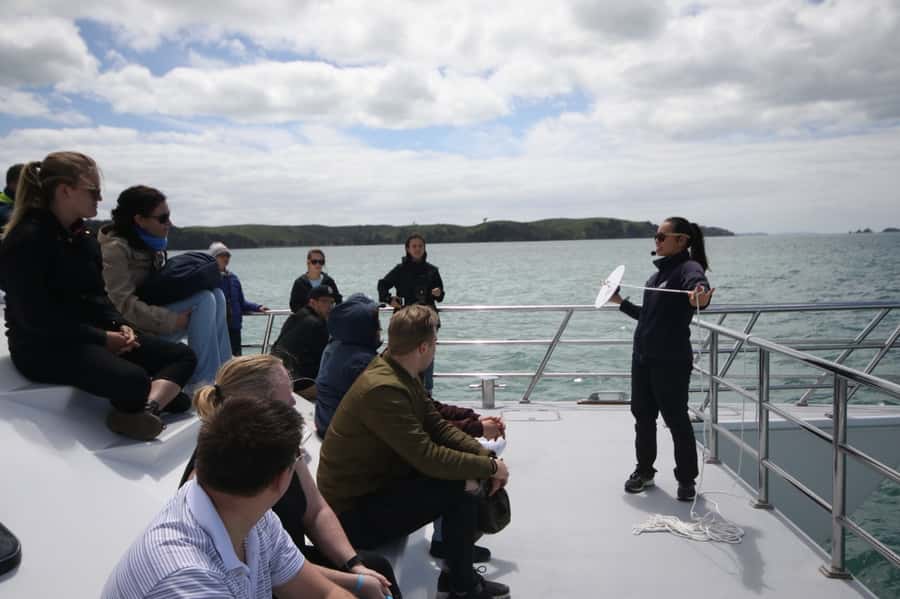
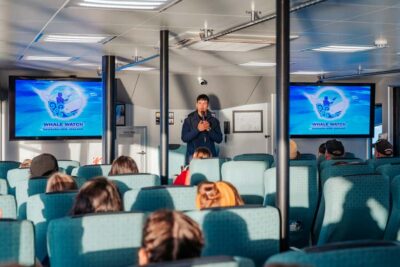
A useful feature is the crew’s enthusiasm. Several guides are marine biologists or work closely with marine research, so the commentary is not limited to basic facts about whales. You may hear about animal behavior, feeding activity, seabirds, plankton, and the methods used to locate mammals in the gulf.
Searching the Hauraki Gulf for dolphins
Once the boat reaches the wider marine park, the pace becomes less predictable. The crew watches the water, birds, and feeding activity for signs of marine mammals. A large group of gannets working over the sea can point toward fish below, which may in turn attract dolphins or whales.
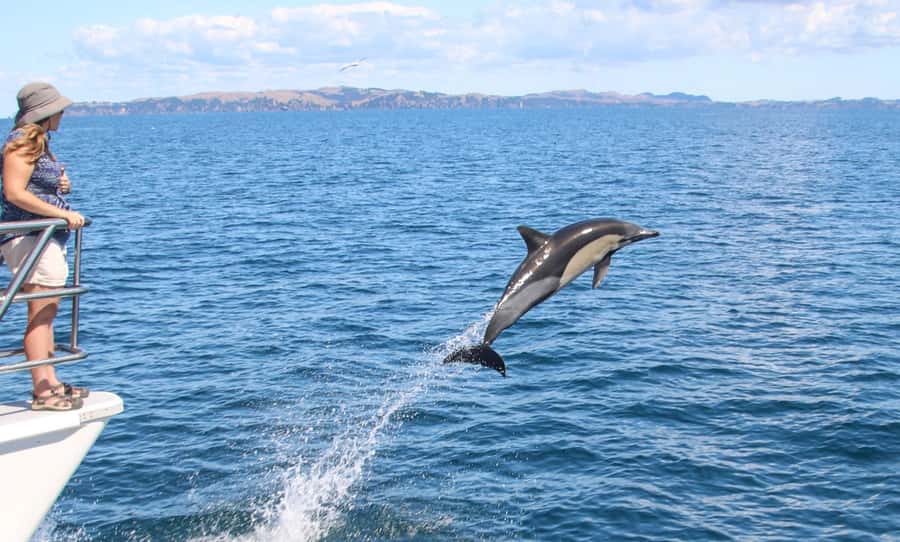
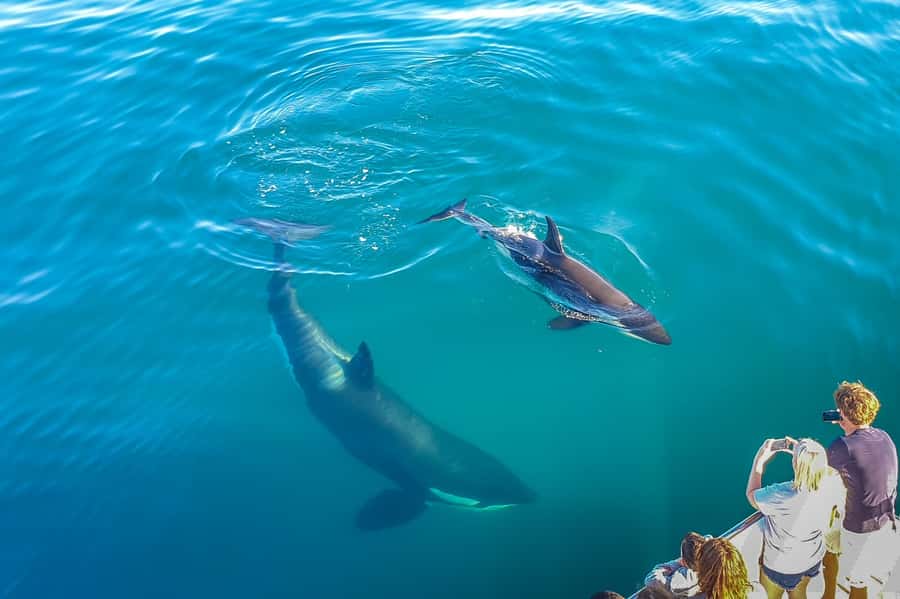
Dolphins are the cruise’s most likely major sighting. Trips have included common dolphins in large pods, sometimes more than 100 animals, with young dolphins visible among them. They may swim beside the catamaran, pass beneath it, or leap near the bow.
This is where the catamaran’s viewing arrangement helps. The boat can move close to the animals while still following responsible viewing practices. You are not guaranteed a perfectly calm sea or animals beside every section of the rail, but the crew works to give people time to watch instead of rushing off after a brief glimpse.
You should keep your camera ready, but do not spend the whole trip looking through a screen. Dolphins surface quickly, and the best moments can last only seconds. Binoculars are useful for distant whales and birds, while a camera with a zoom lens may help more than a phone for animals farther from the boat.
The crew also tries to keep everyone informed as sightings develop. This is important on a wildlife trip, since the animals do not follow a fixed timetable. You may spend time scanning empty water, then suddenly find yourself watching a pod for half an hour.
Whales, sharks, penguins, and seabirds
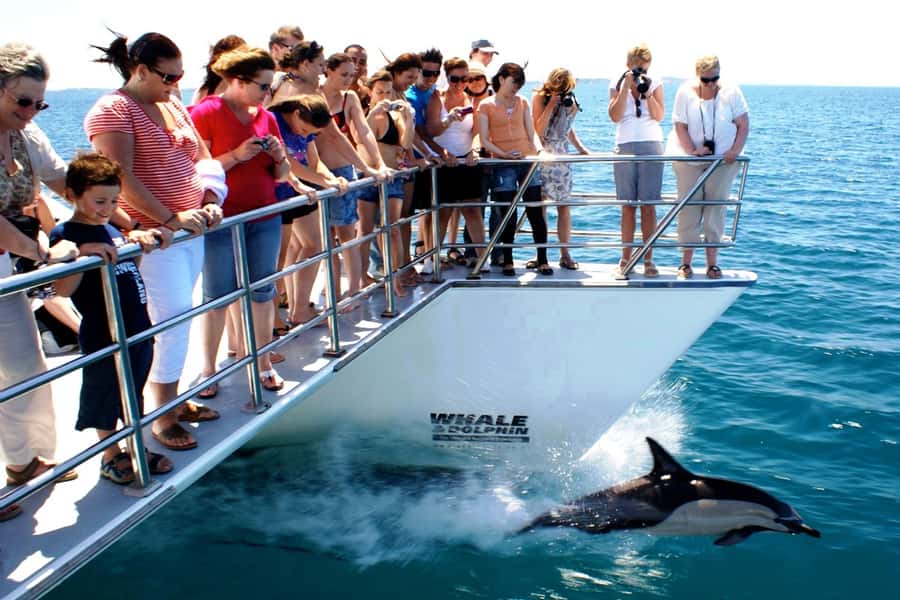
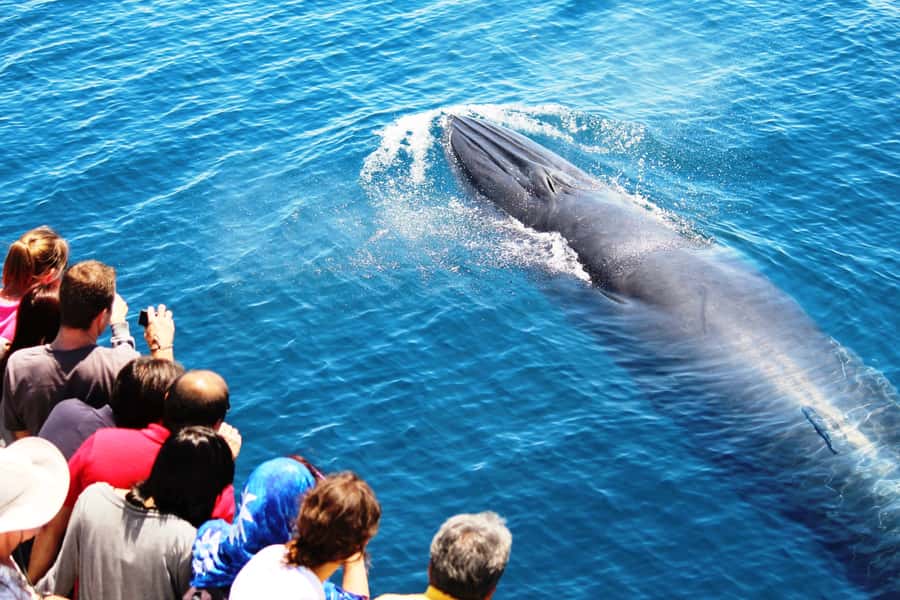
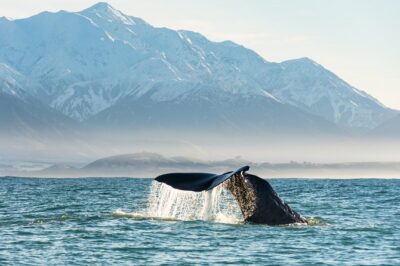
Whales are the sighting that draws most people to this cruise, but they should be treated as a welcome extra. Bryde’s whales have appeared on many successful trips, sometimes two or three animals, and some passengers have seen several whales at a distance. Other sailings have produced no whales at all.
The gulf is large, and marine mammals move freely through it. That makes a whale sighting exciting precisely because it cannot be staged. A calm day can help you spot the back and blow of a whale, while wind and swell make the search harder.
The activity includes a free second cruise if no marine mammals are seen. The wording matters: this is a marine mammal guarantee, not a whale guarantee. You should check the provider’s terms when booking, but the practical point is clear. If your trip produces no dolphins, whales, or other marine mammals, you have a chance to return.
Other wildlife can make the trip worthwhile even when whales stay away. Blue penguins, gannets, shearwaters, and other seabirds have all been spotted. Gannets are especially entertaining as they plunge toward the water after fish, though I will use a less dramatic word here: their fast drops from the sky are easy to spot and photograph.
Sharks have also appeared, including blue sharks and a hammerhead shark. These sightings are less predictable than dolphins or birds, and the crew may identify them from a distance. Still, they add to the sense that this is a broad wildlife safari rather than a narrow whale hunt.
More Half-Day Tours in Auckland
- Half-day Discover Auckland City Sightseeing Tour
★ 5.0 · 1,080 reviews - Auckland Scenic Half-Day City Sightseeing Tour
★ 4.8 · 532 reviews - Half-Day: Small Group Auckland Scenic Tour – 4 HOURS
★ 5.0 · 152 reviews - Auckland Shore Excursion: Half-Day Guided City Tour
★ 5.0 · 148 reviews
Research on board adds substance
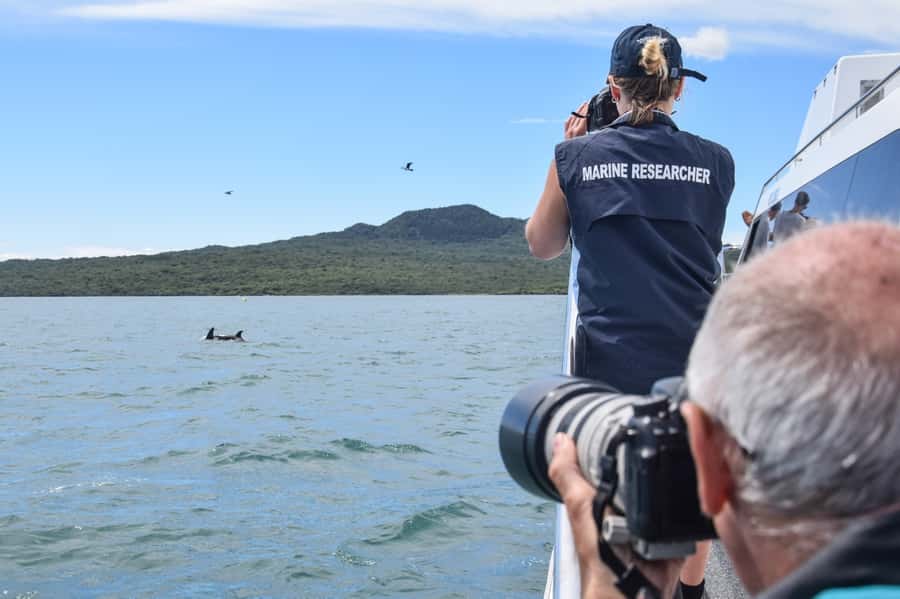
The strongest feature of this cruise is the link between tourism and marine science. The Dolphin Explorer is also used as a research vessel, and the crew may stop to collect samples or carry out observation work during the sailing.
Past trips have included plankton sampling. That might sound small beside a whale, but it helps explain the food chain that supports the larger animals. The crew can connect tiny organisms in the water with fish, seabirds, dolphins, and whales farther up the chain.
You may also learn how researchers track marine mammals by watching feeding activity, bird gatherings, and other signs. This gives you a better understanding of why the boat sometimes changes course or spends time searching. The crew is not simply wandering around hoping for luck. They are reading the sea.
I appreciate the ethical approach. The guides keep attention on the animals without treating them like a performance. One account of the trip noted that the boat allowed plenty of time with dolphins while keeping a respectful distance. That balance is worth looking for in any wildlife excursion.
A dollar from every ticket goes to the Hauraki Gulf Guardians fund. You should not book the cruise only for its conservation claim, but this gives the fare a useful second purpose. You are paying for a day on the water while also helping support work aimed at protecting the gulf.
What the 4.5-hour schedule feels like
The cruise lasts 270 minutes, or four and a half hours. That is long enough to reach productive areas of the gulf, spend time with animals, and include commentary without turning the experience into a rushed harbor ride.
The length is also the main commitment. If you are prone to seasickness, four and a half hours on open water can feel long, especially in wind or swell. Take seasickness medicine before departure if you need it. Bring warm clothing, a showerproof jacket, sun protection, and any personal medication.
The weather can change during the trip. Some sailings have begun under a warning for large swell, and the operator has offered a refund or rebooking when conditions looked unsafe. The crew may also cancel a trip because of wind, weather, or sea conditions. That is frustrating if your Auckland schedule is tight, but it is the right call for a wildlife boat.
There is a small range of snacks, hot food, and drinks for sale on board, including beer and wine. Food is not included, so eat beforehand if you do not want to buy something at sea. Alcohol is available, but this is better approached as a nature trip than a floating bar outing.
Is the $130 fare good value?
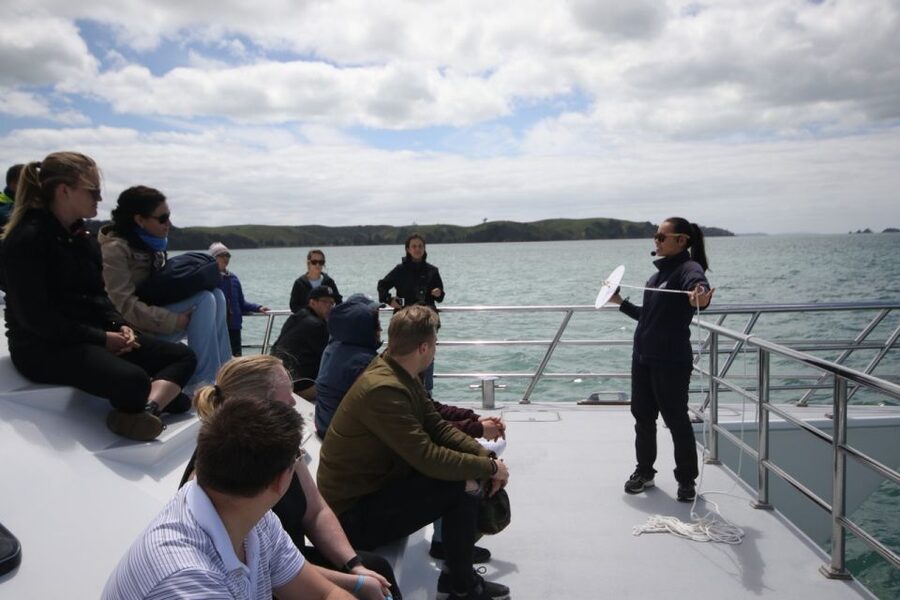
At $130 per person, this is not Auckland’s cheapest water outing. You are paying for a half-day commitment, a purpose-built catamaran, an English-speaking guide, marine commentary, research activity, and the chance to see wildlife in its natural setting.
The value improves if you care about the quality of the experience, not just the number of animals seen. On a successful day, you may see dolphins close to the boat, whales, penguins, gannets, and sharks, along with Auckland’s volcanic islands and harbor views. On a quiet day, the research explanations and scenery become more important.
The free second cruise also reduces the financial risk when the gulf produces no marine mammals. It does not make the first trip convenient to repeat if you are leaving Auckland soon, so check your schedule before booking. If you have only one spare morning or afternoon, you should accept that nature may not cooperate.
Some people may find the fare high, especially if they see only distant birds or a few dolphins. I think the price is fairest for visitors who value conservation, science, and a careful approach to wildlife. If you want a quick city cruise, choose a shorter harbor outing instead.
Who will enjoy this cruise most?
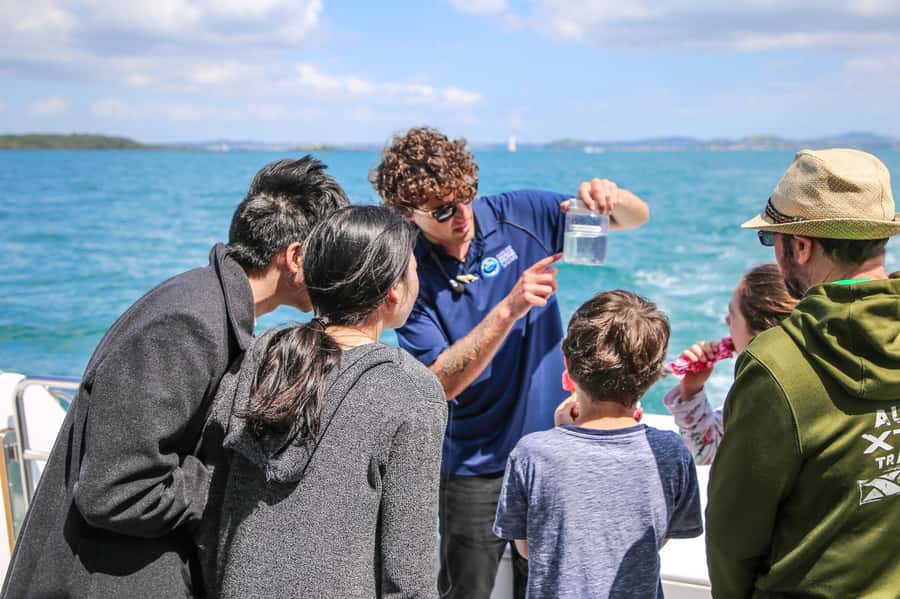
This is a strong pick for anyone who wants a close look at Auckland’s marine setting without committing to a full-day expedition. It suits families with supervised children, couples, photographers, birdwatchers, and anyone curious about marine biology.
It is also good for repeat visitors who have already seen the city from land. The route combines landmarks with open-water wildlife, so the trip does not depend entirely on a whale sighting.
You should think twice if you dislike boats, have serious seasickness concerns, need step-free access, or cannot spare four and a half hours. Pregnant women who are heavily pregnant should not take the activity, according to the operator.
The boat can become lively when families are on board. One passenger found it harder to hear the commentary because of excited children. That is not a flaw in the children, but it is a practical point if you want quiet, uninterrupted talks.
Booking details worth knowing
The meeting point is Berth 9 at Eastern Viaduct Marina, opposite the Maritime Museum. Check in 30 minutes before departure, and remember that check-in closes 15 minutes before the scheduled time.
You can cancel up to 24 hours before departure for a full refund. The reserve-now-and-pay-later option also helps if your Auckland plans may shift.
Wear layers, even on a sunny day. Bring a warm top, showerproof jacket, hat, sunscreen, camera, binoculars, and medicine. The boat has food and drinks for purchase, but none are included in the $130 fare.
The tour is conducted in English. It is not wheelchair accessible, and minors cannot travel alone.
Should you book the Auckland Whale and Dolphin Safari?
I would book this cruise if you have four and a half hours, can handle open water, and want more than a simple sightseeing ride. The combination of dolphins, possible whales, seabirds, Auckland views, marine research, and conservation support gives the trip real substance.
Book with realistic expectations. You may see a huge pod of dolphins and several whales, or you may spend much of the day watching birds and sea conditions. The free return cruise helps, but only if you have time to use it.
For the best chance of a memorable outing, keep your schedule flexible, dress for changing weather, and listen to the crew’s explanations. The wildlife is the headline, but the research and care behind the cruise are what make this a worthwhile choice at $130.
FAQ
Where does the cruise leave from?
The boat departs from Berth 9 at Eastern Viaduct Marina in Auckland. The berth is opposite the Maritime Museum, at the western end of Quay Street.
How long does the experience last?
The eco-cruise lasts 270 minutes, or four and a half hours.
What animals might I see?
Possible sightings include orcas, bottlenose or common dolphins, Bryde’s whales, blue penguins, gannets, shearwaters, and sharks. Wildlife sightings are not guaranteed.
What happens if no marine mammals are seen?
You can take the cruise again for free if no marine mammals are seen.
Is food included?
Food and drinks are not included. A small selection of snacks, hot food, and drinks, including beer and wine, is available to buy on board.
What should I bring?
Wear warm clothing and bring a showerproof jacket, sun hat, sunscreen, camera, binoculars, personal medication if needed, and seasickness medicine if required. Seasickness medicine should be taken before the trip.
Can children take the cruise?
Children under five are allowed only when closely supervised by a parent or guardian. Unaccompanied minors are not permitted.
Is the boat wheelchair accessible?
No. The vessel has stairs and narrow doorways, so it is not wheelchair accessible.
More Dolphin Watching in Auckland
- Auckland: Bay of Islands Day Tour with Dolphin Cruise
★ 5.0 · 11 reviews - Akaroa Dolphins ~ Harbour Nature Cruise
★ 5.0 · 2,143 reviews - Akaroa: Dolphin Nature Cruise
★ 4.9 · 440 reviews - Swimming with Wild Dolphins in Akaroa
★ 4.5 · 261 reviews
More Whale Watching Trips in Auckland
- Auckland: Tikapa Moana Whales, Dolphins and Islands Cruise
★ 3.9 · 292 reviews - Auckland: Tikapa Moana Dolphin, Whale and Island Cruise
★ 4.0 · 17 reviews - Kaikoura: Whale Watching Cruise
★ 4.6 · 3,089 reviews - Whale Watching in Kaikoura by Boat
★ 4.5 · 2,906 reviews
Just added around Auckland
- Zombie Bite Escape Room Experiences★ 5.0 · 54 reviews
- Auckland Airport Private One-Way or Round-Trip Transfer★ 4.5 · 14 reviews
- Kumeu Wine Region Shuttle from Auckland★ 4.5 · 19 reviews
- Auckland’s Wild West Coast & Black Sand Beaches Tour inc Lunch★ 5.0 · 12 reviews
- Vineyards Honey and Black Sand Beaches from Auckland★ 5.0 · 93 reviews
- West Coast Discovery Tour★ 5.0 · 37 reviews
- Wētā Workshop Unleashed – Intro to Scars and Scrapes Workshop★ 5.0 · 5 reviews
- West Coast Discovery Piha Beach Private Tour★ 5.0 · 14 reviews
Whale Watching, compared.
Auckland Dolphin and Whale Watching Eco-Safari Cruise
Read our review →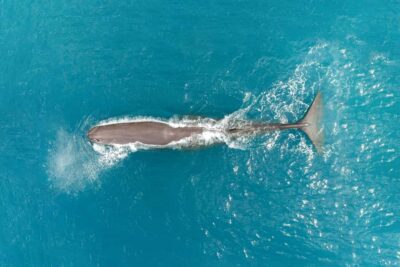
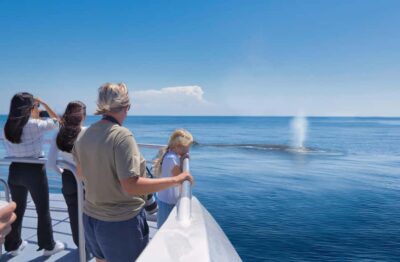
Tikapa Moana Whales, Dolphins and Islands Cruise
Read our review →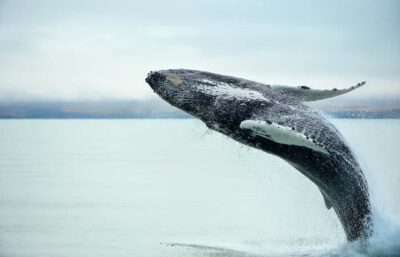
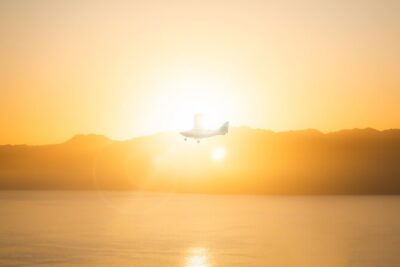
Kaikōura Whale Watching Scenic Flight (40 Minutes)
Read our review →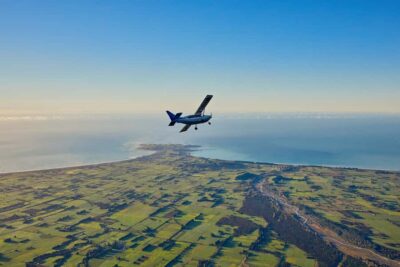
Browse the lists this tour appears in