
Reviewed · WHALE WATCHING
Kaikoura: Whale Watching Flight with Commentary
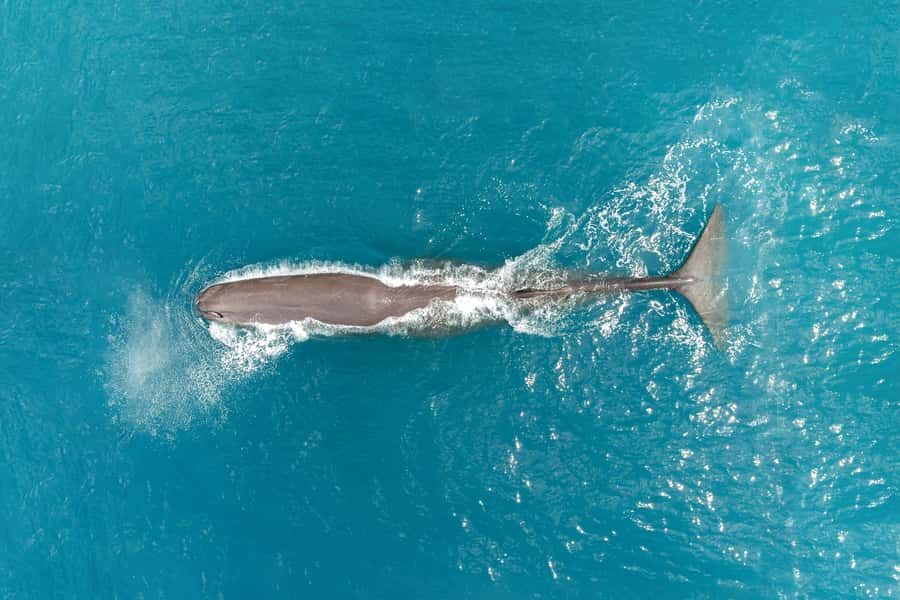
Kaikoura’s whales make more sense from the air. A sperm whale can look like a dark mark from a boat, but from above you see its full size, its pale wake, and the huge stretch of ocean around it. This small-plane flight covers far more water than a boat can, then returns along the coast with views of snow-covered mountains and bright coastal reefs.
I like the guaranteed window seat, which removes the usual scramble for the best side. I also like the radio link between pilots, boats, and the flight crew, since fresh sightings can redirect the plane quickly. The catch is simple: whales are wild, and you can pay $131 without seeing one. The scenery still makes a strong backup, but this is not a guaranteed-animal ticket.
Key points before you book
- Aerial scale: The view from above shows the full size of Kaikoura’s sperm whales far better than a low boat view.
- Thirty minutes in the air: The flight is short, but the plane can search a wide area in that time.
- Every passenger gets a window: You do not need to fight for a view or lean across another passenger.
- Pilots manage both sides: Expect the aircraft to circle and reposition so passengers on each side get a look.
- Small group setting: The aircraft carries no more than seven participants, creating a more personal flight.
- Wildlife is not promised: You may see sperm whales, dolphins, humpbacks, blue whales, orcas, pilot whales, and other marine life, but refunds are not offered if animals stay out of sight.
Why the plane changes whale watching in Kaikoura
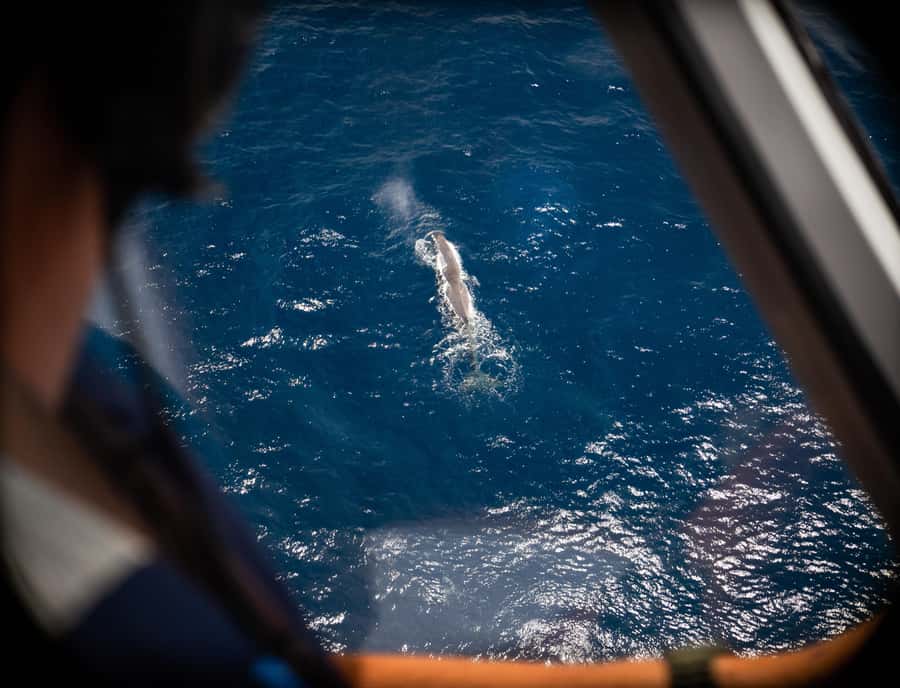
Kaikoura is famous for sperm whales because deep water lies close to shore. That gives the town an unusual advantage, but whales still cover a large area and spend long periods below the surface. A boat must travel through the water at a set pace. A plane can scan broad sections of the coast and head toward a sighting much faster.
That difference matters most on a short outing. In 30 minutes of flight time, you are not simply following one fixed route. The pilot can work with information coming over the radio, search open water, and then turn toward a whale or dolphin pod.
From above, marine life becomes easier to spot in some ways and harder in others. You can see a whale’s body shape and the water around it, but the aircraft moves quickly and the animal may vanish before you reach it. The pilot’s skill matters here. Several pilots, including Ben, Alex, Tom, and Dan, have been singled out for clear commentary, careful flying, and making sure both sides get a useful view.
The experience also works as a scenic flight even on a quiet wildlife day. You look down over Kaikoura’s narrow coastal strip, turquoise water, reefs, and the Kaikoura mountain ranges. On a clear day, the return over the coast may be the most memorable part for you.
More Whale Watching Trips in Kaikoura
- Kaikoura: Whale Watching Cruise
★ 4.6 · 3,089 reviews - Whale Watching in Kaikoura by Boat
★ 4.5 · 2,906 reviews - Kaikōura Whale Watching Scenic Flight (40 Minutes)
★ 5.0 · 221 reviews
At Kaikoura Airport, the experience starts early
The meeting point is Air Kaikoura Aero Club at 627 State Highway 1, about a 10-minute drive south of Kaikoura. Turn right when you reach the airport. Free parking is available, but there is no standard hotel pickup or drop-off, so you need to arrange your own way there.
Check-in is required 30 minutes before the scheduled flight. Take this seriously. Flight times may shift to match whale activity, especially when a whale has recently surfaced or is expected to return. If you are not present at the required check-in time, the plane may leave without you.
The first formal part is a personal safety briefing, listed as about 15 minutes. You receive an overview of the flight and instructions before boarding. The small group size, limited to seven people, means the briefing should feel direct rather than like a large tour-company presentation.
The activity is wheelchair accessible, but weight rules still apply. The maximum passenger weight is 120 kilograms, or 264 pounds. Infants sitting on an adult’s lap must weigh 11 kilograms or less. If an infant exceeds that limit, a child ticket is required. Contact the operator in advance if weight limits may affect your booking, since refunds are not provided when you arrive over the allowed limit.
A window seat for every passenger
The guaranteed window seat is one of the best practical features here. On a small aircraft, that gives you an open view without another passenger blocking the water. It also improves your photos, since you can shoot straight down or out toward the coast instead of working around shoulders and heads.
The plane’s compact size brings a real trade-off. You get a close, personal view, but a small aircraft can feel more active than a large sightseeing plane. The pilot may make sharp turns or circle quickly when a whale is found. One passenger specifically found the rapid circling uncomfortable and wished it had been explained beforehand.
If you are prone to motion sickness, prepare for the possibility of repeated turns. Eat lightly, follow the crew’s instructions, and tell the staff about concerns before boarding. The flight is short, but the search pattern can include tight turns as the pilot positions the plane for good views.
The pilot uses a headset system for English commentary. That lets you hear what is happening over the engine noise and follow the search more easily. Commentary can include information about the animals, the coastline, and the search itself. It also helps you understand why the plane changes direction rather than assuming the pilot is simply circling at random.
Thirty minutes searching the open water
Once airborne, the main whale-watching section lasts about 30 minutes. The aircraft covers the sea off Kaikoura, scanning for the animals that make this coast special.
The regular target is the sperm whale. From above, you may see the animal surface, travel, and then slip below the water. Sperm whales are impressive partly because their full length becomes easier to judge from the sky. A number of successful flights have seen one or two, while especially lucky outings have found several.
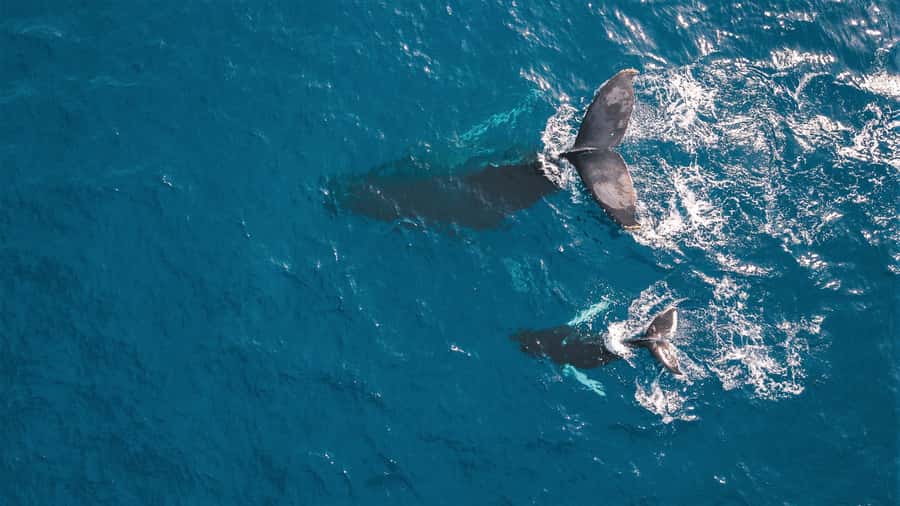
The possible list is wider than sperm whales. You may see dusky dolphins close to shore, pilot whales farther out, humpbacks, orcas, blue whales, and other marine life. Sightings described during the flight have included a humpback surrounded by hundreds of dolphins, groups of pilot whales, pairs of orcas, and even blue whales. None of those sightings can be treated as a normal result, but they show the range of wildlife in these waters.
The radio network is useful when conditions change. The flight crew can hear information from other aircraft and boats, then move toward a recent sighting. On one outing, departure was delayed briefly because whales had recently gone below the surface near the end of an earlier flight. That kind of adjustment may improve your odds, though it can also make the schedule less exact.
When a whale is located, the pilot circles and repositions the plane. The goal is to give people on both sides a clear view. This is important because a whale may surface only briefly, and the best view can last seconds. Keep your camera ready, but do not spend the whole flight staring at a screen. The scene below changes quickly.
A few more Kaikoura half-days to weigh up
- Wildlife Sea Kayaking Tour – Kaikoura
★ 5.0 · 467 reviews - Seal Kayaking Adventure in Kaikoura
★ 5.0 · 422 reviews - Kaikoura: Half-Day Wildlife Kayaking Tour
★ 4.6 · 390 reviews - Half Day Zipline Adventure in Kaikoura
★ 5.0 · 258 reviews
The return flight is part of the value

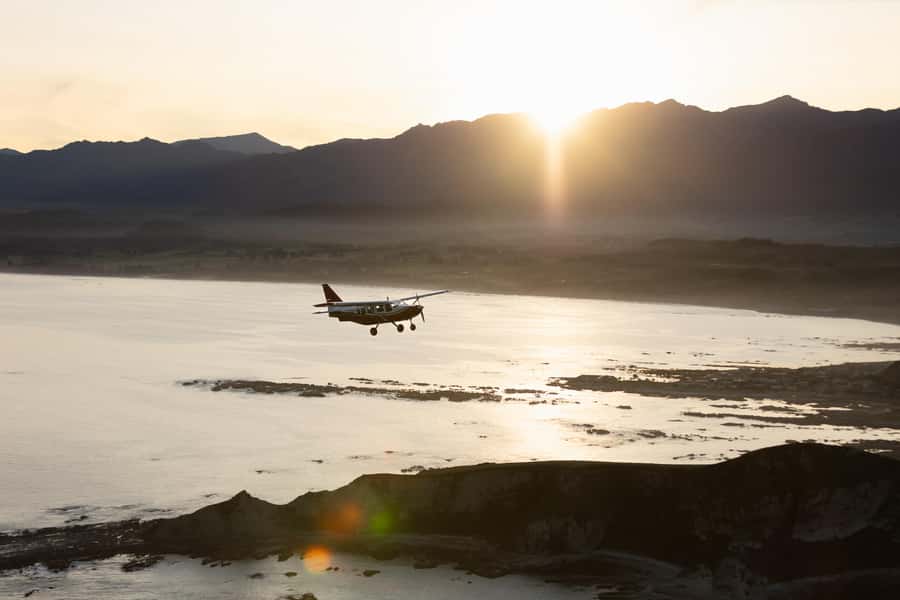
After the wildlife search, the plane takes in Kaikoura from above. This is not filler added after the main event. The coast and mountains give you a strong sense of place that a boat cannot provide in the same way.
You see the sharp contrast between the ocean and the Kaikoura ranges, often with snow on the higher peaks. From the air, the reefs and coastal curves become easy to read. You also understand how narrow the built-up area is compared with the surrounding sea and mountains.
This scenic portion helps soften the risk of an empty wildlife search. If whales remain below the surface, you still receive an aerial view of one of New Zealand’s most dramatic coastal settings. That does not make the wildlife guarantee unnecessary, but it makes the $131 feel less dependent on one brief animal sighting.
A photo stop is listed after the flight at the Air Kaikoura Aero Club, before you return to the airport meeting point. The full activity is advertised as 40 minutes, with the airborne portion listed at 30 minutes. Add the 30-minute pre-flight check-in and briefing time when planning your day.
How much value do you get for $131?
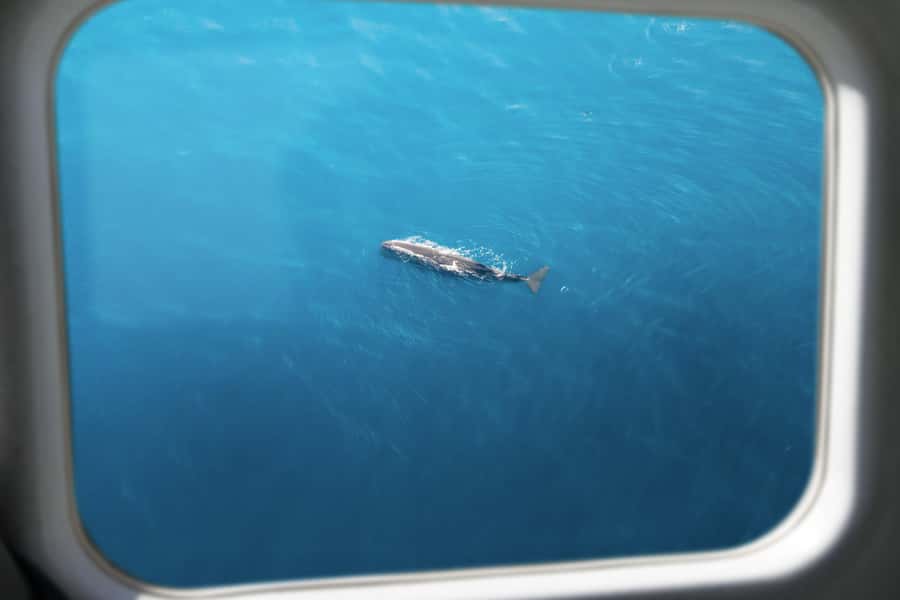
At $131 per person, this is not the cheapest way to look for whales. The price makes more sense if you value three things: covering a large search area, avoiding a crowded boat, and seeing Kaikoura from above.
The flight is particularly useful when your time in town is limited. A 30-minute airborne search does not require the longer commitment of a standard marine excursion, and you can see a wide section of coast in one outing. It is also a strong alternative if a boat trip is cancelled because of conditions, as long as the aircraft can safely operate.
You should still compare the cost with your expectations. If your main goal is a guaranteed sperm whale sighting, this is not the right purchase because no operator can promise a wild animal will surface. If your goal is a small-group scenic flight with a serious chance of marine life, the price is easier to justify.
The experience has an overall rating of 4.6 from 823 ratings, and 86 percent of people give the transport itself a perfect score. The strongest praise centers on professional staff, smooth landings, clear commentary, and pilots who work to give both sides a view. Those details matter more here than polished presentation. A good pilot can turn a short flight into a focused search rather than a silent loop over the sea.
The pilots make a real difference
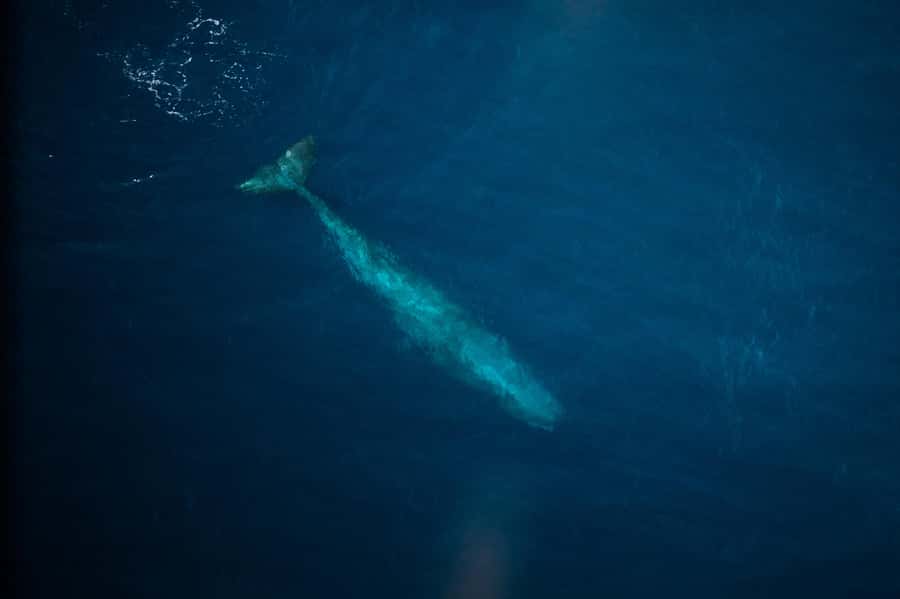
The best part of the commentary is that it stays connected to what you can see. Pilots such as Ben have been praised for explaining the animals and keeping the flight calm. Alex has been noted for a running commentary and for redirecting the plane when a sighting came through the radio. Tom has been praised for turning the plane so everyone could see, while Dan has been remembered for both flying and narration.
You may not get one of those exact pilots on your departure, so treat the names as examples of the style to expect, not a guarantee. The common thread is active guidance. The pilot points out sightings, explains the search, and coordinates with other aircraft and boats.
A careful pilot also manages the viewing experience. The plane can circle one way and then the other, allowing people on opposite sides to see the whale. That is a small operational detail, but it makes the guaranteed window seat genuinely useful rather than merely technical.
Weather, wildlife, and the real risk
Flights depend on safe weather and visibility. If poor weather prevents the flight from operating, you receive a full refund. The operator can also adjust flight times to suit conditions and whale behavior.
A weather-safe flight does not guarantee wildlife. You may see dolphins but no whale, a distant whale that surfaces once, or nothing more than open water. The company provides honest information about the likelihood of sightings before departure, and you should listen closely rather than treating the trip as a promise.
There is no refund or rescheduling simply because no whales appear. That policy makes the scenic value important. Book this only if you can accept the flight as both wildlife search and aerial tour.
Who will enjoy this most?
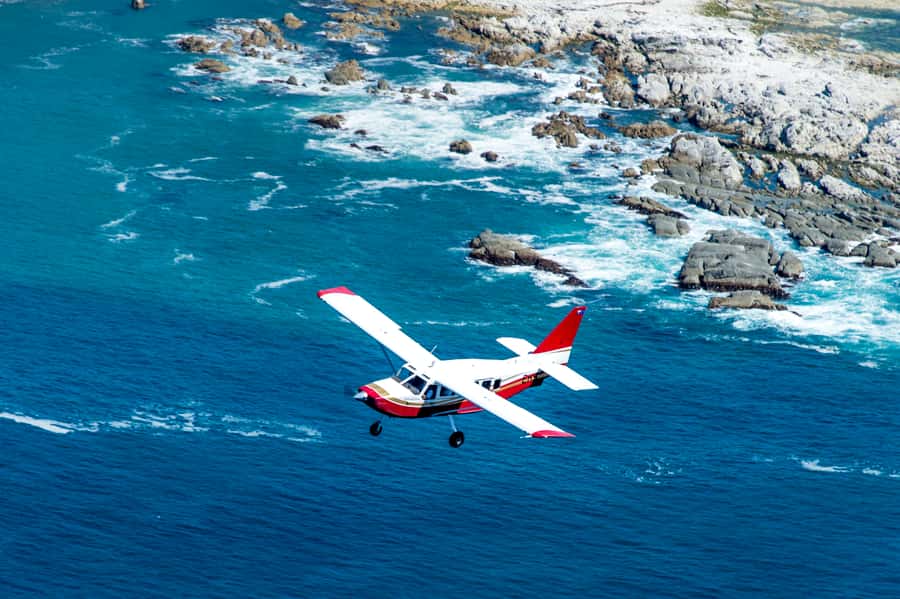
I would choose this flight if you want maximum viewing access in a short period, especially if you are already spending time in Kaikoura and want a different angle on the coast. It suits photographers, families who prefer a short activity, and anyone who dislikes the idea of spending hours on a boat.
It also suits people who have already taken a marine trip and want to understand the scale of the whales and coastline from above. The flight offers a very different view, not simply a faster version of a boat trip.
You should think twice if small-plane motion makes you uneasy or if tight circling is likely to cause sickness. The aircraft is described as safe and professionally operated, but safety does not mean the ride will feel perfectly still.
The activity is also a good fit for visitors who need flexibility. You can cancel up to 24 hours in advance for a full refund, and a reserve-now, pay-later option is available. Minimum numbers are required for the flight to operate, so keep your schedule flexible enough to handle an adjustment.
Should you book the Kaikoura whale-watching flight?
Book it if you want a short, small-group flight where every passenger has a window and the aircraft can search a broad stretch of sea. The combination of sperm whale scale, dolphin pods, mountain views, and live pilot commentary gives the experience value even when wildlife is unpredictable.
Skip it if $131 feels too high for a chance rather than a certainty, or if you strongly dislike rapid turns in a small aircraft. For everyone else, this is one of the most efficient ways to see Kaikoura’s marine world and coastal setting in one outing. Go in expecting a scenic flight with a serious wildlife search, not a guaranteed whale encounter.
FAQ
Where does the whale-watching flight depart from?
It departs from Air Kaikoura Aero Club at 627 State Highway 1, at Kaikoura Airport. The airport is about a 10-minute drive south of Kaikoura, and free parking is available.
How long does the activity take?
The advertised activity lasts 40 minutes. The flight itself lasts about 30 minutes, with a safety briefing before boarding and a photo stop after the flight. You must check in 30 minutes before your scheduled departure.
Does every passenger get a window seat?
Yes. Every passenger receives a guaranteed window seat, giving you an unobstructed view for whale watching and photography.
What animals might I see?
Possible sightings include sperm whales, dusky dolphins, humpback whales, blue whales, orcas, pilot whales, and other marine life. Sightings are not guaranteed because the animals are wild.
Will I receive a refund if no whales are seen?
No. Refunds or rescheduling are not available when whales are not spotted. A full refund is provided if poor weather prevents the flight from operating.
Is commentary included?
Yes. English live commentary is provided by the pilot, and listening headsets are included. An English audio guide is also listed.
Is the flight suitable for wheelchair users?
The activity is wheelchair accessible. It is not suitable for people over 120 kilograms, or 264 pounds.
Can I cancel my booking?
You can cancel up to 24 hours in advance for a full refund. A reserve-now, pay-later option is also available, and flight times may be adjusted to match weather and whale activity.
Just added around Kaikoura
- Kaikōura Whale Watching and Scenic Landing – 1hr Premier Tour★ 5.0 · 24 reviews
- Kaikōura Whale Watching – 1hr 20min Ultimate Adventure★ 5.0 · 8 reviews
- Sunset Kayak tour in Kaikoura★ 5.0 · 46 reviews
- Llama Trek (Taster) – Kowhai River Valley and Native Woodland Tour★ 5.0 · 76 reviews
- Kaikoura Whale Watching – 45 Minute Ocean Safari★ 5.0 · 39 reviews
- Private Wildlife Kayaking Tour – Kaikoura★ 5.0 · 44 reviews
- Sunset Evening Kayaking Tour – Kaikoura★ 4.5 · 81 reviews
- Kaikoura Helicopters Extended Whale Watch★ 4.5 · 15 reviews
Whale Watching, compared.
Auckland Dolphin and Whale Watching Eco-Safari Cruise
Read our review →
Whale and Dolphin Watching Half-Day Eco Cruise
Read our review →
Tikapa Moana Whales, Dolphins and Islands Cruise
Read our review →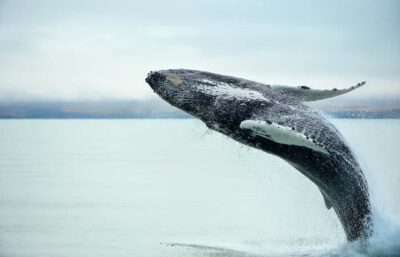
Kaikōura Whale Watching Scenic Flight (40 Minutes)
Read our review →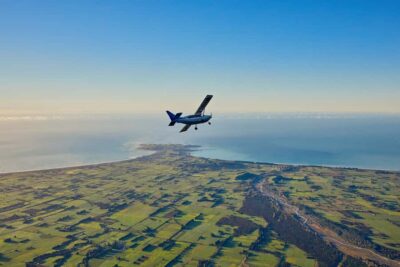
Browse the lists this tour appears in