
Reviewed · DOLPHIN WATCHING
Akaroa Harbour 2-Hour Dolphin Nature Cruise
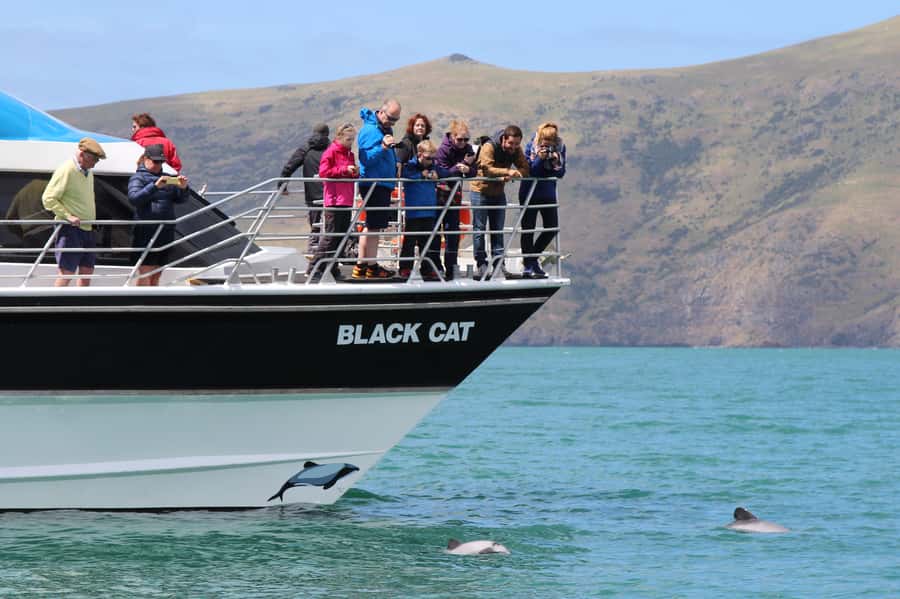
Akaroa Harbour is one of New Zealand’s best places to look for Hector’s dolphins, the world’s smallest and rarest dolphins. This two-hour cruise also takes you past fur seals, little penguins, seabirds, sea caves, and huge volcanic cliffs inside an extinct crater.
I like the mix of wildlife and geology, and I like that the skipper does more than point at animals. You hear about Akaroa’s Māori and European past, the harbour’s volcanic origins, and places such as Scenery Nook. The main drawback is simple: wild animals do not follow a timetable, so dolphin sightings can range from excellent to limited.
Key points
- Hector’s dolphins: Look for New Zealand’s small, distinctive native dolphins in their natural habitat.
- Scenery Nook: See a striking amphitheatre of pink, purple, and red volcanic rock.
- Open-air viewing: Use two open decks for photographs, with covered seating when the wind or sun picks up.
- More than dolphins: Fur seals, little penguins, albatross, cormorants, and other birds may appear along the way.
- Useful onboard comforts: Tea, coffee, and hot chocolate are included, with toilets and a licensed bar available.
- Easy harbour access: The boat leaves from the Main Wharf, also convenient for cruise ship passengers arriving by tender.
Why Akaroa Harbour is worth seeing from the water
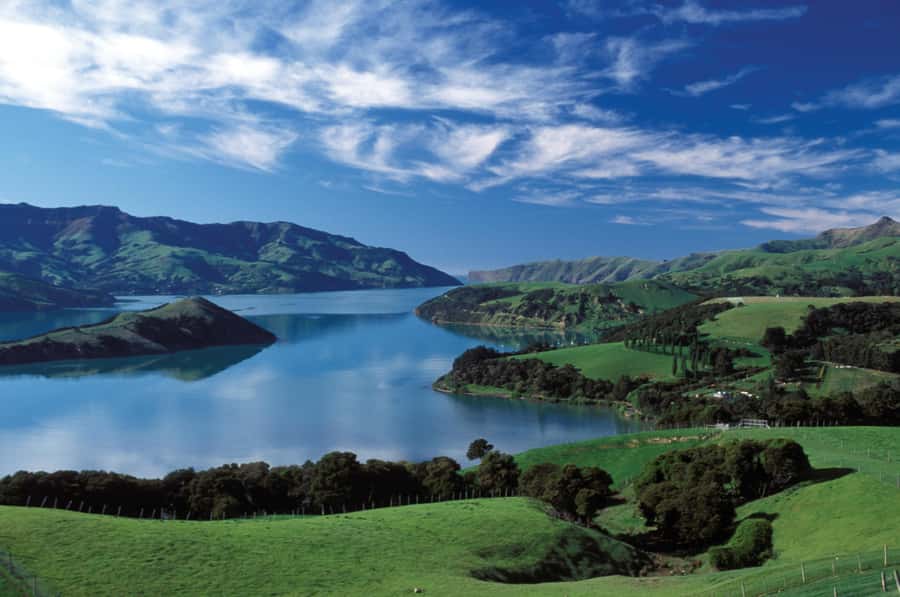
Akaroa Harbour is not simply a place to take a boat ride. It is the flooded interior of an ancient volcanic crater, and the water gives you the best view of its scale.
From the catamaran, you can look up at sea cliffs reaching about 500 feet. Ancient lava flows shaped the harbour’s steep walls, caves, gullies, and unusual rock colours. The scenery changes as the boat moves, so even a quiet wildlife period still gives you plenty to watch.
I especially like the balance here. A standard harbour cruise might give you pleasant views but little context. This one connects the scenery with the forces that formed it, then adds local stories and wildlife. That makes the two hours feel like an outing with substance, not just a ride around the bay.
The trip is also a good way to see parts of Banks Peninsula that are difficult to reach from land. Sea caves, offshore rock formations, and the cliffs around the outer harbour take on a different scale from the boat.
A few more Akaroa half-days to weigh up
- Akaroa Dolphins ~ Harbour Nature Cruise
★ 5.0 · 2,143 reviews - Akaroa: Dolphin Nature Cruise
★ 4.9 · 440 reviews - Akaroa Harbour Nature Cruise
★ 5.0 · 332 reviews
The boat and the best place to sit
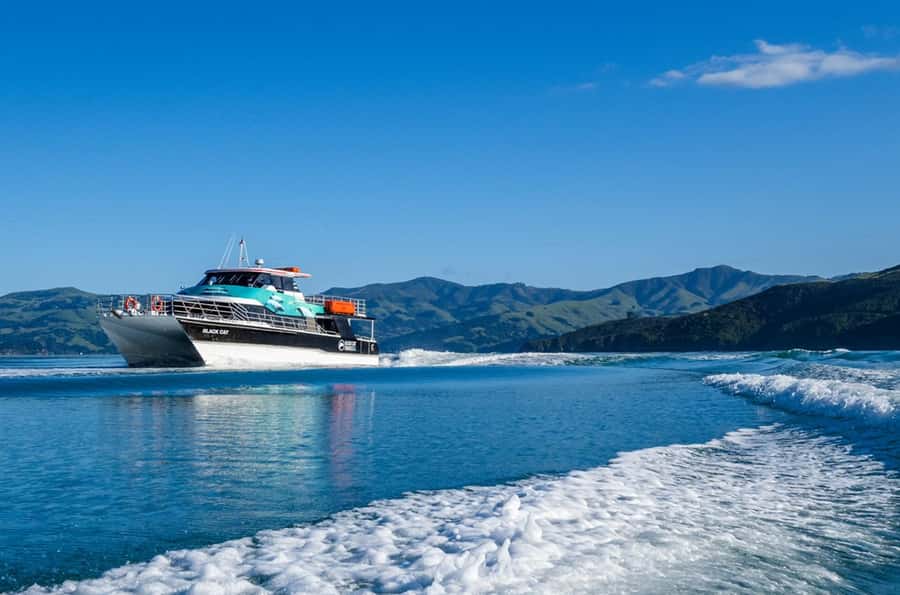
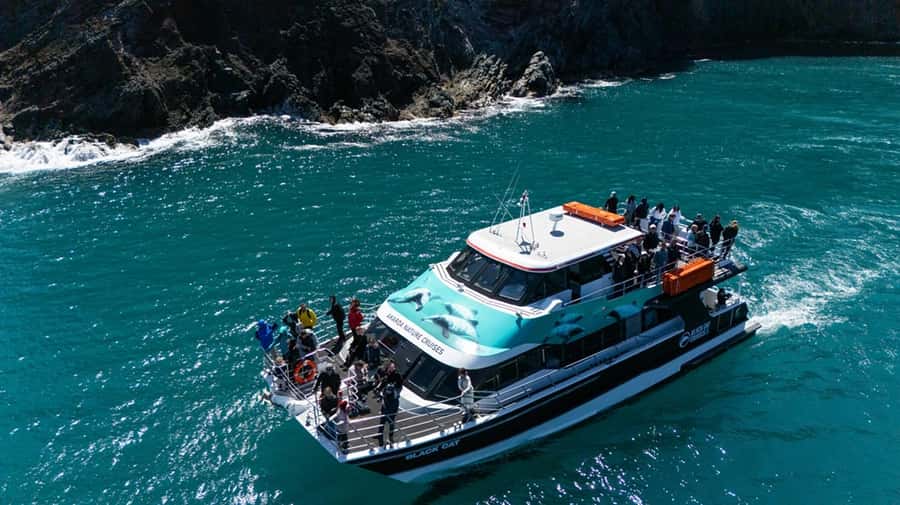
Black Cat Cruises uses a modern, spacious catamaran with two open decks. That layout matters because wildlife can appear on either side of the vessel, and you will want to move around rather than remain fixed behind a window.
The open decks provide the clearest views and the best chance for photographs. They also expose you to wind, spray, and a sharp drop in temperature once the boat moves away from the wharf. Bring warm clothing even in summer. A hat and sunscreen are also wise, since the water reflects sunlight and cloudy weather does not prevent sunburn.
Covered seating gives you shelter and a more relaxed place to listen. Seating arrangements can feel limited at busy times, and sound is not equally clear everywhere on the boat. One useful detail is that extra speakers have been noted near the rear, but you may still want to stay near the guide when the commentary begins.
Onboard toilets and a licensed bar add comfort, especially for families. Tea, coffee, and hot chocolate are included. You can also buy other refreshments, though the supplied information does not specify the full bar menu.
The vessel has high rails and is intended to suit families with young children. You still need to supervise children at all times, both for safety and so the boat remains pleasant for everyone.
Looking for Hector’s dolphins
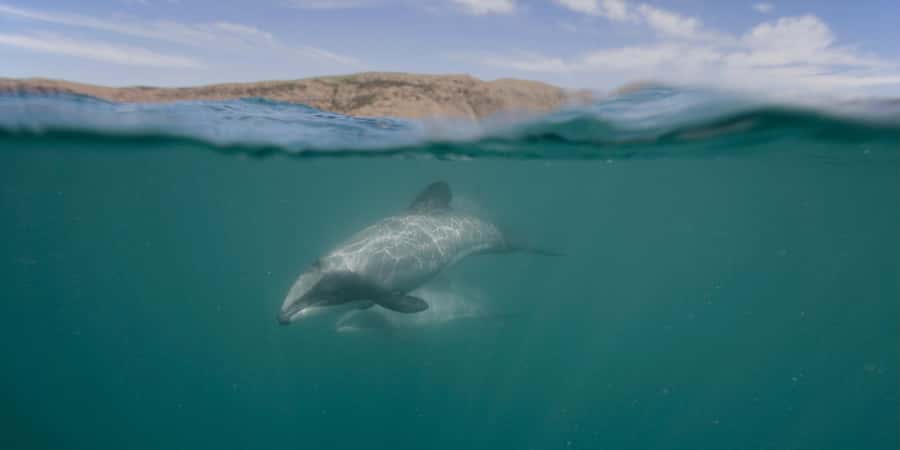
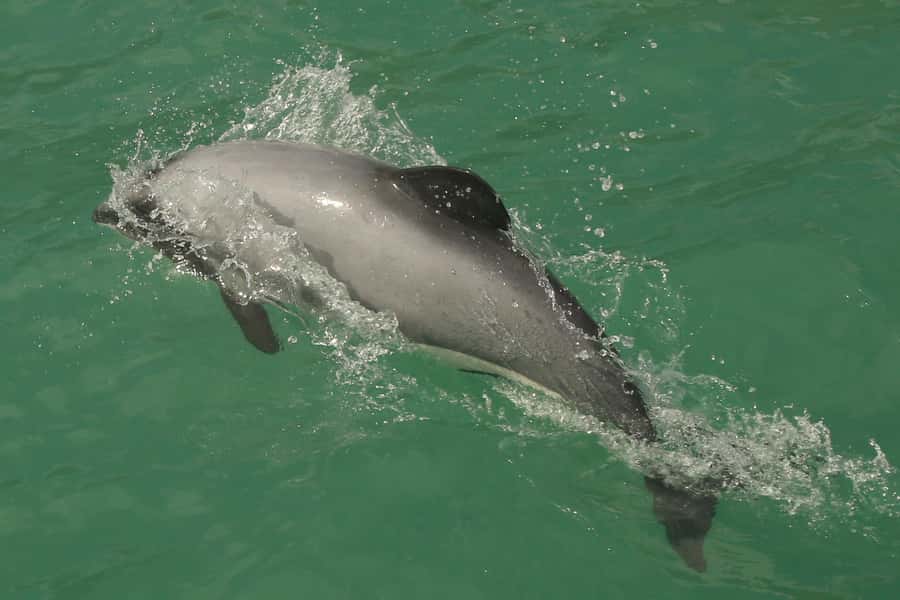
The main reason to book this cruise is the chance to see Hector’s dolphins in the wild. They are native to New Zealand and among the smallest dolphin species in the world. Their rarity gives the sighting real weight, but it also means you should approach the trip with realistic expectations.
The crew searches the harbour and surrounding waters rather than placing animals in a predictable viewing spot. On good days, you may see several dolphins, and they can sometimes swim close to the boat. At other times, sightings may be brief or limited. One cruise had very few dolphins despite a strong effort from the skipper, while other outings produced many close views.
That uncertainty is not a flaw in the operation. It is the nature of a wildlife trip. If seeing dolphins is your only goal, you are taking a chance. If you value the volcanic coast, birds, seals, and commentary as well, the experience remains worthwhile when the dolphins are elusive.
Hector’s dolphins can also be difficult to photograph. They are quick, small, and often visible for only a moment. Keep your camera ready, but do not spend the entire trip staring at a screen. You will get more from the experience by watching the water and listening for the guide’s call.
The skipper’s skill matters here. Rob has been praised for clear and entertaining commentary, and other skippers have worked hard to locate wildlife and position the boat well. The crew does not control animal behaviour, but good local knowledge improves your chances.
Fur seals, penguins, and seabirds
Dolphins are the headline act, but the wider wildlife list gives this cruise much of its value.
New Zealand fur seals can often be seen near rocky shores and offshore formations. You might see them resting on rocks or moving through the water. Young seals have also been seen around the coastal cliffs, which makes the seal viewing especially appealing at the right time of year.
Little penguins, sometimes called fairy penguins, are another possible highlight. They are small and easy to miss, so binocular-style attention helps. You might spot one near the waterline or among rocks, but do not expect a long, close display.
The harbour and outer coast also attract seabirds. Keep watch for albatross, cormorants, and other native birds. Bird sightings give you something to focus on between dolphin encounters and help explain how the harbour functions as a marine environment.
I like that the cruise does not treat every non-dolphin sighting as a consolation prize. Seals, penguins, and seabirds are part of the main experience. A day with dolphins, seals, penguins, and birds can feel remarkably full, while a quieter day still has a solid wildlife range.
Same corner of the country, a completely different day out:
- Swimming with Wild Dolphins in Akaroa
★ 4.5 · 261 reviews - Akaroa Shore Excursion: Banks Peninsula and Christchurch City Sights Tour
★ 4.0 · 228 reviews - Shore Excursion Guided Sea Kayaking through Akaroa Marine Reserve
★ 5.0 · 160 reviews - Akaroa Shore Excursion: Banks Peninsula, Christchurch City Tour and the International Antarctic Centre
★ 4.0 · 135 reviews
Scenery Nook and the volcanic coast
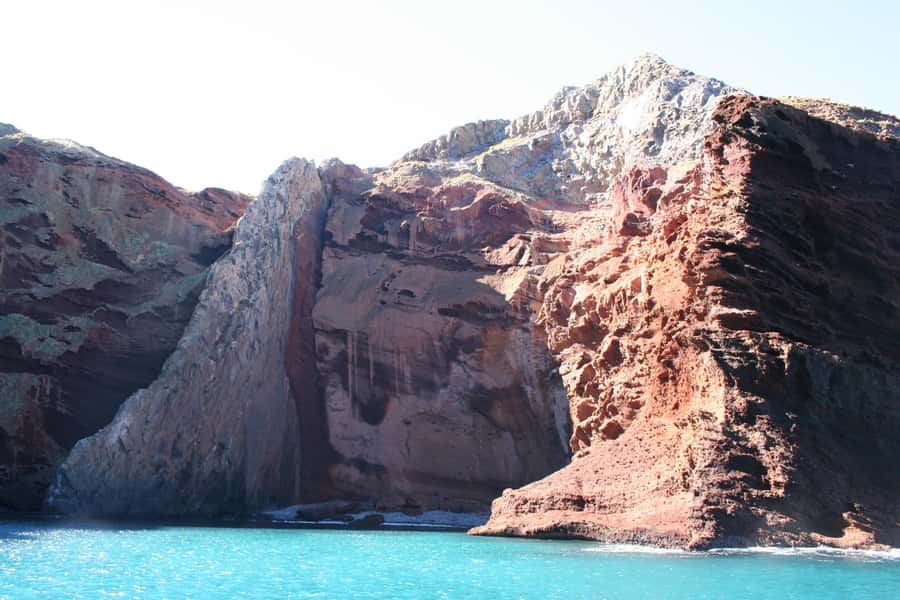
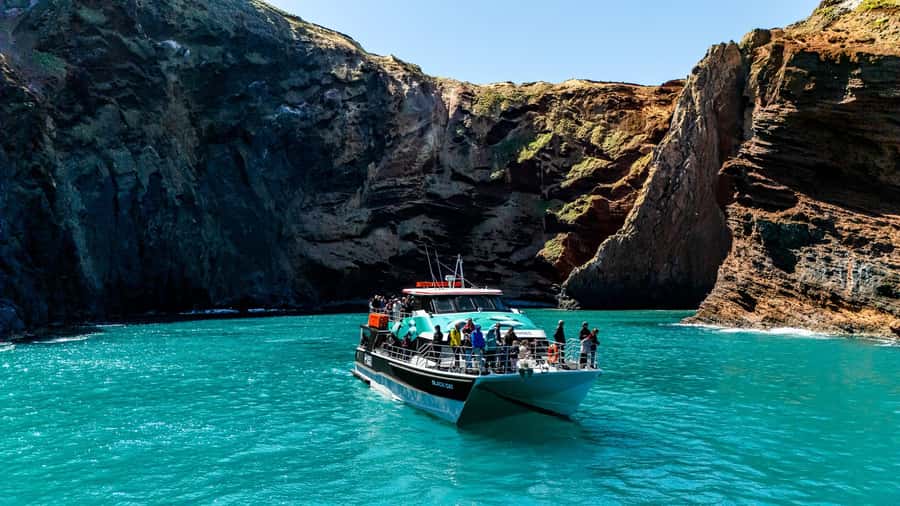
The boat’s route includes several memorable geological features. The most distinctive is Scenery Nook, a natural amphitheatre marked by pink, purple, and red volcanic rock. The colours can look especially strong in clear weather, but the shape of the cliffs is the real attraction.
The trip also passes tall sheer cliff faces, sea caves, and rock formations with names such as Cathedral and Elephant Rocks. These formations help you see the harbour as the remains of a volcano rather than just a pretty inlet.
Nikau Palm Gully is another unusual feature. It contains the southernmost native nikau palms in the world, a detail that adds a botanical angle to the trip. The palms grow in a setting where steep volcanic walls meet the sea, making this one of the more distinctive sights along the route.
The boat may also approach caves and cliff edges where the water has worn through softer rock. These areas are good for photographs, but the views are not always easy to capture. The catamaran can be moving, the light changes quickly, and passengers gather on the most open viewing areas.
For the best pictures, bring a camera, phone, or both, but protect them from spray and keep a firm hold on hats. One person even had to return for a hat that went overboard. That small detail says a lot about how breezy the open decks can be.
The skipper’s stories add real value
The commentary covers Māori and European history, the volcanic creation of the harbour, and the wildlife around you. I consider this a major part of the trip, because the cliffs and coves can otherwise become a sequence of attractive views without much meaning.
The quality of the experience depends partly on where you sit and how well you can hear. Some parts of the boat have clearer audio than others, and commentary may be harder to follow at the back or when the wind rises. If the stories matter to you, move closer to the guide when possible.
The best commentary combines facts with a sense of place. You hear why the cliffs look the way they do, how Akaroa developed, and what makes the local dolphin population special. Guides such as Rob have also been praised for adding humour, which helps keep children and teenagers interested during quieter stretches.
The result is suitable for more than dedicated wildlife watchers. You can enjoy the cruise as a scenic outing, a short history lesson, a geology trip, or a family activity. That range is one reason the experience works well for mixed-age groups.
Getting to the Main Wharf
The meeting point is the Main Wharf in Akaroa. From Christchurch city or Christchurch International Airport, allow roughly 80 to 90 minutes by car. The drive crosses farmland and the Banks Peninsula hills, so the cruise works best as part of a wider Akaroa day rather than a rushed add-on.
If you are arriving by cruise ship, your tender comes directly to the Main Wharf. That makes the meeting point particularly practical, since you do not need a separate transfer from the landing area.
The cruise lasts two hours, with departure times varying by date. Check the available start time before arranging the rest of your day. You will want enough time to reach Akaroa, find the wharf, and board without rushing.
The activity is offered in English with a live guide. Cancellation is allowed up to 24 hours before departure for a full refund, and the reserve-now, pay-later option can help if your New Zealand plans are still shifting.
Is $71 good value?
At $71 per person, this is not the cheapest way to see Akaroa Harbour, but the price covers more than a short scenic boat ride. You receive two hours on the water, live commentary, wildlife searching, access to the outer volcanic coast, and complimentary tea or coffee.
The value is strongest when you see several kinds of wildlife. Dolphins, seals, penguins, and seabirds combined with the cliffs and caves make the fare feel fair. Even without a major dolphin encounter, the volcanic scenery and guide’s explanation provide a useful second layer.
I would compare this with the cost of building a similar outing yourself. You would still need to reach Akaroa, and the harbour’s sea caves, cliffs, and offshore wildlife are not easy to experience independently from land. The boat also saves you the effort of planning a route and searching for the right viewpoints.
The price makes less sense if you are interested only in guaranteed dolphin photography. No responsible wildlife cruise can promise that. Book it for the whole package: rare marine life, a dramatic crater harbour, and two hours of guided time on the water.
Who should book this cruise?
This is a strong fit for families, couples, solo visitors, photographers, and anyone with a free half-day in Akaroa. The high rails, covered seating, toilets, and hot drinks make it easier for families to manage the outing, though children must be watched closely.
It also suits cruise ship passengers because the boat leaves from the same main wharf where tenders arrive. The two-hour length leaves room for a walk around Akaroa before or after the cruise, though you should allow extra time around your ship’s tender schedule.
You do not need to be a serious wildlife fan. The scenery and geology carry the trip, while the commentary gives the outing more purpose. If you enjoy learning how a place was formed and hearing local stories while looking for animals, you will likely find the format rewarding.
People sensitive to cold or motion should prepare carefully. The open decks can be chilly even on a warm day, and conditions affect what you see. Bring warm layers, a hat, and sunscreen. The boat is powerful and generally offers a smooth ride, but a calm day makes the experience more comfortable.
Wheelchair access requires special care. Ramps allow passengers in wheelchairs to board and leave with an able-bodied companion, but the onboard toilets are not wheelchair friendly. The activity information also lists wheelchair users as not suitable, so contact the operator before booking if you need wheelchair access rather than assuming the general accessibility note applies to your needs.
Should you book the Akaroa Dolphin Nature Cruise?
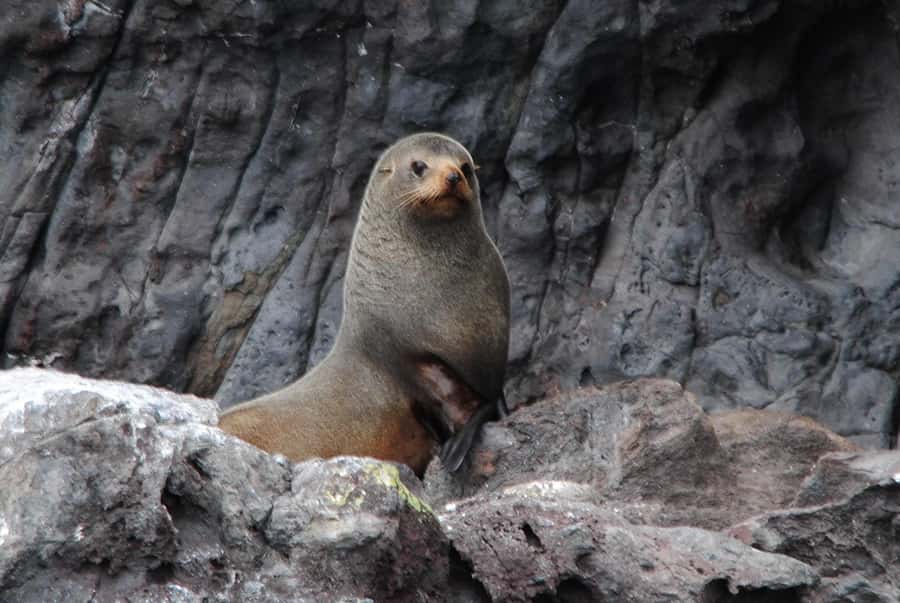
Yes, if you want a well-rounded look at Akaroa Harbour rather than a guaranteed animal encounter. The combination of Hector’s dolphins, fur seals, little penguins, seabirds, sea caves, Scenery Nook, Nikau Palm Gully, and volcanic cliffs gives you plenty to see in two hours.
Book with realistic expectations. You might see many dolphins close to the boat, or only a few in the distance. The boat, crew, scenery, and commentary keep the trip worthwhile, but wildlife remains unpredictable.
At $71, I consider it good value for a first visit to Akaroa, particularly if you are arriving by cruise ship or have limited time on Banks Peninsula. Wear warm clothes, stay ready with your camera, and choose a place where you can hear the guide. If those small preparations suit you, this is an easy way to experience the harbour’s wildlife and volcanic character in one outing.
FAQ
Where does the Akaroa dolphin cruise depart?
The cruise departs from the Main Wharf in Akaroa, New Zealand.
How long does the cruise last?
The nature cruise lasts two hours.
How much does the cruise cost?
The listed price is $71 per person.
What wildlife might I see?
You might see Hector’s dolphins, New Zealand fur seals, little penguins, albatross, cormorants, and other seabirds.
Are dolphin sightings guaranteed?
No. Hector’s dolphins live in the wild, so sightings can vary from many dolphins to only a few.
What scenery does the cruise include?
The route includes volcanic cliffs, sea caves, Cathedral and Elephant Rocks, Scenery Nook, and Nikau Palm Gully. Scenery Nook has pink, purple, and red volcanic rock.
Is commentary included?
Yes. A live English-speaking skipper or nature guide provides commentary about Akaroa’s Māori and European history, volcanic origins, and wildlife.
What is included in the ticket?
The ticket includes the two-hour nature cruise, English commentary, and complimentary tea and coffee. Hot chocolate is also offered onboard.
What should I bring?
Bring warm clothing, a camera, sunscreen, and a hat. Sea breezes can make the open decks cool even on warm days.
Is the boat wheelchair accessible?
Ramps allow passengers in wheelchairs to board and leave with able-bodied companions, but the onboard toilets are not wheelchair friendly. The activity information also lists wheelchair users as not suitable, so confirm your needs with the operator before booking.
More 2-Hour Experiences in Akaroa
- Akaroa: Pohatu Penguins Scenic Nature 2-Hour or 4-Hour Tour
★ 4.9 · 125 reviews - Milford Sound: 2-Hour Small Boat Scenic Cruise
★ 4.8 · 2,561 reviews - 2-Hour Milford Sound Scenic Cruise
★ 5.0 · 1,520 reviews - Whitianga: 2-Hour Cathedral Cove and Volcanic Coast Cruise
★ 4.8 · 816 reviews
Just added around Akaroa
- Akaroa Wildlife Cruise★ 5.0 · 101 reviews
- Night Awe – Stargazing tour in Akaroa★ 5.0 · 61 reviews
- Solar Explorer in Akaroa – Sun-Viewing Tour with Telescopes★ 5.0 · 5 reviews
- Guided Electric Mountain Bike & Sea Kayak Tour in Akaroa★ 5.0 · 22 reviews
- Guided Electric Mountain Bike Tour- Akaroa Explorer★ 5.0 · 4 reviews
- Lava Loop- Guided electric mountain bike tour in Akaroa★ 5.0 · 34 reviews
- Shamarra Alpaca Farm Tours★ 5.0 · 117 reviews
- Akaroa Explorer- Guided Electric Bike Tour in Akaroa★ 5.0 · 18 reviews
Dolphin Watching, compared.
Auckland Dolphin and Whale Watching Eco-Safari Cruise
Read our review →
Whale and Dolphin Watching Half-Day Eco Cruise
Read our review →
Tikapa Moana Whales, Dolphins and Islands Cruise
Read our review →
Motuara Wildlife Sanctuary Tour and Dolphin Cruise from Picton
Read our review →Browse the lists this tour appears in