
Reviewed · CRUISES & BOAT TOURS
Glass Bottom Boat Tour
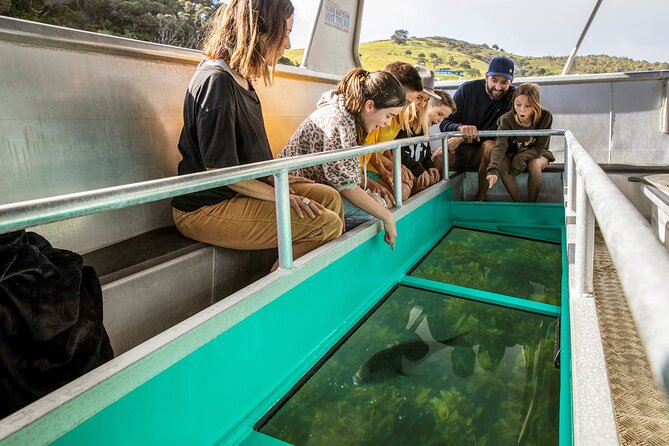
The best part of this Goat Island glass-bottom boat tour is the simple view beneath you. You can watch snapper, blue maomao, rays, kelp, and other sea life through the boat’s glass viewing area without putting on a wetsuit or getting into the water. The boat also reaches caves behind Goat Island that you cannot see from shore.
I like the mix of easy sightseeing and real marine life. I also like that the licensed guide adds context instead of leaving you to stare at the water alone. The main thing to keep in mind is that Goat Island is an open marine reserve, so fish numbers and sightings change with the tide, weather, and natural movement of animals.
Key points to know before you book
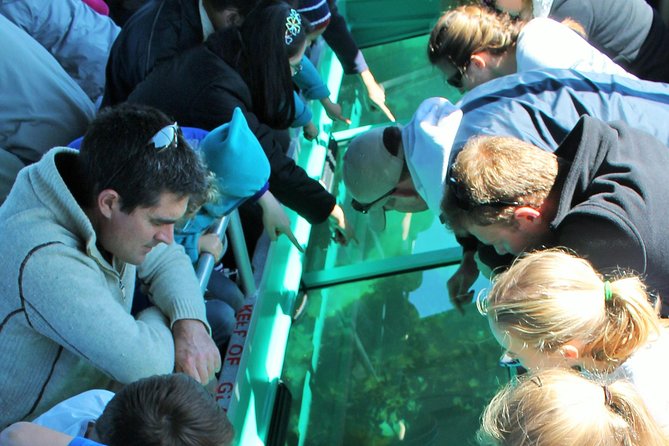
- Look through the glass viewing area: See fish and underwater plants without getting wet.
- Cruise to Goat Island’s caves: The 10-minute cave section includes the famous Key Hole.
- Expect changing wildlife: Snapper, rays, seals, dolphins, whales, and orca are possible, but never guaranteed.
- Plan for a half-day from Auckland: You must make your own way to Goat Island in Leigh.
- Good family choice: The short duration and easy viewing suit children who enjoy sea life.
- Weather matters: Poor conditions can lead to a different date or a full refund.
Goat Island gives you a close look at New Zealand sea life
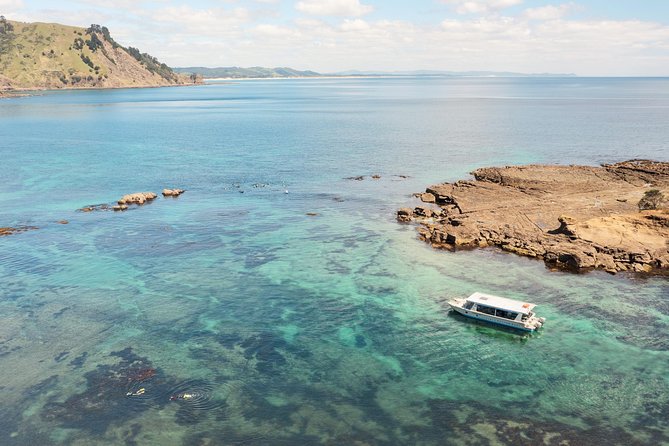
Goat Island Marine Reserve was New Zealand’s first marine reserve. It is an open reserve, which means there are no barriers keeping fish and other creatures in one area. Marine life moves naturally through the reserve, so each trip has a different mix of sightings.
That makes the tour more authentic than a fixed aquarium display, but it also means you need realistic expectations. You might see a large snapper almost under the boat, or you might find the water quieter than expected. A strong sighting is never guaranteed, and even the best conditions cannot make wild animals appear on schedule.
The glass viewing area gives you a useful middle ground. You get an underwater view, but you do not need swimming ability, snorkeling equipment, or a tolerance for cold water. If you are visiting with children, this can be easier than organizing a full water activity.
A recent rating of 4.6 from 39 reviews points to a consistently well-received outing. The most praised feature is the guide, who explains what you are seeing and helps turn a short boat ride into a lesson about the reserve. That guidance matters when fish are small, fast, or hard to identify through moving water.
More Boat Tours in Auckland
- Auckland Dolphin and Whale Watching Eco-Safari Cruise
★ 4.5 · 1,790 reviews - Auckland: Whale and Dolphin Watching Half-Day Eco Cruise
★ 4.5 · 1,072 reviews - Auckland Harbour Sailboat Cruise Including Three Course Dinner
★ 4.5 · 476 reviews
The first 50 minutes: fish, kelp, and open water
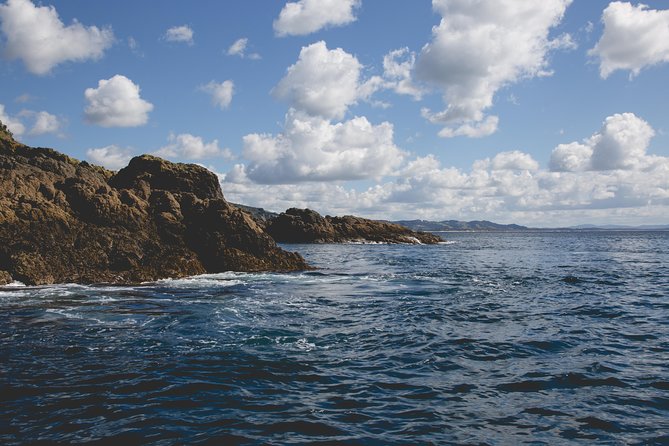
Most of the tour is spent cruising around Goat Island Marine Reserve. This section lasts about 50 minutes, leaving enough time to watch the water, scan the glass viewing area, and take in the rocky coast around the island.
The fish listed for the reserve include giant snapper, blue maomao, parore, red moki, goatfish, leather jackets, sweep, silver drummer, spotties, hiwihiwi, marble fish, eagle rays, and stingrays. You may not see every species, but this gives you a good idea of the range of life in the reserve.
Snapper are among the most exciting possibilities. Large fish can make the viewing area feel surprisingly close to the sea floor, especially for children. Rays offer a different kind of sighting, moving more slowly and often giving you a better chance to follow them with your eyes.
The reserve also supports kina, kelp, seaweeds, sponges, and anemones. These details are worth watching for. The tour is not only about counting fish. The plants and smaller organisms help you understand what makes this protected area useful to marine life.
Conditions affect what you see. Wind, waves, light, and tide can change how clear the water appears. Animals also move through the reserve on their own schedule. One day may bring plenty of fish, while another gives you more coastline, caves, birds, and underwater plants.
This is where the guide adds real value. A well-informed guide can point out species that are easy to miss and explain why the reserve’s wildlife varies. The experience received strong praise for the guide’s knowledge, even alongside the honest note that one trip did not produce many fish.
I would treat the fish list as a guide to what is possible, not a promise. If your main goal is to see one particular animal, this may feel uncertain. If you enjoy a short nature trip with changing conditions, the uncertainty is part of the deal.
The final 10 minutes: Goat Island’s caves by boat
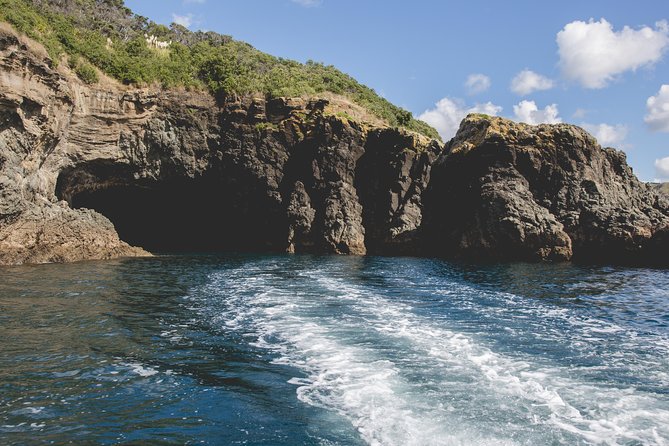
The final part takes you around the back of Goat Island to see several caves. This section lasts about 10 minutes, but it adds an important feature that you cannot get from a beach or walking trail.
The famous Key Hole is one of the named cave sights. A boat gives you access to these rocky spaces, which are not available to most people from land. The caves also change the rhythm of the tour. After watching the water through the glass, you look up at the island’s rock formations and enter a more enclosed coastal setting.
Ten minutes is not a long time, so do not expect a full cave expedition. Think of this as a scenic boat passage with a few special views. It works well as a second act to the marine reserve visit, rather than as the main reason to book.
The cave section also helps make the tour more than a fish-viewing ride. If the water is not crowded with marine life on your departure, the caves and coastline still give you something distinctive to see.
Wildlife includes more than fish
Goat Island’s marine life includes several larger animals, but sightings remain chance encounters. The reserve can sometimes produce dolphins, orca, whales, and seals. These are exciting possibilities, not scheduled parts of the trip.
You may also see eagle rays and stingrays, which are more realistic things to hope for than whales or orca. Again, there is no guarantee. The tour operates in a natural reserve, not a controlled animal attraction.
Birdlife adds another layer to the ride. Possible species include pied shags, red-billed and Dominican seagulls, blue penguins, reef herons, terns, gannets, and petrels. You might spend part of the trip looking through the glass, then shift your attention to the air and shoreline.
That variety is useful for families. Children can look for large fish, birds, caves, and moving shapes beneath the boat. The one-hour length also keeps the outing manageable for young attention spans, though conditions on the day will still affect how much you see.
A few more Auckland half-days to weigh up
- Waiheke Island: Ferry & Hop-On Hop-Off Explorer Bus Tickets
★ 4.6 · 3,311 reviews - Hobbiton & Waitomo Caves Guided Day Trip from Auckland incl lunch
★ 5.0 · 2,677 reviews - From Auckland: Hobbiton & Waitomo Caves Day Trip with Lunch
★ 4.9 · 2,505 reviews - Auckland: Hobbiton Movie Set Day Trip with Festive Lunch
★ 4.8 · 1,431 reviews
Why the open reserve makes the experience unpredictable
The open-reserve system is central to understanding this tour. Marine animals are not kept behind barricades, so the boat does not follow a set wildlife display. The reserve protects the area, but it does not control animal behavior.
I see this as both the tour’s greatest strength and its main limitation. You are seeing a living marine area rather than a staged attraction. At the same time, a quiet trip is possible, and you should not book expecting guaranteed dolphins or a boat surrounded by fish.
Weather and sea conditions also matter. Poor weather can cause the trip to be canceled, with the choice of a different date or a full refund. Even when the tour runs, conditions can affect visibility and animal movement.
This is worth considering when planning your day from Auckland. Leave some flexibility if the boat trip is important to you. If your schedule is tight, the free cancellation policy allows you to cancel for a full refund up to 24 hours before the start time, but changes or cancellations inside that window are not refunded.
Is $31.83 good value for one hour?
At $31.83 per person, the tour is priced as an accessible short outing rather than a full-day marine adventure. The value depends on what you want from it.
You are paying for a licensed guide, the boat ride, the glass viewing area, access to the marine reserve by water, and the cave cruise. You also get a simple way to see the area without buying snorkeling gear or committing to a longer activity.
The price makes sense for families, couples, and anyone already visiting Goat Island. It is also a reasonable add-on to a half-day trip north of Auckland. Since the tour returns to its meeting point, you do not need to arrange a separate return from the water.
The value is less certain if you are making a long journey solely for a guaranteed wildlife encounter. No one can promise how many fish will be present, and the tour lasts only about an hour. In that case, think of it as one part of a Goat Island outing, not the whole day.
You can bring water, but no food or drink other than water is allowed on the boat. There are no facilities at Goat Island Marine Reserve, so plan ahead before you arrive. This is a small detail, but it matters if you are traveling with children or intend to spend extra time in the area.
Getting to Goat Island from Auckland
The meeting point is Goat Island Marine Reserve in Leigh, about a half-day trip north of Auckland city. You make your own way there from Auckland or another location.
That arrangement gives you control over the rest of your day. You can build the boat ride around time in the Goat Island and Matakana areas instead of being tied to a large coach schedule. The tradeoff is that transport to the reserve is not included.
The activity begins and ends at the same meeting point. That makes the tour easy to fit into a self-drive plan, but you need to allow enough time to reach Leigh before departure. The experience information does not provide a separate hotel pickup service, so do not expect transport from Auckland to be part of the booking.
Goat Island is best treated as a destination rather than a quick city-center activity. The boat itself lasts one hour, but the trip from Auckland and time around Leigh will shape your day. I would avoid placing another fixed appointment immediately afterward, especially because marine conditions can affect the schedule.
Is the boat suitable for families?
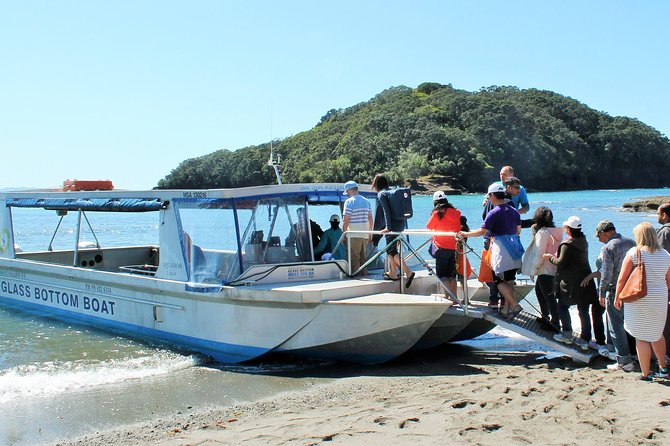
The short length and glass viewing area make this a natural family choice. Children can see marine life without needing to swim, snorkel, or stay in the water. The chance of spotting large snapper, rays, birds, or seals gives them several things to watch for.
The experience is also suitable for most participants, and service animals are allowed. The maximum group size is 49 people, so this is not a private boat ride. If you prefer a quiet, personal wildlife trip, the possible group size is an important consideration.
A larger group can work well for a casual family outing, especially at this price. It may feel less intimate than a small specialist trip, but the licensed guide still provides a useful point of contact and explanation.
Bring only what you need, especially water. Food and other drinks are not allowed on the boat, and the reserve has no facilities. Since conditions can affect the experience, I would also prepare children for the possibility that the fish are not as plentiful as hoped.
What this tour does best, and where it falls short
The tour’s strongest feature is access. You get an underwater view and a look at the back of Goat Island without needing special skills or a separate water-sports booking.
Its second strength is variety. In one hour, you may see fish, rays, sea plants, birds, coastal rock, and caves. The guide helps connect those sightings to the marine reserve, which is especially useful if you do not know New Zealand’s local sea life.
The weakness is wildlife uncertainty. The reserve is open, and natural conditions control the show. One trip may offer plenty of fish, while another may produce fewer sightings but still provide attractive scenery and caves.
The other limitation is timing. One hour is enough for a taste, not a full marine study. You will not have time for a long exploration of each cave or every species in the reserve.
The tour works best when you value the setting as much as a checklist of animals. If you need a guaranteed sighting, choose an activity designed around controlled viewing instead. If you want an easy, scenic introduction to Goat Island, this boat trip is a sensible option.
Should you book the Goat Island glass-bottom boat tour?
Book it if you are already planning to visit Goat Island or Leigh and want an uncomplicated way to see the marine reserve. The $31.83 price, one-hour length, glass viewing area, guide, and cave cruise make it especially appealing for families and first-time visitors.
I would also book it if you enjoy natural experiences where conditions shape the outcome. You might see giant snapper, rays, seals, or even larger animals, but you must accept that the reserve can be quiet on a particular day.
Skip it if you need a guaranteed wildlife encounter, dislike group activities, or cannot spare a half-day trip from Auckland. For everyone else, it offers a pleasant look at New Zealand’s marine life, with enough variety to make the short ride worthwhile.
FAQ
Where does the Glass Bottom Boat Tour meet?
The tour meets at Goat Island Marine Reserve, Leigh 0985, New Zealand.
Where does the tour end?
The activity ends back at the same meeting point at Goat Island Marine Reserve.
How long does the boat tour last?
The tour lasts approximately one hour. About 50 minutes are spent viewing the marine reserve, followed by about 10 minutes cruising to the caves behind Goat Island.
Do I need to arrange transport from Auckland?
Yes. You make your own way to Goat Island from Auckland or elsewhere. Transport from Auckland is not included.
What marine life might I see?
Possible sightings include snapper, blue maomao, parore, red moki, goatfish, leather jackets, rays, stingrays, kina, kelp, sponges, and anemones. Dolphins, orca, whales, and seals may also appear, but sightings are not guaranteed.
Can I see the caves during the tour?
Yes. The boat cruises behind Goat Island to visit several caves, including the famous Key Hole.
Can I bring food or drinks?
Only water is allowed on the boat. Coffee, tea, food, and other drinks are not included or permitted. There are no facilities at Goat Island Marine Reserve.
What happens if the weather is poor?
The tour requires good weather. If it is canceled because of poor conditions, you can choose a different date or receive a full refund.
Just added around Auckland
- Auckland Airport Private One-Way or Round-Trip Transfer★ 4.5 · 14 reviews
- Zombie Bite Escape Room Experiences★ 5.0 · 54 reviews
- Kumeu Wine Region Shuttle from Auckland★ 4.5 · 19 reviews
- Auckland’s Wild West Coast & Black Sand Beaches Tour inc Lunch★ 5.0 · 12 reviews
- Vineyards Honey and Black Sand Beaches from Auckland★ 5.0 · 93 reviews
- West Coast Discovery Tour★ 5.0 · 37 reviews
- Wētā Workshop Unleashed – Intro to Scars and Scrapes Workshop★ 5.0 · 5 reviews
- West Coast Discovery Piha Beach Private Tour★ 5.0 · 14 reviews
Cruises & Boat Tours, compared.
Premium Milford Sound Small Group Tour & Cruise from Queenstown
Read our review →
Cruise Milford NZ Small Boutique Cruise Experience
Read our review →

Walter Peak Gourmet BBQ & Lake Whakatipu Cruise
Read our review →
Shotover River Extreme Jet Boat Ride in Queenstown
Read our review →Browse the lists this tour appears in