
Reviewed · HISTORICAL TOURS
Olveston Historic Home Guided Tour
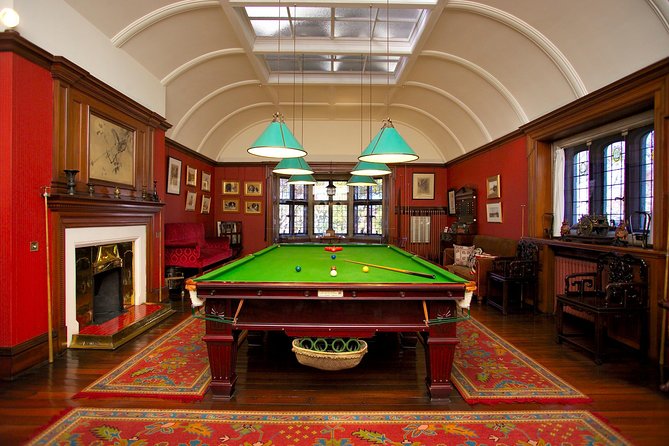
Olveston is not an empty old house with a few pieces of furniture behind glass. It is a complete Edwardian home, left with its original contents, from art and ceramics to practical household fittings. The house feels like a time capsule, and a guide helps you understand why each room matters.
I like the small groups, which make it easier to hear the guide and ask questions. I also like the freedom after the tour, when you can wander the one-acre garden, take in views toward Dunedin and Otago Harbour, and see the restored Fiat 510 Tourer. The main consideration is the hill leading to the house, which can be steep for anyone with mobility concerns.
Key points to know before you go
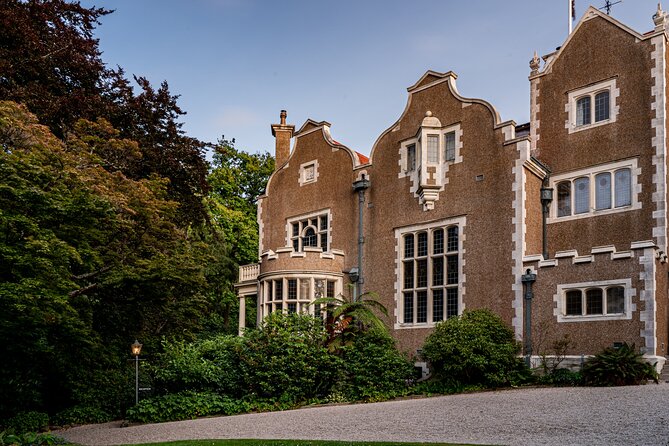
- Original contents throughout the house: Olveston retains the furnishings and objects collected by the Theomin family.
- A guided route through more than 13 rooms: The house has 35 rooms in total, but the public tour focuses on the most important and spectacular spaces.
- Small groups of up to 15: This is a better setup for questions and clear explanations than a crowded self-guided visit.
- Rare art and global collections: Look for Japanese ceramics, 15th-century Italian paintings, furniture, and objects gathered during the family’s travels.
- A garden visit follows the house tour: You can explore the National Significance garden at your own pace.
- Allow about 1 hour 15 minutes: The house tour is often described as about an hour, with extra time for the grounds.
Why Olveston feels like a real home, not a museum display
Olveston was built in 1906 for a prominent Dunedin merchant family. The design came from English architect Sir Ernest George, and the Jacobean-style exterior gives only part of the story. Inside, you get a close look at how a wealthy household lived in Otago during the early 1900s.
The most important thing here is completeness. Many historic houses preserve architecture but lose their daily objects. Olveston has more than 120 works of art, original furnishings, decorative pieces, and household equipment. You are not simply looking at a grand staircase or an elegant dining room. You are seeing the choices, habits, and ambitions of one family.
That makes the guide essential. Without context, you might admire a room and move on. With an explanation, a radiator, bathroom fitting, travel souvenir, or piece of furniture can reveal how modern the house was for its time. The family’s travels also shaped the interior. They spent two years travelling around the world to buy furniture and objects for their home, so the collections have a broad international reach.
I especially like the contrast between grand design and practical detail. Olveston has the formal rooms you expect in a mansion, but it also contains small features that show how carefully the house was planned. A review of the home’s bathroom noted its large shower rose, heated towel arrangements, and unusual toilet seat. Those details may sound funny, but they help you picture the people who actually used the house.
A few more Dunedin half-days to weigh up
- Clearwater Wildlife Tours (small group 10max) Otago Peninsula
★ 5.0 · 531 reviews - Speight’s Brewery Tour & Guided Tasting
★ 5.0 · 508 reviews - Guided Evening Penguin Viewing Otago Peninsula, Dunedin, New Zealand
★ 5.0 · 471 reviews
The guided route through more than 13 rooms
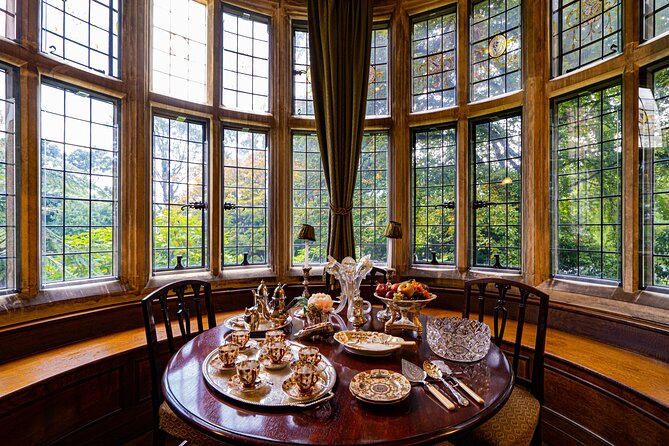
The visit begins at 42 Royal Terrace, just outside central Dunedin. Once inside, your guide leads the group through the principal rooms and explains the family story, the building, and the objects collected for it.
Although Olveston contains 35 rooms, the public visit covers more than 13 key rooms. That is enough to give you a strong sense of the home without turning the tour into an exhausting march from doorway to doorway. The smaller group size, capped at 15 people, matters here. You can hear the guide and stop to ask about details that catch your eye.
The strongest guides make the home feel personal. Kevin and Kay are among the guides associated with especially warm and engaging visits, and the guiding style is generally described as friendly, clear, and willing to answer questions. The best part of this approach is that the house does not become a lecture about dates and architects. The family’s daily life remains at the centre.
Expect a tour with a good amount of spoken explanation. If you prefer to walk silently and study objects alone, this may feel more structured than a standard museum visit. If you want to understand why the objects are there, the guided format is worth the small amount of scheduling it requires.
Jacobean design and Edwardian comfort
Sir Ernest George’s design gives Olveston a formal English character, but the interior is not simply old-fashioned. The house shows how technology and comfort were entering wealthy homes in the early 20th century.
Look beyond the major pieces. Heating, bathroom fittings, kitchen supplies, radiators, and towel arrangements can tell you as much as the paintings. They show a family interested in comfort and convenience, not just appearances. The house also reflects the confidence of Dunedin during the period when Otago’s wealth had grown from gold and commerce.
The architecture is worth attention, but you do not need to be an expert to enjoy it. Your guide will point out the features that make the building distinctive. The practical details are often the easiest way to connect with the past because they answer familiar questions: How did people heat the house? What did they use in the kitchen? How did a bathroom work? What did comfort mean in 1906?
Art, ceramics, and objects collected around the world
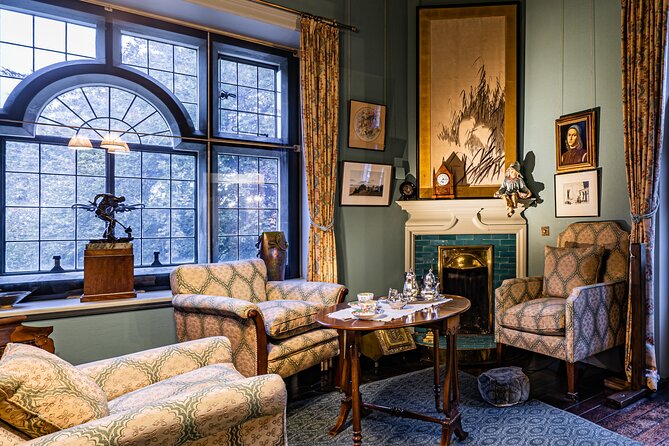
Olveston’s collections are one of its major reasons to visit. The house contains Japanese ceramics, rare 15th-century Italian paintings, fine furniture, and decorative objects from different parts of the world.
The Japanese ceramics are particularly useful for understanding the family’s taste and international outlook. They are not presented as isolated gallery pieces. You see them in the setting for which they were acquired, among furniture and objects used in a private home.
The Italian paintings add another layer. Their age and rarity can easily become the headline, but the guide’s explanation helps connect them to the family’s collecting habits and the role art played in a prosperous household. You can also look for the less famous items. A travel object, domestic tool, or piece of furniture may reveal how the family travelled, entertained, and arranged its daily life.
Give yourself time to look up, down, and across each room. Period houses reward slow attention. The important detail may be a light fitting, a fireplace, a fabric, or a household object rather than the largest painting.
Photography requires permission, so do not arrive expecting to photograph every room. This protects the interiors and original floor coverings, but it also means you should plan to enjoy the visit with your eyes rather than through a phone screen. Stiletto heels are not permitted because they can damage the wooden floors and floor coverings.
Same corner of the country, a completely different day out:
- Larnach Castle and Gardens Admission Ticket
★ 4.5 · 279 reviews - Dunedin Shore Excursion: Small-Group Tour of Dunedin and the Otago Peninsula
★ 4.5 · 270 reviews - Dunedin: Wildlife and Penguin Tour
★ 4.6 · 239 reviews - Otago Peninsula Wildlife Cruise with Monarch
★ 4.5 · 227 reviews
The Theomin family story

Olveston becomes more interesting when you connect the house to the family who lived there. This was the home of a prominent merchant family in Dunedin, and the building reflects both their success and their wide interests.
The fact that the house stayed with the original family before being given to Dunedin is important. You are not looking at a later reconstruction assembled from unrelated period pieces. The furnishings and objects belonged to the household, which gives the tour an unusual sense of continuity.
The family story also helps explain the house’s scale. A 35-room mansion can seem excessive when viewed only as architecture. Once you understand its role as a family home, a place for entertaining, and a setting for displaying art collected on long journeys, the rooms begin to make more sense.
The guide also places Olveston in Dunedin’s wider story. This was Otago’s major town, shaped by commerce, gold, and ambitious building. The home shows what success looked like at the upper end of that society, while the household details give you a glimpse of ordinary routines within an extraordinary setting.
One acre of garden and views over Dunedin
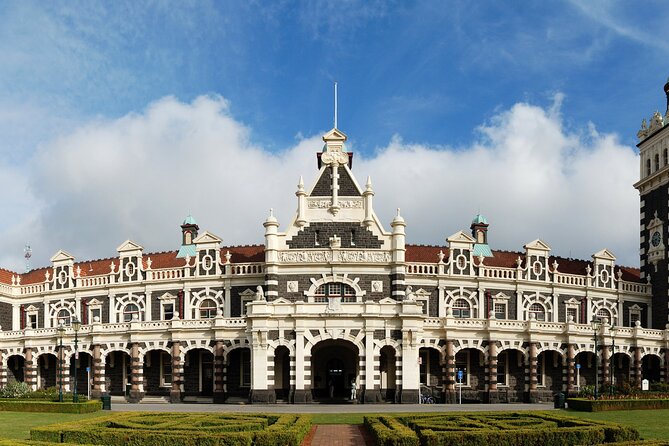
After the guided portion, you are free to explore the grounds. The garden covers about one acre and has National Significance, so do not rush straight back to town.
The garden offers a change of pace after the detailed indoor tour. You can walk around without following a guide, study the planting and layout, and take in views over Dunedin and Otago Harbour. The grounds also give you a chance to consider the house from outside, where its scale and setting are easier to appreciate.
Look for the restored Fiat 510 Tourer, purchased by the family in 1922. It is a small but memorable link between the elegant house and the changing world beyond it. The car also adds a human touch to the visit. The family was not frozen in 1906. They continued to adopt new forms of travel and modern living.
The garden is intimate rather than a huge park, so it works best as a pleasant extension to the house visit. If you enjoy gardens, allow extra time. If you are mainly interested in architecture, you can still make a worthwhile circuit before visiting the gift shop.
Is the $16.13 price good value?
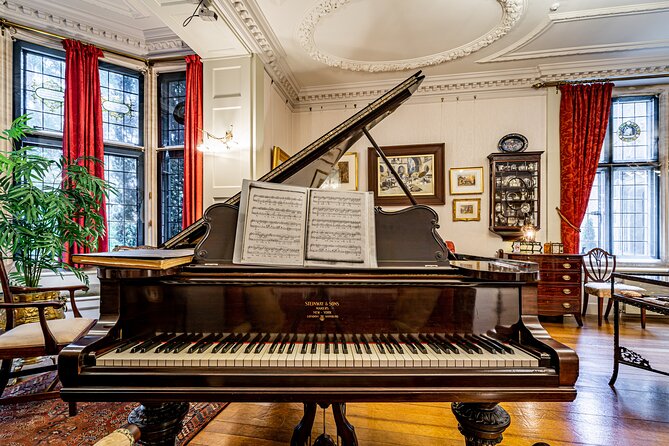
At $16.13 per person, this is one of the easier Dunedin heritage visits to justify. The fee includes admission and a local guide, and you receive access to a preserved home with original contents, art, a major collection of household objects, and a significant garden.
The value comes from the context. A cheaper or free visit without explanation might let you see the rooms, but it would not necessarily explain the family’s travels, the design choices, or the importance of the furnishings. Here, the guide does much of the interpretive work.
The tour is also a manageable length. A visit of about an hour, or roughly 1 hour 15 minutes when you include the full scheduled experience, fits neatly into a day of sightseeing in Dunedin. It is long enough to feel substantial but short enough to combine with other city activities.
Prebooking is sensible because spaces are limited. The maximum group size is 15, and the experience had been booked frequently in the previous week. You can cancel for a full refund up to 24 hours before the start time, which gives you some flexibility if your plans change.
Getting there and practical points
The meeting point is 42 Royal Terrace in central Dunedin, and the tour ends at the same place. Hotel pickup and drop-off are not included, so you need to make your own way there.
The house is near public transport, but the approach can involve a steep hill. This is the main practical concern for anyone with mobility issues. Most people can take part, and no health restrictions are listed, but the incline is worth considering before you book.
Wear sensible shoes. The no-stiletto rule protects the original floors, and comfortable footwear will also help on the approach and around the garden. A mobile ticket is accepted, so you can keep the booking on your phone.
The gift shop is well stocked and includes locally made items. It is a useful final stop if you want a small Dunedin keepsake rather than a generic souvenir.
Who will enjoy Olveston most?
I would recommend this tour to anyone interested in historic houses, architecture, art, domestic technology, or the social story of Dunedin. It also works well for people who normally find grand homes a little lifeless. The original contents give Olveston more personality than a house filled with replacement furniture.
Families can enjoy it if children are willing to listen and look carefully, though the guided format is more suitable for children with an interest in old houses and objects than for those who need constant activity. The garden provides a useful break after the indoor route.
Cruise passengers and anyone with a half day in Dunedin should find the timing convenient. You get a focused heritage experience without committing to a full-day excursion. It is also a good choice if you want something indoors that still connects you with the city’s past.
I would be less enthusiastic if your priority is photography. Permission is required, and the visit is built around listening and observation. You should also think twice if a steep approach or extended standing is difficult for you.
Should you book Olveston Historic Home?
Book it if you want to see how a wealthy Dunedin family actually lived, not just admire an old façade. The combination of original furnishings, international collections, practical Edwardian details, a small guided group, and a garden walk gives you plenty for the price.
Go with enough time to ask questions and inspect the less obvious objects. The paintings and ceramics are impressive, but the bathroom fittings, kitchen equipment, radiators, and family car may be what you remember later.
Skip it only if you dislike guided house tours, need unrestricted photography, or cannot manage the hill to Royal Terrace. For most people interested in Dunedin’s architecture and past, Olveston is a compact, well-priced visit with far more substance than its one-hour format suggests.
FAQ
How long does the Olveston Historic Home tour take?
The experience lasts about one hour, with the scheduled visit listed as approximately 1 hour 15 minutes. This includes the guided house visit and time to enjoy the garden afterward.
What is included in the ticket?
Admission to Olveston Historic Home and a local guide are included. Hotel pickup and drop-off are not included.
How many people can join each tour?
Each tour has a maximum of 15 participants. This small group size helps you hear the guide and ask questions during the visit.
Can I explore the garden after the guided tour?
Yes. After the guided house visit, you have free time to explore the one-acre garden and grounds at your own pace.
Are photographs allowed inside Olveston?
Photography inside requires permission. Visitors are also asked not to wear stiletto heels because they can damage the wooden floors and original floor coverings.
Is Olveston accessible by public transport?
The home is near public transportation. The approach includes a steep hill, so anyone with mobility concerns should take that into account before booking.
Just added around Dunedin
- Otago Peninsula Scenery and Dunedin City Highlights Tour★ 4.5 · 33 reviews
- Clearwater Private Penguin & Wildlife Tour from Port Otago (5hrs)★ 5.0 · 7 reviews
- Shore Excursion: Dunedin City, Otago Peninsula, Castle Gardens & Olveston Tour★ 5.0 · 81 reviews
- Castle, Coast & City Tour – 8 pax max – Castle Entrance Included★ 5.0 · 102 reviews
- Dunedin Nature & City Tour – Full Day Cruise Excursion★ 4.5 · 87 reviews
- Iconic Wildlife Tour with Yellow Eyed Penguins & Royal Albatross★ 4.5 · 33 reviews
- Harbour, Albatross and Wildlife Cruise on Otago Harbour★ 4.5 · 22 reviews
- Dunedin Shore Excursion – Sightseeing, Larnach Castle, Chinese Garden & Museum★ 3.5 · 13 reviews
Historical Tours, compared.


All Blacks Experience: Interactive Guided Cultural Tour
Read our review →
Skippers Canyon 4WD Heritage half day Tour from Queenstown
Read our review →
Scenic Cruise & Guided Walk on Historic Motor Yacht Lake Te Anau
Read our review →
Skip the Line:WWI & WWII Combo Exhibitions at the Omaka Aviation Heritage Centre
Read our review →
Heritage City and Larnach Castle Van tour with Historian Guide
Read our review →

Browse the lists this tour appears in