
Reviewed · OTAGO PENINSULA WILDLIFE TOURS
Guided Evening Penguin Viewing Otago Peninsula, Dunedin, New Zealand
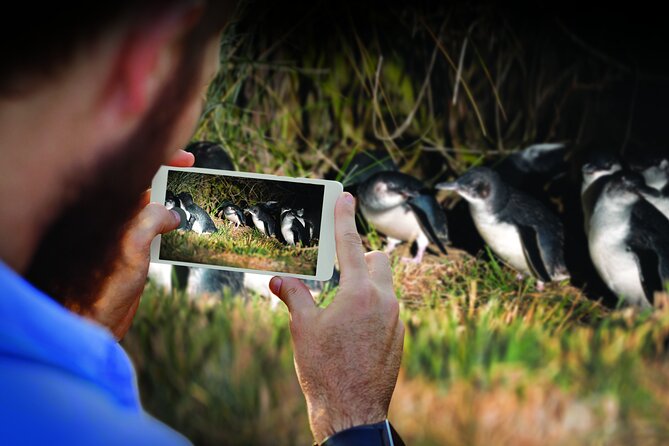
At dusk, little blue penguins come ashore at Otago Peninsula’s largest penguin colony and hurry past the viewing platform only a few metres away. You watch from an open platform rather than chasing them across the beach, so the penguins keep to their routine while you get an unusually close look.
I like the excellent viewing design, which lets the staff move groups around the platform so everyone gets a fair angle. I also like the biologist and conservation-focused guidance, which puts the penguins into context instead of treating them as a quick photo stop. The main catch is the weather: this exposed headland can be cold, wet, and very windy, even when Dunedin feels mild.
Quick takeaways for your evening
- Up to 200 little blue penguins: Numbers are generally higher in summer, while February through August can bring about 10 to 80 penguins on a night.
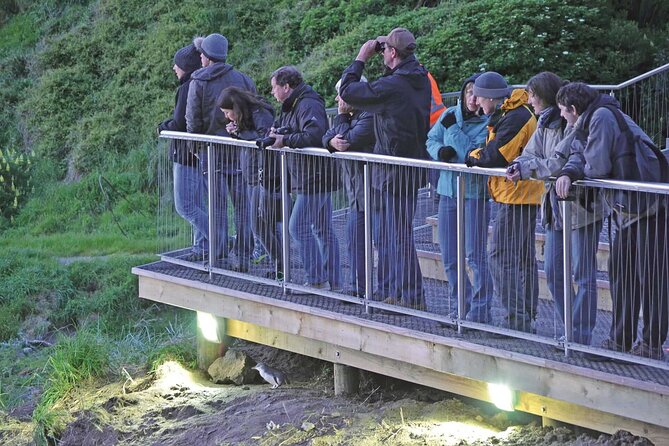
- Very close viewing: Penguins may pass just a few metres from the open platform, with no flash photography allowed.
- A useful opening talk: The experience begins with local Māori and European history, followed by information about penguin behavior, life cycles, and conservation.
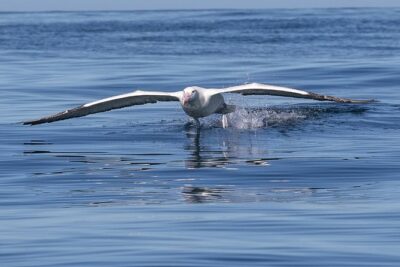
- Wildlife beyond penguins: Keep watch for fur seals, sea lions, and albatross around the coast.
- Self-drive only: No transport is included, so you must reach Blue Penguins Pukekura at 1245 Harington Point Road.
- Prepare for a chilly wait: Wear warm, windproof layers and bring a rain jacket. Umbrellas are not allowed.
Why the penguin return is worth the wait
The main event is simple and memorable. After a day at sea, little blue penguins gather offshore, then arrive in small groups and hurry up the beach toward their nesting areas. The sight is less like a staged show and more like watching a daily wildlife routine unfold.
That difference matters. You cannot order the penguins to appear, and the guides cannot promise a set number. Some nights may bring only a small group. At the best time of year, though, you may see well over 100, with the published maximum reaching about 200.
The penguins move quickly, so the viewing platform is important. You are not standing in one fixed line behind a distant railing. Staff rotate groups around the platform, helping people see the penguins from different angles. This also prevents the front viewing spots from being claimed by the first people who arrive.
The platform sits above an area with penguin boxes and nesting sites. Penguins can pass beneath or beside the viewing area, giving you a close view without requiring anyone to walk onto the beach. That setup is one of the strongest reasons to choose this experience.
More albatross and penguin watching on the peninsula:
- Clearwater Wildlife Tours (small group 10max) Otago Peninsula
★ 5.0 · 531 reviews - Dunedin Shore Excursion: Small-Group Tour of Dunedin and the Otago Peninsula
★ 4.5 · 270 reviews - Dunedin: Wildlife and Penguin Tour
★ 4.6 · 239 reviews
The 30-minute introduction at Blue Penguins Pukekura
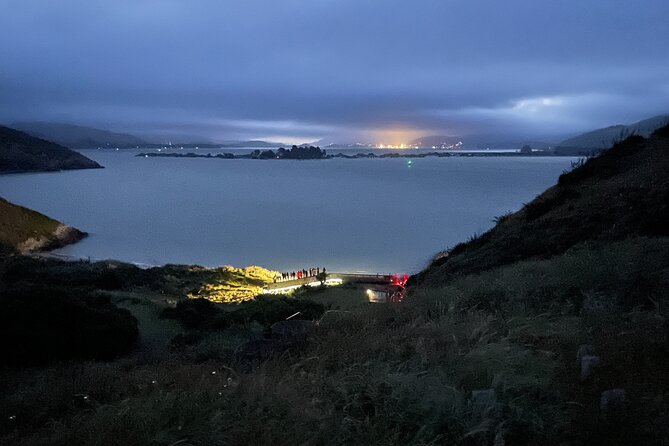
The evening starts with an introduction to the headland’s human history. You learn about Māori occupation before European arrival, then turn to the penguins and the coastal environment that supports them.
The talk covers the penguins’ life cycle, behavior, and survival. Guides explain what you are likely to see once the penguins come ashore, which helps you understand the pauses, group movements, and sudden bursts up the beach.
Some visitors may find the presentation a little long, particularly because the viewing happens late and the drive back to Dunedin takes place after dark. I think the information earns its place, especially if you are interested in conservation rather than just taking a quick photograph. Still, if you want an instant wildlife encounter with no introduction, this is not that sort of outing.
The staff are a major part of the experience. Leon, Shane, and the wider team are described as engaging, friendly, and passionate about their work. Guides answer questions when they are free, although there is not always a formal question-and-answer period after the talk.
Walking the 300 metres to the viewing platform
After the introduction, you walk about 300 metres along a gravel path and boardwalk. The route includes more than 60 built-in steps, so you need to walk unaided and feel comfortable on an uneven outdoor path.
The distance is short, but the steps matter more than the number of metres. Wear steady shoes and take care in wet conditions. The activity is suitable for most people who can walk independently, but it is not a fully flat, easy-access viewing stop.
The route leads to an open platform overlooking the penguin return area. It is not an enclosed theater, so wind and rain reach you directly. That gives you a more natural setting, but it also means you should dress for the coast, not for central Dunedin.
You cannot use an umbrella. Bring a proper rain jacket instead. A warm hat, gloves, and windproof outer layer are sensible choices, especially in spring and on evenings with strong coastal wind. Several visitors found the conditions much colder than expected because the headland is more exposed than downtown.
Watching the little blue penguins arrive
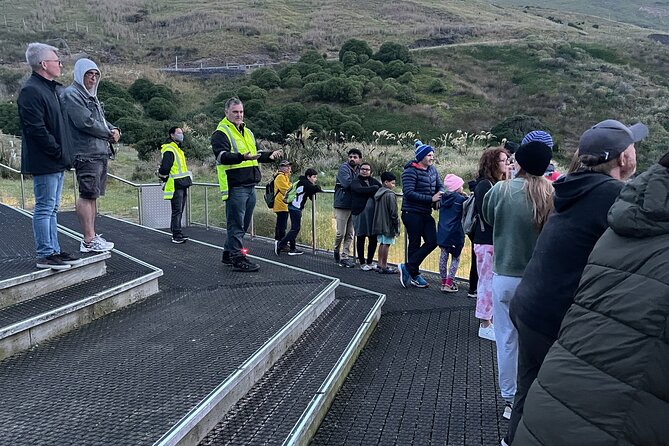
Once you reach the platform, patience becomes part of the experience. The staff watch for groups, sometimes called rafts, coming out of the water and let you know when penguins are approaching.
You may see a few at first, or a steady stream of small birds making their way up the beach. The penguins are tiny, and the low light can make them difficult to spot at a distance. The platform lighting is arranged to help you see them while keeping the focus on the penguins’ movement toward their nests.
The staff rotate people around the platform as different groups arrive. This is especially helpful for anyone standing toward the back. You can also move around to see the penguins from different angles, within the areas directed by the guides.
The closeness is the surprise. A penguin may waddle past only a few metres away, then disappear under the deck or continue toward its nesting area. You are close enough to notice the determined little march, but the viewing arrangement avoids the awkward feeling of being placed directly in the animals’ path.
A few more Dunedin half-days to weigh up
- Speight’s Brewery Tour & Guided Tasting
★ 5.0 · 508 reviews - Larnach Castle and Gardens Admission Ticket
★ 4.5 · 279 reviews - Otago Peninsula Wildlife Cruise with Monarch
★ 4.5 · 227 reviews - Shore Excursion: V8 Trike, Peninsula and City Tour
★ 5.0 · 207 reviews
Photography without flash
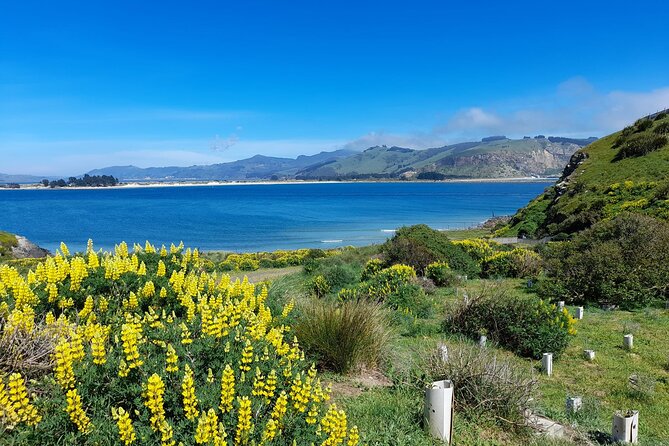
Photography is allowed, which is a real advantage for people who want a record of the evening. Flash is not allowed, and that rule protects the penguins from sudden bright light as they come ashore.
Do not expect every photograph to be sharp. It is dark, the penguins move quickly, and the viewing platform may be busy. A phone can record the atmosphere, but your best memories may come from watching the penguins rather than trying to capture every one.
The ability to move around the platform gives you more than one photo angle. Staff also help groups rotate, so you are not stuck with a single obstructed view. Keep your camera ready, but avoid letting it distract you from the wildlife.
Fur seals, sea lions, and albatross
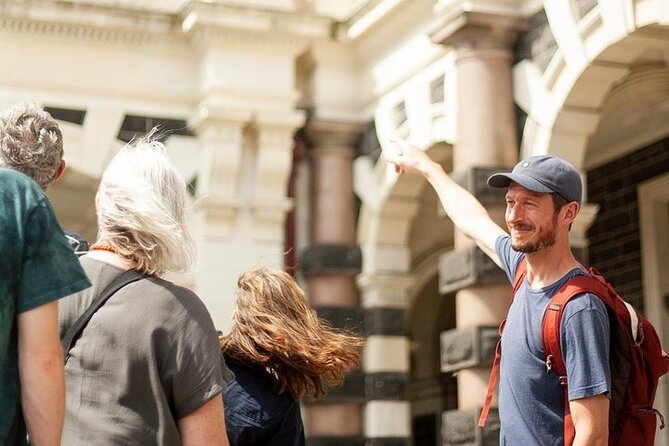
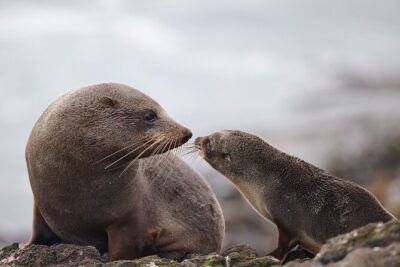
The penguins are the reason to book, but the coast can offer more. Look out for fur seals, sea lions, and albatross in the surrounding area.
Sightings are not guaranteed, and this is not a separate marine wildlife tour. Still, the setting gives you a chance to notice what else is moving around the shoreline. One evening included sea lions roughhousing near the surf while about 100 penguins made their way past, a reminder that the penguin return is only part of the local wildlife scene.
The guides can add useful local observations, particularly if other animals are active that night. Keep your attention on the water and shoreline while you wait.
When should you visit?
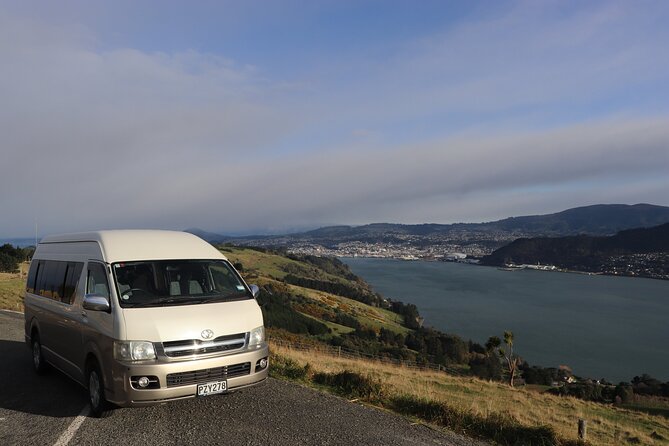
Penguin numbers change with the season. The experience can see up to 200 little blue penguins, but summer generally brings more arrivals than winter.
From February through August, the expected number is about 10 to 80 penguins per night. That is a wide range, and nature does not follow a booking schedule. If seeing a very large group is your top goal, the warmer breeding months offer better odds.
November can be appealing if you hope to see chicks. Young penguins may be visible around nesting areas, though you should treat this as a possibility rather than a guarantee.
The evening also changes with the weather. Spring can still be cold and wet, and wind on the peninsula can make the temperature feel much lower than the forecast for Dunedin. Check your clothing before leaving town. Warm layers are not optional here.
Getting there after dark
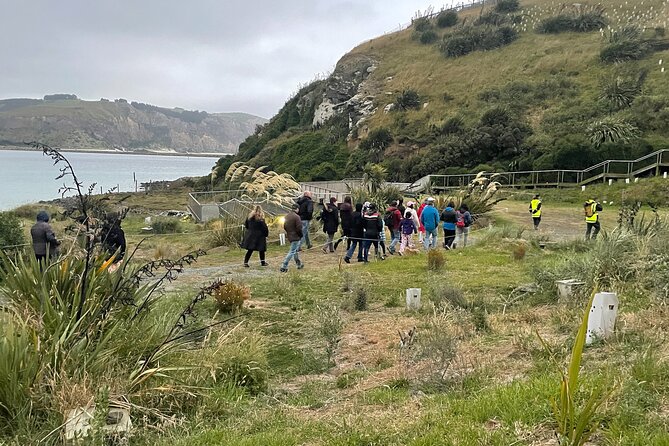
You must drive yourself to Blue Penguins Pukekura, 1245 Harington Point Road, Harington Point. Transport is not included with this tour option, so it suits people with their own rental car or other independent transport.
The road can feel unfamiliar at night, particularly if you are not used to New Zealand roads. Allow enough time to arrive without rushing, and take care on the return journey. One practical issue is that the reserve facilities close after the outdoor viewing, and parking or exit lighting may not be as obvious as you would like.
There are hot drinks such as coffee and hot chocolate available while you observe the penguins. They may be welcome on a cold evening, but eat dinner before you arrive because this is a late outdoor activity and the drinks are not a substitute for a meal.
The tour ends back at the meeting point. Since you return to your car after dark, keep your phone light handy and make sure you know where you parked.
Is $34.13 good value?
At $34.13 per person, this is a modestly priced wildlife experience for a 90-minute guided session. The cost includes all fees and taxes, and the money supports the reserve’s penguin work.
You are paying for more than a short look at birds. The price covers the introductory talk, guide supervision, managed platform viewing, and the care taken to keep people from disturbing the penguins. The close viewing can be especially good value compared with a distant roadside sighting where you may see nothing.
The tradeoff is that you arrange your own transport and accept the uncertainty of wild animals. You may see dozens, or you may see a much smaller number. If fewer than five penguins are seen, the Viator booking terms provide a 30 percent refund, which is less than the 50 percent refund available when booking directly with the provider.
The activity is also weather-dependent. If poor weather causes cancellation, you are offered another date or a full refund. For a wildlife outing on an exposed coast, that policy is useful protection.
Group size and comfort
The maximum group size is 75 people. That is not an intimate private tour, but the rotating system helps spread people around the platform and gives everyone a chance to see the penguins.
The open platform allows more movement than a single narrow viewing line. Staff help organize the flow, call attention to approaching groups, and answer questions when possible. The experience works best when you follow their directions and avoid crowding the front.
There are practical comfort limits. You stand outside for much of the viewing period, and the walk includes gravel, a boardwalk, and over 60 steps. Anyone who needs step-free access or regular assistance should consider the physical demands before booking.
Who will enjoy this experience most?
I would choose this tour if you care about wild animals, birdlife, and conservation, and if you are happy to wait quietly for nature to cooperate. Families with older children may enjoy the penguins’ quick march, while photographers will appreciate the permission to take pictures without flash.
It is also a good fit for anyone who wants a short, focused evening rather than a full-day Otago Peninsula trip. The guides provide local context, but the tour does not attempt to cover every major peninsula sight.
You may want another option if you do not have a car, dislike late-night driving, or struggle with steps and uneven paths. The provider offers a separate tour option with transport, so check that choice if self-driving is a problem.
Small details that make the evening better
Plan to arrive in warm clothing from the start. A coat that feels fine in town may not be enough on the headland, especially when the wind rises.
Bring a rain jacket even if the evening looks clear. Umbrellas are not permitted, and wet weather can arrive quickly on the exposed coast.
Eat beforehand, then use the hot drinks as a warm-up rather than relying on them for dinner. Keep your camera ready, but turn off the flash and give yourself time to watch without looking through a screen.
Finally, accept that the penguins control the schedule. The wait is part of seeing wildlife in a respectful setting. The reward is a close view of tiny birds returning home on their own terms.
Should you book the Otago Peninsula penguin tour?
Yes, if your Dunedin plans include a self-drive evening on the Otago Peninsula and you want one of the closest opportunities to see little blue penguins without disturbing them. The strong points are the open platform, fair viewing rotation, clear conservation talk, and enthusiastic staff such as Leon and Shane.
Book with realistic expectations. You need warm, windproof clothing, a rain jacket, steady walking ability, and patience. Penguin numbers vary, and winter can be much quieter than summer. If those conditions suit you, $34.13 buys an unusually personal wildlife encounter and a useful introduction to this remarkable corner of Dunedin.
FAQ
How long does the penguin viewing experience last?
The tour lasts approximately 1 hour and 30 minutes.
Where does the tour start and finish?
It starts and finishes at Blue Penguins Pukekura, 1245 Harington Point Road, Harington Point, New Zealand.
Is transportation included?
No. This tour option is for people with their own transport. If you do not have a car, the provider offers another option that includes transport.
How many penguins might I see?
The colony can receive up to 200 little blue penguins. From February through August, the expected number is about 10 to 80 per night, with more usually seen during summer.
Can I take photographs?
Yes. Photography is allowed, but you must not use flash.
How close can I get to the penguins?
The penguins may pass just a few metres from the open viewing platform. You watch them from the designated platform and do not approach them on the beach.
Is the tour suitable for people with limited mobility?
You must be able to walk unaided. The route includes a 300-metre walk on a gravel path and boardwalk with more than 60 built-in steps.
What should I wear if the weather is wet?
Bring a rain jacket and warm, windproof clothing. Umbrellas are not allowed.
Are other animals visible?
You might see fur seals, sea lions, and albatross around the coastal area, although sightings are not guaranteed.
What happens if the weather cancels the tour?
If poor weather causes cancellation, you are offered a different date or a full refund. You can also cancel up to 24 hours before the start time for a full refund.
More Evening Tours in Dunedin
- Oamaru: Penguins Evening Viewing Ticket
★ 4.5 · 682 reviews - Tauranga: Evening Glowworm Kayak Tour
★ 5.0 · 311 reviews - Auckland: Night Kayak Tour in Glowing Bioluminescent Waters
★ 4.9 · 259 reviews - Tauranga: Evening Glowworm Kayak Tour
★ 4.8 · 206 reviews
Just added around Dunedin
- Otago Peninsula Scenery and Dunedin City Highlights Tour★ 4.5 · 33 reviews
- Clearwater Private Penguin & Wildlife Tour from Port Otago (5hrs)★ 5.0 · 7 reviews
- Castle, Coast & City Tour – 8 pax max – Castle Entrance Included★ 5.0 · 102 reviews
- Dunedin Nature & City Tour – Full Day Cruise Excursion★ 4.5 · 87 reviews
- Shore Excursion: Dunedin City, Otago Peninsula, Castle Gardens & Olveston Tour★ 5.0 · 81 reviews
- Iconic Wildlife Tour with Yellow Eyed Penguins & Royal Albatross★ 4.5 · 33 reviews
- Harbour, Albatross and Wildlife Cruise on Otago Harbour★ 4.5 · 22 reviews
- City Highlights, Larnach Castle & Peninsula Views★ 5.0 · 77 reviews
Otago Peninsula Wildlife Tours, compared.
Clearwater Wildlife Tours (small group 10max) Otago Peninsula
Read our review →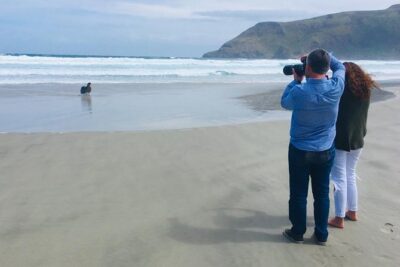
Dunedin Shore Excursion: Small-Group Tour of Dunedin and the Otago Peninsula
Read our review →
Albatross, seals, and sea birds-Wildlife Cruise
Read our review →
Otago Peninsula In-Depth Tour & Blue Penguins Pukekura Experience
Read our review →
Dunedin Wildlife Cruise-Albatross, seals and harbour
Read our review →
Shore Excursion: Dunedin City, Otago Peninsula, Castle Gardens & Olveston Tour
Read our review →Browse the lists this tour appears in