
Reviewed · CANOES & KAYAKS
Akaroa: Akaroa Marine Reserve Sea Kayaking Tour
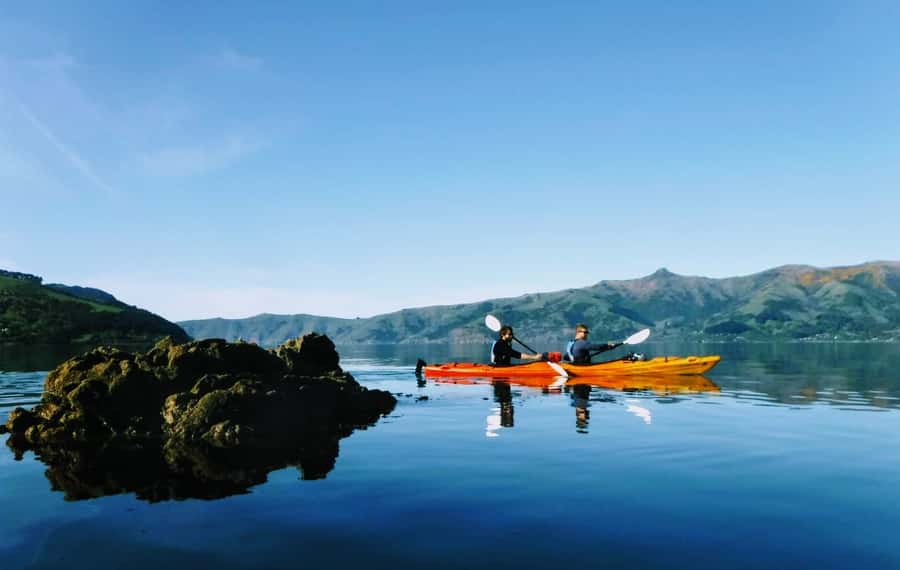
Akaroa Harbour is a sea-flooded volcanic crater, and a kayak gives you the best seat for seeing its cliffs, quiet bays, caves, and clear water. I like the small groups of no more than eight, plus the chance to meet Hector dolphins, fur seals, penguins, and sea birds at water level.
I also like the strong guiding. Guides including Alex, Lucia, Max, William, and Thomas have been praised for clear safety help, good local stories, and patient support for nervous paddlers. The catch is simple: you must paddle, and wind can make the return trip tiring. Wildlife is common in season, but no sighting is promised.
Key things to know before you book
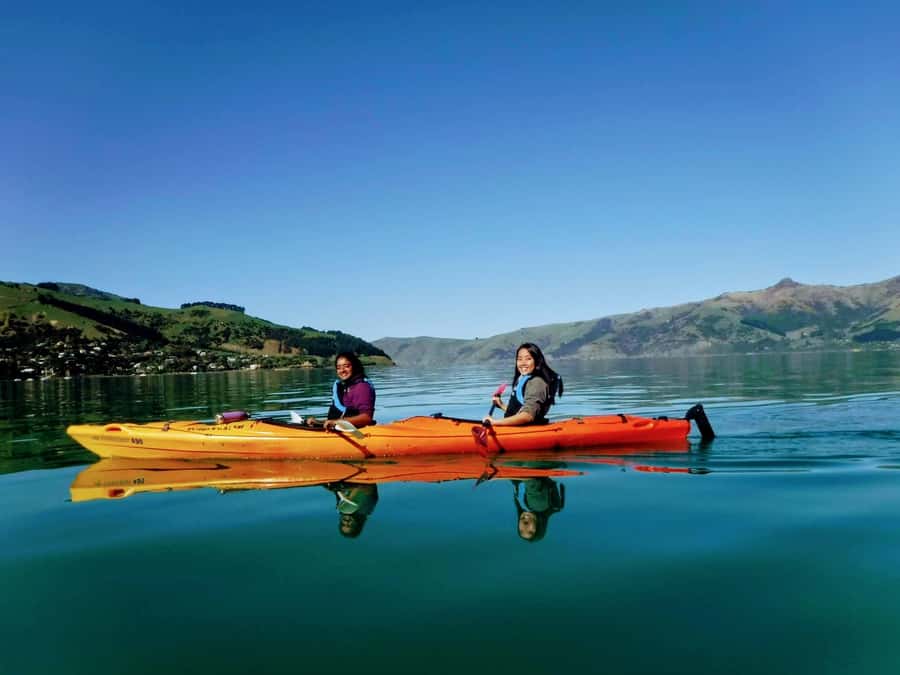
- You paddle through an extinct volcanic crater: Akaroa Harbour is the flooded core of an old volcano, with striking rock walls and sheltered inlets.
- The guide-to-guest ratio is excellent: One guide leads a maximum of eight people, keeping the outing personal and easier to manage.
- Wildlife is possible, not guaranteed: Hector dolphins, white-flippered penguins, fur seals, and birdlife may appear during the kayaking season.
- The outing lasts 150 minutes: Allow two and a half hours for instruction, paddling, wildlife watching, and returning to shore.
- The kayaks are stable and suitable for all abilities: You still need some arm strength, and wind or waves can add work.
- The price is $80 per person: That includes the kayak, gear, instruction, safety briefing, guide, and photos.
Why Akaroa Harbour is best seen from a kayak
Akaroa sits about 80 minutes from Christchurch, but it feels far removed from the city. The harbour reaches into the old volcanic crater, creating a broad waterway with smaller bays, rocky features, and sheltered corners. From a road or lookout, you see the shape of the harbour. From a kayak, you are down at the water, moving through it under your own power.
That change in viewpoint matters. You can watch the cliffs rise from the water, paddle into quiet inlets, and look closely at caves and other coastal features. The pace is slow enough for your guide to point out geology and wildlife without turning the trip into a rushed sightseeing circuit.
The water is described as turquoise, though its appearance will depend on weather and light. The main appeal is not one single photo stop. It is the steady sequence of open harbour views, narrow bays, rock formations, and fresh air.
This is also a marine reserve, so the setting has more than scenic value. The area supports rare marine mammals and a wide range of birds. The tour is designed to leave a small impact, making a paddle-powered visit a sensible way to see this fragile coastal environment.
More Kayaking Trips in Akaroa
- Shore Excursion Guided Sea Kayaking through Akaroa Marine Reserve
★ 5.0 · 160 reviews - Sunrise wildlife sea kayaking in Akaroa marine reserve
★ 5.0 · 123 reviews - Akaroa: 4WD Safari and Guided Sea-Kayaking Experience
★ 4.8 · 120 reviews
Meeting your guide opposite the bowling club
The meeting point is opposite the bowling club, at the picnic benches on the grass. That is useful to know because you are not heading to a large terminal or waiting for a coach. You meet on land, receive your equipment and instructions, then get ready for the water.
A guide leads each group, with a maximum of eight people per guide. That limit is one of the strongest features of the trip. A guide can keep an eye on individual paddlers, answer questions, and offer extra help when the group includes mixed ages or abilities.
The guides also add much of the character. Alex has been praised for combining wildlife information with an easygoing manner. Max is noted for taking a small group around the bay while keeping the mood friendly and relaxed. Lucia has been praised for calm instruction and dolphin watching, while William helped nervous paddlers feel secure around the water.
You may not get a particular guide, but the pattern is clear: the experience depends heavily on personal attention and local knowledge. The guides discuss wildlife, geology, and the history of the area as you move along, so the outing is more than a rental kayak with a map.
Getting comfortable in the kayak
The tour provides a safe, stable, comfortable sea kayak and all kayaking equipment. You also receive full instruction and a safety briefing before setting out. This is important if you have never kayaked before, or if you are uneasy about balancing on open water.
The equipment and coaching are aimed at all abilities. One nervous parent described being put at ease quickly, and another outing included clear instructions, individual help getting properly situated, and close attention from the guide throughout. That makes this a better choice for first-timers than an unguided paddle.
Still, do not mistake stable for effortless. You will use your arms and shoulders for much of the trip. One person described the activity as a good workout, while another called it a little tiring. If the wind rises, the trip back can include plenty of waves and extra effort.
Wear a light wind or rain jacket, even on a pleasant day. Bring a sun hat, sunscreen, and drinking water in a reusable bottle. Large bags and luggage are not allowed, so leave bulky belongings elsewhere.
The first paddle across the crater
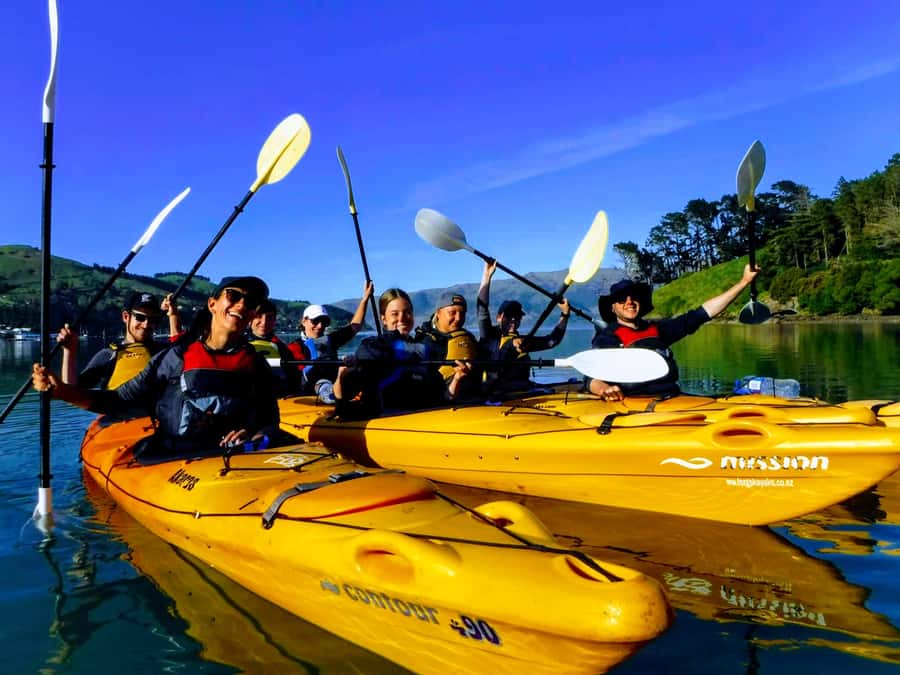
Once the group is ready, you paddle out into Akaroa Harbour. The first part gives you time to learn the rhythm of the kayak and settle into the water. Your guide can watch how everyone is managing and adjust the pace as needed.
This is where the small-group format pays off. You are not trying to keep up with a large fleet, and the guide can pause to explain what you are seeing. The outing balances movement with stops for scenery and wildlife, rather than asking you to paddle hard for the full 150 minutes.
The harbour’s volcanic origin gives the trip a clear sense of place. You are not simply kayaking along a generic shoreline. You are moving through the flooded remains of an extinct crater, with the surrounding land forming the walls and folds of that old volcanic structure.
Expect panoramic views, but remember that a kayak is exposed to weather. Calm conditions make the trip easy and reflective. Wind can change the feel of the outing quickly, especially on the return. April visitors have described a more exciting trip when wind created waves, with the guide offering encouragement along the way.
A few more Akaroa half-days to weigh up
- Akaroa Dolphins ~ Harbour Nature Cruise
★ 5.0 · 2,143 reviews - Akaroa: Dolphin Nature Cruise
★ 4.9 · 440 reviews - Akaroa Harbour Nature Cruise
★ 5.0 · 332 reviews - Swimming with Wild Dolphins in Akaroa
★ 4.5 · 261 reviews
Caves, bays, and coastal features
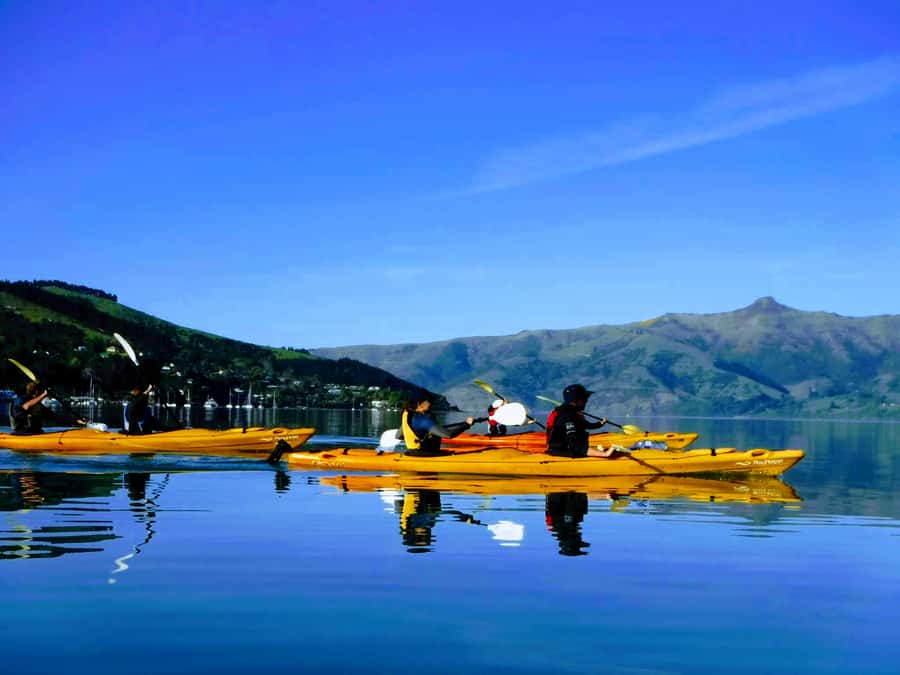
The route includes serene inlets and bays, along with caves and other features you can approach from the water. These details give the paddle variety. You might move through open water for a while, then angle toward a rocky edge or look into a cave.
The caves are not presented as a major underground expedition. They are short coastal features that add interest to the route and give you a reason to keep looking around. One outing included a couple of chances to see inside them, along with explanations of the area’s geology.
The best part is the combination of activity and observation. You are getting exercise, but you are also close enough to notice the shape of the rock, the movement of birds, and changes in the water. The guide helps connect those details to the natural setting.
Do not expect a rigid sightseeing list with every feature guaranteed. Wind, water conditions, wildlife activity, and group pace can affect where the kayak goes. The value is in the setting and the guide’s interpretation, not in checking off a fixed number of caves.
Wildlife watching at water level
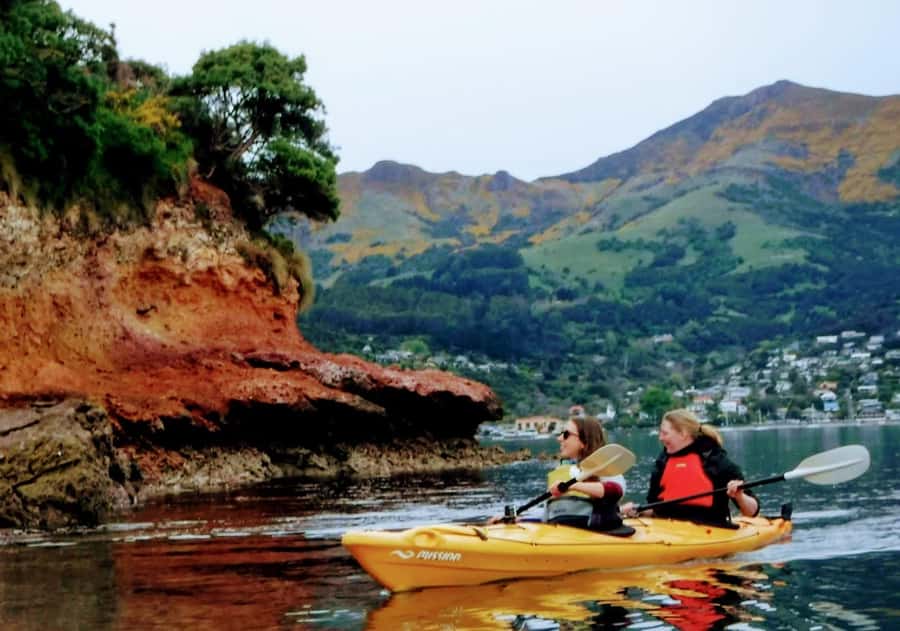
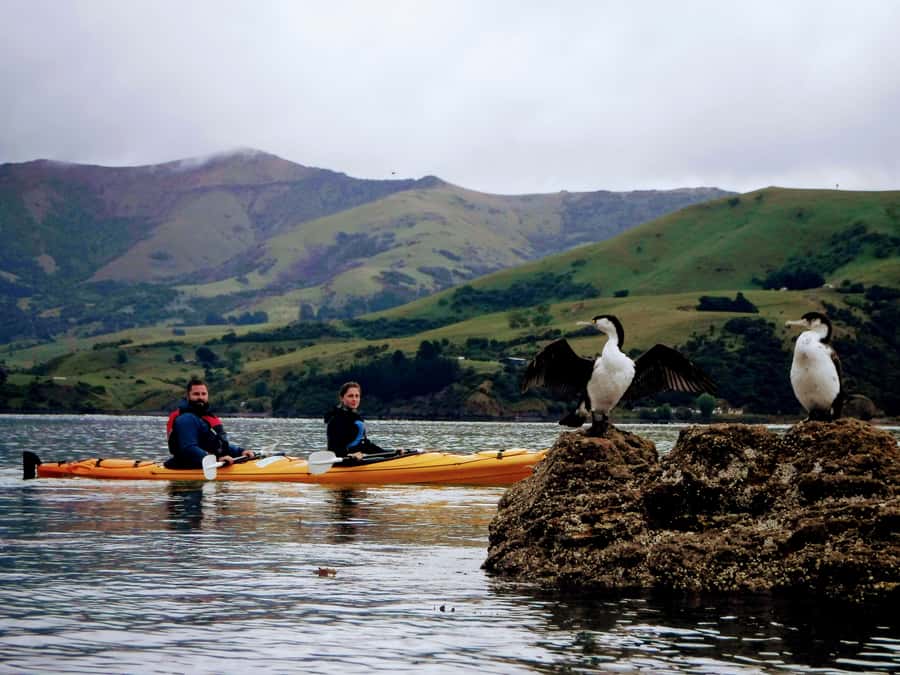
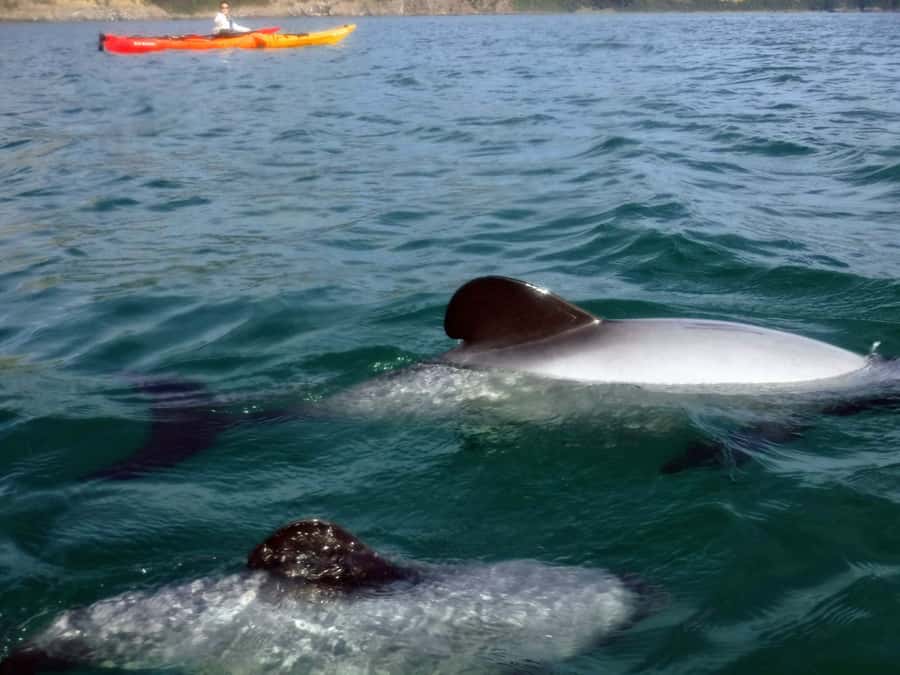
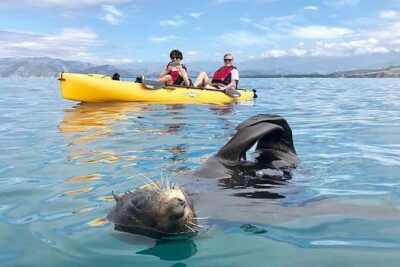
Akaroa is a strong place to look for wildlife, especially during the sea kayaking season. The possible sightings include Hector dolphins, which are native to New Zealand, white-flippered penguins, fur seals, many kinds of birds, and other sea life.
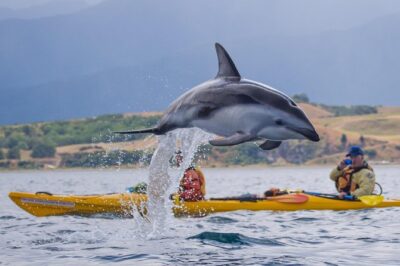
Hector dolphins are the headline sighting. They are small, rare marine mammals, and seeing one near a kayak can be an extraordinary moment. A particularly fortunate outing had dolphins swimming around the kayaks for an extended period, including one that surfaced between two boats.
That kind of encounter is possible, not part of a guarantee. Another outing had no wildlife sightings but still provided a good paddle through the crater and visits to coastal caves. You should book this for the harbour, geology, and guided experience first, with animals as a valuable bonus.
The kayak is a good platform for watching because it is quiet and low to the water. You are not surrounded by engine noise, and the guide can explain what you are seeing without breaking the mood. At the same time, wildlife can move away, remain hidden, or simply not appear during your time on the water.
How much paddling should you expect?
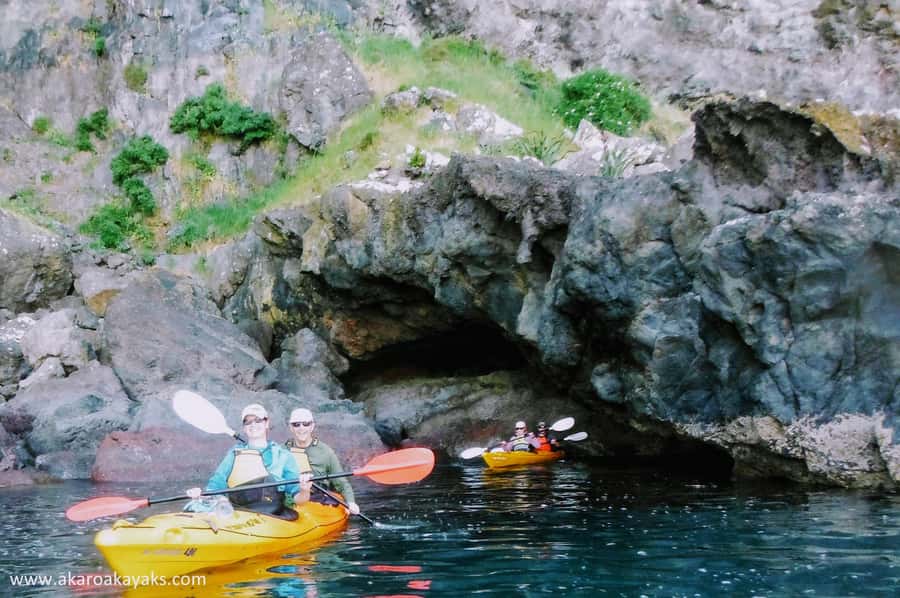
The tour runs for 150 minutes, or two and a half hours. That is long enough to feel like a proper outing rather than a quick introduction, but short enough to fit into a day in Akaroa or a day trip from Christchurch.
You should expect a moderate physical element. The kayaks are stable, and the trip is suitable for all abilities, but you will still paddle for much of the time. The work may feel light in calm water and more demanding when wind creates waves.
Your guide sets the pace for the group and offers instruction as needed. The presence of a guide is useful for people who are unsure about steering, coordinating strokes, or handling changing conditions. It also means you can focus on the scenery instead of working out the route.
If you want the least strenuous version of the experience, choose a day when conditions are settled if that choice is available. Bring water, protect yourself from the sun, and do not arrive expecting a passive cruise.
What the $80 price includes
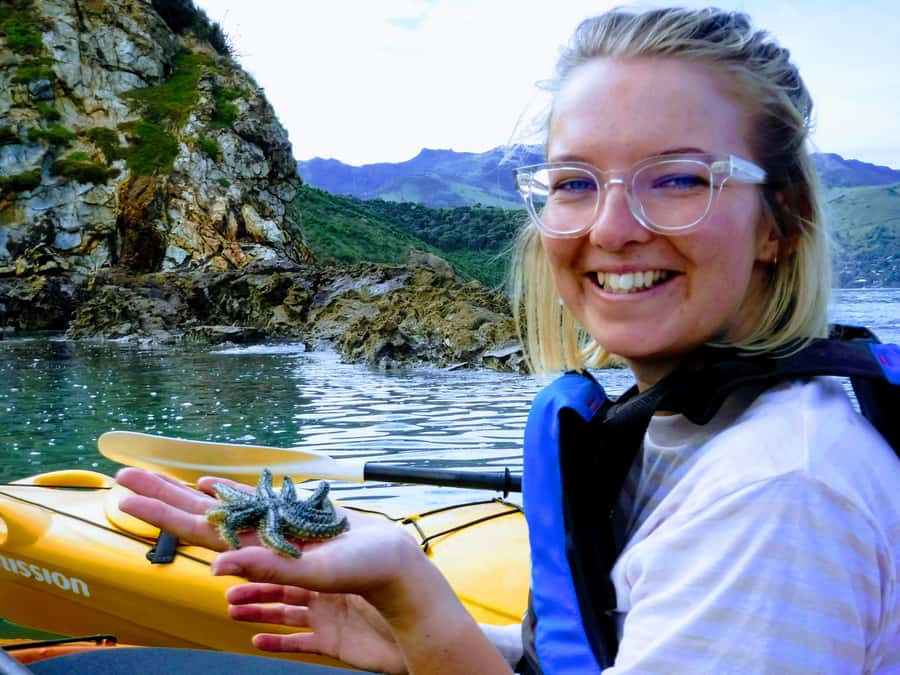
At $80 per person, this is fairly priced for a 2.5-hour guided sea kayaking trip. You are not paying only for time on the water. The cost includes a stable kayak, all kayaking gear, instruction, a safety briefing, a guide for up to eight people, and photos.
The guide-to-guest ratio is especially important when judging value. A large group could offer a lower price but less help with technique, safety, and wildlife interpretation. Here, one guide can pay attention to individual paddlers and keep the experience conversational.
The photos are another useful inclusion. You can enjoy the outing without keeping a phone in your hand, though the information provided does not specify how many photos you receive or how they are delivered.
The price looks strongest for people who want three things at once: exercise, scenery, and local nature information. If you only want a short, gentle boat ride, this is not the right product. If you want to explore under your own power with equipment and guidance supplied, the fee is reasonable.
Who will enjoy this trip most?
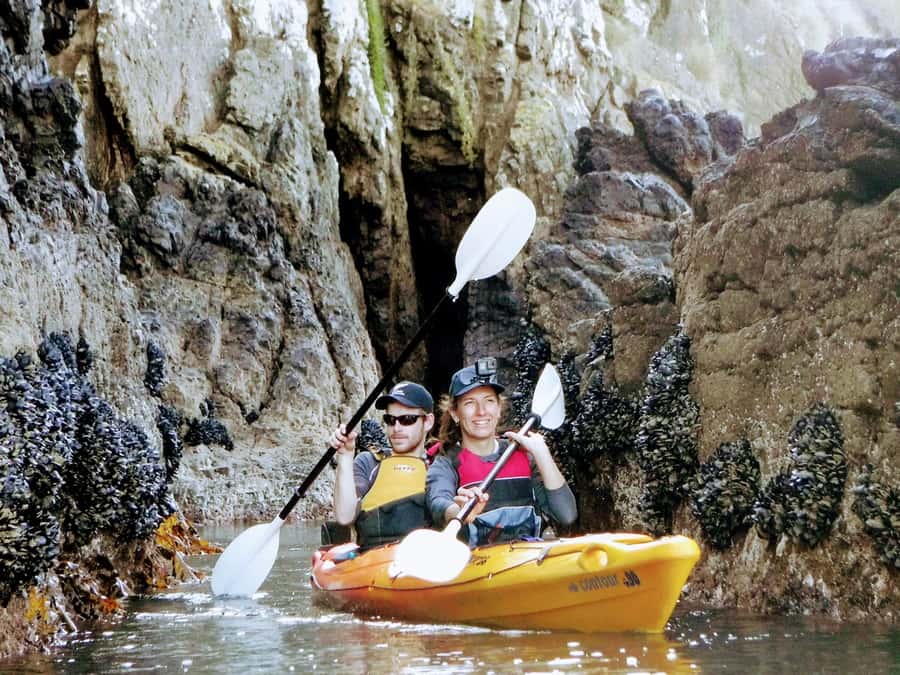
I would recommend it to first-time kayakers, active families, couples, and solo visitors who like small groups. The stable boats and patient instruction make the experience approachable, while the scenery gives experienced paddlers enough to enjoy.
It also suits people with limited time in Akaroa. Two and a half hours leaves room for other plans, and the meeting point is central enough to be practical for a visit to the town. The drive from Christchurch is about 80 minutes, so it can also fit into a wider day based there, though you should account for your own transport and schedule.
Families should consider each person’s comfort with paddling and open water. The activity is described as suitable for all abilities, but it is still physical. Children’s specific age rules are not provided, so check before booking if that matters for your group.
You might also choose this if you are nervous about kayaking. Guides have helped apprehensive participants feel safe, explained the equipment, and offered encouragement. That said, a person who cannot paddle or who wants to avoid any chance of wind and waves should choose a land-based activity instead.
Practical details that affect your day
The meeting point is the picnic benches on the grass opposite the bowling club in Akaroa. Bring a reusable water bottle, sunscreen, a hat, and a light wind or rain jacket. Large bags and luggage are not allowed, so pack only what you need for the water.
Tours are guided in English, Spanish, or French. The activity includes photos, but no other transport or meal is listed, so plan your route to and from Akaroa separately.
Free cancellation is available up to 24 hours before the start time for a full refund. You can also reserve and pay later, which helps if your South Island plans depend on weather or changing transport arrangements. Check the available starting times when booking.
The overall rating is 4.4 from 100 reviews, with strong praise for the scenery, guides, wildlife, safety help, and small groups. The less positive points are useful too: the paddling can be tiring, the return can become wavy in wind, and wildlife may not appear.
Should you book the Akaroa kayak tour?
Book it if you want to see Akaroa Harbour from the water, enjoy a real but manageable workout, and learn about the area from a local guide. The volcanic crater, caves, open views, and chance of Hector dolphins make this more rewarding than a standard equipment rental.
I would be especially inclined to book if you are new to kayaking or prefer a small group. Guides such as Alex, Lucia, Max, William, and Thomas have shown the value of clear instruction and friendly conversation, though the guide on your date will vary.
Skip it if you want a guaranteed dolphin encounter, dislike paddling, or are unwilling to deal with changing wind. For everyone else, $80 buys a well-supported way to experience one of Akaroa’s most memorable natural settings, with wildlife as an exciting extra rather than a promise.
FAQ
How long is the Akaroa Marine Reserve sea kayaking tour?
The tour lasts 150 minutes, or two and a half hours.
How much does the tour cost?
The price is $80 per person.
Where is the meeting point?
Meet at the picnic benches on the grass opposite the bowling club in Akaroa.
What wildlife might I see?
Possible sightings include Hector dolphins, white-flippered penguins, fur seals, a wide range of birdlife, and other sea creatures. Sightings are not guaranteed.
Are kayaks and equipment included?
Yes. The tour includes a stable, comfortable sea kayak and all kayaking gear.
Is instruction provided?
Yes. The tour includes full instruction, information, and a safety briefing before paddling.
What should I bring?
Bring drinking water in a reusable bottle, sunscreen, a sun hat, and a light wind or rain jacket.
Can I cancel the booking?
Yes. You can cancel up to 24 hours in advance for a full refund. You can also reserve your place and pay later.
Just added around Akaroa
- Night Awe – Stargazing tour in Akaroa★ 5.0 · 61 reviews
- Solar Explorer in Akaroa – Sun-Viewing Tour with Telescopes★ 5.0 · 5 reviews
- Akaroa Wildlife Cruise★ 5.0 · 101 reviews
- Guided Electric Mountain Bike & Sea Kayak Tour in Akaroa★ 5.0 · 22 reviews
- Guided Electric Mountain Bike Tour- Akaroa Explorer★ 5.0 · 4 reviews
- Lava Loop- Guided electric mountain bike tour in Akaroa★ 5.0 · 34 reviews
- Shamarra Alpaca Farm Tours★ 5.0 · 117 reviews
- Akaroa Explorer- Guided Electric Bike Tour in Akaroa★ 5.0 · 18 reviews
Canoes & Kayaks, compared.
Small-Group Kayak Adventure from Franz Josef Glacier
Read our review →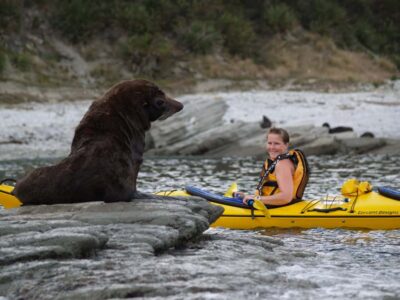
Dart River Canoe and Jet Boat Experience from Queenstown
Read our review →Browse the lists this tour appears in