
Reviewed · FARMS
Lake Tekapo High Country Farm Tour (Carbon Positive)
The best part of the Lake Tekapo High Country Farm Tour is its scale. You are not simply looking at sheep beside a road. You are riding across a working 50,000-acre property, with the Southern Alps and Aoraki Mt. Cook appearing beyond the paddocks. I like the small group of no more than 10 and the chance to get close to alpacas, sheep, horses, and other farm animals. I also like that the guide connects the scenery with real farming life, rather than treating the trip as a quick photo stop.
The main consideration is that this is still a farm tour, not a fast-paced sightseeing ride. Some of the animal time at the start may feel basic, especially for adults who have already visited a farmyard. You should also skip it if you have animal allergies, and remember that the 4WD van travels over both smooth and bumpy roads.
Key things to know
- A 50,000-acre working farm: See 12,000 Merino sheep, 700 Angus cows, alpacas, horses, and working dogs across a huge Mackenzie property.
- Private Mt. John viewpoint: Finish with a quieter lookout offering views across the Tekapo area and toward the Southern Alps.
- Small-group transport: The modern, air-conditioned 12-seater 4WD van is limited to 10 participants.
- More than animal feeding: Visit Irishman Creek Hut and Swan Tarn, where the endangered Black Stilt bird lives.
- Local tastes and touches: Try New Zealand honey and fresh spring water at Forks Stream.
- A guide-led experience: Andy has been singled out for answering questions with enthusiasm and explaining regional farming clearly.
Why this farm tour adds something different to Tekapo
Lake Tekapo is famous for its blue water, Church of the Good Shepherd, and clear night skies. Those sights are worth your time, but they show only one part of the Mackenzie Basin. The High Country Farm Tour takes you beyond the lakeside viewpoints and into the working countryside that gives the area much of its character.
I find that useful because high-country farming can otherwise seem like a distant backdrop. From the road, you may see sheep and wide open paddocks, but you do not necessarily understand how large these properties are or how farming fits the dry, exposed setting. This tour gives you that context while taking you to places you would not reach on a standard Tekapo outing.
The property covers about 50,000 acres, a size that changes your sense of distance. A two-hour visit cannot show every corner of it, but it gives you a clear taste of the open country and the animals managed there. The trip is best understood as a compact introduction to a much larger operation.
A few more Lake Tekapo half-days to weigh up
- Lake Tekapo: Alpine Stargazing Experience with a Guide
★ 4.5 · 626 reviews - Lake Tekapo: Stargazing Experience
★ 4.9 · 607 reviews - Tekapo Shuttle: Mt Cook Day Tour via Pukaki & Tasman Lake
★ 4.8 · 307 reviews
Setting out from D’Archiac Drive
The meeting point is at 48a D’Archiac Drive, next to Balmoral Farmyard and Shop in Lake Tekapo. Look for the Go Tekapo signboard and turn into the driveway, where the office is located.
This is a practical starting point if you are already staying in Tekapo. You are not being collected from a distant town, and the clear signboard should make the arrival straightforward. Since the tour lasts only two hours, arriving at the correct office matters. There is not much spare time for a wrong turn.
The vehicle is a modern 12-seater 4WD van with air conditioning, but the tour is limited to 10 participants. That leaves some extra space and helps keep the group from feeling crowded. The small size also matters once you stop near the animals or gather around the guide for an explanation.
Expect a mixture of smooth and bumpy roads. The 4WD is suited to the property, but this is not a polished coach ride on a sealed highway. If you prefer a little motion and the feeling of getting out into working country, that is part of the appeal. If you need a completely gentle ride, the road conditions are worth considering before you book.
Meeting the farm animals
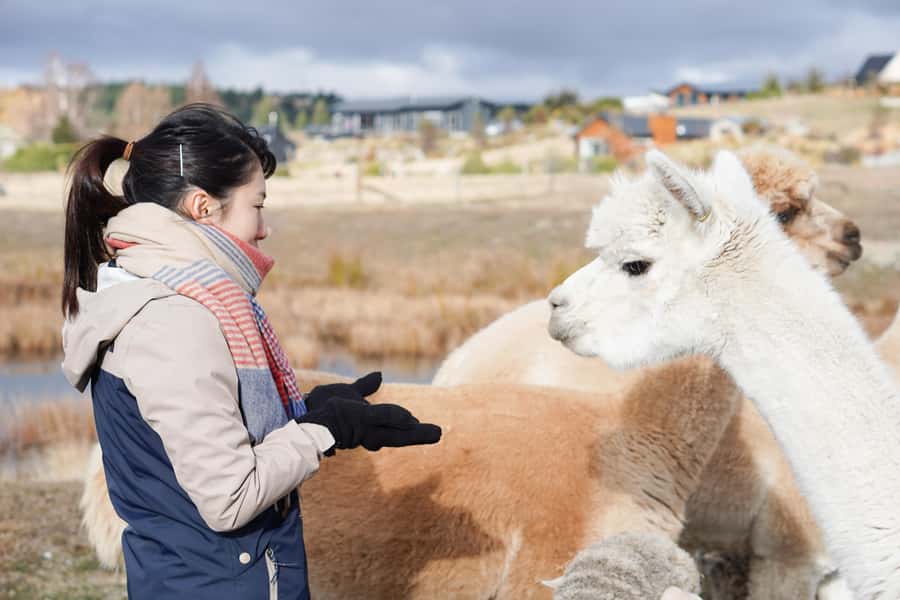
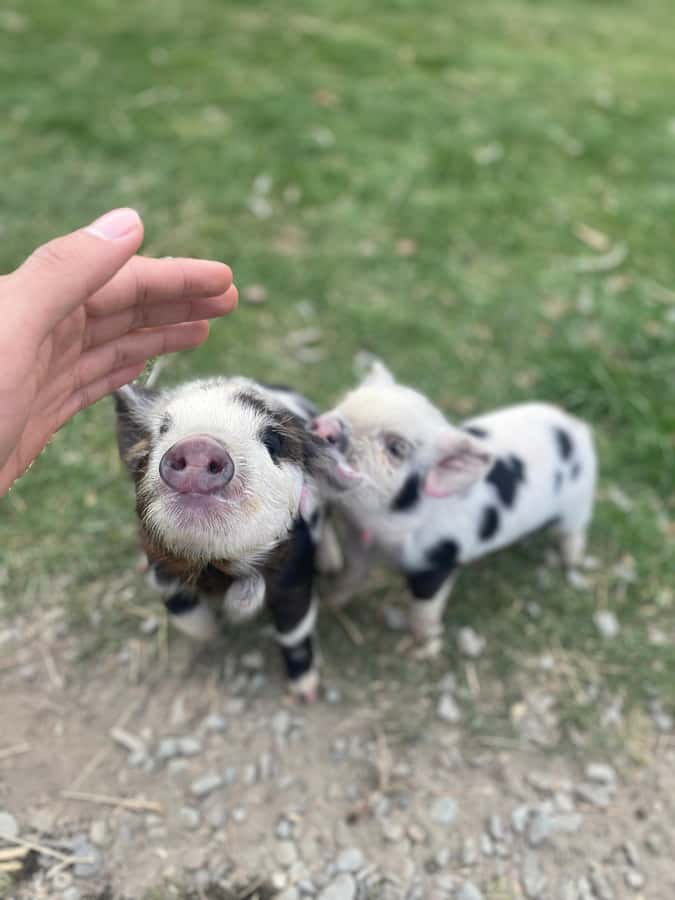
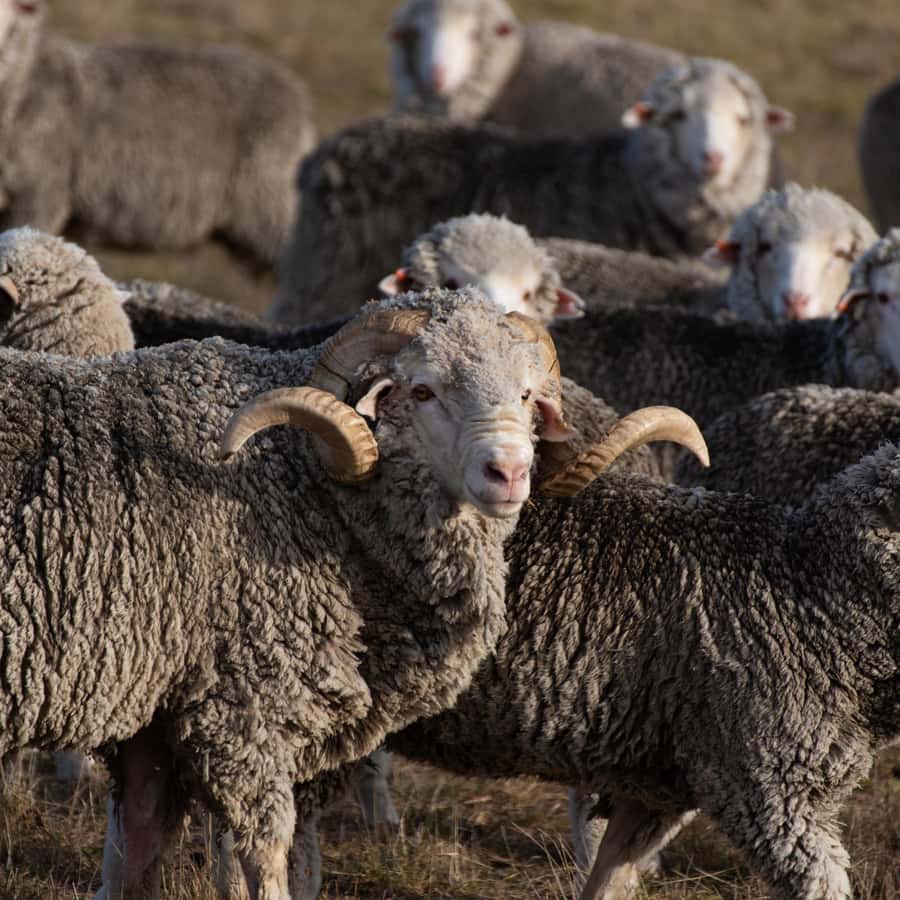
The animal encounters are an important part of the trip. You can feed farm animals using the supplied food, with Merino sheep, alpacas, and Angus cows among the main attractions. You may also see horses, working dogs, and other farmyard animals during the visit.
The variety gives the tour a useful rhythm. One moment you are looking over a broad paddock, and the next you are focused on the behavior of an alpaca or the movement of a working dog. Children are likely to enjoy this hands-on element, while adults may appreciate seeing animals in a working setting rather than only in a petting zoo.
The opening animal time may feel a little simple for some adults. One visitor felt that this early look at the animals was aimed more at young children and could be shortened. That is a fair caution. If your main goal is the farm’s scale, farming stories, and mountain views, the first animal stop may not be the strongest part of the outing.
Still, I would not dismiss it. Feeding the animals gives you a direct connection with the property, and it can be a good way to settle into the tour before the van heads farther across the farm. You will also have chances to get close to alpacas again near the end.
Merino sheep, Angus cattle, and working country
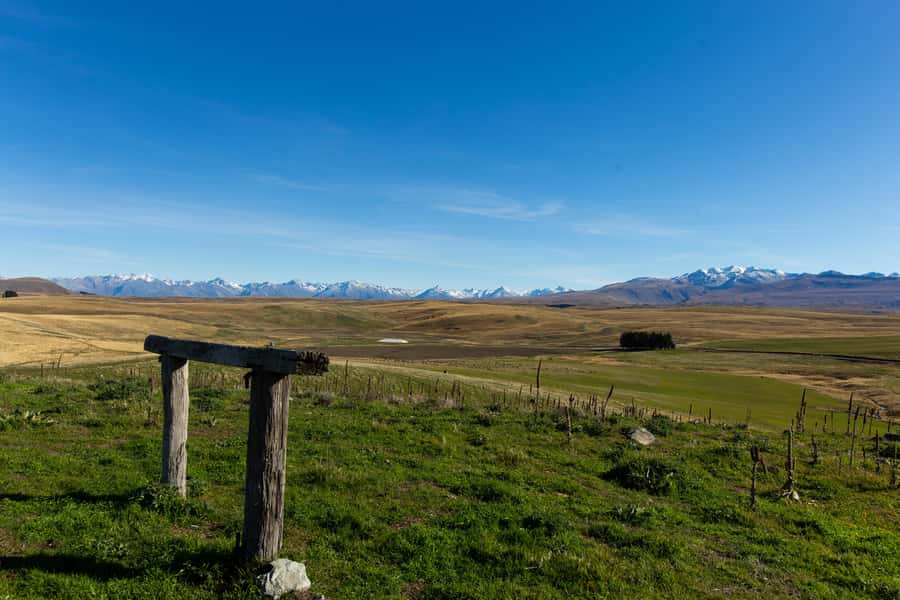
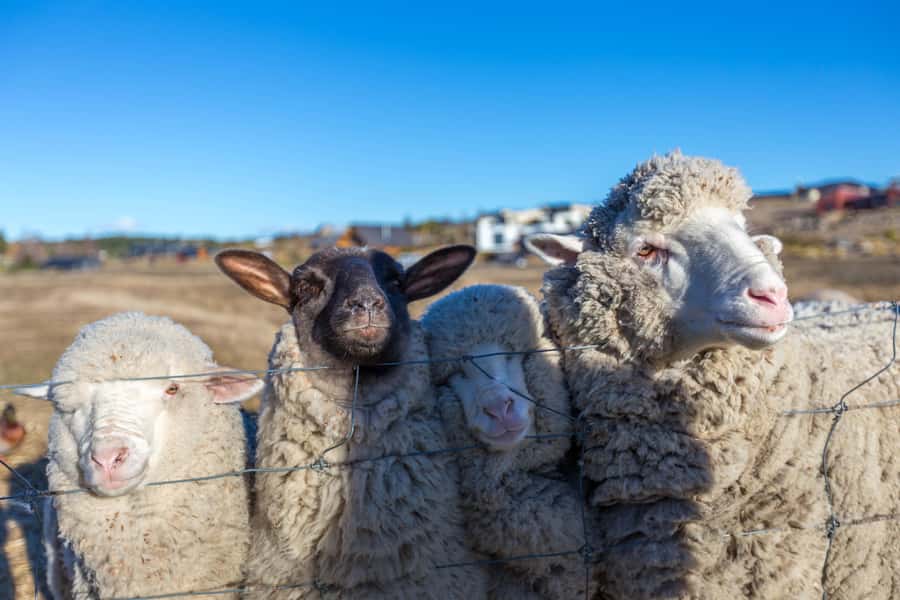
The numbers help explain what you are seeing. The property has about 12,000 Merino sheep and 700 Angus cows, along with alpacas, horses, and working dogs. Those figures are not just trivia. They show the difference between a small farm visit and a high-country station operating on a very large scale.
Merino sheep are closely linked with New Zealand farming, and seeing such a large flock gives you a better feel for the work involved in managing animals across wide country. Angus cattle add another side to the operation, while the working dogs show the practical partnership needed to move and manage stock.
Your guide provides the story behind the animals and the area. Andy has earned particular praise for answering questions with energy and for explaining agriculture in the region clearly. That matters because the quality of a farm tour depends heavily on the guide. The scenery may be impressive, but the guide is what turns a drive past animals into a useful experience.
You should feel free to ask about farming in the Mackenzie area, the animals, and the way the property operates. The tour is designed as a guided visit, so it works best when you treat it as a chance to learn, not just as transport to a photo stop.
Same corner of the country, a completely different day out:
- Chameleon Stargazing Shared Tour
★ 5.0 · 181 reviews - Lake Tekapo: Mountaintop Stargazing at Mount John Summit
★ 4.5 · 176 reviews - Mount John Observatory Stargazing Experience, Tekapo
★ 4.5 · 160 reviews - Lake Tekapo: Single Day Multiple Entry Pass for Hot Pools
★ 4.2 · 129 reviews
Irishman Creek Hut and the Mackenzie past
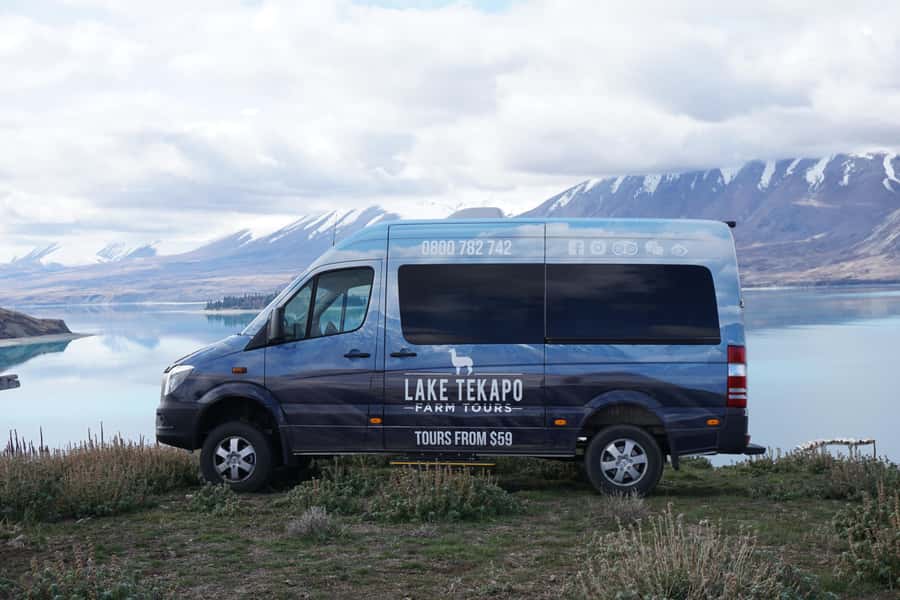
Irishman Creek Hut gives the tour a historical marker among the open paddocks. It helps you picture how people used and moved through this high-country area before modern visitor facilities made the region easier to reach.
The hut is also a good reminder that the Mackenzie Basin is not only about scenery. Its story includes farming, isolation, practical shelter, and the steady work of living in a demanding environment. The guide’s explanation adds meaning to what might otherwise look like a small old building beside a track.
I like this stop because it changes the pace. You are not constantly looking for the next animal or mountain view. A place such as the hut gives you something human to focus on, and it helps connect the farm today with the people who worked here in earlier times.
The information provided does not specify how long the van stops at the hut, so you should not expect a long historical visit. Think of it as one part of a wider route, not a museum tour.
Swan Tarn and the Black Stilt
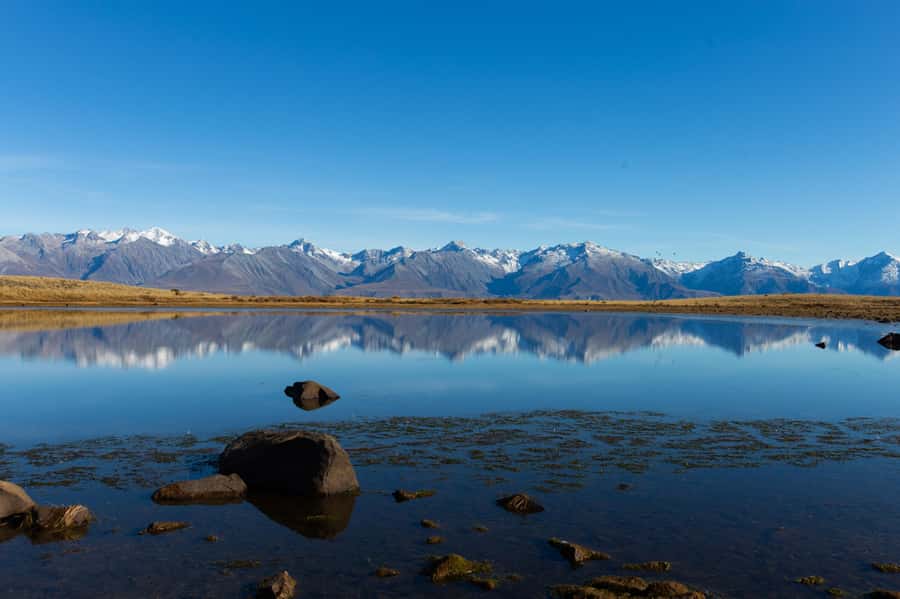
Swan Tarn is another distinctive point on the route. It is home to the endangered Black Stilt bird, giving the tour an environmental side as well as a farming focus.
You may not see the bird itself. Wildlife sightings cannot be promised, and the value of this stop is also in knowing why the wetland matters. The Black Stilt is a rare native bird, so the tarn shows that farming country can also support important habitat.
This stop may appeal most to you if you like tours that explain how people, animals, and protected places share the same region. It adds a layer that a simple farm animal visit would miss. You are learning not just what the property produces, but also what needs care within and around it.
Bring your camera, but keep your expectations sensible. The tour promises a chance to visit a place associated with the Black Stilt, not a guaranteed wildlife photograph.
Honey and spring water at Forks Stream
The stop at Forks Stream includes fresh spring water and New Zealand honey. These are small details, but they make the outing feel connected to local produce and the natural setting.
The spring water offers a simple taste of the area rather than a formal food stop. The honey adds a distinctly New Zealand farm touch. Neither should be treated as a full meal, so plan your day with the understanding that the tour provides samples, not lunch.
I like these moments because they break up the driving without adding a manufactured attraction. You are tasting something associated with the country you are passing through, then seeing where the water comes from. It is a modest part of the itinerary, but it gives the tour some flavor in the literal sense.
The private Mt. John lookout
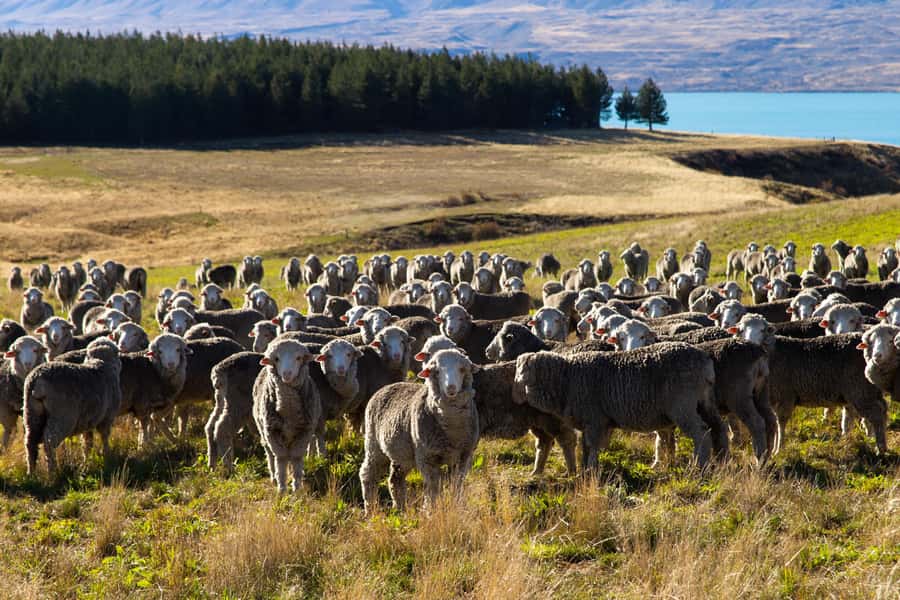
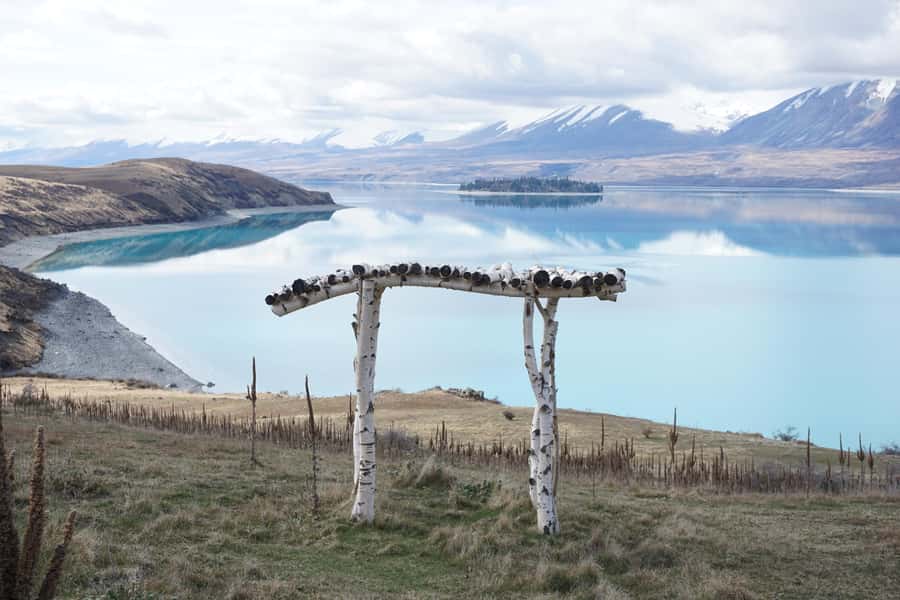
The trip finishes at a private Mt. John lookout. This is likely to be the visual high point of the tour, especially if you want broad views of Lake Tekapo, the surrounding country, and the Southern Alps, with Aoraki Mt. Cook visible in the distance when conditions allow.
The word private matters here. Lake Tekapo has several popular viewpoints, but this stop is presented as a quieter place reached through the farm. That can give you more room to take photographs and listen to the guide without the feel of a crowded public lookout.
The guide explains Tekapo from this high point, helping you place the lake and surrounding country in context. There is also a playful moment where you can dress like a farmer for photographs and a laugh. It is not a serious cultural presentation, but it gives the group a relaxed ending after the more informative parts of the drive.
Mountain views depend on weather and visibility. The tour promises the chance to capture views of the Southern Alps and Aoraki Mt. Cook, but clouds can change what you see. I would book it for the combination of farm access and scenery, not solely for one perfect mountain photograph.
Finishing with alpacas
The final chance to get close to alpacas gives the outing a friendly finish. Alpacas are photogenic, and their calm, curious behavior makes them a natural favorite for pictures.
This is also where the tour may work especially well for families. The route has enough variety to hold attention: animals, a hut, a wetland, a stream, and a mountain lookout. The two-hour length keeps it from becoming an all-day commitment.
Animal allergies are the clear limitation. The tour is not suitable for people with animal allergies, and even if your symptoms are mild, you should take the close contact with sheep, alpacas, cows, horses, and dogs seriously.
Is $89 good value for two hours?
At $89 per person, this is not the cheapest way to see the Tekapo area. You can enjoy the lake and many public viewpoints without paying for a tour. The value comes from access to a private working property, a guide, 4WD transport, animal food, and a private lookout.
The price makes more sense if you would otherwise miss the high-country farm experience. You are paying for entry into a huge operation that is not set up as a normal public attraction. You also avoid trying to find the farm tracks yourself, and the guide gives the scenery an agricultural and local context.
The small group improves the value. Ten people or fewer means you can ask questions and get closer to the animals without being part of a large bus group. The air-conditioned vehicle is another practical benefit, especially when the weather is cold, bright, or changeable.
I would call the price fair for the right visitor, but not essential for every Tekapo itinerary. If you have only a short time in the area and want classic lake photographs, spend that time around the lake. If you want to understand the countryside beyond the main tourist stops, the tour earns its cost.
Who should book this experience?
I would recommend it to you if you enjoy working farms, wide-open scenery, local stories, and animal encounters. It is a good match for families, photographers, visitors interested in New Zealand agriculture, and anyone who wants a different view of Tekapo.
It also suits people who prefer a guided outing with a clear two-hour limit. You get a substantial taste of the property without giving up an entire morning or afternoon.
You may want to skip it if you dislike bumpy roads, have animal allergies, or want a purely scenic mountain tour. The farm animals and agricultural explanations are central, not side features.
The tour is listed as wheelchair accessible, which is useful for visitors who need that option. Since road surfaces and conditions can vary across a working farm, it is still sensible to confirm any specific mobility needs when booking.
Booking and cancellation details
The tour costs $89 per person and runs for two hours, with start times depending on availability. It is conducted in English by a live guide.
You can cancel up to 24 hours before the activity for a full refund, and the reserve-now, pay-later option lets you hold a place without paying immediately. That flexibility is useful in Tekapo, where weather can affect mountain views.
Should you book the Lake Tekapo High Country Farm Tour?
Book it if you want to see the Mackenzie Basin as a working place, not just a beautiful view from the lakeshore. The strongest reasons are the huge farm setting, the small group, the animal access, Andy’s clear guiding, and the private Mt. John lookout.
Skip it if your priority is a quick scenic drive or if the animal portion does not interest you. At two hours and $89, it is best for visitors who value access and explanation. For that audience, this is a thoughtful way to add farming, wildlife habitat, and high-country scenery to a Tekapo stay.
FAQ
Where does the Lake Tekapo High Country Farm Tour begin?
The meeting point is 48a D’Archiac Drive in Lake Tekapo, next to Balmoral Farmyard and Shop. Look for the Go Tekapo signboard and turn into the property.
How long does the farm tour last?
The tour lasts two hours.
How much does the tour cost?
The price is $89 per person.
How many people can join the tour?
The group is limited to 10 participants. Transport is provided in a 12-seater 4WD van.
What animals can I see?
The farm has Merino sheep, Angus cows, alpacas, horses, working dogs, and other farmyard animals. Animal food is included for the farm encounters.
Will I see Aoraki Mt. Cook?
The tour includes views of the Southern Alps and Aoraki Mt. Cook when conditions allow. Mountain visibility can depend on the weather.
Does the tour visit a private viewpoint?
Yes. The route finishes at a private Mt. John lookout, where the guide explains more about Tekapo and the surrounding area.
What other places are visited?
The tour includes Irishman Creek Hut, Swan Tarn, and Forks Stream. Swan Tarn is home to the endangered Black Stilt bird, and Forks Stream is where you can taste fresh spring water.
Is the tour wheelchair accessible?
Yes, the activity is listed as wheelchair accessible.
Is the tour suitable for people with animal allergies?
No. The tour is not suitable for people with animal allergies because it includes close contact with farm animals.
Just added around Lake Tekapo
- Silver River Stargazing Experience in Lake Tekapo★ 4.5 · 106 reviews
- Tekapo Star Gazing Tour – Soak in the Stars★ 4.5 · 109 reviews
- Lake Tekapo Scenic Wilderness Cass Valley Tour★ 4.5 · 19 reviews
- Scenic 4WD Tour Lake Tekapo Backcountry★ 5.0 · 77 reviews
- Mt Cook Day Tour From Tekapo (Small Group, Carbon Neutral)★ 4.5 · 11 reviews
- Day Trip: Lake Tekapo to Mt Cook National Park★ 4.5 · 31 reviews
- Lake Tekapo Ultimate Stargazing Experience★ 5.0 · 3 reviews
- Stargazing Experience at Cowan’s Private Observatory★ 4.0 · 85 reviews
Farms, compared.
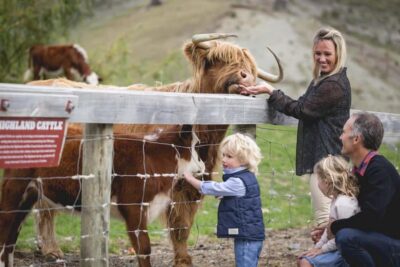
Queenstown Lake Cruise and Walter Peak Farm Tour
Read our review →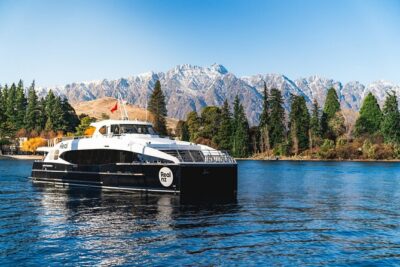
Dinner at Walter Peak High Country Farm and Cruise from Queenstown
Read our review →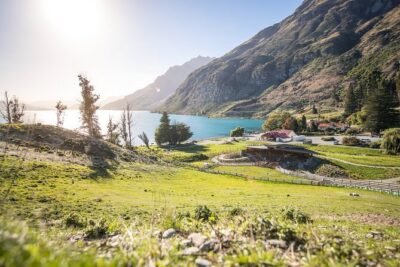
Queenstown Lake Cruise and Walter Peak Farm Adventure
Read our review →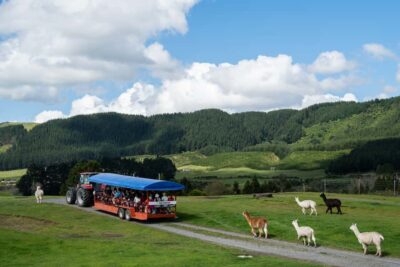
Agrodome Farm Experience including Farm Show and Farm Tour – Rotorua
Read our review →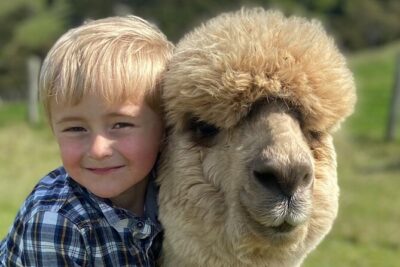

Sheep Farm Day Trip from Christchurch + Lunch and Winery visit.
Read our review →Browse the lists this tour appears in