
Reviewed · STARGAZING TOURS
Chameleon Stargazing Shared Tour
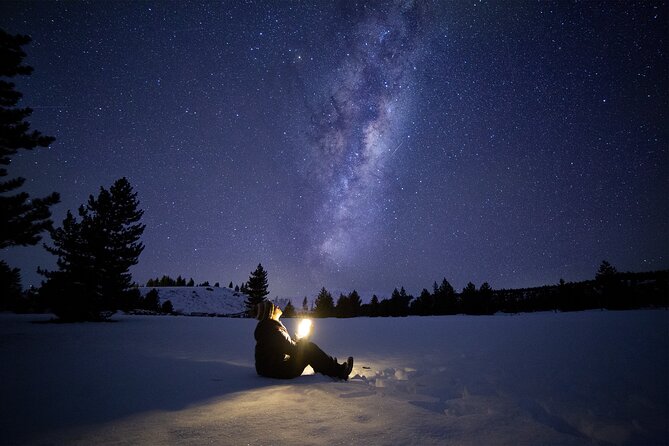
Lake Tekapo’s real magic begins after the last light fades. In this 90-minute Chameleon Stargazing session, you recline beneath the southern sky, follow a laser pointer across the constellations, and use a powerful telescope to see far more than the naked eye can show. Saturn, nebulae, the Milky Way, and the Southern Cross may all come into play, depending on the night.
I like two things in particular: the guides make astronomy friendly rather than overly technical, and the cozy finish, with blankets, hot chocolate, and marshmallows over a fire bowl, gives the evening a warm social rhythm. Guides including George, Guthrie, Estella, and Mok have been praised for their clear explanations and easy manner.
The one catch is simple: the sky is in charge. Clouds, a full moon, changing weather, and aurora activity can alter what you see. A cancellation or shortened session may be the sensible result, so keep your schedule flexible and dress for cold conditions.
Key Points at a Glance
- A small group of up to 14 people: You get a more personal session than a large coach-style astronomy outing.
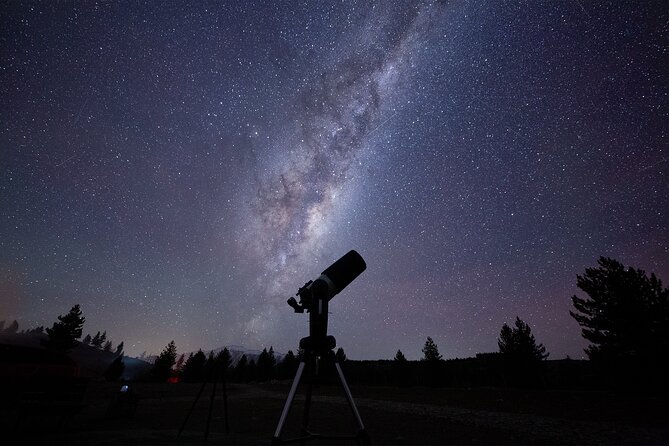
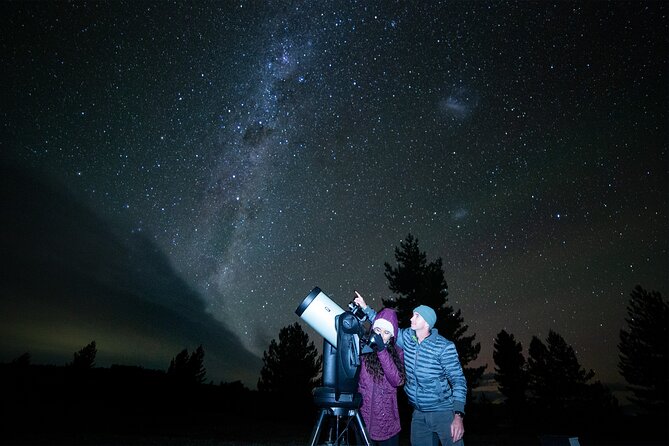
- Powerful telescope viewing: The guide may point out planets, nebulae, galaxies, and other deep-sky objects visible that night.
- Stories as well as science: Expect explanations of constellations, astronomy facts, and Māori significance.
- Comfort built into the evening: Reclining seats, soft blankets, hot chocolate, tea or coffee, and marshmallows are provided.
- A photo to take home: The team captures a photograph of you beneath the stars and provides complimentary images.
- Weather matters: The sky changes from night to night, and poor conditions can lead to a new date or full refund.
Why Lake Tekapo Is Such a Good Place for Stargazing
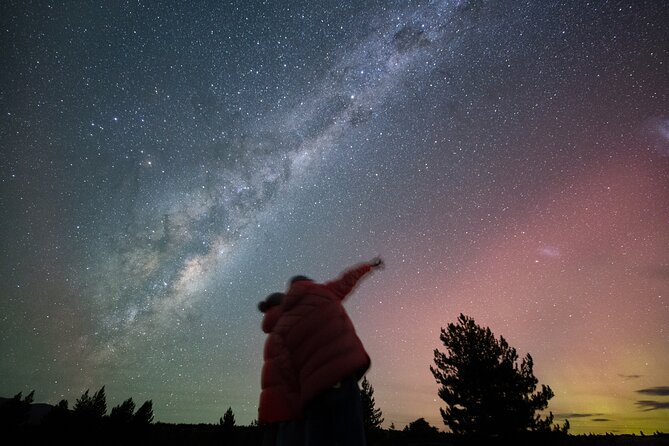
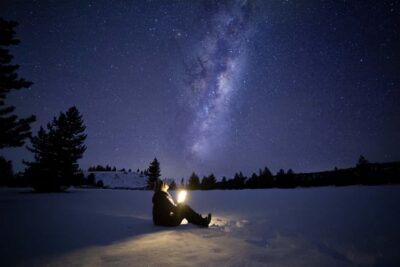
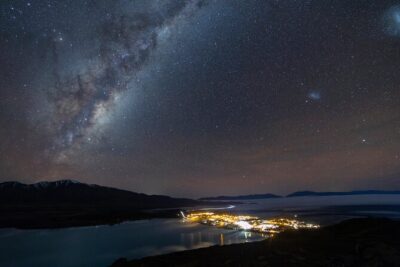
Lake Tekapo is in New Zealand’s South Island, an area prized for its dark night sky. That matters most if you live in a city, where streetlights and buildings wash out the faintest stars. Here, on a clear night, you might see the Milky Way as a broad band rather than a faint smudge.
You do not need to know the difference between a star, a planet, and a nebula before arriving. The session is designed for curious beginners, but the guide also fields detailed questions. That mix is one of the tour’s strongest points. You can simply look up and enjoy the view, or ask why a constellation appears where it does.
The southern sky also offers sights that many northern-hemisphere visitors rarely see. The Southern Cross is a natural highlight, and the guide may explain how its stars have been understood and used across different cultures. Māori stories and significance add a local connection that a generic astronomy lecture would miss.
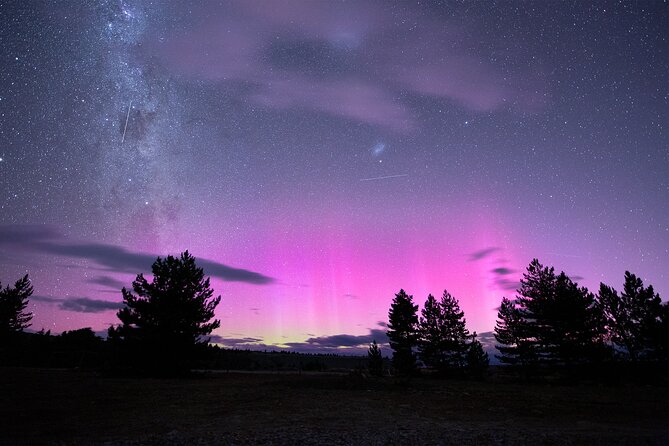
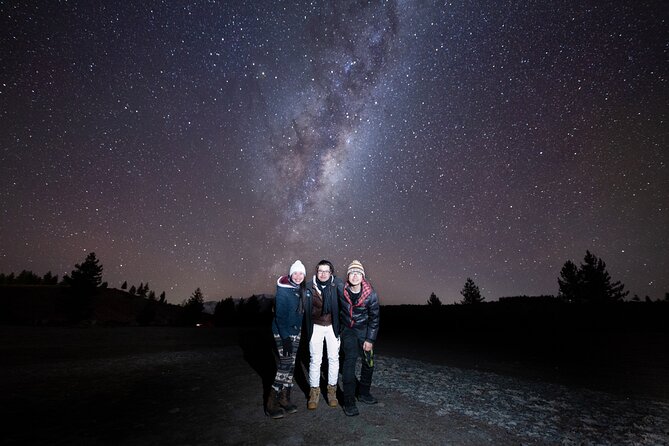
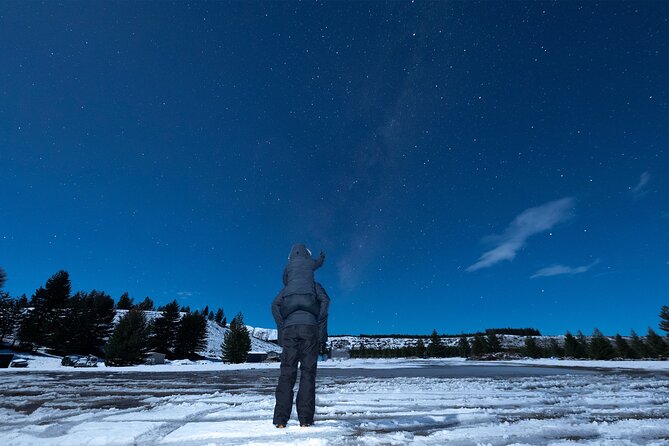
Still, dark skies do not guarantee a perfect show. The natural rotation of the sky means the objects visible at one time of year will differ from those seen at another. Moon phase, clouds, and aurora activity also shape the evening. The photographs used to promote the experience are examples, not a promise of the exact sky on your date.
More Stargazing Tours in Lake Tekapo
- Lake Tekapo: Alpine Stargazing Experience with a Guide
★ 4.5 · 626 reviews - Lake Tekapo: Stargazing Experience
★ 4.9 · 607 reviews - Lake Tekapo: Mountaintop Stargazing at Mount John Summit
★ 4.5 · 176 reviews
What Happens During the 90-Minute Session
The experience begins at 70 Andrew Don Drive in Lake Tekapo and ends at the same place. There is no shuttle to or from your accommodation, so you need to arrange your own way to the meeting point.
Once the group is gathered, the guide sets the tone with an introduction to the night sky. You may begin with naked-eye viewing, which helps you get your bearings before the telescope comes into use. A laser pointer is used to trace stars and constellations, making it easier to connect the explanation with the actual sky above you.
This opening section is more important than it may sound. Telescope viewing can feel like a series of disconnected glimpses if you do not understand what you are seeing. By first identifying patterns and directions in the sky, the guide gives the rest of the session a clear shape.
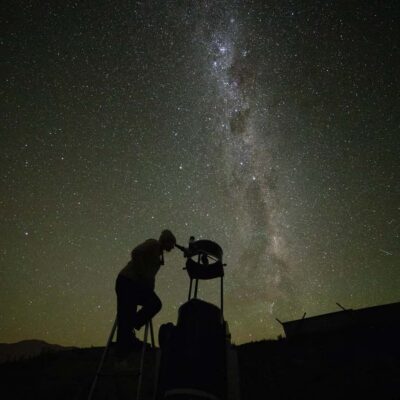
The telescope portion is the technical heart of the evening. You take turns looking through a high-powered instrument at objects selected for that night. Past viewing examples include Saturn, nebulae, galaxies, and other deep-sky objects. The exact lineup is never fixed, since clouds and the position of the sky decide what is practical.
Some sights appear brighter and sharper than you might expect. Others may look like a small patch of light rather than the full-color images associated with space photography. That is normal. The value is in seeing a distant object through the telescope in real time, then hearing the guide explain what it is and how far away it lies.
The team also uses an Escape 2 system for capturing images. A complimentary photograph of you beneath the night sky is part of the experience, and one detailed account says telescope images were emailed a few hours after the session. The exact photo process can vary, but you should expect a take-home image rather than needing to manage your own camera in the dark.
The Guides Make the Difference
The equipment is useful, but the guide shapes the quality of the night. Chameleon’s guides are described as enthusiastic, interactive, and able to handle a wide range of questions. Guthrie has been praised for explaining visible stars and constellations, including their Māori significance. George has also been singled out for his astronomy knowledge and warm hosting.
Estella has guided sessions focused on constellations, galaxies, and the dark sky, while Mok has been praised for making a chilly evening lighthearted and enjoyable. You may not get to choose your guide, but the range of names associated with the experience suggests a team comfortable with both science and storytelling.
I would especially recommend this format if you are traveling with mixed interests. One person can enjoy the visual spectacle, another can ask technical questions, and someone else can simply appreciate the quiet. The guides keep the session engaging without requiring you to prepare in advance.
The small maximum group size of 14 also matters. You are not lost in a crowd, and the guide has a better chance of answering questions and giving everyone time at the telescope. It remains a shared tour, so you will take turns rather than having the equipment to yourself.
Reclining Seats, Blankets, and a Fire Bowl
Stargazing requires patience. You may spend several minutes waiting for your turn at the telescope or for a cloud to move away. The setup helps make that waiting pleasant, with cozy reclining seats where you can lean back and watch the sky.
Blankets are provided, and this is not a minor extra. Lake Tekapo nights can be cold, particularly in winter. Several accounts stress that the blankets made a real difference, but I would still arrive in warm layers. The supplied blanket is a comfort aid, not a substitute for a proper jacket and warm clothing.
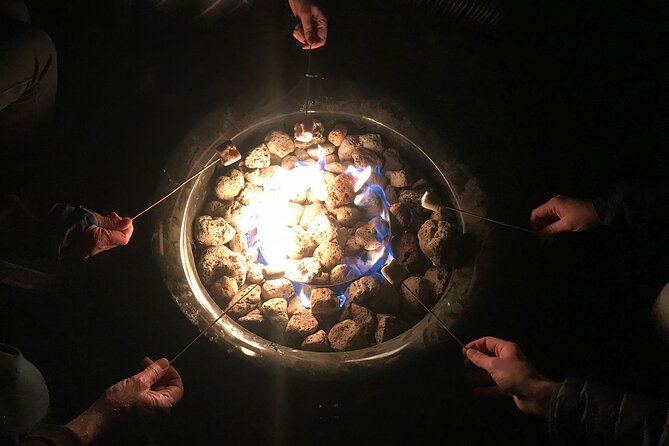
Hot chocolate, tea or coffee, and marshmallows are included. The warm drink generally appears during the session, while marshmallow roasting provides the closing activity around a fire bowl. This gives the evening a relaxed finish after the more focused telescope viewing.
The treats do not turn the event into a campfire party. The sky remains the main attraction. But they make the experience more approachable, especially for children, first-time stargazers, or anyone who finds a long period outdoors less appealing.
Fire safety and astronomy also need to share the same space. The fire bowl is used after the main observing, which makes sense: bright light can interfere with dark-adapted eyes. The sequence lets you enjoy the faint sky first, then gather for something warm and informal.
More dark sky nights near Lake Tekapo:
- Mount John Observatory Stargazing Experience, Tekapo
★ 4.5 · 160 reviews - Silver River Stargazing Experience in Lake Tekapo
★ 4.5 · 106 reviews - Stargazing Experience at Cowan’s Private Observatory
★ 4.0 · 85 reviews - Dark Sky Indoor Maori Cultural Astronomy Experience
★ 4.5 · 70 reviews
How Weather and Moonlight Affect the Experience
You should treat this as a weather-dependent activity, not a guaranteed show. Clouds can roll in quickly, and the team may shorten or cancel a session if conditions turn poor. In one case, a session was called off after about half an hour when the weather changed, with a full refund provided.
That policy is fair. A telescope cannot see through solid cloud, and a company that proceeds regardless would risk offering a poor experience. Chameleon provides weather updates, so check your email on the day and make sure the operator has a way to reach you.
Cloud does not always ruin the evening. One session began with a decision to cancel, then the sky cleared enough for the group to see the Milky Way and Southern Cross. Another went ahead despite passing cloud by moving quickly through the main viewing before visibility worsened.
The moon deserves attention, too. A full or nearly full moon brightens the sky, which can make faint Milky Way detail harder to see. It is not a total loss, since the moon itself and some bright objects can still be interesting, and telescope viewing may continue. If your priority is the fullest possible view of the Milky Way, aim for dates near the new moon.
Aurora activity can also change the night. A strong Aurora Australis was an unexpected highlight for one family, but auroras cannot be promised. Think of them as an extra gift from the sky, not part of the basic product.
Is $74.47 Good Value?
At $74.47 per person, this is not the cheapest way to look at stars. You could step outside near Lake Tekapo and see plenty for free on a clear night. The question is what you want beyond simply being outdoors.
The price includes the telescope, guide, hot chocolate, tea or coffee, marshmallows, blankets, the organized seating area, all fees and taxes, and complimentary photography. You are paying for access to equipment you may not have, plus someone who can identify what you are seeing and explain why it matters.
For a first-time stargazer, that guidance is the main value. Without it, you may see a beautiful sky but miss planets, nebulae, or constellations that are less obvious. The guide also gives the night cultural and historical context, including Māori connections to the stars.
The small group size strengthens the value. With no more than 14 people, this is more personal than a large astronomy presentation. It is still shared, though, and you should not book it expecting a private telescope session.
The value drops if your schedule cannot tolerate a weather cancellation. You may receive a full refund or an alternative date, but a refund cannot replace a missed evening if you are leaving Lake Tekapo the next morning. I would book early enough in your stay to leave room for a second attempt.
Timing and the Midnight Date Trap
The activity lasts about one hour and 30 minutes, but the start time will depend on the season and darkness. A late evening can be tiring, especially for young children, but darkness is essential for the experience.
Pay close attention to the date if your chosen start time falls after midnight. A session beginning at 12:30 a.m. on January 1 takes place during the night of December 31 into January 1. You need to be in Lake Tekapo on December 31, not arrive on January 1 expecting to attend that night.
This sounds obvious once explained, yet it is an easy booking mistake. If the time or date is unclear, contact the operator before finalizing your plans.
The meeting point is 70 Andrew Don Drive, Lake Tekapo 7999. The experience returns there, and no accommodation shuttle is included. Build in enough time to find the site and settle in before the sky program begins.
Who Will Enjoy Chameleon Stargazing Most?
I would choose this tour for anyone who wants more than a quick look at the stars. It suits couples seeking a quiet evening, families who like hands-on learning, and visitors from bright cities who have never seen a truly dark sky.
It is also a good choice for people who enjoy a guide-led experience but do not want a long excursion. Ninety minutes is enough time to see several telescope targets, hear stories, enjoy a warm drink, and finish with marshmallows without taking over your entire evening.
Photography-minded visitors should set sensible expectations. You receive a complimentary photograph, which is a nice record of the night, but this is not presented as a full astrophotography workshop. The sky in the final image may not match the dramatic promotional examples.
You should think twice if you strongly dislike cold weather, late nights, or uncertainty. Even with blankets and warm drinks, you will be outside. A full moon or cloud may also limit the views. The tour can still offer useful explanations and some telescope targets, but the experience is best when you accept that nature sets the terms.
Service animals are allowed, and most people can participate. The provided information does not give detailed mobility guidance, so if you need specific seating or access arrangements, ask before booking.
Booking, Cancellation, and Practical Tips
You can cancel at least 24 hours before the start time for a full refund. Changes or cancellations inside that 24-hour window are not accepted for a refund, and the cut-off uses local time.
If poor weather forces cancellation, you are offered another date or a full refund. That makes the weather risk easier to manage, but I still recommend placing the activity early in your Lake Tekapo stay.
Before you go, I would:
- Check the weather email on the day.
- Wear several warm layers, even if the afternoon felt mild.
- Bring patience for telescope turns and passing cloud.
- Check the moon phase if the Milky Way is your main goal.
- Confirm the date carefully for any after-midnight start.
- Plan your own transport to and from Andrew Don Drive.
- Keep your phone available for weather updates.
The experience has a 5 out of 5 rating from 181 reviews, with 99 percent recommending it. Those figures fit the strongest pattern of the experience: excellent guides, good organization, comfortable seating, and a memorable blend of telescope viewing and simple treats. The occasional lower rating is tied to cloud and moonlight, not to a lack of effort by the team.
Should You Book It?
Book Chameleon Stargazing if you want a friendly introduction to Lake Tekapo’s night sky, with real telescope viewing, local star stories, a small group, and practical comforts. The chance to see Saturn, nebulae, the Milky Way, or an Aurora Australis makes the evening special, but none of those sights can be guaranteed.
I would book it early in your stay, watch the forecast, and arrive warmly dressed. If you can accept that clouds may change the plan, the $74.47 price is reasonable for the equipment, instruction, refreshments, and photo. If you need certainty, choose a free outdoor look at the stars instead. For most curious visitors, though, this is a worthwhile way to spend a clear night in Lake Tekapo.
FAQ
Where does Chameleon Stargazing meet?
The meeting point is 70 Andrew Don Drive, Lake Tekapo 7999, New Zealand. The activity also ends back at this location.
How long does the stargazing tour last?
The experience lasts approximately one hour and 30 minutes.
What is included in the price?
The price includes the telescope, marshmallows, coffee or tea, hot chocolate, and all fees and taxes. Complimentary photographs are also provided as part of the experience.
Is transportation from my accommodation included?
No. Shuttle service to and from your accommodation is not included. You need to make your own way to the meeting point.
How many people can join the shared tour?
The activity has a maximum of 14 participants.
What can I see through the telescope?
The objects depend on the night, weather, moon phase, and the natural rotation of the sky. Possible sights include planets, nebulae, galaxies, and other deep-sky objects.
Does the tour operate in cloudy weather?
The experience requires good weather. If poor conditions lead to cancellation, you are offered a different date or a full refund. The company also sends weather updates by email.
What should I wear?
Dress warmly and bring suitable layers. Blankets are provided, but Lake Tekapo nights can be cold, particularly during winter.
What happens if my tour starts after midnight?
Check the date carefully. A 12:30 a.m. start on January 1 takes place during the night between December 31 and January 1, so you need to be in Lake Tekapo on December 31.
Just added around Lake Tekapo
- Silver River Stargazing Experience in Lake Tekapo★ 4.5 · 106 reviews
- Tekapo Star Gazing Tour – Soak in the Stars★ 4.5 · 109 reviews
- Lake Tekapo Scenic Wilderness Cass Valley Tour★ 4.5 · 19 reviews
- Scenic 4WD Tour Lake Tekapo Backcountry★ 5.0 · 77 reviews
- Mt Cook Day Tour From Tekapo (Small Group, Carbon Neutral)★ 4.5 · 11 reviews
- Day Trip: Lake Tekapo to Mt Cook National Park★ 4.5 · 31 reviews
- Lake Tekapo Ultimate Stargazing Experience★ 5.0 · 3 reviews
- Stargazing Experience at Cowan’s Private Observatory★ 4.0 · 85 reviews
Stargazing Tours, compared.
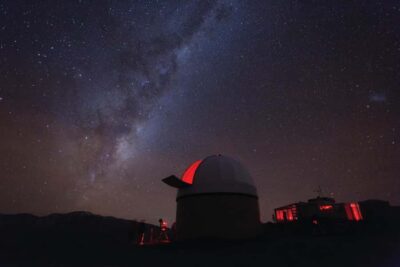
Mount John Observatory Stargazing Experience, Tekapo
Read our review →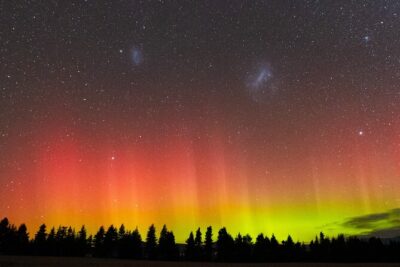
Silver River Stargazing Experience in Lake Tekapo
Read our review →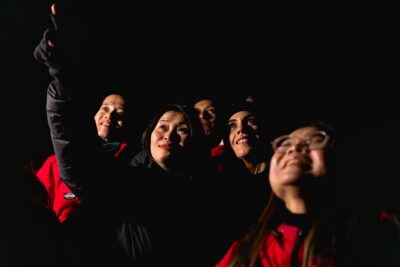
Stargazing Experience at Cowan’s Private Observatory
Read our review →
Dark Sky Indoor Maori Cultural Astronomy Experience
Read our review →
Browse the lists this tour appears in