
Reviewed · STARGAZING TOURS
Mount John Observatory Stargazing Experience, Tekapo
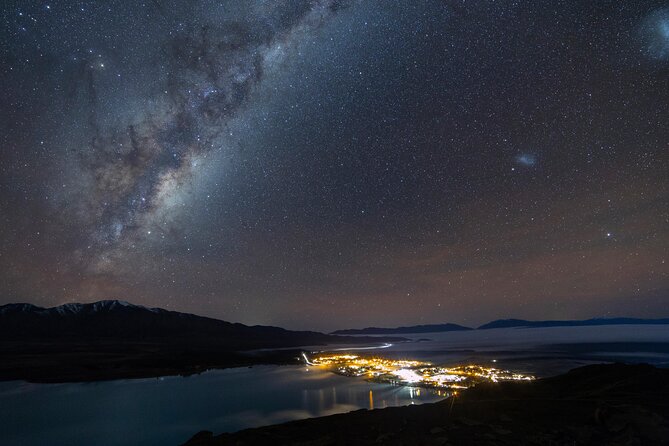
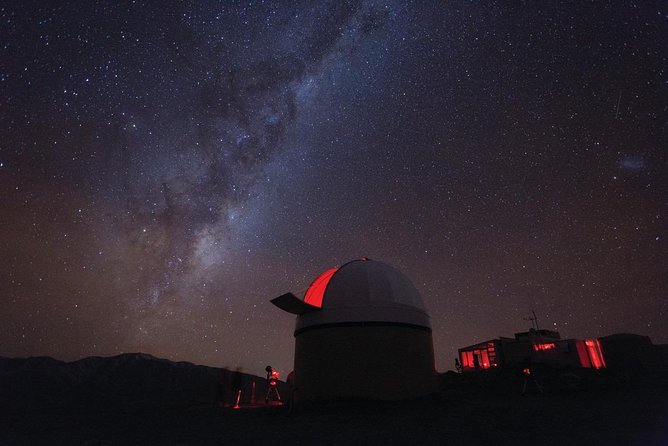
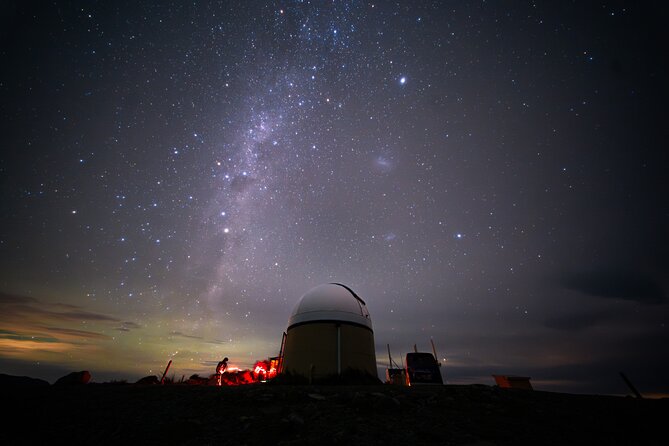
Mount John Observatory puts you above Lake Tekapo at 1,029 metres, inside the world’s largest gold-standard International Dark Sky Reserve. The reward is a far darker sky than most people ever see, with the Milky Way, Southern Cross, planets, star clusters, and perhaps a distant galaxy on view.
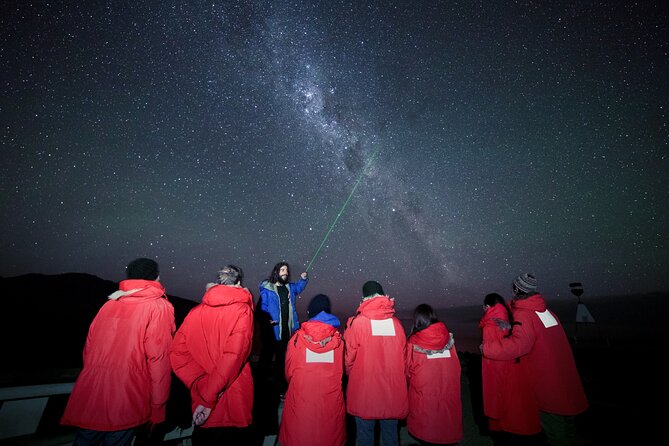
I like the mix of plain-eye stargazing and powerful telescopes. You first learn to read the sky with laser pointers, then see selected objects through observatory equipment. I also like the warm extreme-weather jackets, since the summit can be bitterly cold even in spring.
The catch is simple: cloud and wind can change the night. A clear forecast is no guarantee, and a poor-weather replacement indoors may feel much less special than the mountaintop visit.
Key points at a glance
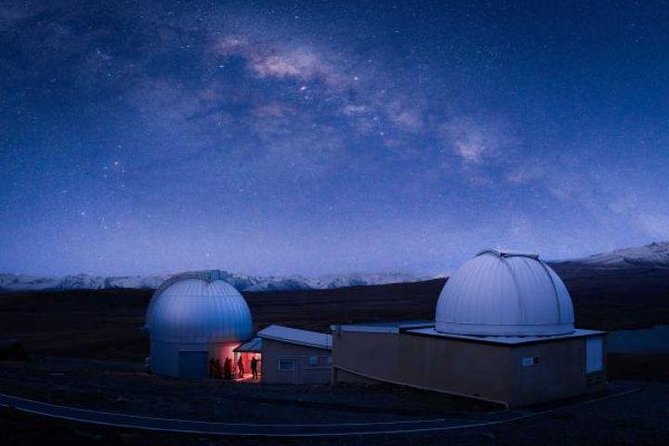
- Mount John summit access: Travel from Lake Tekapo township to the University of Canterbury’s observatory at 1,029 metres.
- Southern Hemisphere focus: Learn the Southern Cross, the true southern star, planets, star clusters, and other objects that are hard to see from northern skies.
- Three ways to look up: Guides combine unaided viewing, laser-pointer talks, and advanced telescope equipment.
- Cold-weather help: Extreme Cold Weather jackets are supplied, but warm layers remain essential.
- Small departure groups: Each trip time is capped at 22 people, with the activity listing giving a maximum of 30 overall.
- Weather matters: Cloud can cancel the summit visit. You may receive another date or a full refund.
Why Mount John is the right place for stargazing
Lake Tekapo is part of the Aoraki Mackenzie International Dark Sky Reserve, where controls on artificial light help protect the night sky. Mount John gives you an even better viewpoint, high above the town and surrounding lakes and mountains.
That setting matters because stargazing is not just about owning a strong telescope. Dark skies let you see far more stars with your own eyes. The Milky Way becomes a broad band rather than a faint smudge, and familiar southern patterns have room to appear clearly.
You also get a useful sense of scale. The summit is not a planetarium with a painted ceiling. You are outside, looking through real darkness, with the observatory buildings and research centre around you. The University of Canterbury facility is an active astronomical research centre, so the setting feels more substantial than a simple roadside star tour.
The guides make the difference for beginners. They explain what you are looking at, point out major constellations, and use laser pointers to connect the dots overhead. You do not need a background in astronomy. The talks are designed to be educational without turning into a lecture.
More Stargazing Tours in Lake Tekapo
- Lake Tekapo: Alpine Stargazing Experience with a Guide
★ 4.5 · 626 reviews - Lake Tekapo: Stargazing Experience
★ 4.9 · 607 reviews - Chameleon Stargazing Shared Tour
★ 5.0 · 181 reviews
From Lake Tekapo township to the 1,029-metre summit
Your evening begins at the Dark Sky Project in Lake Tekapo, where you check in before boarding the return transport to Mount John. The transfer is included, which keeps the evening simple, especially since the summit is not a place you should try to reach on foot after dark.
The ride takes you up to the observatory at 1,029 metres above Tekapo. The journey is short in the context of the whole activity, around 15 minutes in the stated schedule, but the change in setting is important. You leave the lights of the township and head toward a darker, colder summit.
Hotel pickup is not included. You need to reach the Dark Sky Project meeting point in the town itself. Plan a little extra time so you are not rushing through check-in, particularly if you need to find the meeting point after dinner.
Once you arrive at the summit, stay close to the guide. The area is very dark, and white torches or phone lights are not allowed because they damage everyone’s night vision. That rule can feel strict when you first step outside, but it is necessary. A single bright beam can spoil several minutes of adjustment for the whole group.
What the 90-minute summit session is like
The main visit lasts about 1 hour and 30 minutes. The guide begins with the sky above you, rather than sending you straight to a telescope. This is a smart approach because the most memorable sights may be the ones you identify for yourself later.
You might learn to find the Southern Cross, a key feature of the southern sky. You may also hear about the so-called false southern star and how to identify the true southern star. Details like this give the evening a practical edge. Instead of simply being told that the sky is beautiful, you learn how to find your way around it.
The laser-pointer talks help you understand the positions of stars and constellations. A guide can show you how separate points of light form a pattern, then explain what you are really seeing. The effect is especially useful if you arrive knowing very little about astronomy.
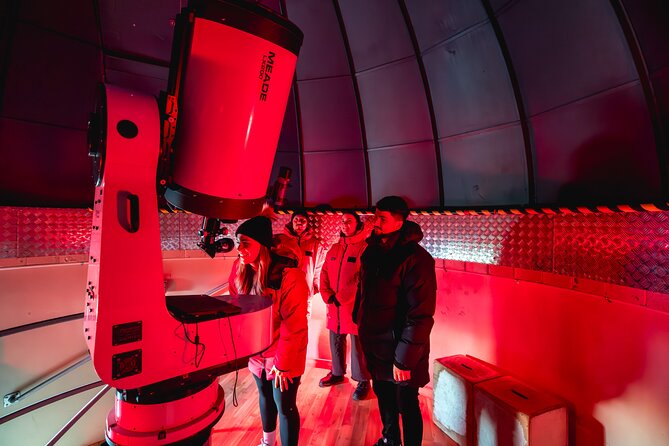
After the naked-eye section, the group moves to telescope viewing. The equipment gives you a closer look at objects that appear as tiny points or faint smudges without magnification. The exact viewing list depends on the sky and what is visible that night, but past sessions have included the moons of Jupiter, old star clusters, and young stars.
This combination keeps the experience varied. You are not standing in a queue for one telescope for the entire evening, and you are not only listening to a talk. The session moves between explanation, observation, and equipment.
The group size helps, though this is still a shared activity. The stated limit is 22 people per trip time, while the wider activity information gives a maximum of 30 participants. You should expect other people around you, but the cap is far more manageable than a large coach group.
Telescope viewing and what you might see
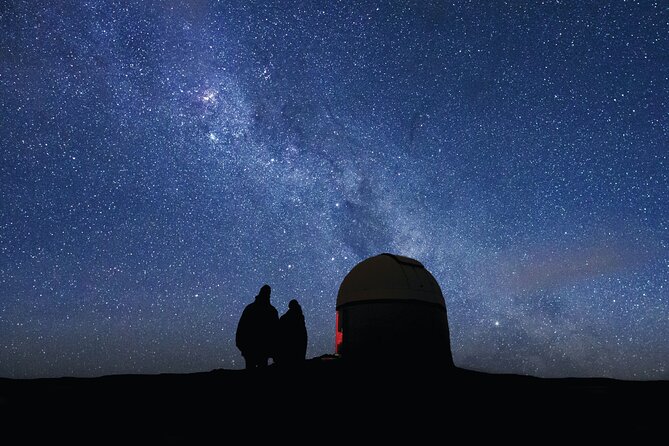
The observatory uses advanced equipment rather than small handheld scopes. That is the main reason the price is higher than a basic public stargazing walk.
A telescope can turn a planet from a bright dot into a visible object with shape and detail. It can also show clusters of stars that look like a single hazy patch to the unaided eye. The guides may point out distant galaxies or objects connected with the birth and development of stars, depending on conditions.
You should keep your expectations flexible. This is not a promise that every named object will appear on every departure. Clouds, wind, the season, and the brightness of the moon all affect what can be seen. One especially useful tip is to consider moon phase when choosing your date. A full moon can brighten the sky and make the Milky Way harder to see, even when the weather is clear.
The telescope section is particularly good for beginners because the guide explains what is in the eyepiece. You do not need to know where to look or how to interpret a blurry patch of light. The aim is to make astronomy accessible, not to test you.
Experienced sky watchers can still find value here. A genuinely dark sky is unusual, and the observatory provides a chance to use equipment you are unlikely to have at home. The visit may also reveal objects you have never found on your own.
More dark sky nights near Lake Tekapo:
- Lake Tekapo: Mountaintop Stargazing at Mount John Summit
★ 4.5 · 176 reviews - Silver River Stargazing Experience in Lake Tekapo
★ 4.5 · 106 reviews - Stargazing Experience at Cowan’s Private Observatory
★ 4.0 · 85 reviews - Dark Sky Indoor Maori Cultural Astronomy Experience
★ 4.5 · 70 reviews
Cold, darkness, and practical comfort
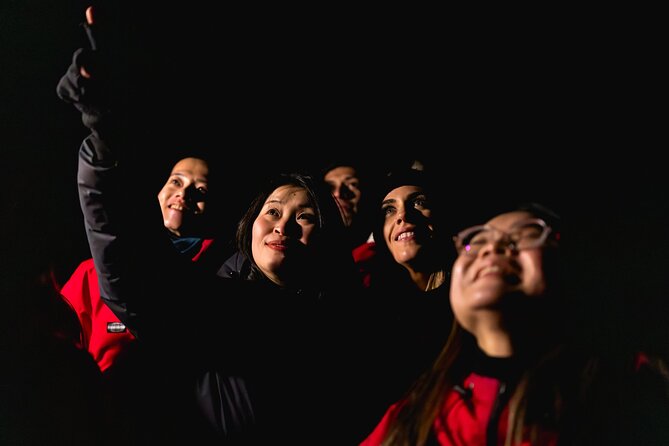
Do not underestimate the temperature. The summit can be freezing in November, and winter conditions will be colder still. Extreme Cold Weather jackets are provided, which is a welcome touch, but you should wear warm layers underneath. Add closed shoes, warm socks, and a hat if you have them.
The supplied jackets are not a substitute for sensible clothing. You may spend much of the session standing outside, and cold hands make it harder to enjoy a telescope. Dress as if you are going to wait outdoors for longer than you expect.
Darkness creates a second practical issue. Walking around the summit can be difficult at first, and white lights are not permitted. Keep near the guide and group, and avoid wandering off to take phone pictures.
Photography is not the main purpose of the evening. On a still night you might be able to take a picture with your own camera, but the availability of camera assistance can depend on wind. Do not book this expecting guaranteed souvenir photographs. Your eyes, rather than your phone, are the reliable viewing tools.
There are no meals or snacks included. Eat before you check in, and bring anything you need only if the operator permits it. The supplied details do not promise food during the summit session.
Weather can decide the whole evening
This activity requires good weather, and the operator may cancel the summit visit if cloud cover makes the outdoor program unworkable. That is frustrating, but it is an unavoidable part of astronomy.
Cloud does not always ruin the session. Broken cloud can move and reveal stars between gaps, and a strong guide may still identify constellations or explain the sky. But thick cloud can hide the main sights, and wind can also affect comfort and telescope use.
If poor weather cancels the trip, you are offered another date or a full refund. An alternate indoor experience may be available, but you should not assume it will match the summit visit. The indoor option is best treated as a fallback, not the reason to book.
If your Lake Tekapo schedule allows, place this tour early in your stay. That gives you a chance to move to another night if the first attempt is canceled. One practical account involved waiting an extra night for better conditions, so flexibility can matter.
You can cancel for a full refund if you do so at least 24 hours before the start time. Cancellations made inside that window are not refunded, and changes are not accepted less than 24 hours before departure. Pay close attention to the date if you choose a start time after midnight.
Is the $139.39 price good value?
At $139.39 per person, this is not a cheap evening activity. The cost includes return transport from Tekapo, summit access, an astronomy guide, telescope viewing, and an extreme-weather jacket.
I think the price makes sense if you care about the location and equipment. You are not simply looking at stars from a dark field near town. You are taken to the summit of Mount John and given access to an observatory linked with the University of Canterbury. That combination is difficult to reproduce independently.
The value is weaker if you mainly want a quick look at the Milky Way. Tekapo’s dark skies can be appreciated without paying for a formal tour, especially if you already own warm clothing and know how to identify constellations. You also take a financial risk when the weather is uncertain, even though a cancellation brings a new date or refund.
For a first astronomy experience, the price includes useful guidance rather than just access to a viewpoint. You learn what you are seeing and get the chance to use professional equipment. That is where the tour earns its cost.
Who will enjoy it most?
This is best for curious beginners, couples, families with older children, and anyone who wants a clear introduction to the Southern Hemisphere’s night sky. Children can attend but must be accompanied by an adult.
It also suits people who enjoy science but do not want a highly technical lecture. The guides explain the basics, point out constellations, and connect the sights to wider ideas about planets, star clusters, solar systems, and galaxies.
You should think twice if you dislike cold, standing outdoors, or uncertain plans. It is also not recommended for people with mobility issues. The summit is dark, the ground can be hard to navigate, and the tour is built around moving between viewing points and telescope equipment.
Language matters for safety. English and Mandarin guides are available, and you are required to speak the language of the tour so you can understand health and safety instructions. If you cannot communicate in the selected tour language, you will not be allowed to join.
How to get the most from your night
Choose the clearest available evening, but remember that forecasts can change. If your stay is short, book with enough time left to try again if weather cancels the first departure.
Wear layers even if the day in Tekapo feels mild. The summit temperature can be a surprise, and the provided jacket works best over warm clothing.
Avoid planning a tight commitment immediately afterward. The activity lasts about 1 hour and 45 minutes in total, and outdoor conditions can affect the pace. You will enjoy it more if you are not checking the clock.
Keep your phone light off once the group begins. Give your eyes time to adjust, and listen for the guide’s instructions about where to walk. The darkness is part of the experience, not an inconvenience to overcome.
Finally, treat the telescope list as a possibility rather than a guarantee. The sky decides what is available. The strongest sessions combine several clear objects with a good explanation of what makes each one worth seeing.
Should you book Mount John Observatory Stargazing?
Book it if you want more than a pretty night sky. The trip gives you a high summit setting, a protected dark sky, practical help with southern constellations, and telescope access that makes the science feel real.
I would especially recommend it for first-time stargazers and visitors who want a signature Lake Tekapo activity. The main caution is weather. If you have only one night and would be disappointed by a cancellation or indoor replacement, the risk is worth considering.
For the best odds, allow two nights in Tekapo, avoid the brightest moon if possible, and pack warm clothes. With that small amount of planning, this is one of the area’s strongest evening activities.
FAQ
Where does the Mount John stargazing experience begin?
You check in with the Dark Sky Project team in Lake Tekapo township before taking the included transport to Mount John.
How high is Mount John Observatory?
The summit is 1,029 metres above Lake Tekapo.
How long does the experience last?
The full activity lasts approximately 1 hour and 45 minutes. The summit stargazing portion lasts about 1 hour and 30 minutes, with around 15 minutes listed for the initial transfer and check-in stop.
What is included in the price?
The experience includes exclusive summit access, an astronomy guide, naked-eye stargazing with laser pointers, telescope viewing, return transport from Tekapo township, and extreme cold-weather jackets.
Are meals or snacks included?
No. Meals and snacks are not included.
Is hotel pickup included?
No. Hotel pickup and drop-off are not included. You need to reach the Dark Sky Project meeting point in Lake Tekapo.
What happens if the weather is poor?
If poor weather prevents the tour from operating, you may be offered another date or a full refund. An alternate indoor experience may also be offered.
How many people can join each departure?
Each trip time has a maximum of 22 people. The activity information also gives a maximum of 30 participants overall.
Are children allowed to join?
Yes, children can participate, but they must be accompanied by an adult.
Can I cancel for a refund?
You can cancel at least 24 hours before the start time for a full refund. Cancellations or changes made less than 24 hours before the experience are not accepted for a refund.
Just added around Lake Tekapo
- Silver River Stargazing Experience in Lake Tekapo★ 4.5 · 106 reviews
- Tekapo Star Gazing Tour – Soak in the Stars★ 4.5 · 109 reviews
- Mt Cook Day Tour From Tekapo (Small Group, Carbon Neutral)★ 4.5 · 11 reviews
- Lake Tekapo Scenic Wilderness Cass Valley Tour★ 4.5 · 19 reviews
- Scenic 4WD Tour Lake Tekapo Backcountry★ 5.0 · 77 reviews
- Day Trip: Lake Tekapo to Mt Cook National Park★ 4.5 · 31 reviews
- Lake Tekapo Ultimate Stargazing Experience★ 5.0 · 3 reviews
- Stargazing Experience at Cowan’s Private Observatory★ 4.0 · 85 reviews
Stargazing Tours, compared.
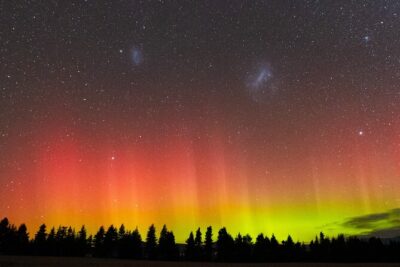
Silver River Stargazing Experience in Lake Tekapo
Read our review →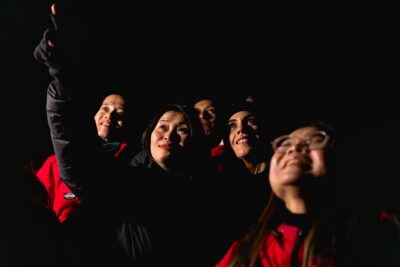
Stargazing Experience at Cowan’s Private Observatory
Read our review →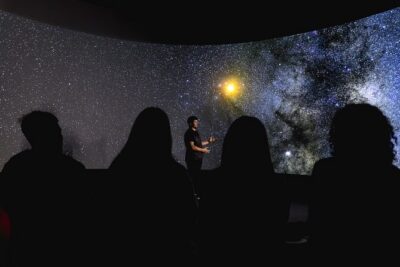
Dark Sky Indoor Maori Cultural Astronomy Experience
Read our review →
Browse the lists this tour appears in