
Reviewed · CANOES & KAYAKS
Bioluminescence Kayak Tour – Est. 1994
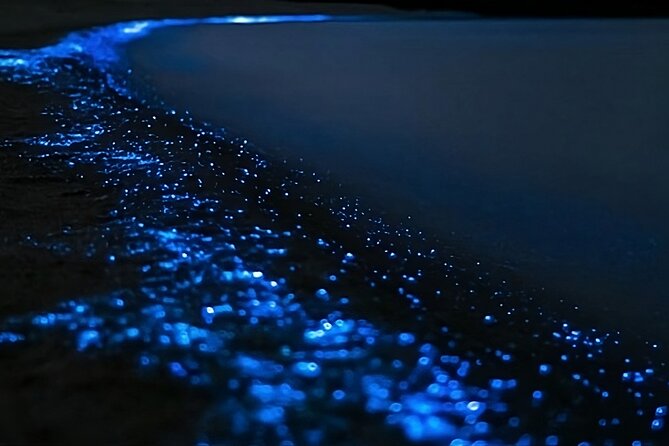
The water is the star here. As your paddle moves through the dark sea, tiny flashes of blue-green light can appear around the blade and hull, like sparks under the surface. This two-hour night kayak tour leaves Auckland’s city lights behind and heads for the protected waters of the Long Bay Okura Marine Reserve.
I like the small 1:6 guide-to-guest ratio, which gives beginners room to learn without feeling lost in a crowd. I also like the simple setting: quiet water, native birds, stars overhead, and no need to bring a kayak or safety kit. The main caution is that bioluminescence is a natural event, not a stage show. Some nights bring a strong glow, while others offer only brief, subtle flashes.
Key points at a glance
- The glow appears when the water moves: Paddle strokes, splashes, and small waves can trigger blue sparks from microscopic plankton.
- Beginners are welcome: Qualified guides provide kayaking instruction and safety help before you head into the dark.
- The route is near Auckland’s North Shore: The exact launch area is within 10 kilometres of the North Shore Canoe & Kayak Store in Mairangi Bay.
- Guides keep the group personal: A 1:6 guide-to-guest ratio makes it easier to ask questions and get help.
- Photos are difficult: Phone cameras may not capture the faint glow, so plan to enjoy much of this one without a good picture.
- Weather and moonlight matter: Poor weather can cancel the tour, and the amount of visible glow changes with conditions.
Auckland’s night sea, lit from below
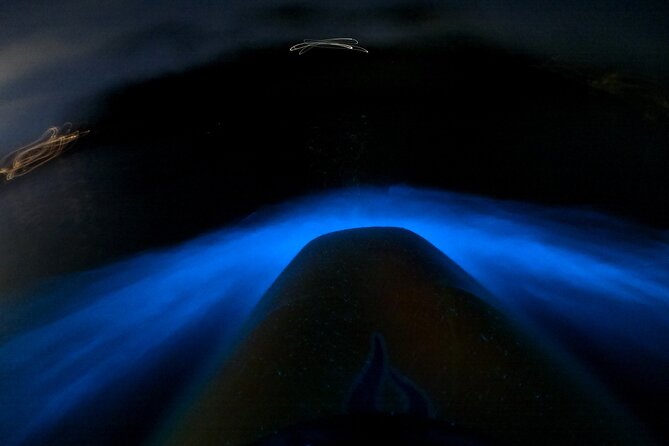
Bioluminescent plankton are tiny ocean organisms that produce light when disturbed. You do not simply look at a glowing sea from the shore. You make the light happen by paddling, moving your hands through the water, or letting a small wave break around the kayak.
That cause-and-effect is what makes the outing special. A paddle stroke may leave a quick trail of sparks. A slap of water can create a brighter burst. The effect is often subtle, but in a dark setting even a small flash can feel remarkable.
The tour runs along Auckland’s northern coast, away from the harsh neon glow of the city. The exact location is confirmed before 3.30pm on the day of the tour and sits within a 6-mile, or 10-kilometre, radius of the North Shore Canoe & Kayak Store in Mairangi Bay.
The main paddling area is the protected Long Bay Okura Marine Reserve. Protection from heavy open-water conditions helps make the route suitable for first-time kayakers, though you are still on the sea and should expect normal coastal movement.
More Kayaking Trips in Auckland
- Auckland: Night Kayak Tour in Glowing Bioluminescent Waters
★ 4.9 · 259 reviews - Sunset kayak tour to Rangitoto Island
★ 5.0 · 168 reviews - Day sea kayak tour Rangitoto Island
★ 5.0 · 79 reviews
Meeting in Rosedale and getting ready
The listed meeting point is 2/20 Ascension Place, Rosedale, Auckland 0632. This is where the activity begins and ends. The location is near public transportation, and one visitor reached the meeting point by Auckland bus before using an Uber to return to central Auckland.
The activity operator is Canoe & Kayak Adventures. Guides provide the kayak, paddle, and safety equipment, along with instruction before you set off. Stable sea kayaks or sit-on-top kayaks are used, an important detail if you have never paddled before or feel uneasy about balancing.
The group limit is 24 people, but the 1:6 guide-to-guest ratio matters more than the maximum number. It means the guides can spread through the group and keep an eye on paddlers rather than leading from far ahead.
You should expect to get wet. That may come from paddle splashes, getting in and out, or a short rain shower. Wear clothing that can handle water, and bring a change of clothes for afterward. Jeans are not suitable for the activity, and one guide was able to provide extra clothing when a participant arrived in denim, but it is better to come prepared.
Changing areas may not be open after the night paddle, so do not count on having a full facility available at the end. This is one of those outings where a dry layer and a simple plan for getting home make a real difference.
Learning to kayak before darkness arrives
The tour is designed for people without kayaking experience. Your guides explain how to hold and use the paddle, how to move the kayak, and how to handle the boat safely. The instruction is practical rather than technical, giving you enough skill to manage the calm protected water.
Several guides receive repeated praise for being patient, friendly, and reassuring. Names mentioned by visitors include Gareth, Madison, Eloise, Paul, Peter, Ben, Keith, Josh, Maddy, Elena, Sam, and others on the guiding team. You may not have any particular guide on your departure, but the operation clearly relies on staff who enjoy teaching as much as paddling.
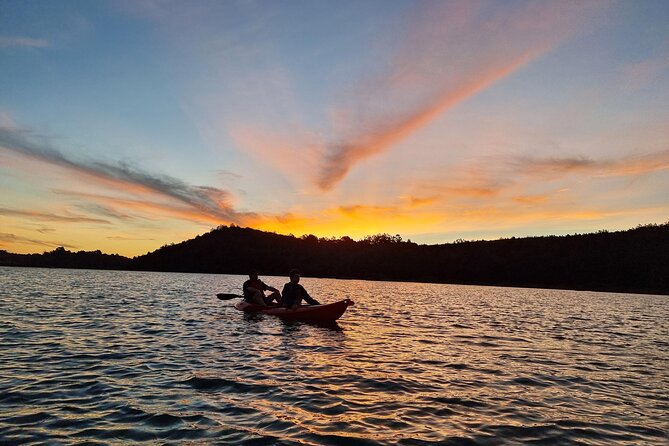
The first part may take place around sunset, before the sky becomes fully dark. This gives you a chance to get comfortable in the kayak and see the coastal setting before the night view takes over. As darkness settles, the focus changes from the shoreline to the water around your boat.
Getting out of the kayak can be more awkward than paddling it. If you are nervous about the activity, remember that the entry and exit may be the least graceful moments. Follow the guide’s instructions, take your time, and avoid rushing at the shore.
Paddling Long Bay Okura Marine Reserve
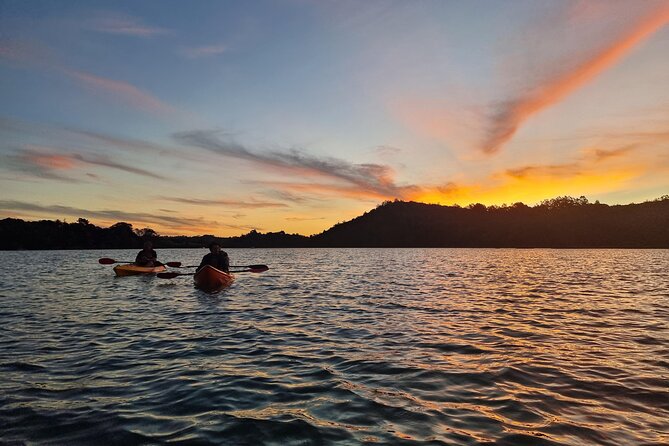
The Long Bay Okura Marine Reserve gives the tour a calm natural setting rather than a busy city harbor. At night, you hear the Hauraki Gulf and native birds more clearly, while the shoreline becomes a dark outline around the water.
This is not a sightseeing cruise with a long list of landmarks. You are there to paddle, listen, and watch for light in the water. The scenery is easier to appreciate before full darkness, while the bioluminescence becomes easier to see after the last daylight fades.
Some outings also include views of a star-filled sky. Clear nights may reveal stars and planets above while the water flashes below. That combination is part of the appeal, although it depends on cloud cover and the conditions on the day.
The kayaking itself is manageable for most people. The tour information says most participants can take part, and the use of stable kayaks makes the activity approachable. Still, you should be comfortable taking part in a two-hour outdoor paddle and getting wet. The guides place safety first, and the weather can affect the plan.
A few more Auckland half-days to weigh up
- Waiheke Island: Ferry & Hop-On Hop-Off Explorer Bus Tickets
★ 4.6 · 3,311 reviews - Hobbiton & Waitomo Caves Guided Day Trip from Auckland incl lunch
★ 5.0 · 2,677 reviews - From Auckland: Hobbiton & Waitomo Caves Day Trip with Lunch
★ 4.9 · 2,505 reviews - Auckland Dolphin and Whale Watching Eco-Safari Cruise
★ 4.5 · 1,790 reviews
How strong is the bioluminescence?
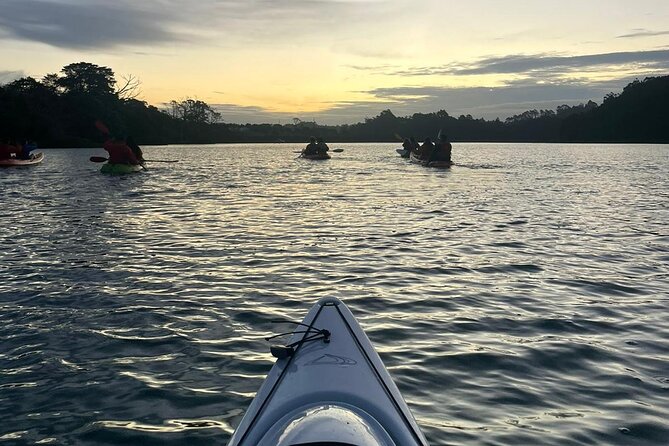
This is the most important point to understand before booking. The glow varies. Some nights produce a striking display, with blue sparks around the paddle and waves that seem to light from within. Other nights offer only short flashes or a weak shimmer.
Several accounts describe the effect as looking like underwater stars, sparklers, or an Avatar-like glow. One outing produced enough light for people to see several types of bioluminescence, while another included glow worms as an unexpected extra. Those moments can be extraordinary, but they are not guaranteed.
A few people found the glow less bright than photographs suggest. That is a fair concern. Promotional images often show the strongest possible conditions, while a normal night may be much more delicate. The light may appear for only half a second at a time, especially if the plankton concentration is low.
Moonlight, cloud, water movement, weather, and natural variation all affect what you see. A dark night generally helps, but darkness alone cannot create a strong display if the plankton are not particularly active.
I would book this tour if you are happy with a chance to see a natural phenomenon rather than a guaranteed performance. If your main goal is bright, easily photographed glowing water, you may find the experience underwhelming. If you enjoy quiet outdoor activities and can appreciate a faint flash as much as a big one, the uncertainty is part of the fun.
Why your phone may not capture the magic
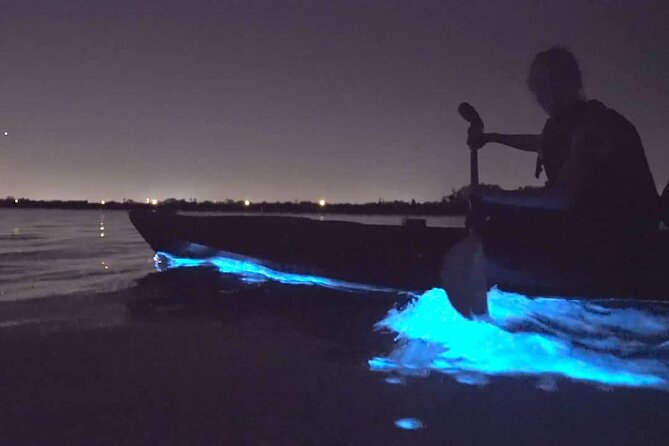
You should lower your expectations for photos and video. Several people found that phone cameras could not record the glow clearly, especially from a moving kayak. The light can be brief and faint, and a camera may show only a dark frame.
That is not a fault with the equipment or guides. It is a limit of ordinary phone photography in low light. The best part of the tour may remain in your memory rather than your camera roll.
Guides work to improve your chances by taking the group to areas where the plankton are visible and explaining how movement creates the light. You can help by watching the water closely after each paddle stroke instead of waiting for a constant glow.
This is also a good reason to avoid treating the tour as a photo assignment. Put the phone away when the water starts sparkling. You will see more, and you will not spend the best moments trying to frame a shot that may not come out.
What the $73.85 price gets you
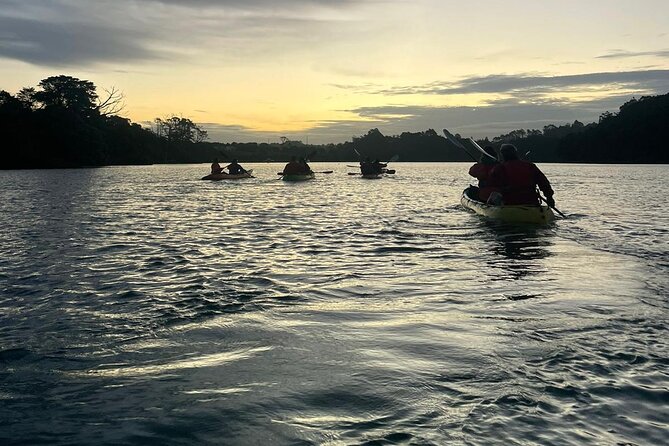
At $73.85 per person, the price includes the kayak, paddle, safety gear, instruction, and guide support. You are paying for a full two-hour activity with a qualified team, not simply equipment rental.
That makes the cost reasonable for a first-time kayaker who wants a guided night outing near Auckland. You do not need to arrange a kayak, learn the route, judge the sea conditions, or work out where to look for bioluminescence. The 1:6 ratio adds value because the guides can give personal help.
The price is harder to justify if you are mainly paying for a strong glow and a set of perfect photographs. Nature does not provide that guarantee. You are buying access to the setting and the chance to see the plankton, along with a safe introduction to night kayaking.
The tour has a 4.2 out of 5 rating from 187 published ratings, with especially strong praise for the guides, safety, and the unusual setting. The weaker experiences usually focus on the amount of bioluminescence rather than the staff or equipment.
Timing, transport, and practical planning
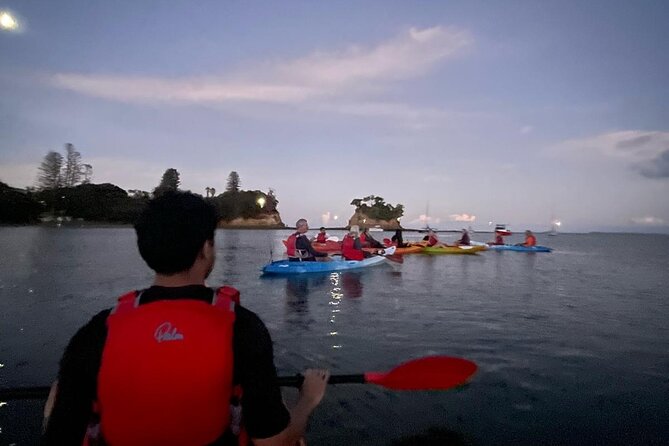
The exact paddling location is confirmed on the day before 3.30pm. That detail matters because the activity takes place within 10 kilometres of the Mairangi Bay store rather than at one fixed launch site stated in advance.
Allow time to reach the Rosedale meeting point at 2/20 Ascension Place. Public transportation is nearby, but your return may finish after normal evening plans have changed. An Uber worked for a previous participant returning toward central Auckland, so I would have a ride option ready rather than assuming a late bus will suit you.
The activity ends back at the meeting point. All kayaking and safety equipment is included, and confirmation arrives when you book. The maximum group size is 24, though the guide ratio keeps direct support available.
This experience requires good weather. If poor weather cancels the tour, you are offered another date or a full refund. The same choice applies if the minimum number of participants is not reached. You can cancel for a full refund if you do so at least 24 hours before the start time. Cancellations or changes inside that window are not accepted for a refund.
Who will enjoy this night paddle?
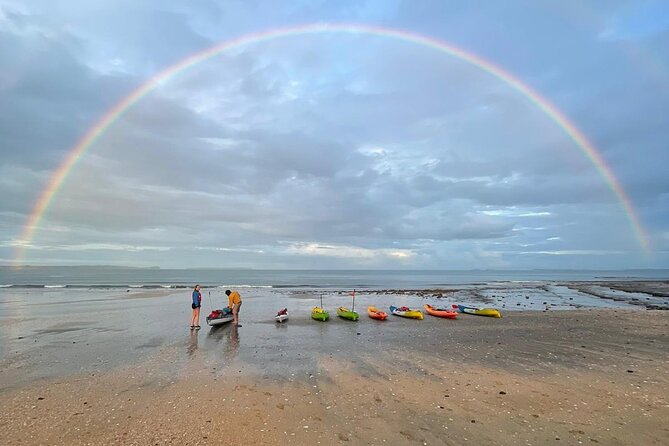
This tour suits first-time kayakers, couples, families, and anyone looking for something beyond Auckland’s usual daytime attractions. The calm reserve, patient instruction, and stable kayaks make it a sensible choice for beginners.
It also works well as a final evening activity in Auckland. The city is close enough for easy access, yet the water and darkness create a clear change of pace. You may see stars, hear birds, and spend much of the time in quiet water rather than in a noisy entertainment district.
You should think twice if you dislike getting wet, have serious back concerns, or need a strong visual spectacle to feel that an outing was worthwhile. One useful tip from the experience is to request or choose a kayak with a backrest if you have back trouble. The boats are stable, but two hours of paddling can still be tiring.
This is not the best choice for someone who wants to see the coast in daylight. The shoreline becomes hard to see after dark. Canoe & Kayak Adventures also offers daytime trips with clear-bottom kayaks, which may suit you better if scenery matters more than the glowing plankton.
Should you book the Bioluminescence Kayak Tour?
Book it if you want a guided, beginner-friendly night on Auckland’s coast and understand that the glow may range from faint sparks to a memorable blue display. The strongest reasons to go are the personal guide support, the peaceful reserve, and the chance to create light with every paddle stroke.
Do not book it solely because you expect your phone to produce the same images you have seen online. Bring dry clothes, avoid jeans, plan your ride home, and accept that weather and natural conditions control the show.
For $73.85, this is good value when you treat it as a complete night kayaking experience with bioluminescence as the bonus. On a clear, active night, it can be a remarkable Auckland memory. On a dimmer night, the kayaking, stars, guides, and quiet water still need to be enough for you.
FAQ
How long does the bioluminescence kayak tour last?
The activity lasts approximately two hours, including kayaking instruction and the night paddle.
Where does the tour meet?
The listed meeting point is 2/20 Ascension Place, Rosedale, Auckland 0632, New Zealand. The activity ends back at the meeting point.
Is kayaking experience required?
No. Qualified guides provide kayaking tuition, and the experience is designed for people who have not kayaked before.
What equipment is included?
The price includes kayaking equipment, paddles, and safety gear. Stable sea kayaks or sit-on-top kayaks are used.
Where does the tour take place?
The paddle takes place within a 6-mile, or 10-kilometre, radius of the North Shore Canoe & Kayak Store in Mairangi Bay. The exact location is confirmed before 3.30pm on the day of the tour. The main route is in the Long Bay Okura Marine Reserve.
How many people can join the tour?
The maximum group size is 24 people. The guide-to-guest ratio is 1:6.
Can I take part using public transportation?
The meeting point is near public transportation. The listed meeting point is in Rosedale, and the activity ends there. A previous participant used an Auckland bus to reach the meeting point and an Uber to return to a hotel.
Can the bioluminescence be photographed?
You may find it difficult to capture the glow with a phone camera. The light can be faint and brief, so photos and videos may not show what you see on the water.
What happens if bad weather cancels the tour?
If poor weather causes a cancellation, you are offered a different date or a full refund. If the minimum number of participants is not reached, you are also offered another date, a different experience, or a full refund.
Just added around Auckland
- Auckland Airport Private One-Way or Round-Trip Transfer★ 4.5 · 14 reviews
- Zombie Bite Escape Room Experiences★ 5.0 · 54 reviews
- Kumeu Wine Region Shuttle from Auckland★ 4.5 · 19 reviews
- Auckland’s Wild West Coast & Black Sand Beaches Tour inc Lunch★ 5.0 · 12 reviews
- Vineyards Honey and Black Sand Beaches from Auckland★ 5.0 · 93 reviews
- West Coast Discovery Tour★ 5.0 · 37 reviews
- Wētā Workshop Unleashed – Intro to Scars and Scrapes Workshop★ 5.0 · 5 reviews
- West Coast Discovery Piha Beach Private Tour★ 5.0 · 14 reviews
Canoes & Kayaks, compared.
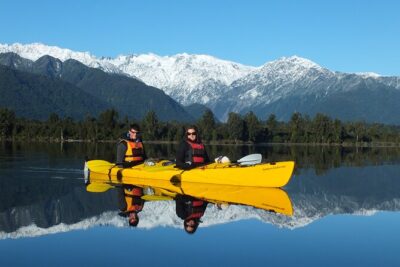
Small-Group Kayak Adventure from Franz Josef Glacier
Read our review →
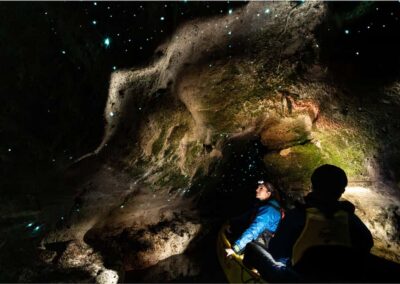
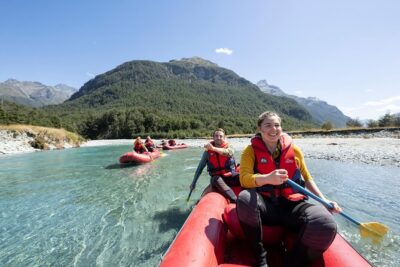
Dart River Canoe and Jet Boat Experience from Queenstown
Read our review →Browse the lists this tour appears in