
Reviewed · CANOES & KAYAKS
Sunset kayak tour to Rangitoto Island
Rangitoto is Auckland’s great volcanic landmark, and seeing it by kayak gives you a far better sense of its place in the Waitematā Harbour than a quick ferry ride. You paddle across open water, eat dinner on the island, hike uphill for sunset, then return with Auckland glowing ahead of you. The night paddle is the real prize.
I like the clever mix of sea kayaking, hiking, and a Kiwi barbecue in one evening. I also like the small groups, with no more than eight people, and guides such as Daniel, Byron, Eric, and Tony who are praised for patient instruction and careful safety work. The catch is simple: this is a serious physical outing, not a gentle sunset cruise. Wind, rain, a steep walk, and a long paddle can make the schedule feel tight.
Key points to know before booking
- Expect roughly 10 kilometres of return kayaking: The crossing takes about an hour each way for a fit group, and the return leg is in darkness.
- The sunset requires a climb: The walk to Rangitoto’s summit is rewarding but includes uphill sections and a descent by headlamp.
- Dinner is cooked on the island: A New Zealand-style barbecue, salad, tea, and coffee are included, with vegetarian and vegan choices available if you note them when booking.
- Small groups make the outing manageable: The maximum group size is eight, allowing the guide to watch paddlers closely.
- Weather changes the plan: Strong wind may send the group to another volcanic island or lead to a rescheduled trip or refund.
- Pack for getting wet: Bring warm layers, sturdy walking shoes, water, and a full change of clothes.
Why kayaking to Rangitoto feels different
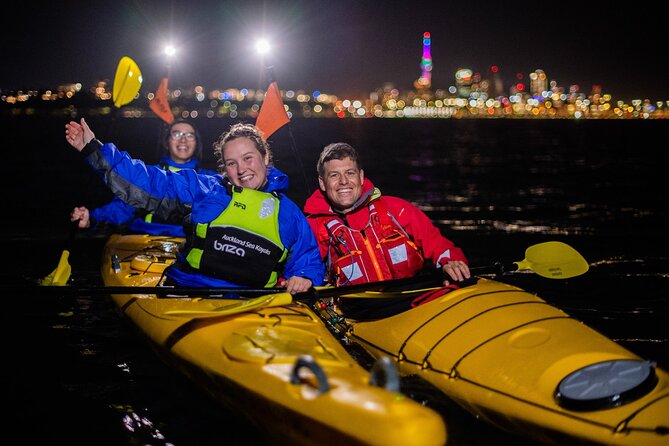
Auckland is a water city, but many visitors see the Waitematā Harbour only from a ferry or waterfront walkway. This tour places you at water level, with the skyline behind you and Rangitoto rising ahead as a broad volcanic cone.
The paddle to the island usually takes about an hour. That timing depends on wind, group pace, and sea conditions, so you should think of it as an active crossing rather than a short scenic float. Guides first cover paddling form and safety, then keep the kayaks together while watching for ferries and other boats.
You do not need previous kayaking experience. The trip is described as suitable for beginners, and the guides provide instruction, sea kayaks, paddles, spray skirts, waterproof jackets, and other essential equipment. Still, beginner-friendly does not mean effortless. You need enough stamina for sustained paddling, and you should be comfortable being on open harbour water.
The experience is most enjoyable when you settle into a steady rhythm. You will have time to look toward Auckland, watch the harbour traffic, and study Rangitoto’s changing shape as you get closer. On a windy day, the crossing can become much more demanding. Several guides have adapted routes or offered alternative islands when conditions made the planned crossing unsafe.
More Evening Tours in Auckland
- Auckland: Night Kayak Tour in Glowing Bioluminescent Waters
★ 4.9 · 259 reviews - Auckland: Sunset & Night Sea Kayak Tour to Rangitoto Island
★ 5.0 · 60 reviews - Te Pā Tū Evening Cultural Experience – Private Tour from Auckland
★ 5.0 · 22 reviews
Reaching the volcanic island after an hour on the water
Rangitoto is Auckland’s highest and largest volcanic cone, and its profile gives the harbour a strong sense of place. Once you land, the mood changes. The city feels farther away, even though it remains visible across the water.
The group has dinner on the island before heading uphill. The meal is a practical part of the outing, since you have already spent about an hour paddling and still have a climb and another paddle ahead. The barbecue has included steak, salad, and other hearty food, with tea and coffee available. Vegetarian and vegan meals can be arranged when you provide advance notice.
Do not expect a long restaurant-style meal. The schedule is built around reaching the summit near sunset, and one account found the eating period rushed. I would treat dinner as a well-timed refuelling stop rather than the main event. Eat enough to keep your energy up, but be ready to move when the guide calls the group together.
The guide adds local information along the way, including details about Rangitoto’s volcanic origin, nearby landmarks, plants, birds, and wildlife. Daniel, Byron, Eric, Tony, Tom, Nathan, Elle, Ben, Cody, and other guides have each been praised for different strengths, but the useful pattern is clear: good leadership matters here. The guide must cook, organize the group, explain the route, and keep everyone safe on both water crossings.
The summit walk and Auckland at sunset
The walk to the summit is not a flat stroll. Different descriptions put the return hike at roughly 5.5 to 7 kilometres, with a moderate lower section and steeper parts near the top. You need walking shoes with a firm sole. Sandals are a poor choice, especially for the descent after dark.
The climb gives the evening a welcome change of pace. After the steady paddle, you are walking through Rangitoto’s volcanic terrain, with the guide pointing out local plants and birds. You might hear tūī or see fantails, depending on the evening and the group’s pace.
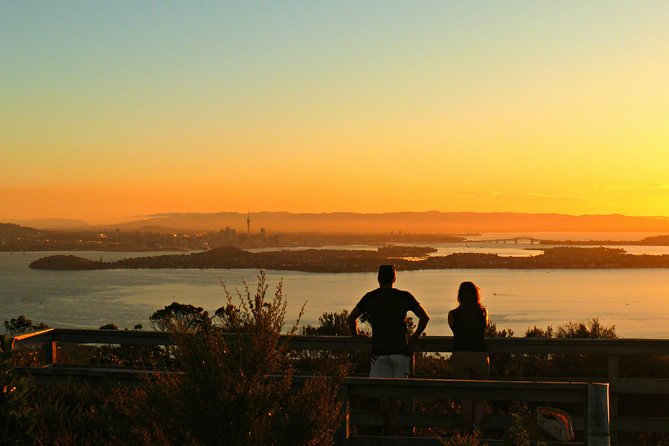
At the summit, the reward is a broad view over Auckland and the Waitākere Ranges. Sunset conditions are never guaranteed. Cloud can soften the colors, and rain may move across the harbour, but even a broken-weather evening can produce memorable views. One group watched rainstorms on either side of Auckland while a clearer patch opened behind the city.
I would not book this solely for a perfect orange sun dropping into the sea. Book it for the whole sequence: the crossing, the island, the climb, the changing light, and the city beginning to shine below. If the cloud blocks the main sunset, you still have a rare view of Auckland from a volcanic summit at dusk.
The walk down is a different challenge. It becomes dark quickly, and headlamps are used. A few people have found this section difficult, especially after the uphill walk. The pace should remain controlled, but anyone uncomfortable walking on uneven ground in darkness should think carefully before booking.
The return paddle beneath the city lights
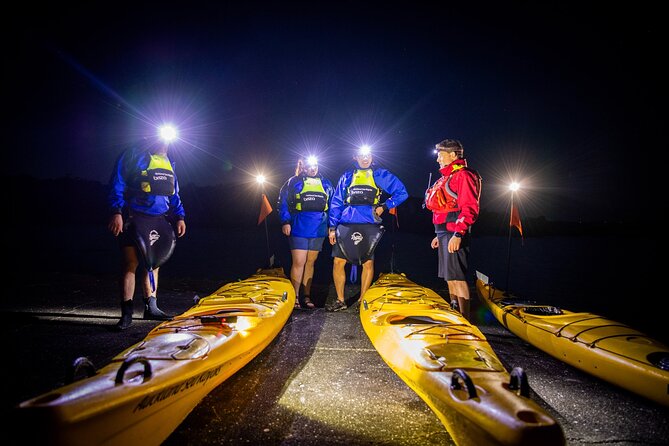
The return is the part that makes this tour more than a daytime kayaking trip. After walking down to the shore, you launch again in darkness and point the kayaks toward Auckland.
The guide leads the group together and uses lights and safety procedures to manage the crossing. The dark water can feel more demanding than the outward journey, particularly if wind or waves have increased. One account described paddling against waves on the return, while another found the water calmer and the crossing peaceful.
You will not have the same view of the harbour as during daylight. Instead, the city lights become your reference point. Auckland’s skyline and waterfront glow across the water, and the quiet between paddle strokes gives the final leg a calm, almost dreamlike quality.
This is also where the tour’s physical demands are most obvious. You have already paddled, eaten, climbed, and walked down in the dark. If you are tired, the guide’s job becomes especially important. The strongest guides, including Daniel and Byron, have been praised for keeping the group together, checking on first-time paddlers, and maintaining a relaxed tone without losing focus.
More Kayaking Trips in Auckland
- Bioluminescence Kayak Tour – Est. 1994
★ 4.0 · 187 reviews - Day sea kayak tour Rangitoto Island
★ 5.0 · 79 reviews - Motukorea / Browns Island Sea Kayak Journey
★ 5.0 · 35 reviews - Auckland Bioluminescence Kayak Tour
★ 5.0 · 31 reviews
What the six-and-a-half-hour schedule really means
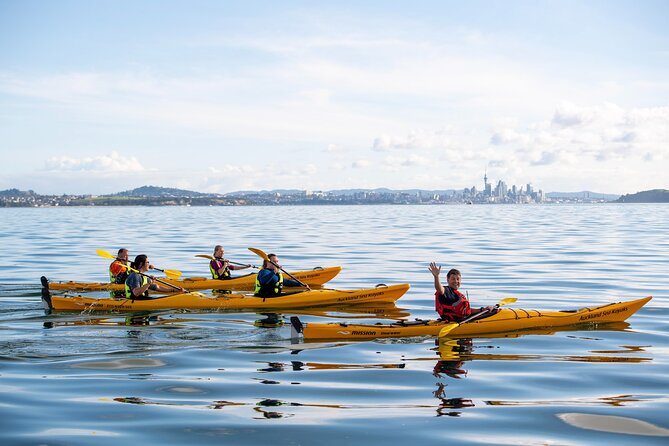
The advertised duration is about six hours and 30 minutes, with a 4:00 pm start from the Auckland Sea Kayaks meeting location on Museum Circuit in Parnell. The exact finish depends on weather, group speed, and the conditions on the return crossing.
This is an evening commitment, not a quick activity to fit between dinner reservations. You should leave the rest of the night open. Some outings have ended late enough for a guide to offer a ride toward central Auckland, but that should not be treated as a standard part of the booking. The listed ending point is back at the meeting point.
The schedule has several moving parts:
- Gear fitting, paddling instruction, and a safety briefing
- The crossing from Auckland to Rangitoto
- Landing and a cooked barbecue dinner
- The walk to the summit
- Sunset viewing
- The descent with headlamps
- The return paddle in darkness
That is a lot for one evening. One person felt the group had to power-walk and paddle to stay on schedule, while others found the pace comfortable and well managed. Your experience will depend partly on the weather and partly on the guide’s timing.
The fitness level is higher than the label suggests
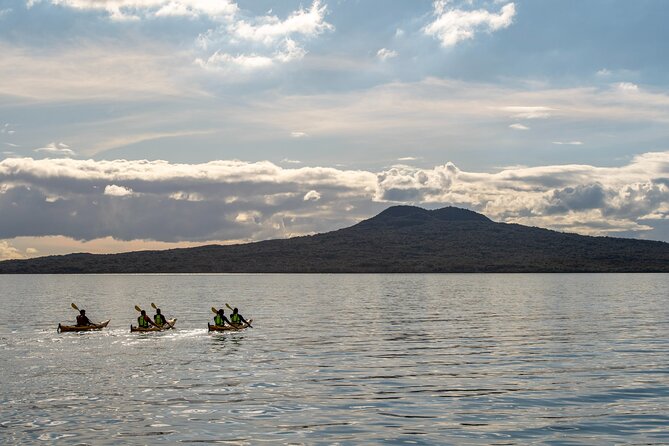
The operator describes the activity as suitable for people with little kayaking experience and asks for a moderate level of fitness. I would interpret that conservatively. You do not need technical kayaking skills, but you do need the endurance for about two hours of total paddling, plus a substantial uphill and downhill walk.
You should be able to:
- Paddle steadily for about an hour at a time
- Handle changing wind and harbour conditions
- Walk several kilometres, including uphill sections
- Descend in darkness with a headlamp
- Stay alert late in the evening after physical exertion
The tour is a good match for active couples, solo visitors who enjoy small groups, and anyone looking for a memorable outdoor evening rather than a passive sightseeing trip. It is less suitable if you want a relaxed boat ride, dislike getting wet, or have limited walking stamina.
First-time kayakers can manage the trip with instruction, but you should not underestimate the crossing. The most helpful approach is to paddle at a steady pace and listen closely to the guide’s advice on form. Efficient technique will save your arms for the hike and the return journey.
Clothing and equipment that will make the night better
All kayaking equipment is supplied, including quality sea kayaks and protective gear. Waterproof jackets and spray skirts have been provided, but you can still get wet from rain, paddle splash, or waves.
I would pack:
- A complete change of clothes
- A warm fleece or insulated layer
- Sturdy walking shoes
- Water
- A small headlamp or torch, if you have one
- Food in sealed containers if you need extra snacks
The change of clothes matters more than it might on a normal daytime paddle. You may want to change before the hike so you are not walking uphill in damp clothes. A warm layer is also useful once the sun drops and you are standing on the summit or preparing for the return crossing.
Keep bags zipped and use the supplied dry bags properly. Avoid loose supermarket bags and open containers. Rangitoto is part of the Hauraki Gulf, where introduced pests can harm native wildlife. Before leaving the mainland, clean soil and seeds from footwear and gear, check for insects and rodents, and use cleaning stations at the pier when available. Pets are not permitted.
Weather, alternate routes, and the value of flexibility
This tour depends heavily on weather. Wind is the biggest concern because it affects both the crossing and the timing. Rain does not automatically ruin the evening, and several outings have remained enjoyable in wet conditions, but poor weather can change the destination or cancel the activity.
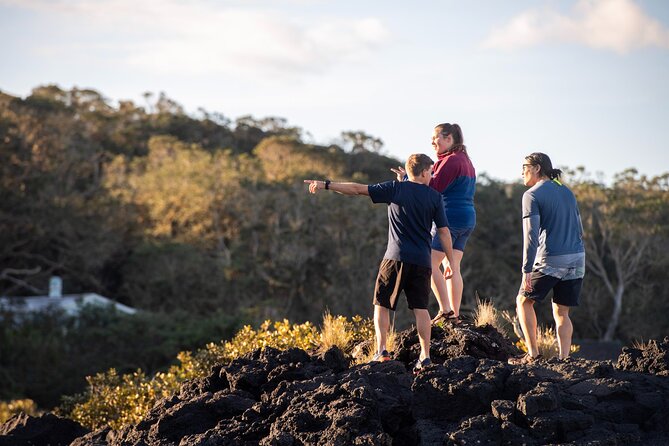
If conditions prevent the planned trip to Rangitoto, the group may visit another volcanic island closer to shore. One such outing included a shorter crater walk and did not offer the same long summit hike. That is a sensible safety choice, but it is worth knowing that the alternative may feel less complete.
The operator may also cancel for poor weather or if the minimum number of participants is not reached. In those cases, you can choose another date or receive a full refund. For your own plans, keep some flexibility around the booking rather than scheduling a fixed dinner immediately afterward.
The cancellation policy allows a full refund when you cancel at least 24 hours before the start time. Changes or cancellations inside that window are not accepted for a refund.
Is the $152.04 price good value?
At $152.04 per person, this is not the cheapest way to see Rangitoto. A ferry and a self-guided walk cost less. But that comparison leaves out the kayak equipment, instruction, guide, safety management, cooked dinner, summit walk, and night crossing.
The value is strongest if you want several activities combined into one carefully managed evening. You do not have to arrange boat transport, rent gear, plan the route, or work out how to return after sunset. The guide also handles the barbecue and provides local information along the way.
The price is less attractive if you are mainly chasing a sunset photograph or if you already own kayaking equipment and prefer to travel independently. The tour’s real appeal is the full progression from city shoreline to island summit and back again.
A maximum of eight participants helps justify the cost. A small group makes it easier for the guide to give paddling advice, monitor the crossing, and adjust the pace. It also creates a more sociable outing without the feel of a large coach excursion.
Who should book the Rangitoto sunset paddle?
You should book this if you want an active Auckland experience with a strong sense of place. It suits people who like combining exercise with scenery and do not mind a little discomfort in exchange for a memorable evening.
I would especially recommend it to:
- Fit visitors seeking something beyond standard city sightseeing
- First-time kayakers who are ready for a real workout
- Couples looking for an unusual sunset outing
- Small groups who enjoy shared outdoor activities
- People interested in Auckland’s volcanic geology and harbour setting
I would hesitate if you want a gentle, predictable schedule. The sunset may be cloudy, the crossing may be windy, and the return is genuinely dark. You also need to accept that dinner may be brief so the group can reach the summit on time.
Should you book it?
Book it if you can handle a long paddle, a steep walk, and a dark-water return. The combination is unusual, and the view back toward Auckland from Rangitoto gives the evening a special sense of scale.
Pack warmly, bring dry clothes and proper shoes, mention dietary needs in advance, and leave your evening free. If you approach this as an active expedition rather than a sightseeing shortcut, the $152.04 price offers solid value. If you want comfort and an easy sunset, take the ferry instead.
FAQ
Where does the sunset kayak tour start?
The tour starts at the Auckland Sea Kayaks city pickup location on Museum Circuit in Parnell, Auckland 1010. The listed start time is 4:00 pm.
How long does the tour last?
The activity lasts approximately six hours and 30 minutes. It ends back at the meeting point, although the exact finish can vary with weather and group conditions.
Do I need previous kayaking experience?
No. The tour is suitable for people with little kayaking experience, and the guides provide paddling instruction and safety guidance. You still need a moderate level of physical fitness.
How far do you kayak?
The return paddle is roughly 10 kilometres, with about an hour of kayaking each way in typical conditions. Wind and group pace can affect the timing.
Is dinner included?
Yes. A barbecue dinner is included, along with coffee and tea. Vegetarian and vegan options can be provided when you note your dietary needs during booking.
What should I bring?
Bring water, warm clothing, sturdy walking shoes, and a complete change of clothes. You may also want your own headlamp or torch. Pack food in sealed containers and keep bags zipped to help protect Hauraki Gulf wildlife.
What happens if the weather is poor?
The tour may be moved to another date, changed to another volcanic island, or canceled. If the operator cancels because of poor weather or because the minimum number is not reached, you can receive a full refund or choose an alternative.
Just added around Auckland
- Auckland Airport Private One-Way or Round-Trip Transfer★ 4.5 · 14 reviews
- Zombie Bite Escape Room Experiences★ 5.0 · 54 reviews
- Kumeu Wine Region Shuttle from Auckland★ 4.5 · 19 reviews
- Auckland’s Wild West Coast & Black Sand Beaches Tour inc Lunch★ 5.0 · 12 reviews
- Vineyards Honey and Black Sand Beaches from Auckland★ 5.0 · 93 reviews
- West Coast Discovery Tour★ 5.0 · 37 reviews
- Wētā Workshop Unleashed – Intro to Scars and Scrapes Workshop★ 5.0 · 5 reviews
- West Coast Discovery Piha Beach Private Tour★ 5.0 · 14 reviews
Canoes & Kayaks, compared.
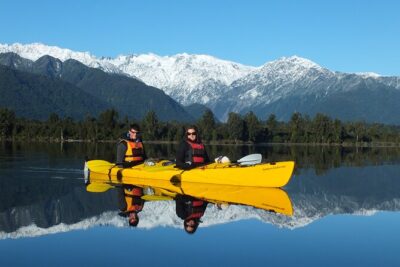
Small-Group Kayak Adventure from Franz Josef Glacier
Read our review →
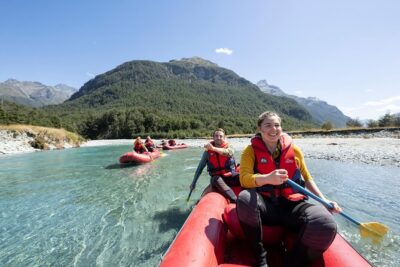
Dart River Canoe and Jet Boat Experience from Queenstown
Read our review →Browse the lists this tour appears in