
Reviewed · AKAROA TOURS
Solar Explorer in Akaroa – Sun-Viewing Tour with Telescopes
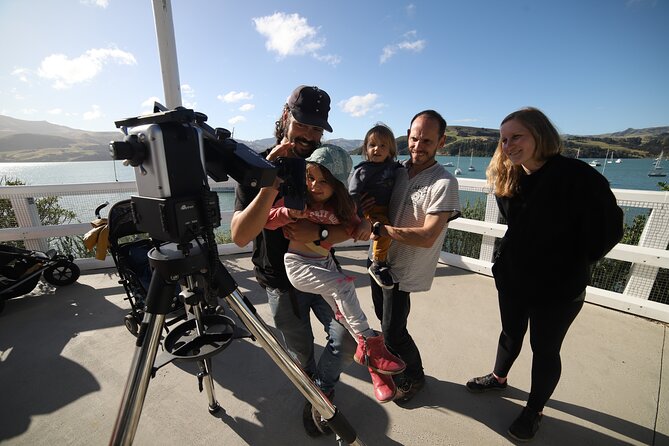
The most surprising thing about Solar Explorer is how much detail you can see in daylight. From Akaroa Lighthouse, a specialist solar telescope brings sunspots, flares, and changing surface activity into view. This is not a talk with a telescope parked in the background. You get to look through it yourself, with an astronomer explaining what appears on the screen.
I like the short 30-minute format, which fits neatly into an Akaroa day without taking over your schedule. I also like the live digital images and smartphone adapter, because you leave with something more useful than a fading memory of a bright spot in an eyepiece.
The main thing to consider is the weather. Clouds can block the Sun, and this experience needs clear enough conditions to operate. The team, including Luca, has worked with visitors to shift bookings when conditions turn poor, but you should keep some flexibility in your day.
Key points at a glance
- New Zealand’s only guided daily Sun-viewing tour: A rare daytime astronomy experience, rather than a standard night-sky outing.
- Akaroa Lighthouse meeting point: You meet at 145 Beach Road, beside an iconic local landmark.
- Specialist solar telescope: See sunspots, solar flares, and surface activity in a safe, focused setup.
- ZWO Seestar S50 images: The telescope captures high-resolution solar images live and shares them with you.
- Small groups of up to eight: The limited size gives you a better chance to look through the equipment and ask questions.
- Weather flexibility: Poor conditions can lead to a new date or a full refund, while changes are free up to 24 hours before the start time.
Why a daytime astronomy tour works so well
Most astronomy tours ask you to stay awake after dark, dress for the cold, and hope clouds stay away. Solar Explorer turns the idea around. You study the nearest star in daylight, at a time that works well for families, cruise-day schedules, and visitors already exploring Banks Peninsula.
The Sun is not just a bright disc. Through the right filter and telescope, it can show dark sunspots, bright flares, and fine activity across its surface. The guide helps you understand what you are seeing instead of leaving you to peer into an eyepiece and guess.
I think this makes the tour especially useful for anyone who has always found astronomy a little too abstract. You do not need to know the names of planets or understand solar physics before you arrive. The experience starts with something familiar, then reveals that it is far more active than it looks from the ground.
The tour is also a good introduction for children. Thirty minutes is long enough to hold attention but short enough to avoid the familiar family problem of one child becoming more interested in the pavement than the stars. Adults who enjoy photography or science will find enough technology and explanation to make the visit worthwhile too.
A few more Akaroa half-days to weigh up
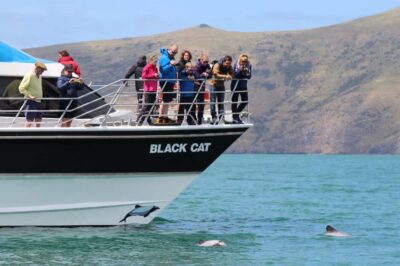
- Akaroa Dolphins ~ Harbour Nature Cruise
★ 5.0 · 2,143 reviews - Akaroa: Dolphin Nature Cruise
★ 4.9 · 440 reviews - Akaroa Harbour Nature Cruise
★ 5.0 · 332 reviews
Meeting the Sun at Akaroa Lighthouse
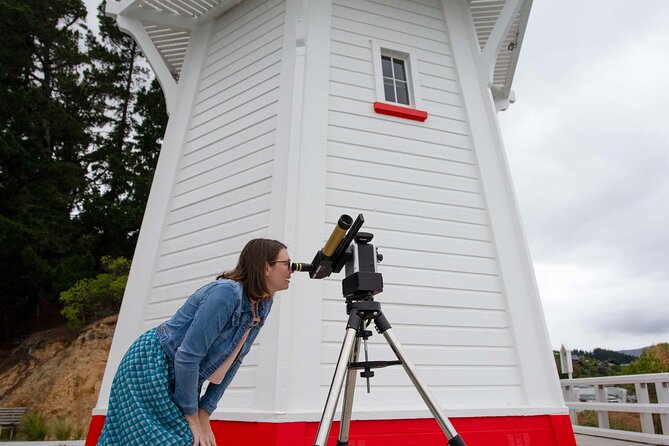
The tour begins at Akaroa Lighthouse, at 145 Beach Road in Akaroa. The lighthouse gives you a clear, memorable meeting point and places the activity close to the town’s waterfront setting. The admission charge for the lighthouse stop itself is free, and the activity ends back at the same meeting point.
Do not expect a long route or several stops. This is a concentrated observation session. You arrive, meet the guide, get oriented with the equipment, and spend the bulk of the 30 minutes looking at the Sun and discussing what appears.
That simple plan is one of the tour’s strengths. You are not losing time on a transfer, a long walk, or a general lecture before reaching the telescope. If you already have a full Akaroa itinerary, this can slot into the day with little fuss.
The trade-off is that the experience does not provide private transportation. You need to make your own way to the lighthouse. Since the meeting point is in Akaroa and the wider destination is about a 90-minute scenic drive from Christchurch, you should allow plenty of time if you are coming from the city.
Looking through the specialist solar telescope
The telescope is the heart of the experience. It is designed for observing the Sun safely and in detail, giving you a chance to see features that ordinary sunglasses or a casual glance cannot reveal. The guide directs your attention to sunspots, solar flares, and surface activity as you look.
That guided element matters. Solar features can change, and the view may not mean much without an explanation. The astronomer can point out the difference between a darker sunspot and a brighter burst of activity, then connect those details to the wider solar system.
The small group limit of eight is helpful here. A large crowd can make telescope viewing feel like a queue, with little time to ask questions. A maximum of eight people should make the session more personal, although the actual number on your departure may vary.
You should also expect the view to depend on what the Sun is doing that day. Some sessions may show more dramatic activity than others. The tour promises the chance to observe sunspots, flares, and surface detail, but astronomy always involves a natural subject rather than a fixed display.
That uncertainty is part of the appeal, though it can also be a point of caution if you want a guaranteed visual spectacle. The guide’s explanation and the live imaging help make the experience useful even when the Sun is less active.
The ZWO Seestar S50 and your phone camera
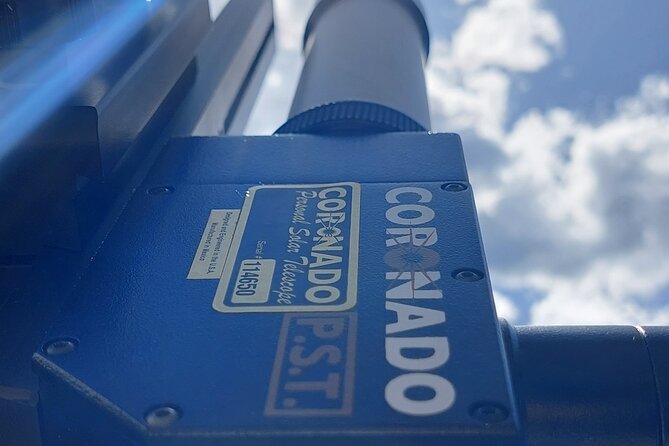
Solar Explorer uses a ZWO Seestar S50 smart telescope to capture high-resolution images of the Sun during the session. These digital pictures are shared with you instantly, giving you a record of what the telescope saw.
This is a strong feature for two reasons. First, you do not have to rely on your own phone camera to capture a tiny, overexposed circle in the sky. Second, the image gives you a clearer reminder of the detail discussed during the tour.
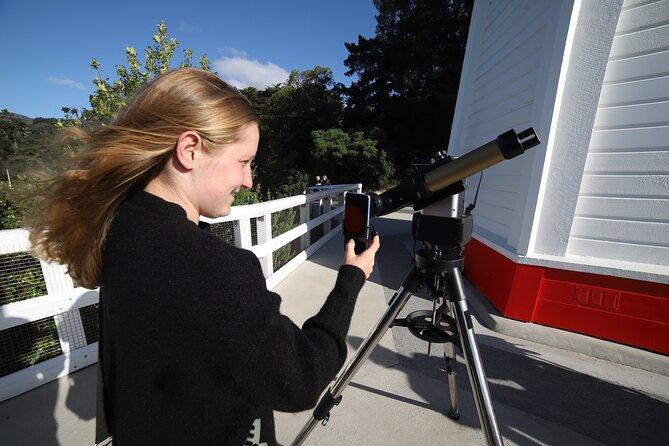
A smartphone adapter is also included. You can place your own phone over the telescope and take pictures through the equipment. That makes the experience more hands-on and gives you a chance to create your own solar images rather than simply receiving a file from the guide.
I would treat the phone feature as a bonus, not the main reason to book. The quality of your result will depend on your phone and how comfortably you can line it up with the telescope. Still, it is a clever addition, particularly if you like taking unusual travel photos.
The live images also help if you are in a group. While one person looks directly through the telescope, the digital view can give others something to watch and discuss. That keeps the session moving and makes the technology easier to appreciate.
Same corner of the country, a completely different day out:
- Swimming with Wild Dolphins in Akaroa
★ 4.5 · 261 reviews - Akaroa Harbour 2-Hour Dolphin Nature Cruise
★ 4.7 · 235 reviews - Akaroa Shore Excursion: Banks Peninsula and Christchurch City Sights Tour
★ 4.0 · 228 reviews - Shore Excursion Guided Sea Kayaking through Akaroa Marine Reserve
★ 5.0 · 160 reviews
A guide who makes the science accessible
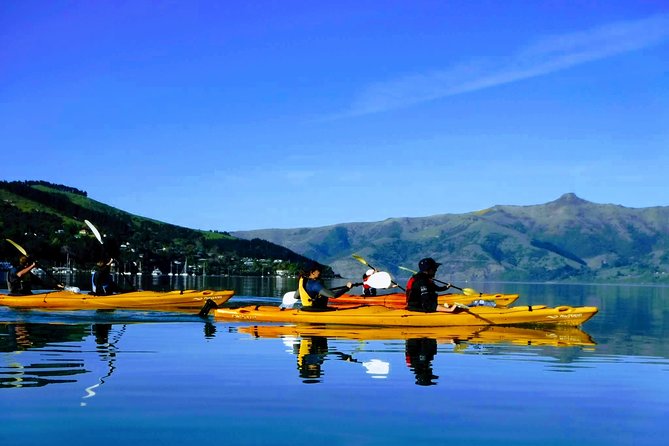
Luca is specifically connected with the experience, and his role appears to go beyond simply setting up the telescope. He has helped people adjust plans when clouds disrupted the original time, kept them informed about conditions, and explained the solar system with clear enthusiasm.
That personal contact is important on a weather-sensitive tour. If clouds are moving across the sky, you want a guide who communicates rather than leaves you guessing. The team has used alternate time slots when conditions improved, so it is worth responding promptly if you receive an update about your booking.
The commentary is aimed at a broad audience. You can expect an educational introduction to the Sun and the solar system, along with explanations of the features visible through the telescope. The experience is suitable for all ages, and you do not need previous astronomy experience.
I particularly like that the format combines explanation with action. You are not sitting through a long technical speech. You hear enough to understand the view, then take your turn at the telescope and ask questions.
The guide’s passion is also a practical asset. Astronomy can become dry when it is reduced to measurements and terms. A guide who enjoys the subject can show you why a small dark mark or bright flare matters.
Weather is the real deciding factor
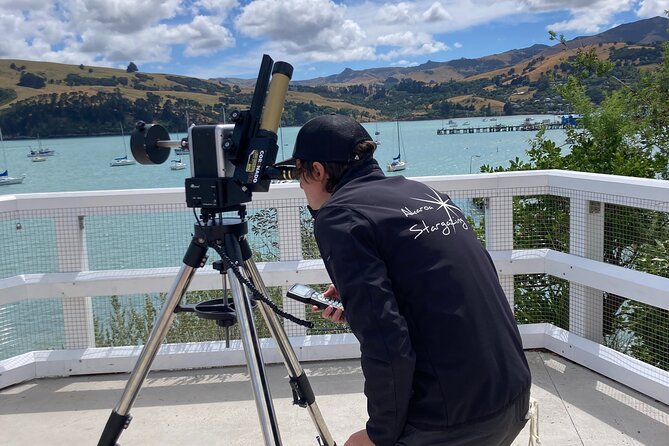
Good weather is required, and this is the most important practical consideration. Clouds can cover the Sun or make the viewing poor, so the operator may cancel the activity if conditions do not work.
If poor weather cancels your tour, you are offered a different date or a full refund. That policy gives you protection, but it does not solve every scheduling problem. If you are in Akaroa for only a few hours, there may be no later departure that fits your plans.
I suggest keeping this activity earlier in your planning rather than treating it as a fixed appointment that cannot move. If you have another flexible stop in Akaroa, you may be able to switch the order if the team recommends a better time.
You can cancel for a full refund up to 24 hours before the local start time. Changes made less than 24 hours before departure are not accepted, and late cancellations are not refunded unless the operator cancels because of weather.
The weather issue is not a flaw in the tour. It is simply the reality of looking at the sky. Still, you should book it with the same mindset you would use for any outdoor activity: allow room for conditions to change.
Is 30 minutes long enough?
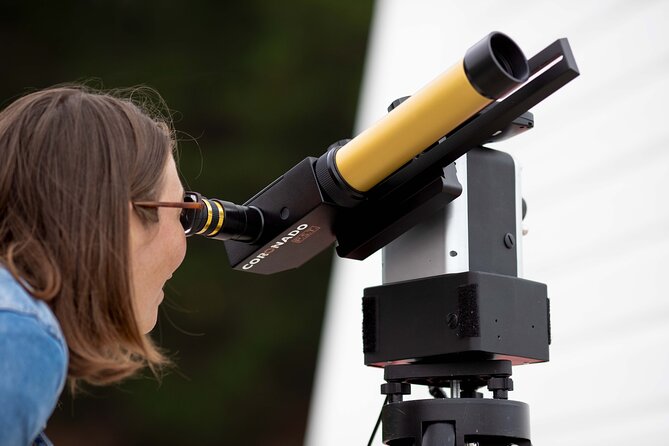
For this particular experience, I think 30 minutes is a sensible length. The main activity is focused on one object, and the telescope gives you a clear purpose from the moment you arrive. A much longer session could begin to feel repetitive, especially for younger children.
The short duration also improves the tour’s value for a day trip. You can combine it with Akaroa’s waterfront, other local activities, or a scenic drive without committing half a day to astronomy.
On the other hand, visitors who want a long lesson in solar science may find the session too brief. This is an introduction and observation opportunity, not a full course. You will get guided commentary and practical telescope time, but not an extended workshop.
The group size may affect how much individual time you receive. With eight people, the experience should remain manageable, but you may need to share the telescope and smartphone adapter. Asking questions directly will help you get the most from the limited time.
What the $24.20 price gives you
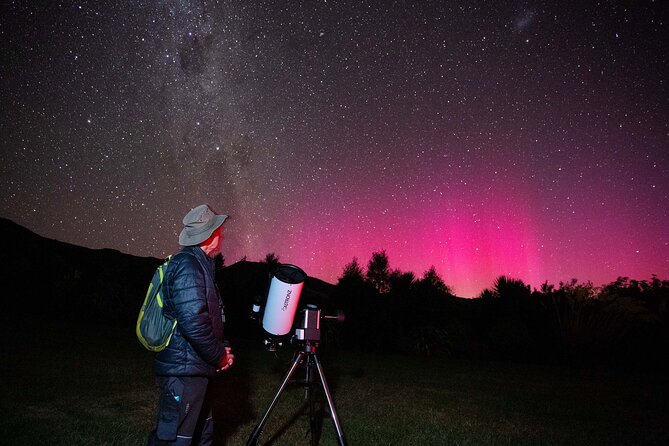
At $24.20 per person, Solar Explorer is priced as an accessible short activity rather than a major excursion. You are paying for specialist equipment, an astronomer-led session, live digital images, and the chance to take your own photos through the telescope.
I see good value here if you are curious about astronomy or want something distinctive to add to an Akaroa visit. The included solar images are useful because they give the tour a lasting element. You are not paying only for 30 minutes of conversation at a scenic meeting point.
The value is less obvious if you are hoping for a broad sightseeing tour. There is no private transportation, no extended route, and no collection of multiple attractions. The price makes sense for the astronomy itself, not as a way to see Akaroa generally.
The fact that the activity is available daily is another benefit. You have more chances to find a time that fits your plans, though the best choice still depends on the weather and your wider schedule.
Who should book Solar Explorer?
I would recommend this tour to families, first-time astronomy visitors, amateur photographers, and anyone seeking an unusual daytime activity. It works particularly well for people who cannot fit in a night stargazing session or who prefer a short, easy-to-manage outing.
It is also a good choice for science-minded friends. The telescope, live images, and phone adapter give you several ways to interact with the subject rather than simply listen to a talk.
You should think twice if your schedule is completely fixed or if you need a guaranteed activity in all weather. The operator offers a new date or refund when conditions cancel the experience, but poor skies can still disrupt a tightly timed day.
Most people can participate, and service animals are allowed. The tour is near public transportation, but you are responsible for reaching the meeting point because private transport is not included.
Should you book Solar Explorer in Akaroa?
Book it if you want a short, affordable activity that shows you something genuinely different. The combination of a historic lighthouse setting, specialist solar telescope, live ZWO Seestar S50 images, and an astronomer such as Luca gives the visit more substance than a simple photo stop.
I would especially choose it when the forecast looks promising and I had enough flexibility to move the booking if clouds arrived. You may see sunspots and flares, learn how the Sun affects the solar system, and leave with images that are far more interesting than a standard holiday snapshot.
Skip it if you are looking for transport, a long tour, or a guaranteed spectacle independent of weather. For everyone else, $24.20 is a modest price for a hands-on look at the star that makes daytime possible.
FAQ
Where does Solar Explorer begin?
The tour begins at Akaroa Lighthouse, 145 Beach Road, Akaroa 7520, New Zealand.
Where does the activity end?
The activity ends back at the Akaroa Lighthouse meeting point.
How long does the tour last?
The tour lasts approximately 30 minutes.
How much does Solar Explorer cost?
The listed price is $24.20 per person.
Is transportation included?
No. Private transportation is not included, so you must make your own way to Akaroa Lighthouse.
What can I see through the telescope?
You may observe sunspots, solar flares, and other solar surface activity through the specialist solar telescope.
Can I take my own photos?
Yes. A smartphone adapter is included so you can take photos through the telescope.
Do I receive photos from the tour?
Yes. The ZWO Seestar S50 captures high-resolution images of the Sun live, and these digital photos are shared with you instantly.
What happens if the weather is poor?
The experience requires good weather. If the operator cancels because of poor conditions, you are offered a different date or a full refund.
How far in advance can I cancel for a full refund?
You can cancel at least 24 hours before the experience start time for a full refund. The cut-off is based on local time.
Just added around Akaroa
- Night Awe – Stargazing tour in Akaroa★ 5.0 · 61 reviews
- Akaroa Wildlife Cruise★ 5.0 · 101 reviews
- Guided Electric Mountain Bike & Sea Kayak Tour in Akaroa★ 5.0 · 22 reviews
- Guided Electric Mountain Bike Tour- Akaroa Explorer★ 5.0 · 4 reviews
- Lava Loop- Guided electric mountain bike tour in Akaroa★ 5.0 · 34 reviews
- Shamarra Alpaca Farm Tours★ 5.0 · 117 reviews
- Akaroa Explorer- Guided Electric Bike Tour in Akaroa★ 5.0 · 18 reviews
- Akaroa Shore Excursion: Akaroa Harbour and Sheep Farm Local Tour★ 4.5 · 11 reviews
Akaroa Tours, compared.
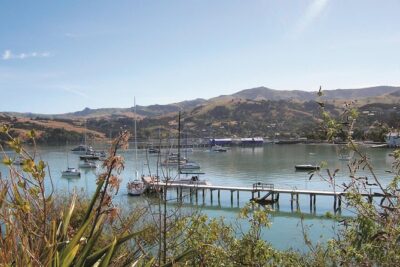
Akaroa Shore Excursion: Banks Peninsula and Christchurch City Sights Tour
Read our review →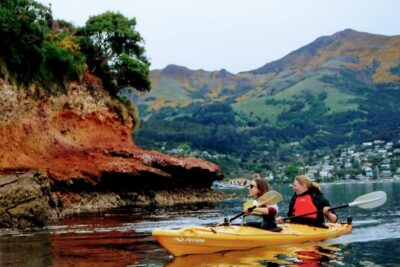
Shore Excursion Guided Sea Kayaking through Akaroa Marine Reserve
Read our review →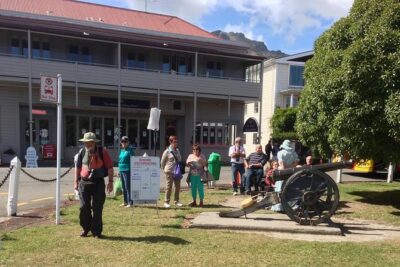
Akaroa Shore Excursion: Banks Peninsula, Christchurch City Tour and the International Antarctic Centre
Read our review →Browse the lists this tour appears in