
Reviewed · GEOTHERMAL PARK TOURS
Rotorua: Floatplane Flight with Orakei Korako Landing
The best part of this Rotorua flight is not simply seeing the geothermal parks from above. It is landing on the Waikato River, gliding around its bends, then stepping ashore at Orakei Korako for a one-hour walk. You get a wide view of the region and time on foot to see the hot springs and terraces up close. I especially like the flight over Mount Tarawera’s long volcanic rift and the chance to compare several geothermal areas in one trip. The main drawback is the price, $505 per person, and the compact six-seat plane can feel a bit cramped.
I also like that this is a small-group trip rather than a large sightseeing flight. Pilot Ben has been praised for clear, friendly commentary, and the landing itself gives the outing a real sense of occasion. You need comfortable shoes, a little flexibility getting in and out of the aircraft, and a tolerance for some bumps if the air is rough.
Key points to know before takeoff
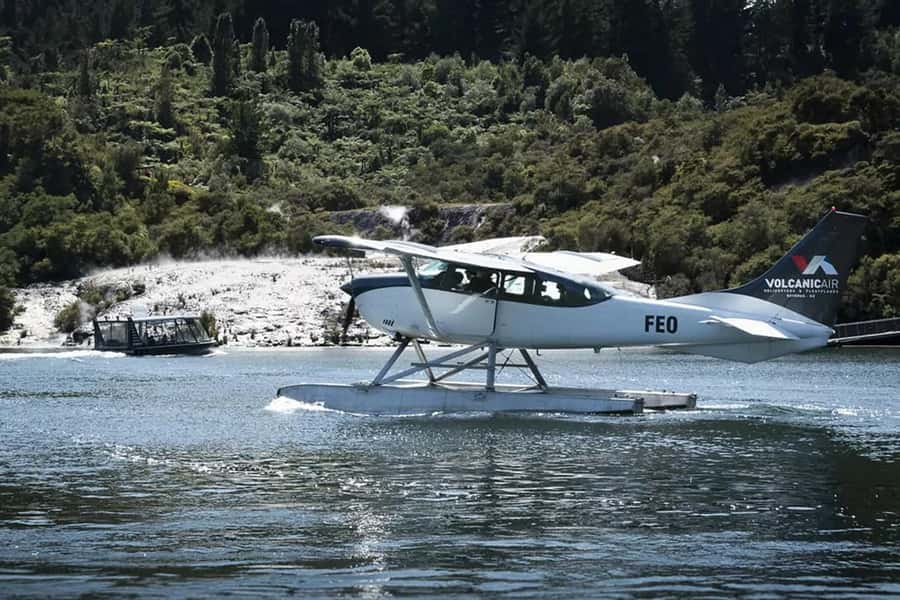
- River landing at Orakei Korako: The floatplane taxis along the Waikato River before docking near the geothermal park.
- Mount Tarawera from above: See the 17-kilometre volcanic rift and its brightly colored craters from the air.
- Several major geothermal areas in one flight: The route passes Waimangu Volcanic Valley, Wai-O-Tapu, Frying Pan Lake, Inferno Crater, Artist’s Palette, and Champagne Pool.
- One hour on foot: Explore Orakei Korako’s hot springs, geysers, mud pools, silica terraces, and thermal cave at your own pace.
- Small aircraft setting: The plane has six small bucket seats, so boarding requires some flexibility and the cabin is not roomy.
- Best for scenery and scale: Aerial views show how Rotorua’s lakes, forests, farms, volcanoes, and thermal areas fit together.
Why this flight is different from a normal Rotorua sightseeing trip
Rotorua is easy to explore from the ground, but its geothermal attractions are spread across a wide area. A visit to one park gives you a close look at bubbling mud or steaming pools. This flight gives you the larger picture first, then brings you down at Orakei Korako for a proper walk.
That combination matters. From the air, you can see the shape of old volcanic craters, the line of Mount Tarawera’s eruption scar, and the way forest and farmland surround the thermal zones. On foot, you can slow down and notice the details that an aircraft cannot provide: silica terraces, changing colors in hot pools, mud bubbling under its own pressure, and steam rising from the ground.
The total experience lasts about two hours. The flight begins and ends at Volcanic Air’s Lake Rotorua pier, so you do not need a separate transfer to a distant park. Hotel pickup and drop-off are not included, so plan your own way to the lakefront.
The group is limited to six people. That keeps the flight personal and gives you a better chance of seeing through the windows, although the plane is compact. One recent passenger described it as six small bucket seats and advised being comfortable with getting in and out of a tight aircraft. That is useful advice, especially if you have limited mobility or simply prefer roomy transport.
More Geothermal Tours in Rotorua
- Rotorua: Wai-O-Tapu Geothermal Park Entry Ticket
★ 4.6 · 2,601 reviews - Rotorua: Hell’s Gate Outdoor Mud Spa & Guided Walk
★ 4.7 · 1,140 reviews - Hell’s Gate Mud Bath & Spas
★ 4.5 · 475 reviews
Lake Rotorua and the first views from the air
The flight leaves from Lake Rotorua, where the floatplane lifts away from the water and climbs over the city and lake district. Early views include Mokoia Island and Sulfur Bay, two of the area’s defining sights.
You may be invited to try to spot all 14 lakes in the district. Do not treat that as a formal scavenger hunt or expect every lake to be easy to identify. It is a fun way to focus your eyes as the plane gains height, and it helps you understand just how much water fills this volcanic region.
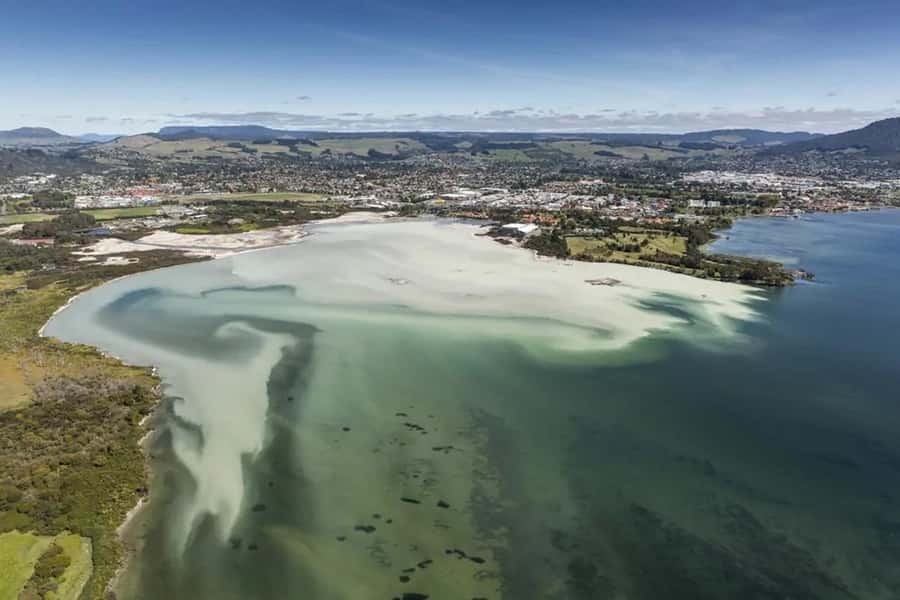
From above, Rotorua becomes a mix of lake, forest, pasture, and steaming ground. That variety is one reason the flight earns its price more convincingly than a short scenic loop. You are not looking at one landmark again and again. The scenery keeps changing as the aircraft moves from the city toward the volcanic areas.
The pilot’s commentary adds useful context. Ben has been singled out for being relaxed, friendly, enthusiastic, confident, and clear in his explanations. Commentary matters here because many of the sights are easier to appreciate once you know what caused them and why some craters are filled with water while others remain hot and active.
Mount Tarawera and the 17-kilometre volcanic rift
The route then heads toward Mount Tarawera, a dormant volcano with a major place in Rotorua’s story. Its eruption reshaped the area and destroyed the famous Pink and White Terraces, once promoted as the eighth wonder of the world.
The most striking feature from the aircraft is the 17-kilometre volcanic rift. From the ground, you can visit viewpoints and learn about the eruption. From the air, the scale of the craters and the length of the split become much easier to grasp.
The colors are part of the appeal. Deep crater walls, colored rock, and water-filled hollows create a view that changes with sunlight and weather. I would keep your camera ready, but do not spend the whole flight staring through a screen. The aerial view is brief, and the sense of scale is better absorbed with your own eyes.
Weather can affect what you see. Cloud, rain, or poor light may soften the colors and obscure parts of the mountain. The experience is still built around a scenic flight, so conditions matter more here than they do at a ground-based attraction. Check the forecast and dress sensibly before you leave.
Waimangu, Frying Pan Lake, and Inferno Crater
After Mount Tarawera, the plane passes over Waimangu Volcanic Valley, described as the youngest geothermal park on Earth. This section gives you a look at a geothermal area shaped by comparatively recent volcanic activity, with steaming water and unusual crater forms spread through the valley.
Frying Pan Lake is one of the key sights. Its broad hot water surface is a reminder that geothermal activity here is not limited to a few isolated pools. The area has heat, gases, water, and mineral deposits working together over a wide zone.
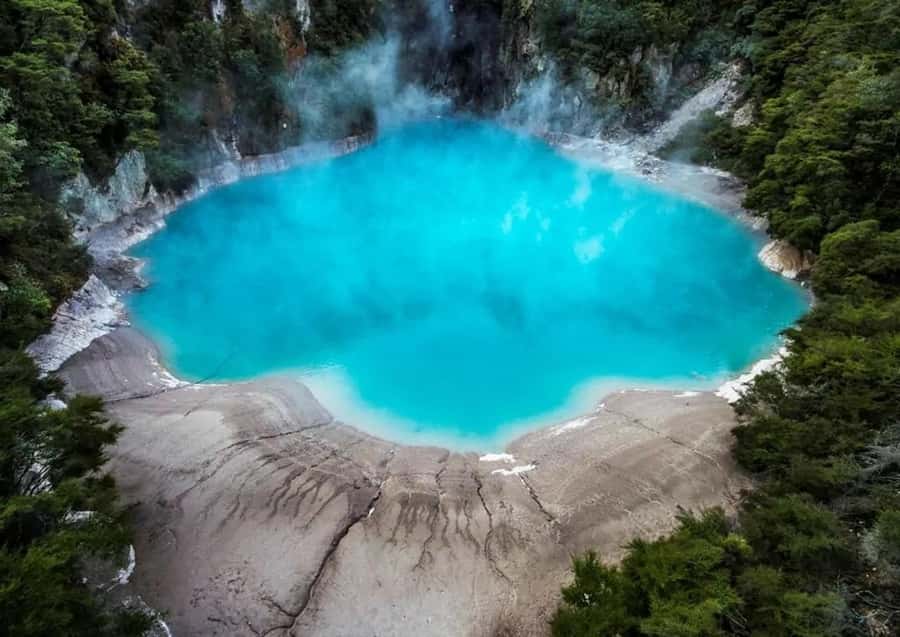
Then comes Inferno Crater, known for its startling blue water. From above, the color is especially effective because you can see it in relation to the surrounding pale ground and dark forest. The flight does not replace a walk through Waimangu, but it lets you see features that are difficult to connect when viewed only from paths and lookout points.
This portion of the route is also a good test of your expectations. You are not landing at every geothermal park. You are viewing them from the aircraft, usually for several minutes at a time. If you want long stops and close access to each site, separate ground visits would suit you better. If you want a broad survey in a limited time, the flight works well.
More geothermal parks and mud pools near Rotorua:
- Rotorua: Hells Gate Outdoor Mud Bath & Spa Experience
★ 4.6 · 398 reviews - Rotorua based Small Group Morning Tour Waimangu and Wai O Tapu
★ 5.0 · 347 reviews - The Hell’s Gate Experience
★ 4.5 · 338 reviews - From Rotorua: Wai O Tapu & Waimangu Eco Thermal Morning Tour
★ 4.8 · 320 reviews
Wai-O-Tapu from a high viewpoint
The aircraft continues over Wai-O-Tapu Thermal Wonderland, another major geothermal area south of Rotorua. From the plane, look for the colorful Artist’s Palette and Champagne Pool.
Aerial views are useful because they show the pattern of the thermal features. On the ground, paths guide you from one pool or crater to the next. From above, you see how the bright mineral colors sit within the wider volcanic zone.
The flight time over each attraction is short, so you may not identify every feature without help. This is where the pilot’s explanations are important. Keep listening, take a few photos, and avoid expecting the same detail you would get from a full park visit.
I see Wai-O-Tapu as part of the flight’s visual sequence rather than its main stop. Mount Tarawera supplies the big volcanic drama, and Orakei Korako supplies the close-up experience. Wai-O-Tapu helps fill in the regional picture.
The unusual arrival at Orakei Korako
The approach to Orakei Korako is one of the strongest parts of the trip. Instead of landing at a conventional airport, the pilot descends toward the Waikato River and follows its bends through native bush.
The plane glides onto the river, taxis past the vegetation, and docks near the geothermal park. A river landing is a small event in itself. You feel the aircraft change from a sightseeing machine into a boat, and the setting is far more memorable than a standard arrival beside a runway.
The floatplane ride can be bumpy at times. That is normal for a small aircraft, but it is worth knowing if you are sensitive to motion. The plane’s size also means that you will be close to the pilot and other passengers. Some people will find this friendly and exciting. Others may prefer a larger, calmer aircraft.
You then have about an hour to explore Orakei Korako on foot. The pace is self-guided, so you can stop for photographs, read the information along the route, and spend more time at the features that interest you most.
Orakei Korako on foot: terraces, geysers, and a thermal cave
Orakei Korako is the reason this flight feels like more than an aerial sightseeing loop. Once you leave the aircraft, the scale changes again. You are close enough to see mineral deposits, hear the activity, and notice the difference between a hot spring, a geyser, and a mud pool.
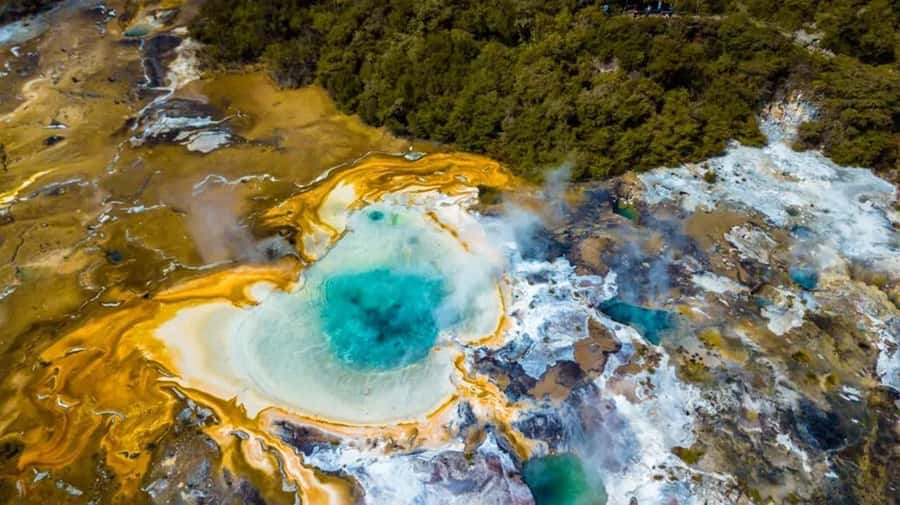
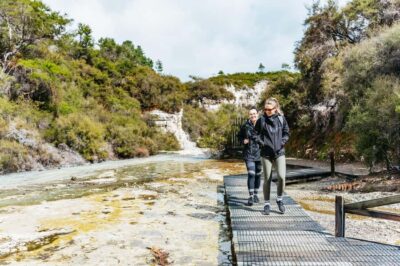
The park includes hot springs, gushing geysers, bubbling mud pits, a thermal cave, and some of the largest silica terraces in the world. Those terraces are especially important to the visit. Silica builds up gradually around geothermal water, forming pale shelves and ridges that can look delicate even though they are created by persistent heat and mineral flow.
The thermal cave adds another kind of interest. It gives the walk a more enclosed feature after the open views of pools and terraces. The exact order and pace of your walk are your own, but one hour is enough for a focused visit rather than a slow, all-afternoon outing.
Wear shoes that are comfortable for walking. Bring water, sunscreen, and a hat. The provided information does not give a route length or detailed accessibility notes, so you should not assume the walk will suit every mobility level. The activity specifically advises against joining if you have back or heart problems, and it is not suitable for pregnant women.
After the walk, you can stop at the café for coffee, tea, or a local snack. Meals and drinks are not included in the price, so bring money if you want something before boarding the plane again. The café break is practical rather than a full meal stop. If you need lunch, plan that separately.
The return flight over farms and mountain ranges
The flight back to Rotorua takes a different visual direction, passing over farmland and the Paeroa mountain range before returning to the city. After the intense colors and steam of Orakei Korako, the open fields offer a quieter contrast.
This return section also reinforces how geothermal activity sits within everyday New Zealand scenery. Farms, native bush, mountains, lakes, and volcanic features are all part of the same region. The contrast is one of the more worthwhile things about seeing Rotorua from the air.
You land back at the Lake Rotorua pier at Volcanic Air. The full route is about two hours, including the Orakei Korako visit. Allow a little patience around the schedule, since floatplane operations depend on conditions and the river landing requires careful handling.
Is $505 per person good value?
At $505 per person, this is not a budget way to see Rotorua. You could visit a geothermal park on the ground for less, and a standard sightseeing flight might cost less if all you want is an aerial view.
The value comes from combining three experiences:
- A scenic flight over the Rotorua lakes district
- A close aerial look at Mount Tarawera and several geothermal parks
- A floatplane landing and one-hour walk at Orakei Korako
Buying those elements separately would take more time and planning. This trip covers a wide area in two hours, and the river landing gives it something that ordinary park visits do not. If you have only a short stay in Rotorua and want scenery, geology, and a little adventure in one outing, the price is easier to justify.
If you are mainly interested in one geothermal park’s paths, signs, and detailed viewpoints, spend your money on a ground visit instead. You pay a premium here for the aircraft, the small group, the pilot’s commentary, and the unusual access to Orakei Korako.
The five-star rating shown for the experience comes from six reviews, so the sample is small. Still, the repeated praise is specific: the scenery, the river takeoff and landing, the pilot’s explanations, the organization, and the sense that the price felt justified. Those are the areas where this experience is most likely to deliver.
What to bring and who should skip it
Pack light. You will want:
- Comfortable walking shoes
- A hat
- Sunscreen
- Water
- A camera
Smoking is not allowed. Dress for the weather, since you will be outside during the walk and conditions can change during the flight.
This outing suits you best if you enjoy scenic flights, volcanic geology, and unusual transport. It is also a good choice if you want to see several Rotorua sights without spending a full day driving between them.
Think twice if you dislike small aircraft, have trouble getting in and out of compact seating, or want a relaxed ground tour with plenty of time at each geothermal area. The plane has six small bucket seats, and some bumps are possible. The activity is not suitable for pregnant women or people with back or heart problems.
Free cancellation is available up to 24 hours before departure, and you can reserve now and pay later. Starting times vary, so check availability when you choose your date.
Should you book this Rotorua floatplane flight?
Book it if the river landing and aerial view are the main attractions for you, not just a way to reach Orakei Korako. The trip is unusually efficient, scenic, and personal. You see the lakes, volcanoes, forests, and farms from above, then get a proper hour among geothermal features on foot.
I would especially recommend it for a first visit to Rotorua, a special occasion, or a short itinerary where driving to several parks is not practical. The strongest moments are the Mount Tarawera rift, the blue Inferno Crater, the Waikato River landing, and the close look at Orakei Korako’s silica terraces.
Skip it if $505 feels too high for a two-hour outing or if you need generous legroom and a smooth, predictable ride. For everyone else, this is one of the more memorable ways to understand Rotorua’s volcanic setting.
FAQ
How long does the floatplane experience last?
The full experience lasts two hours, including the flight and the one-hour self-guided walk at Orakei Korako.
Where does the flight start and finish?
It starts and finishes at Volcanic Air’s Lake Rotorua pier.
What does the flight pass over?
The route includes Lake Rotorua, the Rotorua lakes district, Mount Tarawera, Waimangu Volcanic Valley, Wai-O-Tapu Thermal Wonderland, farmland, and the Paeroa mountain range.
Does the plane land at Orakei Korako?
Yes. The floatplane lands on the Waikato River, follows its bends, and docks near Orakei Korako.
How much time do I get at Orakei Korako?
You have one hour for a self-guided walk through the park.
What can I see at Orakei Korako?
You can see hot springs, geysers, bubbling mud pools, a thermal cave, and large silica terraces.
Is food included?
No. Meals and drinks are not included, although you can buy coffee, tea, or local snacks at the Orakei Korako café.
How many people are in the group?
The group is limited to six participants. The aircraft has six small bucket seats.
Who should not take this activity?
It is not suitable for pregnant women or people with back or heart problems. You should also be comfortable with walking and getting in and out of a compact aircraft.
Just added around Rotorua
- Thrilling Riverbug Adventure on the Rangitāiki River★ 5.0 · 4 reviews
- Te Puia: Te Pō Combo: Te Rā, Dinner, and Haka Performance★ 4.6 · 5 reviews
- Te Puia: Te Rā Guided Day Tour and Haka Performance★ 5.0 · 4 reviews
- Rotorua: Waimangu Volcanic Valley Ticket & Self-Guided Walk★ 4.8 · 104 reviews
- Rotorua: White Island, Mount Tarawera & Waimangu Volcanic …★ 4.4 · 5 reviews
- Rotorua: Velocity Valley – Two Ride Pass★ 4.6 · 8 reviews
- Rotorua: Wai Ariki Hot Springs & Spa 1hr Restorative Bathing★ 4.8 · 16 reviews
- Rotorua: Velocity Valley – NEW Vertigo 43m drop★ 5.0 · 3 reviews
Geothermal Park Tours, compared.
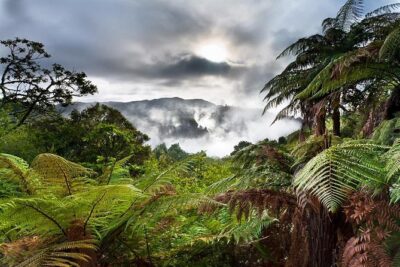
Rotorua based Small Group Morning Tour Waimangu and Wai O Tapu
Read our review →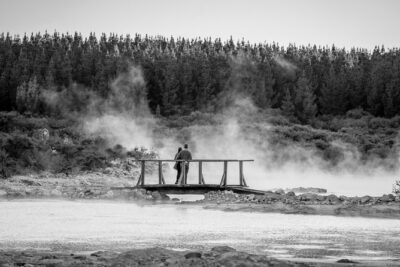
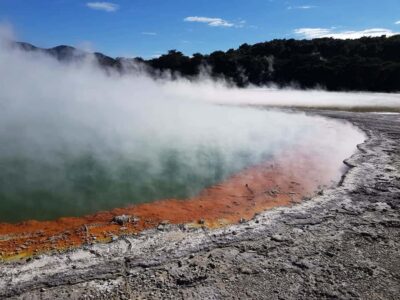
Wai O Tapu & Waimangu Eco Thermal Morning Tour
Read our review →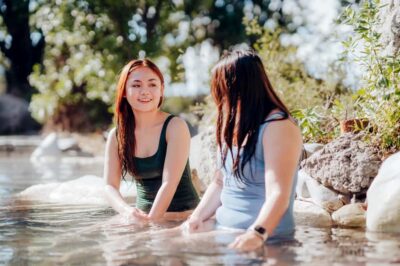
Rotorua Lake: Deluxe Lake Spa Geothermal Hot Spring Bathing
Read our review →Browse the lists this tour appears in