
Reviewed · CITY TOURS
Dunedin: Small Group City Highlights Tour
Dunedin packs grand architecture, university life, steep streets, gardens, and hilltop views into a compact city. This small-group tour covers the main sights in about two hours, with transport between stops so you can get your bearings quickly instead of trying to piece the city together on foot.
I like the efficient route and the mix of famous buildings with less obvious stops, such as a historic cemetery and the upper Botanic Garden. I also like the personal scale and the guide’s focus on both Dunedin’s past and its modern character. The main catch is that the advertised activity duration says 10 hours, while the guided city tour itself is described as two hours, so check the exact start time and schedule before booking.
Key points at a glance
- A quick city overview: Cover Dunedin’s central sights, hills, gardens, and landmarks in a guided two-hour circuit.
- The Railway Station centerpiece: Stop at one of New Zealand’s most photographed buildings and hear how it became a symbol of Dunedin.
- A useful hillside view: Signal Hill gives you a broad look over Dunedin and its surroundings.
- More than postcard stops: Visit Otago University, a historic cemetery, the upper Botanic Garden, and the tomb connected with William Larnach.
- Small-group format: Meet at the Dunedin Visitor Centre in the Octagon and travel between sights in an air-conditioned vehicle.
- Good for a tight schedule: You return to the Octagon, leaving time for other plans.
Why this short Dunedin tour works
Dunedin is easy to underestimate. The central streets are walkable, but some of the best views and unusual sights sit uphill or outside the immediate center. A short driving tour solves that problem neatly.
You see grand civic buildings in the middle of town, then climb toward gardens and viewpoints, then head out to Baldwin Street and the university area. That variety gives you a better sense of Dunedin than a simple architecture walk would.
The tour begins and ends outside the Dunedin Visitor Centre at 50 The Octagon. That is a practical meeting point, especially if you are already exploring the city center. Since the vehicle handles the distances, you spend your limited time seeing sights rather than working out buses, routes, or uphill walks.
This is not a slow, in-depth tour of every building. It is an orientation tour. You get short stops, guided explanations, photo opportunities, and a clear picture of how Dunedin fits together.
More City Tours in Dunedin
- Shore Excursion: V8 Trike, Peninsula and City Tour
★ 5.0 · 207 reviews - Garden and City tour
★ 4.5 · 197 reviews - Cruise Dunedin City and Castle Tour
★ 5.0 · 142 reviews
The Octagon, St Paul’s Cathedral, and Robbie Burns
The Octagon is Dunedin’s central public space and a natural place to begin. From here, the tour introduces the city’s civic heart, including St Paul’s Cathedral and the statue of Robbie Burns.
These stops matter because they show Dunedin’s Scottish influence without requiring a long museum visit. The cathedral gives the center a formal architectural anchor, while the Burns statue points to the cultural links that helped shape the city.
You should expect a brief introduction rather than extended free time at each landmark. That is useful if you want the overall story, but less suitable if you hope to study architectural details or spend time inside the cathedral.
The Octagon is also where the tour returns. I like this arrangement because you can continue exploring on foot afterward, perhaps with lunch or a closer look at the buildings you saw from the vehicle.
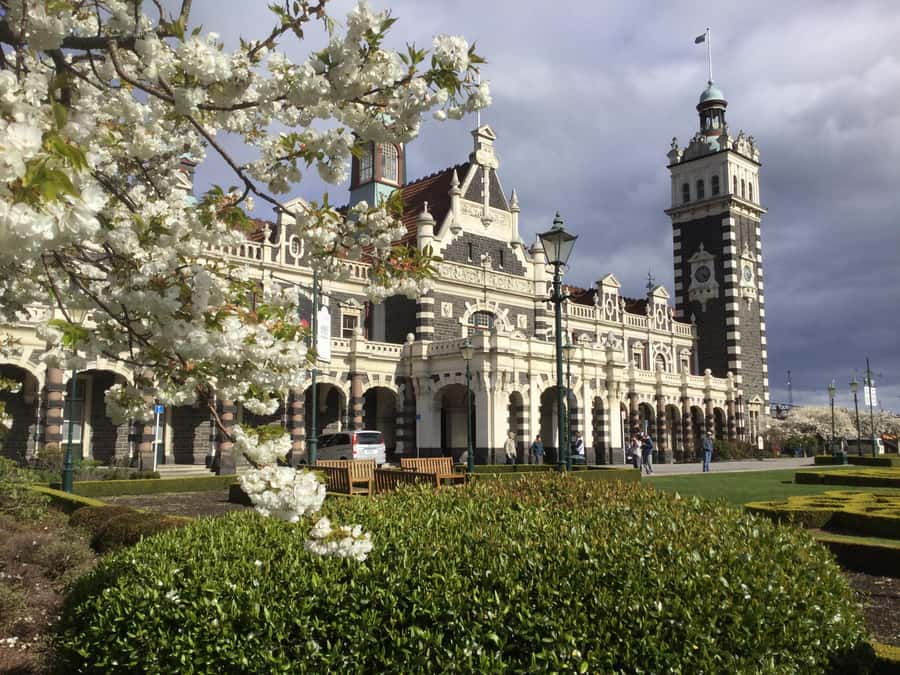
Dunedin Railway Station, the city’s grand photo stop
Dunedin Railway Station is one of the strongest stops on the route. Its elaborate exterior and formal design make it an easy favorite for photographs, and the tour gives you time to stop and hear the story behind the building.
The station is often described as New Zealand’s most photographed building. Even if you are not especially interested in railway architecture, it is hard to miss the contrast between the decorative structure and the practical purpose it once served.
This is a good example of how the tour adds value. You could take a picture on your own, but a guide can give the building context and point out why it matters to Dunedin.
Bring a camera, as requested for the tour. You may want to keep it ready rather than buried in a bag, since the route includes several quick photo stops.
Otago University and Dunedin’s student character
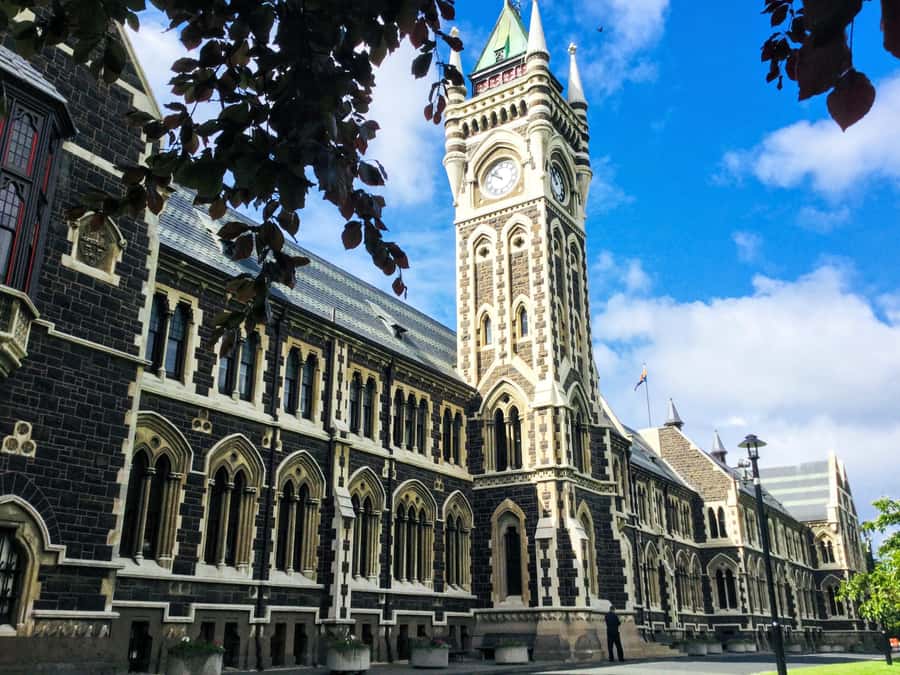
The University of Otago is another important part of the city’s identity. It is the oldest university in New Zealand, and its presence helps explain why Dunedin feels like more than a historic port city.
The tour takes you to the university area and connects it with the wider story of modern Dunedin. This is a useful balance. You see grand older buildings, but you also get a sense of a working city shaped by students, education, and daily activity.
The information provided does not promise a campus entry or a long walking tour, so expect an outside view and a guided explanation. If you want to explore the university grounds in detail, you would need to return independently after the tour.
A few more Dunedin half-days to weigh up
- Clearwater Wildlife Tours (small group 10max) Otago Peninsula
★ 5.0 · 531 reviews - Speight’s Brewery Tour & Guided Tasting
★ 5.0 · 508 reviews - Guided Evening Penguin Viewing Otago Peninsula, Dunedin, New Zealand
★ 5.0 · 471 reviews - Larnach Castle and Gardens Admission Ticket
★ 4.5 · 279 reviews
First Church and the city’s Scottish roots
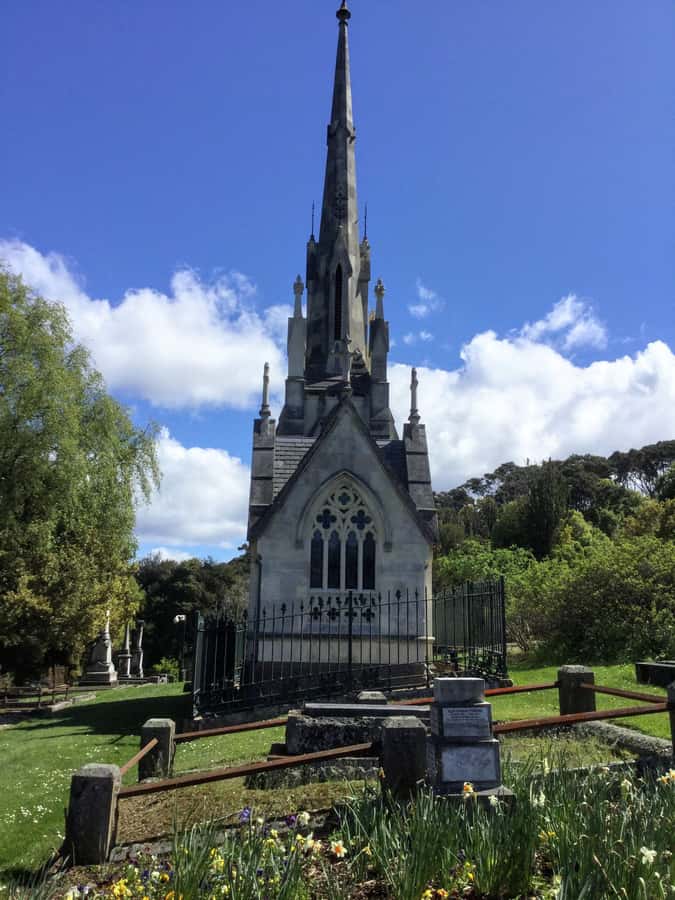
First Church of Otago adds another architectural and cultural stop. Along with St Paul’s Cathedral and the central monuments, it helps explain why Dunedin has such a distinct Scottish character.
The stop is especially useful for first-time visitors who may otherwise see the buildings simply as attractive stone landmarks. The guide’s commentary connects the architecture with the people and ideas that shaped the early city.
The city tour has been praised for its talk on both Dunedin’s history and its modern-day character. That combination is worth noting. You are not getting only dates and old buildings. You should also expect an explanation of how these places relate to Dunedin as it is now.
Baldwin Street and the steepest-street debate
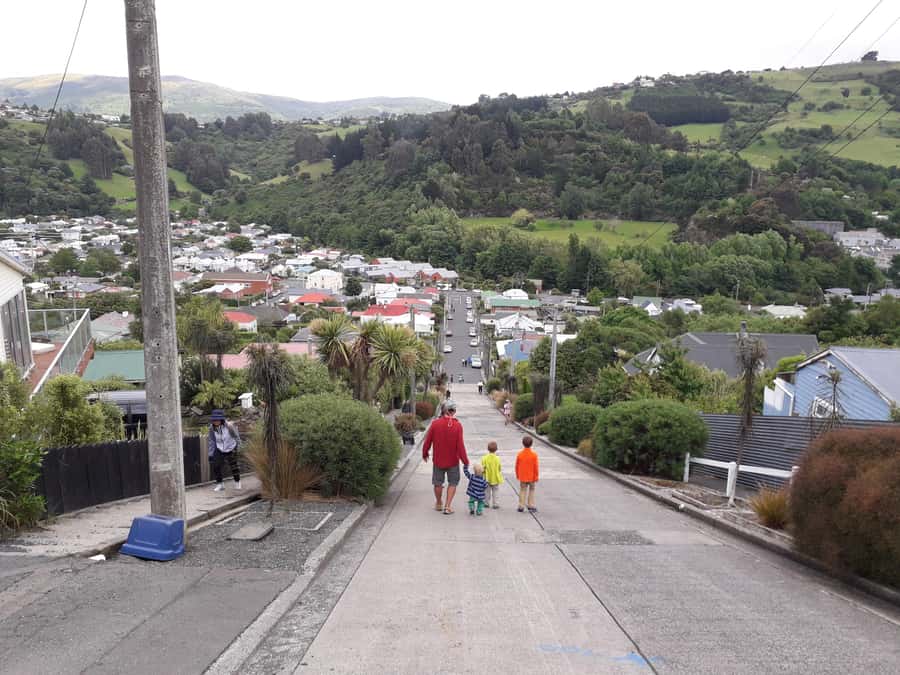
Baldwin Street supplies the tour’s most playful stop. It is widely associated with the title of the steepest street in the world, although the exact claim has been disputed. The tour presents it as a photo stop, with the option of a quick walk up the street.
You do not need to commit to a long climb. That is good news, since the tour is designed to keep moving and the street is notably steep. A photograph gives you the essential experience, while a short walk lets you test the slope for yourself.
This stop works best with modest expectations. Baldwin Street is not a full attraction with a long program of activities. It is a memorable local oddity and a quick chance to see a part of Dunedin that would be awkward to fit into a central walking route.
Comfortable shoes are a sensible choice. They are listed among the recommended items and will also help at the Botanic Garden and cemetery.
Signal Hill for a wider view
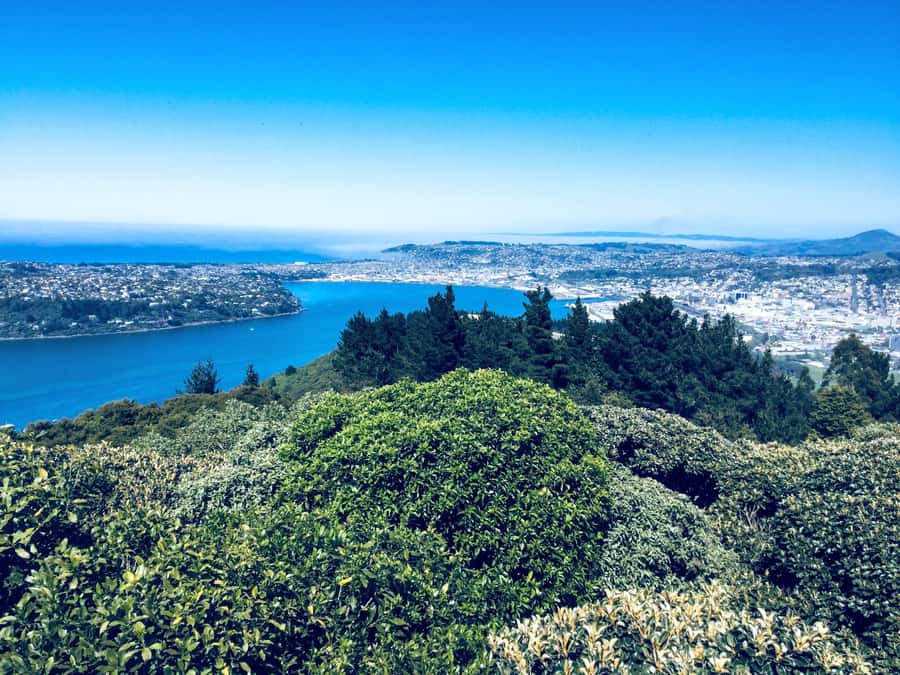
Signal Hill gives the route a change of pace. After the close-up buildings and street-level landmarks, you get a broad panorama of Dunedin and its surroundings.
A viewpoint is valuable early in a city visit because it helps you understand the city’s shape. You can see how the central area relates to the hills and the wider setting, rather than treating each stop as an isolated point on a map.
The amount of time at Signal Hill is not specified, so plan for a scenic stop rather than a long picnic or extended walk. Keep your camera available, and listen closely to the guide’s explanation of what you are seeing.
For me, this is one of the tour’s best practical features. The view turns a list of places into a clearer mental picture of Dunedin.
Upper Botanic Garden, plants, birds, and aviaries
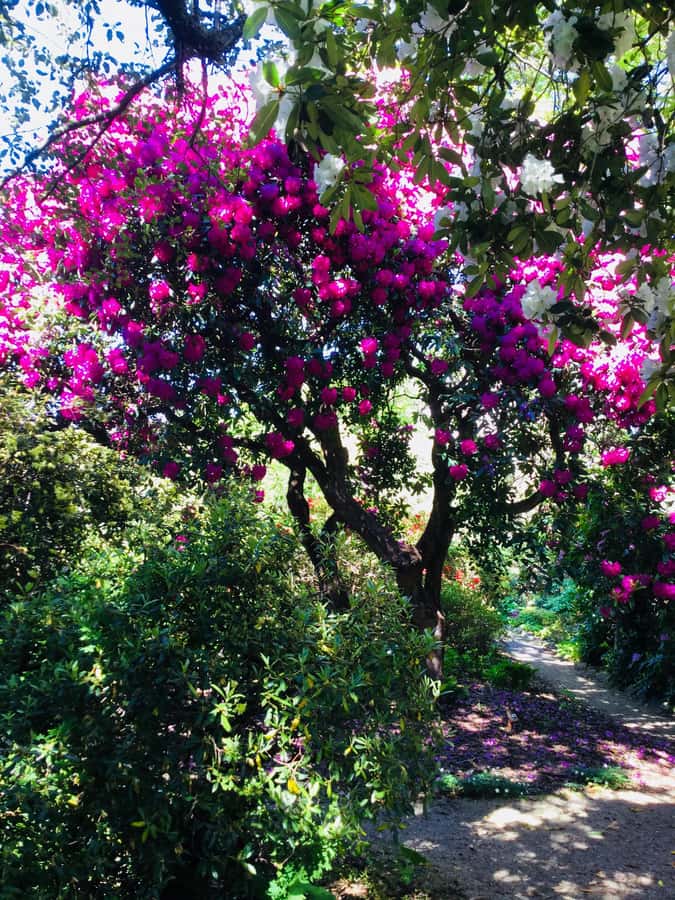
The short guided stroll in the upper Botanic Garden brings some nature into the itinerary. You may see seasonal plants in flower, large rhododendrons, New Zealand native birds, and bird aviaries.
This is not simply a drive-by garden visit. The guided walk gives you a chance to stretch your legs and see a different side of the city. The garden stop is included in the tour price, which is helpful because it turns an otherwise brief city circuit into a more varied outing.
Seasonal timing matters here. Flower displays change, so the garden will not look exactly the same throughout the year. The promise is to see seasonal plants, not a fixed display at every visit.
The stroll is described as short, which suits the tour’s quick pace. If you want a long garden walk, plant-focused visit, or quiet afternoon among the paths, you will need more time than this stop provides. For a compact introduction, it is a sensible addition.
The garden entry is included, and bottled water is provided. Those are small details, but they make a short moving tour easier and reduce the need to organize basic refreshments yourself.
A historic cemetery and William Larnach’s family tomb
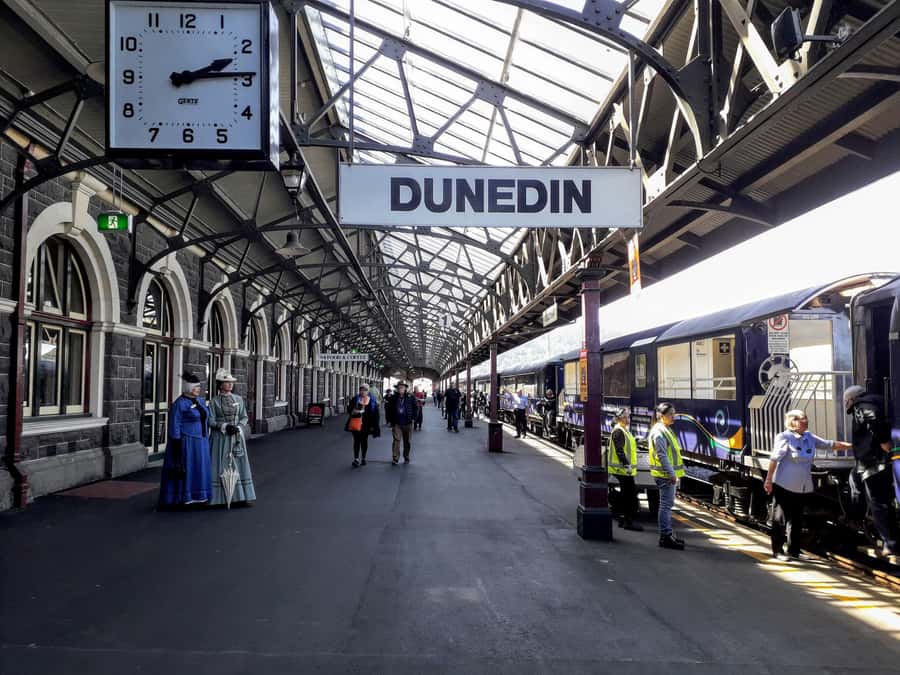
The cemetery stop adds a personal layer to Dunedin’s past. Here, the guide introduces famous people buried in one of the city’s oldest cemeteries and tells the story connected with William Larnach.
You also stop for a photograph of his family tomb. This is a more unusual inclusion than the standard cathedral and station circuit. It shows how the tour tries to connect Dunedin’s public buildings with the people who shaped its story.
Cemetery visits are not for everyone, and the stop may feel quieter or more solemn than Baldwin Street or the Railway Station. Still, it gives the route a useful human focus. You are not only looking at grand structures. You are also hearing about individuals, families, and the marks they left on the city.
The supplied information does not say how long you spend there, so expect a guided introduction and photo opportunity rather than a full cemetery study.
Transport, group size, and pace
The tour uses an air-conditioned vehicle and includes transport between the sights. That matters in Dunedin, where hills and scattered attractions can make a short visit surprisingly time-consuming.
The small-group format is aimed at individual, personalized service. The exact maximum group size is not given, so you should not assume a private tour. Still, a small group generally makes it easier to hear the English-speaking guide and ask a quick question than on a large coach excursion.
The pace is brisk. You move from central landmarks to the university, Baldwin Street, Signal Hill, the Botanic Garden, and the cemetery in a short period. That is the price of fitting so much into two hours.
I would treat the tour as an introduction, not as your only Dunedin activity. It helps you decide where you want to return, and it leaves time for other plans because you finish at the Octagon.
One point needs careful attention: the activity information gives a duration of 10 hours, but the actual guided city experience is repeatedly described as two hours. That may reflect a scheduling or availability field rather than ten hours of sightseeing. Confirm the departure details when you check availability.
Is $74 a fair price?
At $74 per person, the value depends on how much time you have and how easily you can reach the outer stops yourself.
If you are comfortable planning your own transport, you could visit some central sights independently. But the tour also includes the Botanic Garden, Signal Hill, Baldwin Street, the cemetery, and the university area. Transport, a guide, bottled water, an air-conditioned vehicle, and Botanic Garden admission are included.
For someone with only a short window in Dunedin, that package is reasonably useful. You pay for speed, route planning, and interpretation as much as for admission. The tour is less compelling if you have several days and prefer to linger at each place.
A five-star rating appears alongside three completed bookings, including a January 27, 2025 booking from John in the United Kingdom. The specific praise was for an informative talk covering Dunedin’s history and modern character. That matches the tour’s strongest purpose: giving you a clear, spoken introduction rather than offering lengthy time at one attraction.
Who should book this experience?
I would recommend it to you if you have limited time, want a broad first look at Dunedin, or prefer not to organize transport between hilltop and outlying sights. It also suits anyone who wants a guide to explain the city instead of simply collecting photographs.
It is a good choice for a first visit, a short port call, or the opening part of a longer stay. You can use the return to the Octagon as a launch point for your own walking and sightseeing.
You may want another type of outing if you use a wheelchair, since the tour is not suitable for wheelchair users. It may also disappoint you if you want a long botanical walk, detailed interior visits, or extensive free time at each landmark.
Smoking is not allowed. Wear comfortable shoes and bring a camera. The tour is conducted in English.
Should you book the Dunedin City Highlights Tour?
Book it if your priority is coverage. In two guided hours, you see Dunedin’s grand center, university district, steepest-street claim, hilltop view, Botanic Garden, cemetery, and railway station without arranging the route yourself.
I especially like the combination of well-known sights and less expected stops. The Railway Station and First Church provide the classic Dunedin photographs, while the Botanic Garden, Signal Hill, and William Larnach’s family tomb give the tour more character.
Skip it if you have ample time and want to explore slowly. For everyone else, $74 is a fair trade for a compact introduction, especially when the guide’s talk on both old and modern Dunedin is what you value most. Just clarify the two-hour sightseeing schedule before paying, since the listed duration is inconsistent.
FAQ
Where does the Dunedin city tour start?
The tour starts outside the Dunedin Visitor Centre in the Octagon at 50 The Octagon.
How long is the guided city tour?
The sightseeing portion is described as a two-hour guided tour. The activity information also lists a 10-hour duration, so check the available start time and schedule before booking.
What language is the tour conducted in?
The tour is conducted in English with a live English-speaking guide.
Which major buildings does the tour visit?
The route includes Dunedin Railway Station, the University of Otago, First Church of Otago, St Paul’s Cathedral, and the Robbie Burns Statue.
Does the tour include Baldwin Street?
Yes. You stop at Baldwin Street for a photograph or a quick walk up the street, which is associated with the claim of being the steepest street in the world.
Is Botanic Garden admission included?
Yes. Entry to Dunedin Botanic Garden is included, along with a short guided stroll.
Is the tour suitable for wheelchair users?
No. The activity is not suitable for wheelchair users.
Just added around Dunedin
- Otago Peninsula Scenery and Dunedin City Highlights Tour★ 4.5 · 33 reviews
- Clearwater Private Penguin & Wildlife Tour from Port Otago (5hrs)★ 5.0 · 7 reviews
- Dunedin Nature & City Tour – Full Day Cruise Excursion★ 4.5 · 87 reviews
- Shore Excursion: Dunedin City, Otago Peninsula, Castle Gardens & Olveston Tour★ 5.0 · 81 reviews
- Castle, Coast & City Tour – 8 pax max – Castle Entrance Included★ 5.0 · 102 reviews
- Iconic Wildlife Tour with Yellow Eyed Penguins & Royal Albatross★ 4.5 · 33 reviews
- Harbour, Albatross and Wildlife Cruise on Otago Harbour★ 4.5 · 22 reviews
- Dunedin Shore Excursion – Sightseeing, Larnach Castle, Chinese Garden & Museum★ 3.5 · 13 reviews
City Tours, compared.
Half-day Discover Auckland City Sightseeing Tour
Read our review →


2025 Award Winning: Auckland City Highlights Half Day Tour
Read our review →
Arrival Transfer: Auckland Airport to Auckland Central City Centre
Read our review →

Browse the lists this tour appears in