
Reviewed · GEOTHERMAL PARK TOURS
Rotorua: Hell’s Gate Geothermal Walk
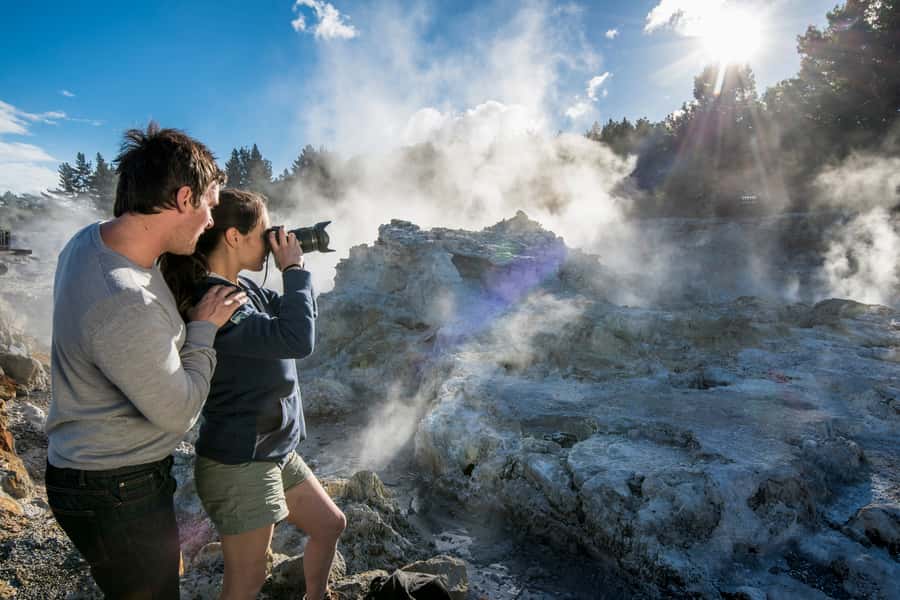
Hell’s Gate is Rotorua’s most forceful geothermal park, where boiling pools, steaming fumaroles, sulfur crusts, and bubbling mud sit beside native bush. The star is New Zealand’s largest active mud volcano, joined by hot waterfalls and water temperatures above 100 degrees Celsius. It feels rawer than a polished sightseeing stop.
I like the choice between a self-guided 2-kilometre walk and a guided outing, plus the chance to add Māori carving and a mud foot pool when available. I also like the contrast between the open geothermal plain and the green bush section. The sulfur smell is strong, and the route is not suitable for people with mobility impairments, so those details matter before you book.
Key points to know before you go
- New Zealand’s largest active mud volcano: See thick, restless mud bubbling and churning close to the marked path.
- Two ways to explore: Follow the supplied map at your own pace, or join an English-speaking guide at 10:30 AM or 2:30 PM.
- The 2-kilometre route takes about an hour: Add time for photos, Māori carving, the mud foot pool, or the café.
- Hot waterfalls and boiling pools: Hell’s Gate offers unusual features beyond the usual steaming vents.
- Expect a strong sulfur odor: The rotten-egg smell is part of the setting and can be hard on young children.
- The $26 price needs checking: The supplied details also say the entry ticket is not included, so confirm the full cost before paying.
Hell’s Gate, where the ground looks alive
Hell’s Gate, also called Tikitere, lies about 15 minutes east of central Rotorua. From town, take State Highway 30, continue roughly five minutes beyond the airport, then turn toward Whakatane. The reserve sits about 3 kilometres down that road.
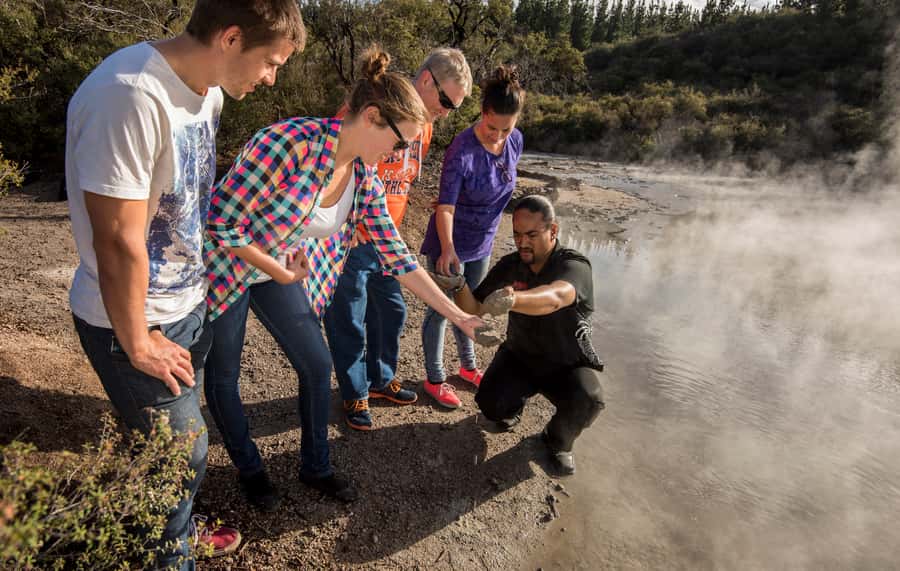
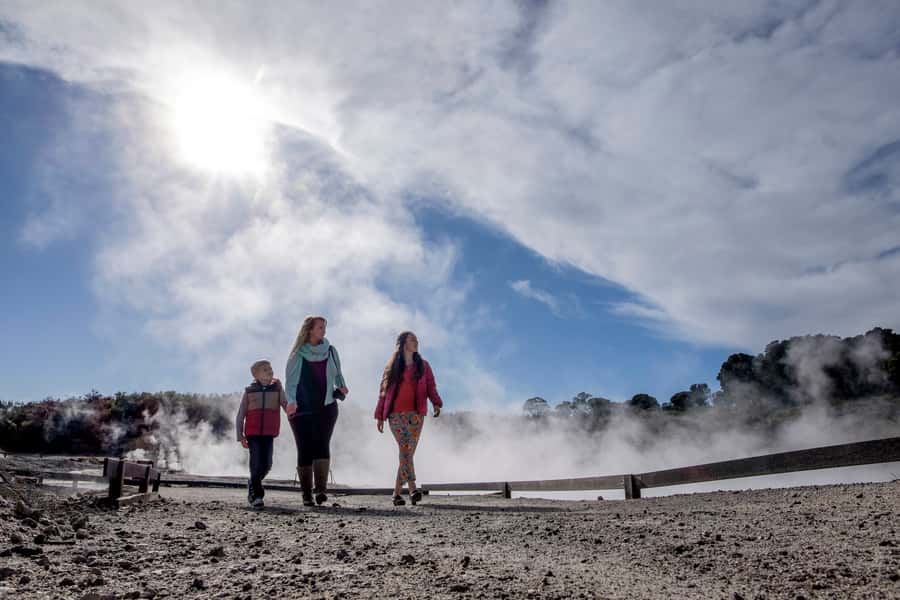
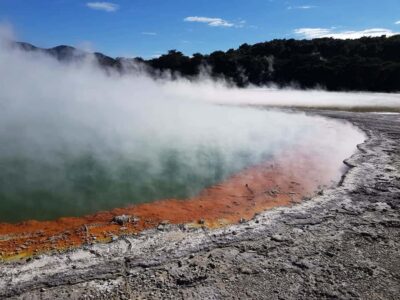
The name suits the place. Mud pops and folds in gray pools, vents send up steam, and mineral deposits mark the ground in pale and sulfur-yellow patches. You are not simply looking at a pretty hot spring. You are seeing heat and water alter the earth in front of you.
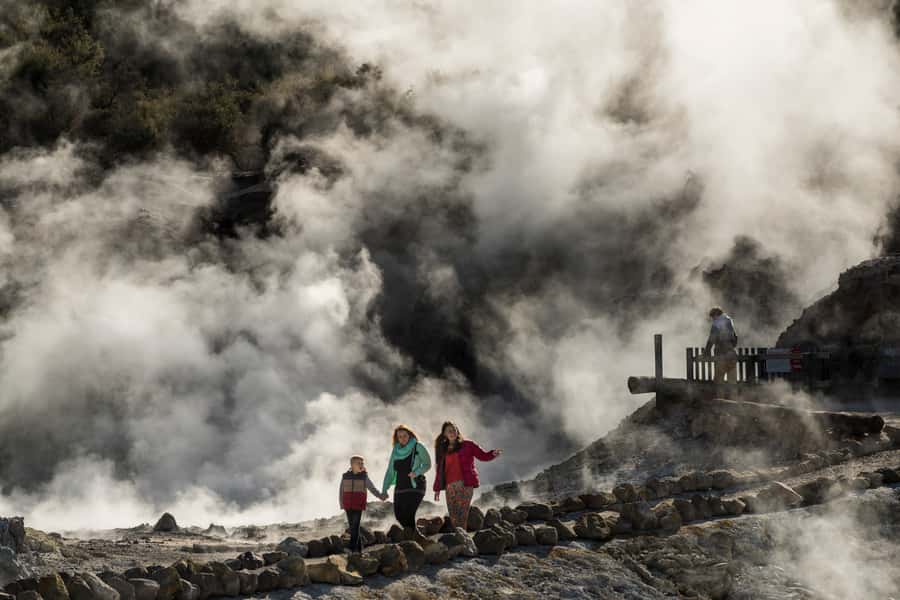
The route takes you through the middle of the geothermal field, with marked paths keeping you away from boiling water and unstable ground. Follow the boundaries carefully. Some pools exceed 100 degrees Celsius, and the setting demands more attention than an ordinary park stroll.
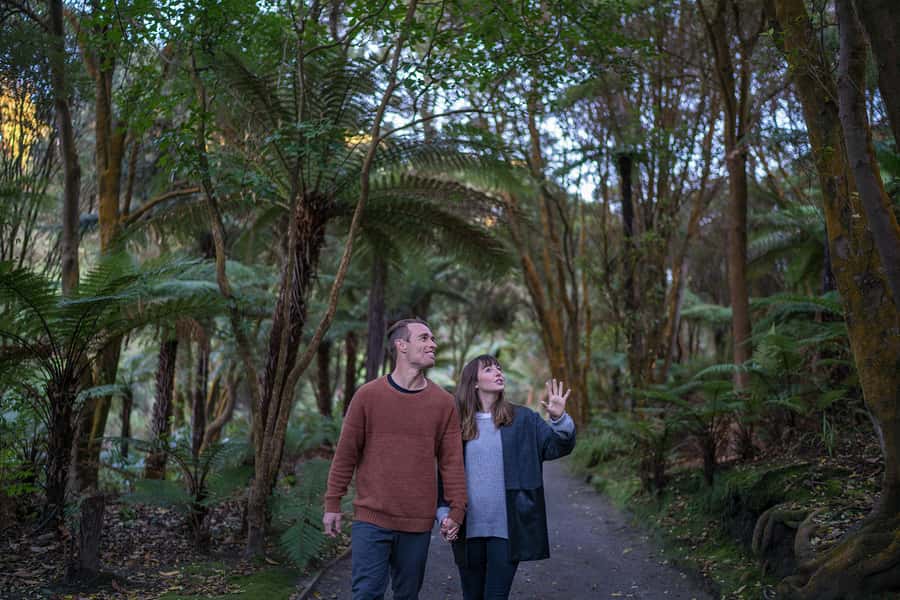
I find the mix of scenery especially effective. One moment you are beside fumaroles and hot pools, and the next you reach a bush-covered section with a waterfall. That change keeps the walk from becoming a series of similar steaming pools.
More Geothermal Tours in Rotorua
- Rotorua: Wai-O-Tapu Geothermal Park Entry Ticket
★ 4.6 · 2,601 reviews - Rotorua: Hell’s Gate Outdoor Mud Spa & Guided Walk
★ 4.7 · 1,140 reviews - Hell’s Gate Mud Bath & Spas
★ 4.5 · 475 reviews
The one-hour walk, step by step
The geothermal walk takes about one hour, though the full visit can last longer. The supplied map gives descriptions of the different pools and features, so you can move at your own speed and stop for photographs.
At the beginning, you get a sense of the reserve’s scale. Steam rises from several points, and the air carries that unmistakable sulfur smell. It is often compared with rotten eggs, and that comparison is accurate. I would not plan this as a surprise outing for a very young child who dislikes strong smells.
The path then brings you close to bubbling mud and hot water pools. The mud volcano is the major attraction, but the smaller formations help explain the area. You see sulfur crystals, mineral crusts, steaming openings, and deposits left behind as hot water cools and evaporates.
Hell’s Gate also includes examples of land coral, an unusual feature that adds another layer to the walk. The value here is not just the number of pools. The map helps you understand how different temperatures and minerals create different colors, textures, and plant life.
The hot waterfalls provide one of the more memorable stops. They give the reserve a feature you do not always find at geothermal parks, and the sight of hot water moving through the bush makes a strong contrast with the bare, steaming ground elsewhere.
The route is generally an easy walk for people who can manage the full distance, but the reserve specifically lists it as unsuitable for people with mobility impairments. Wear comfortable shoes and weather-appropriate clothing. Rain can make the setting more dramatic, but it also calls for sensible footwear and a rain layer.
Self-guided or guided, which works better?
The self-guided option is perfectly workable if your schedule is tight. You receive a map with descriptions, and the route is easy to follow. Several visitors have completed the walk this way and found the written information sufficient.
I would choose self-guided if you want to pause often, take photographs, or finish within a fixed time. You can linger at the pools that interest you and move quickly past features that feel similar. The route takes about an hour, and the map lets you get your bearings fast.
The guided walk adds context that a map cannot always provide. Tours are offered at 10:30 AM and 2:30 PM, subject to availability, and are conducted in English. Guides explain the geology, local history, vegetation, and the connection between Māori culture and the geothermal setting.
Several guides have received especially warm praise for their style. T has been described as entertaining and full of useful detail, while Liam is remembered for being friendly, humorous, and clear. Luke has also been singled out for his engaging explanations. Guide assignments can change, so do not book on the assumption that one particular person will lead your walk.
The guided option matters most if this is your first geothermal park. Without explanation, you may see a pool bubbling beside another pool and miss why they differ. A guide can point out the properties of the mud, the plants that tolerate the heat, and the cultural meaning attached to the area.
The main catch is timing. The guided walks run only at set times, not continuously throughout the day. The booking details also describe the overall activity as one hour while listing a 1.5-hour guided tour. Treat the self-guided route as roughly an hour and allow up to 90 minutes for the guided version.
The smell, the weather, and the practical trade-offs
Sulfur is unavoidable here. On a still day, the odor may feel quite sharp, though most people find it bearable. If you are sensitive to strong smells, this is the first issue to consider, not a minor footnote.
The park operates in all weather, and rain can actually improve the visual effect. Wet conditions deepen the colors of the mud and mineral deposits, while added moisture makes the steam more obvious. Bring weather-appropriate clothing, water, sunglasses, and sunscreen. A rain cape can be purchased onsite if needed.
Protect your jewelry. Sulfur residue can tarnish gold and silver items, and the problem may not be obvious until after the walk. I would remove valuable jewelry before entering the geothermal area and keep it safely stored.
Smoking and drones are not allowed. Those rules make sense in a place with hot vents, marked safety zones, and fragile geothermal features. Stay on the path and keep children close, especially near boiling mud and hot water.
The activity is not suitable for people with mobility impairments. The supplied information does not describe the route as wheelchair accessible, so contact the operator before booking if you have specific access needs.
More Walking Tours in Rotorua
- Rotorua’s Ultimate Zipline: 6 ziplines, 400 m Tandem, Cliff Walk
★ 5.0 · 2,557 reviews - Volcanic Valley Self Guided Walking and Hiking at Waimangu
★ 4.5 · 248 reviews - Rotorua: Mount Tarawera Volcanic Crater Half-Day Guided Walk
★ 4.8 · 121 reviews - Rotorua: Waimangu Volcanic Valley Ticket & Self-Guided Walk
★ 4.8 · 104 reviews
Māori carving and the mud foot pool
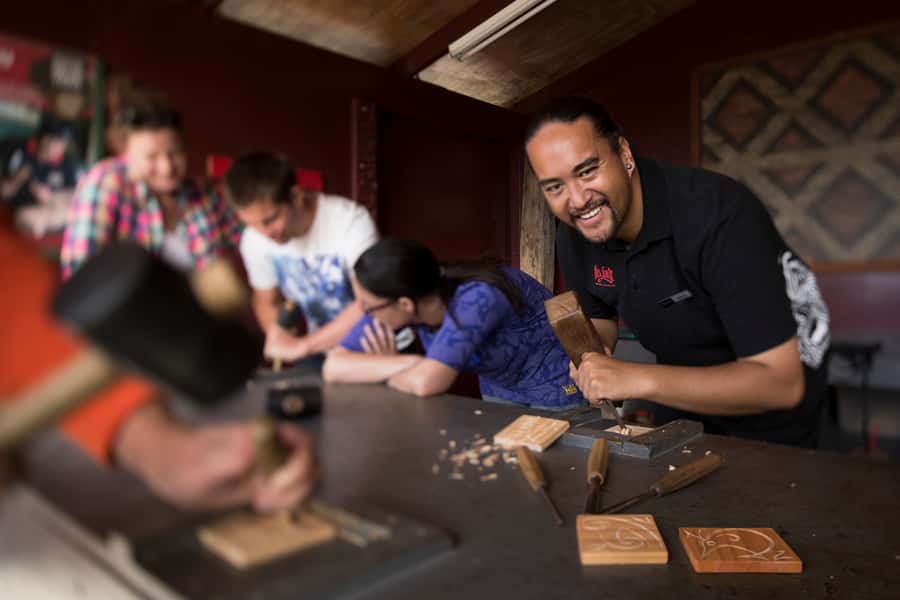
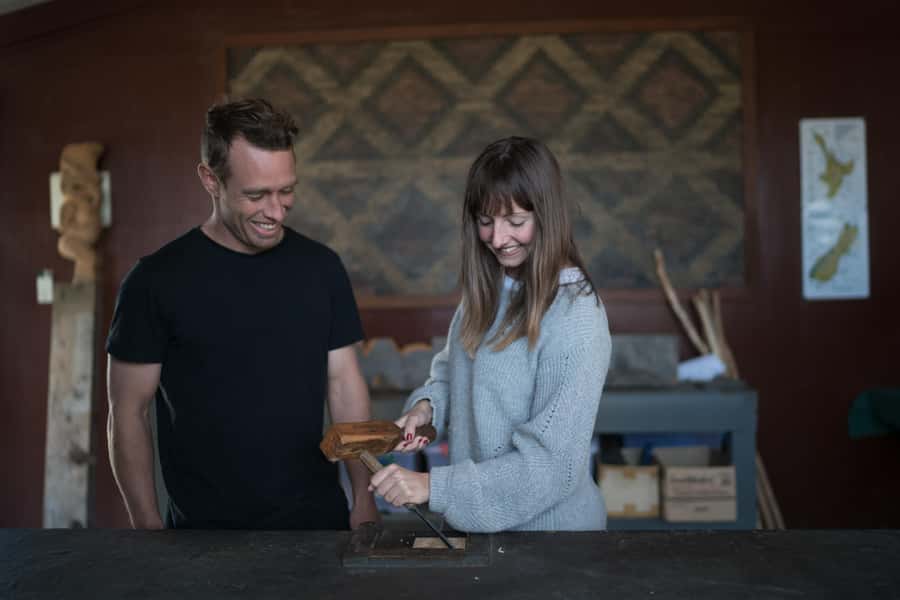
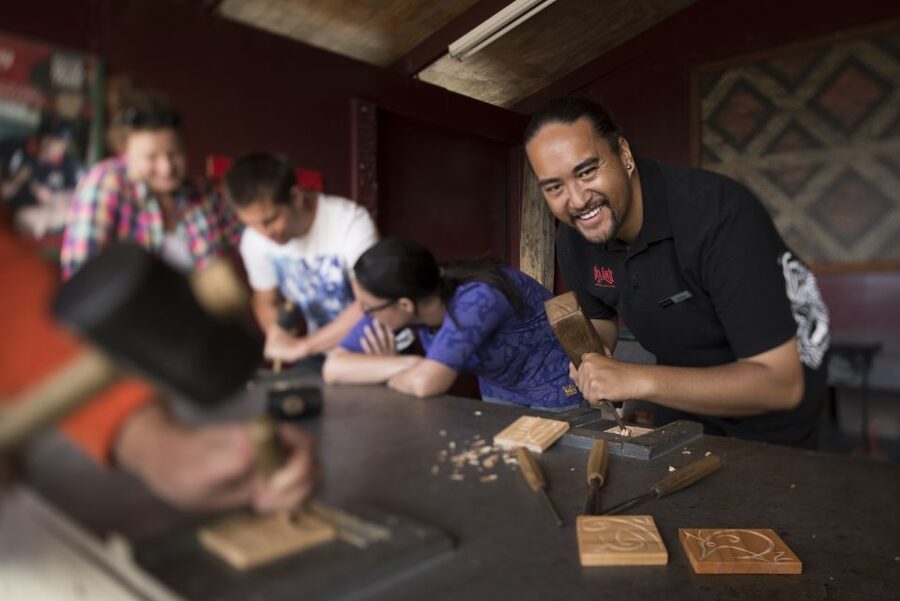
Māori carving is a welcome addition because it gives the visit a hands-on cultural element. A complimentary Māori carving is listed, and the carving activity is subject to availability. Children must be at least 12 years old to take part.
This is more than a quick photo stop. After looking at geothermal features, you get a chance to work with a traditional art form. The activity can make the visit feel less like a viewing platform and more like a cultural outing.
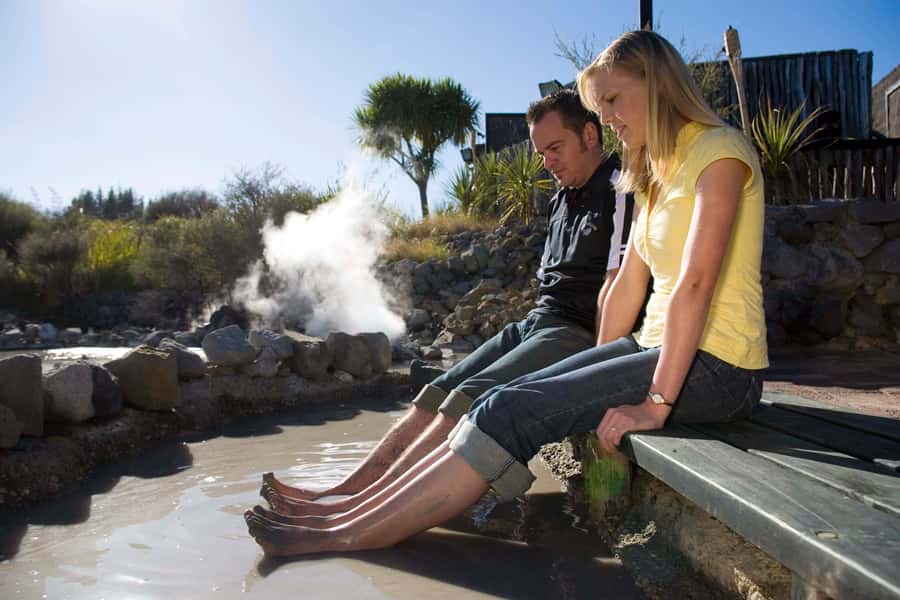
The mud foot pool is another possible extra, also subject to availability. It is a small detail, but it can help round out the visit if you have time. Do not build your entire schedule around either activity, since neither is guaranteed.
The café provides an easy finish. A coffee after a damp or sulfur-scented walk is a practical pleasure, and food options are available onsite. If you are planning the visit around lunch, the café makes Hell’s Gate easier to fit into a half-day outing.
Is $26 a good deal?
The listed price is $26 per person, but the supplied booking information also says the entry ticket is not included. That creates an important question: is $26 the cost of the walk or an additional activity price? Check the final booking screen and ask onsite if necessary before assuming you have paid for park admission.
If the $26 covers admission and the geothermal walk, I consider it fair value for a one-hour visit with a map, access to a major geothermal reserve, and possible cultural extras. You are paying for a concentrated look at active geothermal features rather than a full-day attraction.
If entry is charged separately, compare the final total with your available time. The reserve is worthwhile for people who want mud volcanoes, sulfur deposits, hot waterfalls, and a bush section in one stop. It may feel less compelling if you have already visited several Rotorua geothermal parks and want a longer guided program.
The value improves if you use the guided tour, take part in carving, or visit the mud foot pool when available. It is less strong if you arrive outside the guide times, rush through the walk, and treat the place as a quick photo stop.
Free cancellation up to 24 hours before the activity and reserve-now-pay-later booking make it easier to fit into a changeable Rotorua schedule. Those terms are useful, but they do not remove the need to confirm what the advertised price includes.
Who will enjoy Hell’s Gate most?
I would recommend Hell’s Gate to you if you want geothermal activity at close range and prefer a walk with a mix of natural and cultural content. It works well for adults, older children, photographers, and anyone curious about how heat, water, minerals, and plant life interact.
The self-guided format suits independent visitors and people on a time limit. The guided version suits you if you want stories, explanations, and a clearer understanding of the reserve’s geology and Māori connections.
Families should think about the smell and safety rules. Children taking part in carving must be 12 or older, and the park contains boiling pools and mud. The path may be manageable for many children, but close supervision is essential.
I would hesitate to recommend it if you dislike sulfur odors, have mobility limitations, or want a guaranteed geyser eruption. One useful point is that Hell’s Gate does not have a hot water geyser like some other geothermal sites. Its appeal comes from the mud volcano, hot waterfalls, fumaroles, pools, crystals, deposits, and bush.
Should you book the Hell’s Gate walk?
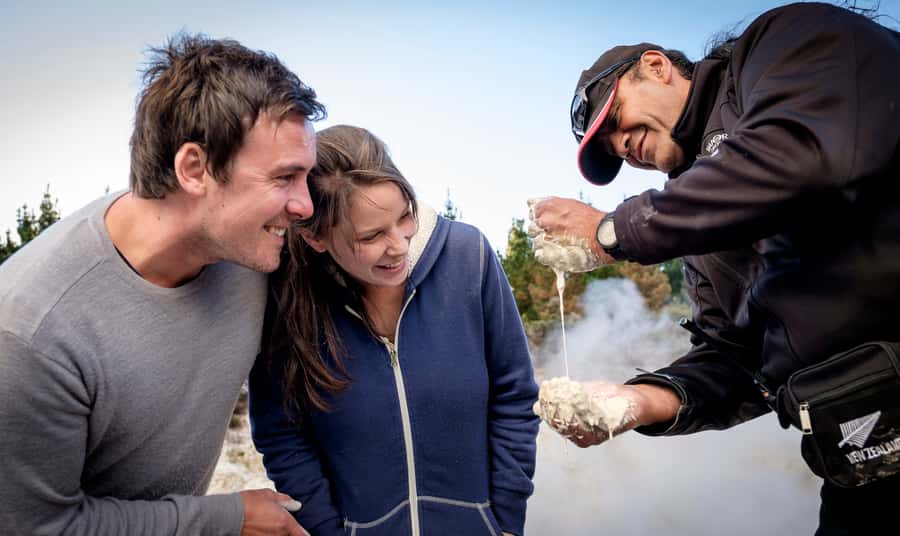
Book it if you want an unusual one-hour Rotorua stop with active mud, hot waterfalls, strong geothermal smells, and a clear choice between guided and independent exploring. The guide can add real value, especially if you catch an engaging leader such as T, Liam, or Luke, though names and availability are not fixed.
Choose the self-guided route if you value flexibility, and arrive prepared for rain, sulfur, and a little care around your belongings. Before booking, confirm the total price because the supplied details list both a $26 per-person cost and a separate entry-ticket warning.
For a first geothermal visit, Hell’s Gate offers a strong mix of sights and explanations. For repeat visitors, its best reasons are the active mud volcano, hot waterfalls, land coral, and the change from steaming plain to bush. That combination makes the park worth your time, provided you know exactly what kind of geothermal stop you are choosing.
FAQ
Where is Hell’s Gate Geothermal Reserve?
Hell’s Gate is just outside Rotorua, about a 15-minute drive from the city center. Travel east on State Highway 30, turn toward Whakatane about five minutes past the airport, and continue 3 kilometres to the reserve.
How long does the geothermal walk take?
The geothermal route takes about one hour. The guided tour is listed as 1.5 hours, so allow extra time if you choose the guided option.
Is the walk guided?
You can explore independently using the included map, or join an English-speaking guided walk if space is available. Guided walks are offered at 10:30 AM and 2:30 PM.
What can you see at Hell’s Gate?
You can see New Zealand’s largest active mud volcano, steaming fumaroles, boiling pools, hot water lakes, sulfur crystals, mineral deposits, land coral, and hot waterfalls.
Does Hell’s Gate have a geyser?
The supplied information notes that Hell’s Gate does not have a hot water geyser like some other geothermal sites. Its main features are active mud, hot pools, fumaroles, deposits, and hot waterfalls.
Does the geothermal park smell strongly?
Yes. Sulfur creates a strong odor often compared with rotten eggs. The smell may be difficult for very young children or anyone sensitive to sulfur.
What should I bring?
Bring comfortable shoes, sunglasses, sunscreen, water, and clothing suitable for the weather. A rain cape is available to purchase onsite.
Can children join the Māori carving activity?
Children must be at least 12 years old to participate in the carving activity. Māori carving and the mud foot pool are subject to availability.
Is Hell’s Gate suitable for people with mobility impairments?
The activity is listed as unsuitable for people with mobility impairments. Contact the operator before booking if you need specific accessibility information.
What does the $26 price include?
The supplied details list a price of $26 per person, but they also state that the entry ticket is not included. Confirm the final price and inclusions before booking.
Just added around Rotorua
- Thrilling Riverbug Adventure on the Rangitāiki River★ 5.0 · 4 reviews
- Te Puia: Te Pō Combo: Te Rā, Dinner, and Haka Performance★ 4.6 · 5 reviews
- Te Puia: Te Rā Guided Day Tour and Haka Performance★ 5.0 · 4 reviews
- Rotorua: Waimangu Volcanic Valley Ticket & Self-Guided Walk★ 4.8 · 104 reviews
- Rotorua: White Island, Mount Tarawera & Waimangu Volcanic …★ 4.4 · 5 reviews
- Rotorua: Velocity Valley – Two Ride Pass★ 4.6 · 8 reviews
- Rotorua: Wai Ariki Hot Springs & Spa 1hr Restorative Bathing★ 4.8 · 16 reviews
- Rotorua: Velocity Valley – NEW Vertigo 43m drop★ 5.0 · 3 reviews
Geothermal Park Tours, compared.
Rotorua based Small Group Morning Tour Waimangu and Wai O Tapu
Read our review →
Wai O Tapu & Waimangu Eco Thermal Morning Tour
Read our review →
Rotorua Lake: Deluxe Lake Spa Geothermal Hot Spring Bathing
Read our review →Browse the lists this tour appears in