
Reviewed · MāORI CULTURAL TOURS
Dark Sky Indoor Maori Cultural Astronomy Experience
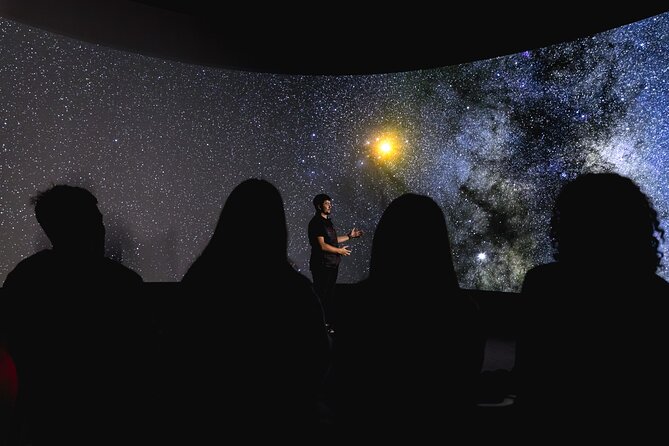
The most appealing thing about this Lake Tekapo attraction is that you can explore the Southern Sky in broad daylight. Inside four interactive zones, Māori astronomy, navigation, creation stories, and modern science come together in a clear, family-friendly presentation.
I like the 45-minute guided format, which gives the subject shape instead of leaving you to wander through displays without context. I also like the strong cultural focus, especially the way Māori knowledge of stars, ocean currents, farming, and daily life is presented alongside Western astronomy.
The main drawback is simple: this is an indoor introduction, not an actual night-sky viewing session. If you want telescopes, stars overhead, and a full outdoor observatory experience, you will need something else as well. Still, for a rainy day or cloudy evening, it is a smart use of an hour.
Key points at a glance
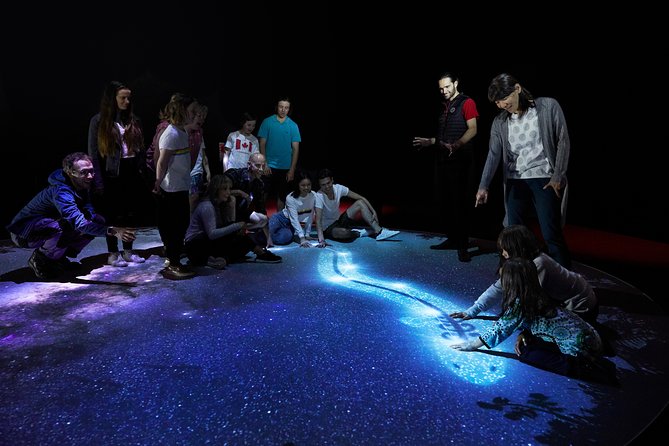
- Four interactive zones: Follow a guided story about Māori constellations, navigation, star clusters, and the origins of life.
- Daytime stargazing: You do not need clear skies or a late-night booking to learn about the Southern Sky.
- Māori and Western science together: The experience connects indigenous knowledge with more recent scientific discovery.
- A restored Victorian telescope: See the 125-year-old Brashear Telescope, which rises nine metres inside the venue.
- A good family stop: Multimedia displays and hands-on activities give children something to do while adults follow the story.
- Small group setting: The experience accepts a maximum of 26 people, helping the guided presentation stay focused.
Why Lake Tekapo is the right place for this experience
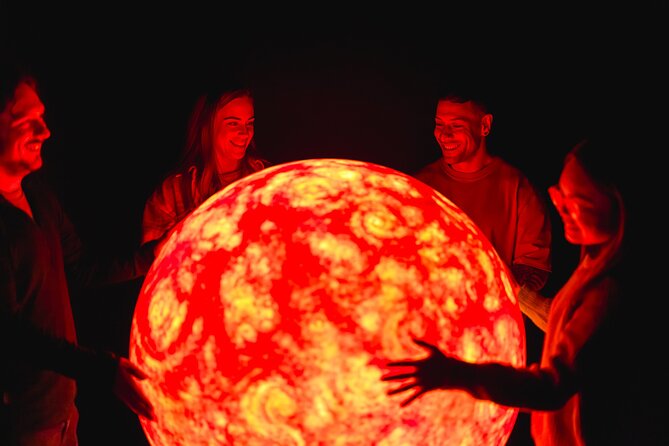
Lake Tekapo sits in the Aoraki Mackenzie International Dark Sky Reserve, so astronomy is not an add-on here. The night sky is part of the identity of the Mackenzie Basin, and this indoor experience gives you a cultural and scientific introduction before you head outside to look up for yourself.
That setting matters. You are not simply visiting a general science museum with a few star displays. The presentation is tied to New Zealand, the Southern Sky, and the Māori relationship with the heavens. It gives you a better sense of how people used the sky as a practical guide long before modern instruments.
The indoor format also solves a common problem in the region. Lake Tekapo can offer clear, cold nights, but it can also bring cloud and rain. This activity operates all year and does not depend on weather, making it useful when an outdoor astronomy plan falls apart.
I would think of it as a companion to night-sky viewing, not a replacement. It prepares you to notice more when the stars do appear.
More Stargazing Tours in Lake Tekapo
- Lake Tekapo: Alpine Stargazing Experience with a Guide
★ 4.5 · 626 reviews - Lake Tekapo: Stargazing Experience
★ 4.9 · 607 reviews - Chameleon Stargazing Shared Tour
★ 5.0 · 181 reviews
Entering four zones of Māori star knowledge
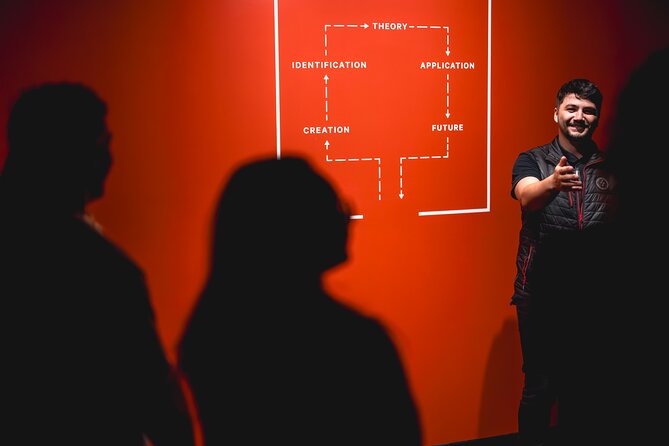
The visit takes place at the Dark Sky Project at 1 Motuariki Lane in Lake Tekapo. A guide leads you through four zones over about 45 minutes, with the full visit lasting roughly an hour.
The first strength is the structure. Astronomy can become abstract very quickly, especially for children. Here, the material is broken into manageable sections, with displays and activities helping you move from one idea to the next.
One part explains how Māori used constellations and ocean currents for navigation. That is a useful reminder that stars were not only objects to admire. They helped people travel, set direction, and understand their place in the wider world.
Another part looks at star clusters and their importance. The Southern Sky is not the same as the sky familiar to many visitors from the Northern Hemisphere, and this presentation helps you see it through a New Zealand lens.
The zones also explore mythology and the stories held in the stars. These are not treated as decoration around a science lesson. The cultural material is central to the experience, showing how astronomy can connect with identity, memory, seasons, and community life.
You will also encounter a science-based account of how living beings came to be. That part broadens the visit beyond constellations and legends, linking the origin of life to a modern scientific narrative.
The result is a useful blend. Māori explanations and Western science are not presented as competing attractions. They sit beside each other and show two ways of asking big questions about the universe.
A guide-led visit, not a silent museum stop
The guide makes a noticeable difference here. One particularly well-liked guide is called To, and the feedback about the guiding style points to a warm, interactive approach. To is comfortable with an informal way of being addressed, and the presentation is described as easy to follow, lively, and clear.
That matters because the subject can be packed with unfamiliar terms. A good guide turns the material into a story instead of a list of facts. The best parts of this experience seem to come from the delivery: an enthusiastic voice, clear explanations, and a willingness to keep the group involved.
The group limit of 26 people is another practical plus. It is not a private tour, but it is small enough for a guide-led presentation to feel personal rather than like a large lecture.
I would still set your expectations properly. This is an educational attraction, so you will spend much of the visit listening and looking at displays. The hands-on elements help, but it is not an amusement ride or a long free-play activity for children.
For families, the sweet spot is likely children who can pay attention for a guided 45-minute program. Younger children may enjoy the lights, images, and interactive parts, but the cultural and scientific ideas may be easier for older children to grasp.
Māori astronomy and Western science in the same room
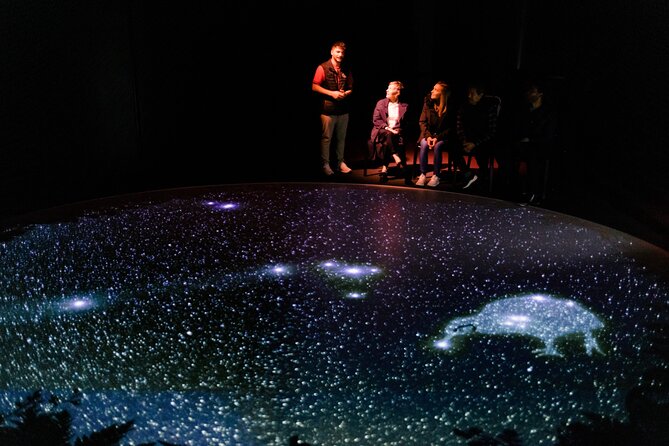
The most valuable part of the experience is its point of view. Māori understanding of the universe is connected to navigation, agriculture, and life, so the stars are presented as part of a working system rather than a distant spectacle.
You learn how the sky could help people understand seasons and farming. You also see why star patterns mattered for travel across the ocean. These connections make astronomy practical and human.
The Western science side gives you a different set of tools. It explains the universe through observation, evidence, and scientific discovery. Bringing both approaches into one visit helps you avoid a narrow idea of astronomy as only telescopes, equations, and distant planets.
I like this balance because it respects the cultural material without turning it into a token opening story. The experience treats Māori astronomy as a serious way of understanding the sky, while still explaining modern scientific ideas.
It also works for people with different interests. If you already enjoy astronomy, you will find a cultural angle that adds depth to familiar subjects. If you know little about stars, the guide-led format gives you a simple way in.
More Māori cultural evenings and village visits:
- Lake Tekapo: Indoor Māori Cultural Astronomy Experience
★ 4.5 · 43 reviews - Mitai Maori Village: Cultural Experience and Dinner Buffet
★ 4.7 · 3,575 reviews - Cultural Experience & Seasonal Māori Cuisine at Te Pā Tū
★ 5.0 · 1,546 reviews - Mitai Maori Village Cultural Experience in Rotorua
★ 4.5 · 1,294 reviews
The nine-metre Brashear Telescope
A highlight inside the venue is the restored Brashear Telescope, a 125-year-old Victorian-era instrument that reaches nine metres in height.
You should not expect to use it as part of this one-hour indoor visit. Its value here is visual and historical. The telescope shows how astronomy was once carried out with large mechanical instruments, long before today’s digital equipment became normal.
It also gives the experience a strong physical centre. Much of the visit deals with ideas, stories, and images. The telescope gives you something substantial to stand beside and study.
For children, the size alone can make an impression. For adults, it adds a link between the history of observing the sky and the modern science explained throughout the exhibition.
Why this is useful on a wet or cloudy day

Lake Tekapo is famous for stars, but the weather does not always cooperate. If clouds or rain cancel your outdoor plans, this attraction gives you a meaningful alternative rather than a generic indoor distraction.
One hour is a good length for that role. You can fit it between other Lake Tekapo activities without giving up half a day. It is also short enough to work for families who need a change of pace.
The indoor setting helps in other ways too. You do not need warm clothing, a clear forecast, or a late bedtime. You can learn about the Southern Sky in comfortable conditions, then decide later if the weather is good enough to look for stars outside.
I would especially consider booking it early in a stay if astronomy is one of your reasons for visiting the Mackenzie Basin. If the sky is cloudy on your first night, you still have a way to build some understanding of the region’s star traditions. If the sky clears later, you will have more context for what you see.
Is the $37.56 price good value?
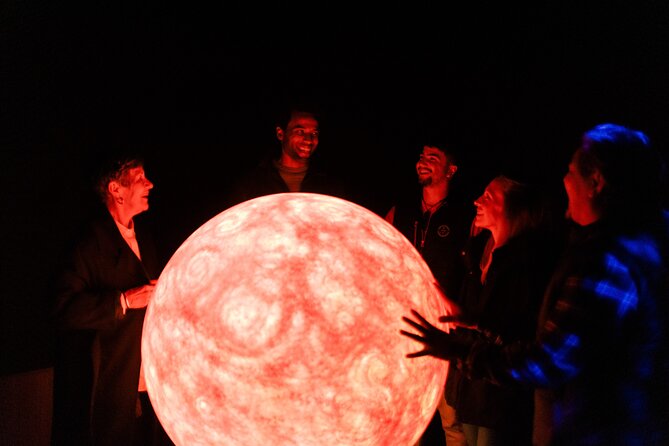
At $37.56 per person, the experience is not an all-day attraction. You are paying for about 45 minutes of guided content, with the overall visit lasting around an hour.
That makes value depend on how you use it. For a dedicated astronomy fan, the price may feel reasonable because the activity combines Māori cultural knowledge, science, multimedia displays, interactive zones, and access to the Brashear Telescope. For a family, the cost adds up, so you should decide if the cultural and educational content suits your group.
I see the strongest value in three situations:
- You have rain or cloud and need a dependable indoor plan.
- You want a cultural introduction to Māori astronomy, not only a telescope session.
- You are visiting with children who respond well to short, guided activities.
The price is less compelling if you only want to see stars through a telescope. This is not advertised as an outdoor viewing session, and the main focus is interpretation, storytelling, and exhibits.
Booking ahead is sensible because the group maximum is 26 people and the attraction is a well-known family stop in Lake Tekapo. The activity has had more than 10 bookings in the past month, which suggests steady interest, though availability can still vary by date.
Who will enjoy the Dark Sky Experience most?
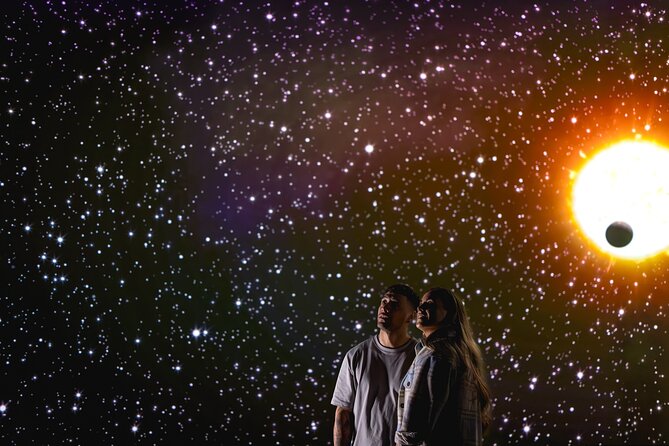
I would recommend it to families, first-time visitors to the Mackenzie Basin, and anyone curious about Māori connections to the night sky. It is also a practical pick for people who cannot manage a late-night astronomy outing or who want a shorter activity between drives.
Children get multimedia displays and hands-on elements. Adults get the wider story about navigation, agriculture, creation, and the relationship between cultural knowledge and science.
You do not need a background in astronomy. The guide explains the material in plain language, and the presentation is designed for all ages.
People looking for a quiet, self-guided museum visit may find the format more structured than expected. The 45-minute guided tour sets the pace. That is helpful for learning, but it leaves less freedom to linger over one display.
The attraction is also suitable for most participants, and service animals are allowed. It is near public transportation, though the supplied information does not specify routes or schedules, so you should check those separately if you are not arriving by car.
Booking, timing, and cancellation details
The meeting point is the Dark Sky Project at 1 Motuariki Lane, Lake Tekapo 7999. The activity ends back at the same location, so you do not need to arrange a separate pickup or return transfer.
Your ticket is mobile, and confirmation is provided when you book. The experience runs year-round and is suitable in all weather, a useful feature in a region where clear skies cannot be guaranteed.
Free cancellation is available if you cancel at least 24 hours before the start time. Cancellations or changes made less than 24 hours ahead are not refunded or accepted, and the cut-off uses local time.
The experience requires a minimum number of participants. If that minimum is not reached and the activity is cancelled, you will be offered another date or experience, or a full refund.
Snacks, coffee, and tea are not included. Since the visit lasts about an hour, this is easy to manage, but you should not expect refreshments as part of the ticket.
Should you book this Lake Tekapo activity?
Book it if you want a short, weather-proof introduction to Māori astronomy and the Southern Sky. The guide-led format, four interactive zones, cultural stories, and striking Brashear Telescope make it more useful than a basic display room.
I would not book it as your only astronomy activity if your main goal is to see stars through a telescope at night. Pair it with outdoor stargazing when conditions allow.
For families, rainy-day planners, and visitors who want New Zealand culture included in their astronomy experience, the $37.56 ticket offers solid value. It gives you a clearer sense of how the sky has guided people, shaped stories, and supported life in this part of the country.
FAQ
How long does the Dark Sky Experience last?
The full activity lasts approximately one hour, including a 45-minute guided tour through four zones.
Where does the experience start and finish?
It starts at the Dark Sky Project, 1 Motuariki Lane, Lake Tekapo 7999, New Zealand. The activity ends back at the same meeting point.
Is the experience suitable for children?
Yes. It is designed for all ages and includes multimedia exhibits and hands-on activities, making it suitable for families.
Does the activity operate if the weather is bad?
Yes. The experience is indoors and operates year-round, so it does not depend on clear skies or nighttime conditions.
What does the experience cover?
It covers Māori astronomy, Western science, navigation using constellations and ocean currents, the importance of star clusters, mythology in the stars, agriculture, life, and a science-based account of how living beings came to be.
Is the Brashear Telescope included?
Yes. Admission includes the chance to view the restored 125-year-old Brashear Telescope, which is nine metres tall.
Just added around Lake Tekapo
- Silver River Stargazing Experience in Lake Tekapo★ 4.5 · 106 reviews
- Tekapo Star Gazing Tour – Soak in the Stars★ 4.5 · 109 reviews
- Mt Cook Day Tour From Tekapo (Small Group, Carbon Neutral)★ 4.5 · 11 reviews
- Lake Tekapo Scenic Wilderness Cass Valley Tour★ 4.5 · 19 reviews
- Scenic 4WD Tour Lake Tekapo Backcountry★ 5.0 · 77 reviews
- Day Trip: Lake Tekapo to Mt Cook National Park★ 4.5 · 31 reviews
- Lake Tekapo Ultimate Stargazing Experience★ 5.0 · 3 reviews
- Stargazing Experience at Cowan’s Private Observatory★ 4.0 · 85 reviews
Māori Cultural Tours, compared.
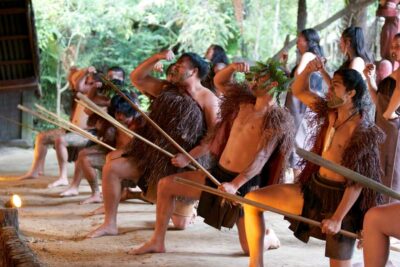
Mitai Maori Village: Cultural Experience and Dinner Buffet
Read our review →
Cultural Experience & Seasonal Māori Cuisine at Te Pā Tū
Read our review →
Mitai Maori Village Cultural Experience in Rotorua
Read our review →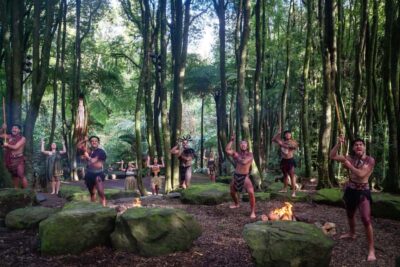
Te Pa Tu Māori Cultural Experience with Dinner
Read our review →
Lake Taupo: Sailboat Trip to the Maori Rock Carvings
Read our review →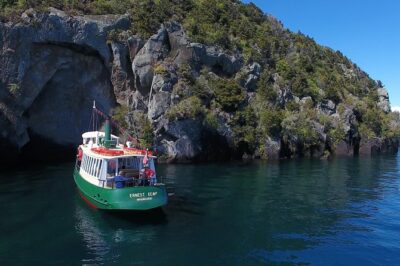
Lake Taupō Māori Rock Carvings Scenic Cruise aboard Ernest Kemp
Read our review →
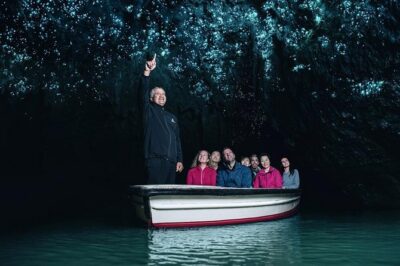
Waitomo Caves & Rotorua – Te Puia Small-Group Tour from Auckland
Read our review →Browse the lists this tour appears in