Reviewed · FULL-DAY
Full-Day Grand Auckland Volcanoes Tour
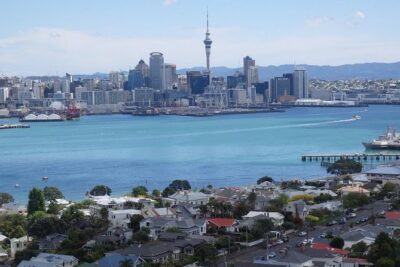
Auckland makes more sense from above. This full-day tour takes you up volcanic cones, around old craters, along lava-strewn coast, and into a military fortress built inside a volcano. Guide Mike links the geology to Māori settlement, British history, and the city you see below.
I like the wide range of stops and the way the day moves between quiet coastal paths, city lookouts, historic sites, and open volcanic spaces. I also like the small minivan format, with a maximum of 11 people and time for questions. The trade-off is clear: this is an active day with plenty of uphill walking, and the full afternoon may feel long if you mainly want the major volcanoes.
Key points to know before booking
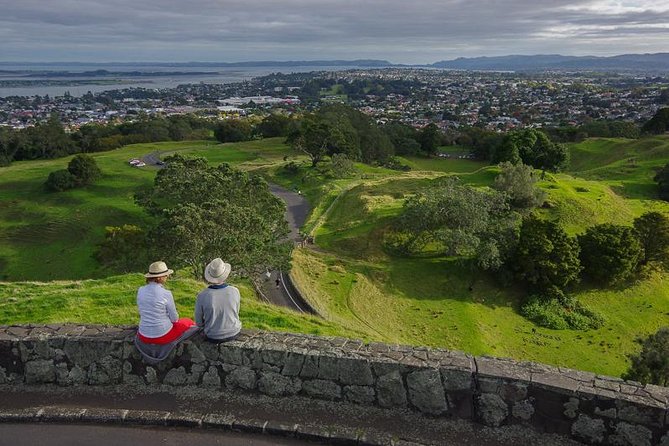
- Auckland from many volcanic summits: See Rangitoto, the Waitematā Harbour, Manukau Harbour, the city center, and several volcanic cones from different angles.
- A full day on your feet: Expect crater paths, summit walks, uneven ground, and optional steeper sections.
- Mike is the main attraction: His talks combine geology, Māori settlement, and New Zealand history in an informal, conversational way.
- The afternoon changes pace: Lake Pupuke, Takapuna’s lava flows, North Head tunnels, Devonport, and Mount Victoria add coast and military history.
- Good for cruise passengers: Port pickup and drop-off are included, with the tour starting at 8:00 a.m.
- Bring proper shoes: Enclosed walking shoes are a must, and some routes can feel closer to hiking than sightseeing.
Why Auckland’s volcanoes are the best way to read the city
Auckland is not simply a city with a few hills scattered around it. Its volcanic cones shape the views, parks, suburbs, harbors, and old settlement sites. The tour makes that pattern easy to see.
You travel by minivan between sites, but the real experience happens outside it. You walk around craters, climb to viewpoints, inspect old lava, and look back at the city from several directions. This gives the day a useful rhythm: drive, walk, listen, take in a view, then move on.
The tour also avoids treating volcanoes as isolated geological oddities. At many stops, Mike explains how Māori communities used the cones for settlement and defense, then connects that past with later British activity and modern Auckland.
That broad approach is a major strength. If you only visit Mount Eden on your own, you see one famous crater. Here, you begin to understand the whole Auckland Volcanic Field.
A few more Auckland half-days to weigh up
- Waiheke Island: Ferry & Hop-On Hop-Off Explorer Bus Tickets
★ 4.6 · 3,311 reviews - Hobbiton & Waitomo Caves Guided Day Trip from Auckland incl lunch
★ 5.0 · 2,677 reviews - From Auckland: Hobbiton & Waitomo Caves Day Trip with Lunch
★ 4.9 · 2,505 reviews
Achilles Point opens with Hauraki Gulf views
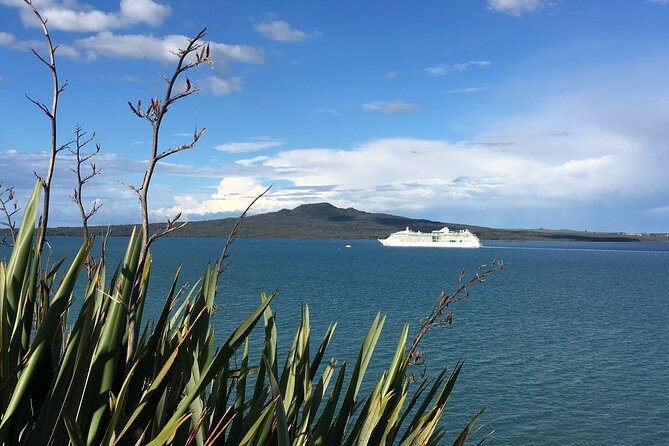
The first stop, Achilles Point, is brief at about 15 minutes, but it sets the tone well. You look across the Hauraki Gulf toward volcanic islands including Rangitoto and Motukorea, with Auckland’s urban edge in view.
This is a good place to get your bearings. Rangitoto is the most obvious volcanic landmark in the harbor, and seeing it from Achilles Point helps you place the islands in relation to the city.
Mike also introduces the arrival of early Māori settlers to New Zealand. That matters because the volcanoes are not just natural features. They were part of how people lived, traveled, defended communities, and understood the region.
The stop is short, so do not expect a long walk here. It works as an opening viewpoint rather than a full hike.
Mount Wellington puts you beside a 10,000-year-old crater
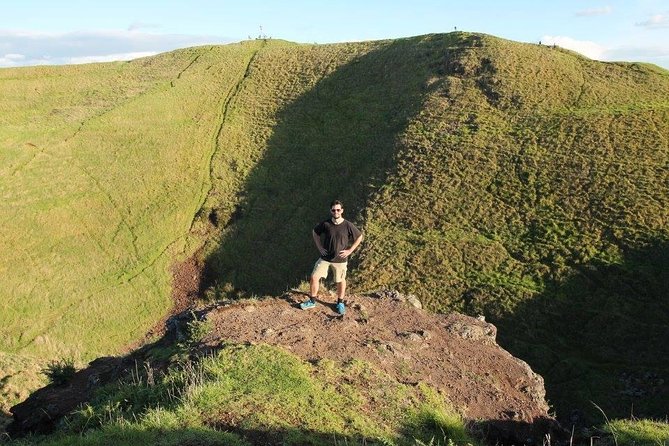
At Mount Wellington, you walk toward the crater near the summit of this roughly 10,000-year-old volcano. The stop lasts about 45 minutes and gives you one of the clearest introductions to Auckland’s volcanic form.
You can choose to enter the steep-sided crater. That option is worth considering if you have steady footing and feel comfortable on an uneven descent, but it is not essential to enjoy the stop. The summit area already gives you a strong sense of the crater’s size and shape.
This is also where the discussion of Māori settlements on Auckland’s volcanoes becomes more specific. The cone is not treated as a bare geological object. You learn how volcanic high ground became important to human communities.
The walk is manageable for an active visitor, but it is not a stop where you remain beside the van. Wear enclosed shoes and expect some uphill effort.
Mangere Mountain brings Māori settlement into focus
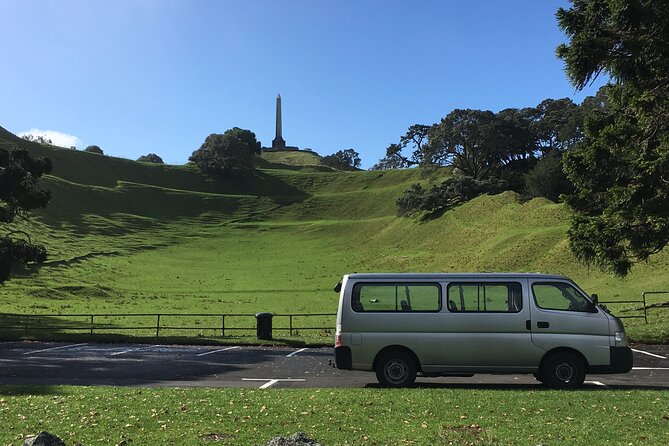
Mangere Mountain is one of the more important stops for seeing how volcanic terrain and Māori history connect. You spend about 45 minutes walking around its craters and learning about the large Māori settlement once located on the mountain.
The views extend toward Manukau Harbour, and the open setting lets you spot additional volcanic features. This stop is less about one postcard view and more about seeing how a broad volcanic site could support a major community.
I find this part especially useful because it adds human scale to the geology. A crater can look abstract until you understand why people chose that ground and how the summit and slopes affected daily life.
The walking here is one of the more substantial parts of the morning. You do not need to climb every steep section, and the tour allows people to appreciate the area at different levels of effort. Still, you should be comfortable walking outdoors for a sustained period.
Same corner of the country, a completely different day out:
- Auckland Dolphin and Whale Watching Eco-Safari Cruise
★ 4.5 · 1,790 reviews - Auckland: Hobbiton Movie Set Day Trip with Festive Lunch
★ 4.8 · 1,431 reviews - Hobbiton Movie Set Small Group Tour from Auckland
★ 5.0 · 1,380 reviews - Auckland Explorer: Sightseeing Hop-on Hop-off Tour
★ 4.0 · 1,180 reviews
One Tree Hill connects scenery with New Zealand history
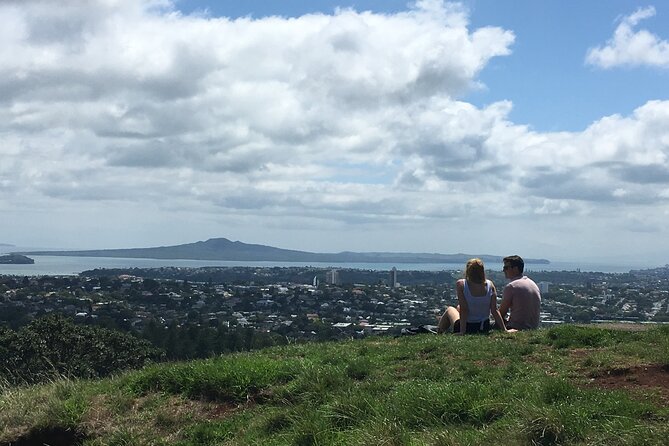
One Tree Hill, or Maungakiekie, is one of Auckland’s best-known volcanic sites. The stop lasts about 30 minutes and includes a view of the hill, a historical talk, and a drive around Cornwall Park to see more volcanic craters.
The focus here shifts from physical geology to the relationship between Māori and British communities in New Zealand. That makes this stop useful for placing Auckland within the country’s wider story.
You may also see ordinary park life here, including sheep at the base of One Tree Hill. Those small details keep the tour from feeling like a checklist of summits. Auckland’s volcanic sites are working parks and public spaces, not just monuments.
Because the stop is relatively short, you will not get a long summit walk at One Tree Hill. The value comes from the combination of park scenery, historical context, and the volcanic features visible around Cornwall Park.
Mount Eden gives you the classic Auckland panorama
Maungawhau, also called Mount Eden, is the morning’s big viewpoint. You walk around the crater and reach the summit for broad views of Auckland and the surrounding volcanic cones.
This is the view many people hope to get from the tour, but it has more value after the earlier stops. By now, you have seen several cones and heard how they relate to one another. From Mount Eden, you can look across the city and recognize that Auckland is built among volcanic forms rather than beside one isolated peak.
The crater itself is the main feature, so stay focused on the ground as well as the skyline. The summit walk requires uphill effort, and the tour is better suited to people who enjoy being outdoors than to those seeking a mostly vehicle-based city tour.
After the morning’s walking, you stop for one hour in central Auckland for lunch. Food and drinks are not included, and you choose where to eat. This gives you flexibility, but you should budget separately and keep an eye on the clock.
The afternoon begins at Lake Pupuke
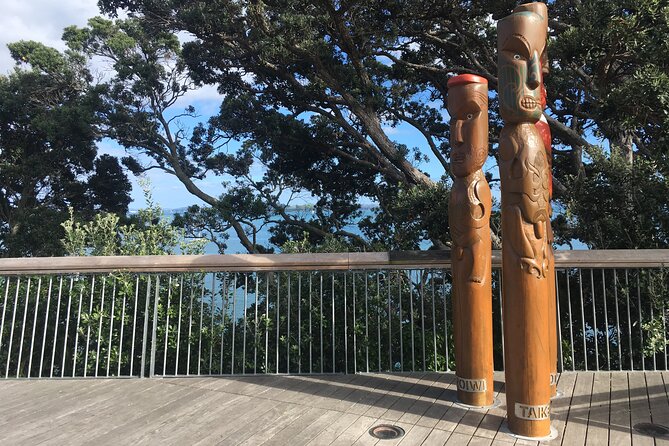
The afternoon starts with Lake Pupuke, a large freshwater explosion crater. The stop lasts about 15 minutes and offers a change from the raised cones and summit views of the morning.
Here, the important point is that Auckland’s volcanic features do not all look alike. Lake Pupuke shows another kind of volcanic event, now transformed into a freshwater lake in an urban setting.
The stop is brief, so treat it as a short geological pause rather than a full lakeside outing. Its main purpose is comparison: you see how different volcanic activity can produce different forms.
Takapuna reveals Auckland’s old lava flows
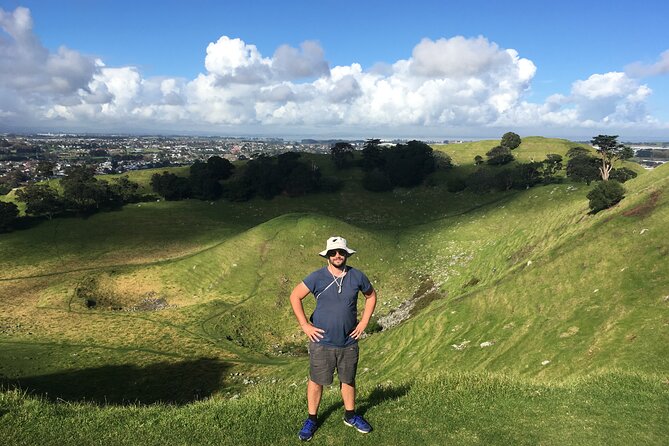
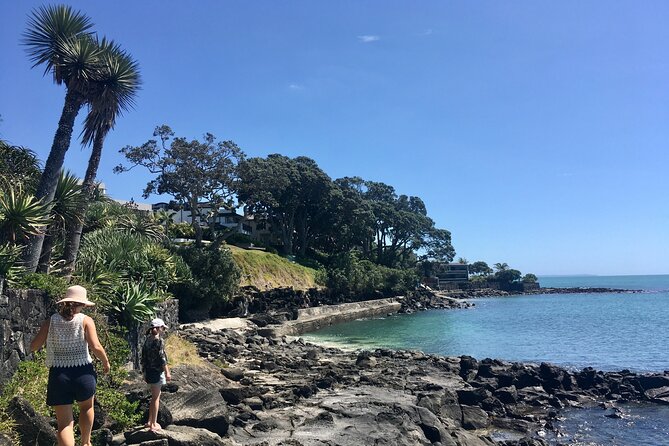
At Takapuna Beach, the tour becomes more hands-on. You explore old lava flows along the coast, with features that can include tree moulds and lava tubes. The optional coastal walk lasts about 45 minutes.
This is one of the most unusual parts of the day because the evidence of volcanic activity is spread across the shoreline rather than gathered into a neat crater. You can see how lava once moved through the area and how later coastal forces exposed or altered it.
The footing may be less certain along parts of the coast. Good balance helps, and the walk should be approached as an optional exploration rather than a race to cover every rock.
Depending on conditions, the lava field may be especially visible at low tide. The tour description specifically highlights the chance to walk across lava that is partly covered by the sea, so the shoreline experience can vary with the day.
There may also be a stop for ice cream near the beach. That small break is welcome after the morning climbs and gives the afternoon a relaxed local feel.
North Head combines volcanoes with military history
North Head Historic Reserve is a strong afternoon stop because it adds a completely different layer to the volcanic story. A British military fortress was built into the volcano, and you walk around the outer area to see tunnels and guns.
The route is described as an easy walk around the periphery, but you are still walking outdoors and may encounter uneven ground. The payoff is a mix of harbor views, city views, old defenses, and volcanic structure.
This is the sort of place you might miss if you simply followed Auckland’s standard city sights. The fortress makes the volcano useful again, this time as a defensive position. That is a practical example of how the region’s high ground shaped later history.
Devonport and Mount Victoria finish with choices
The final section takes you through Devonport, known for historic houses, before an optional walk up Mount Victoria. From the top, you get another excellent view of Auckland and the harbor.
The day does not force everyone into the same final climb. If someone in the group cannot manage Mount Victoria, the vehicle can reach the top, making the view available without another steep walk. That flexibility is helpful after several hours on foot.
You can also choose to remain in Devonport and take the ferry back to the city. This is not included in the tour price, so bring extra money if you want that option. The ferry can be a pleasant way to cross the harbor, but it is not the same as being driven back to the meeting point.
Clarify your return plan with Mike before splitting from the group. The stated tour arrangement includes a return drive over the Auckland Harbour Bridge to your hotel or the meeting point, while the Devonport ferry is an optional alternative.
What the $179.97 price gets you
At $179.97 per person, this is not a cheap hop-on, hop-off outing. It is a full 10-hour day with port pickup and drop-off, minivan transport, a small group capped at 11, and guided walks at numerous sites.
The value improves if you want interpretation rather than simple transport. You could visit Mount Eden or One Tree Hill independently, but fitting together Mount Wellington, Mangere Mountain, Lake Pupuke, Takapuna, North Head, Devonport, and the harbor viewpoints would take careful planning and your own vehicle.
The strongest value is the combination of access and explanation. Mike often takes photos for the group, offers practical guidance about steep sections, and uses questions and guessing games to keep the talks active.
Still, the full-day format is not right for everyone. If your main interest is Māori history and the major mainland volcanoes, the half-day option may be enough. The full day makes more sense if you want the coastal lava flows, North Head fortress, Lake Pupuke, and Devonport as well.
Who should book this Auckland volcano tour
You should consider this tour if you:
- Want to see Auckland from several high viewpoints in one day
- Enjoy geology, local history, and Māori culture together
- Are visiting from a cruise ship and need port transfers
- Prefer a small guided group to planning many stops alone
- Can handle several walks, hills, and some uneven footing
- Want to see less obvious sites such as lava tubes and a fortress inside a volcano
You may want a shorter option if you dislike long days, prefer museums and cafés, or have limited mobility. Much of the value comes from walking outside, and the scenery is earned with steps.
The tour operates in all weather, and poor weather can lead to a different date or a full refund. Dress for changing conditions, bring water, and use proper enclosed shoes. Food and drinks are your responsibility, with a one-hour lunch stop in central Auckland.
Should you book it?
Book the full day if you want Auckland explained through its volcanic foundations rather than simply photographed from one lookout. The mix of craters, Māori settlement sites, lava coast, harbor views, and military history makes this a well-rounded day.
Choose the half-day format if you want the main mainland volcanoes without the afternoon coastal and Devonport section. For active visitors, cruise passengers, and anyone curious about why Auckland looks the way it does, the full day offers strong value. Just be honest about your stamina. The views are excellent, but you will work for them.
FAQ
How long does the Full-Day Grand Auckland Volcanoes Tour last?
The tour lasts approximately 10 hours and begins at 8:00 a.m.
Where does the tour start?
The listed meeting point is 148 Quay Street, Auckland Central, Auckland 1010, New Zealand.
Is pickup included?
Port pickup and drop-off are included. The tour also offers pickup, and the return is normally to the hotel or meeting point.
How much does the tour cost?
The listed price is $179.97 per person.
How much walking is involved?
The tour includes substantial walking, including uphill paths, crater walks, summit routes, and an optional coastal walk. A moderate level of physical fitness is recommended.
Are food and drinks included?
No. Food and drinks are not included. You have one hour to stop for lunch in Auckland City at a location of your choice.
What happens if the weather is poor?
The experience requires good weather. If it is canceled because of poor weather, you will be offered another date or a full refund. Free cancellation is available up to 24 hours before the start time.
Just added around Auckland
- Auckland Airport Private One-Way or Round-Trip Transfer★ 4.5 · 14 reviews
- Zombie Bite Escape Room Experiences★ 5.0 · 54 reviews
- Kumeu Wine Region Shuttle from Auckland★ 4.5 · 19 reviews
- Auckland’s Wild West Coast & Black Sand Beaches Tour inc Lunch★ 5.0 · 12 reviews
- Vineyards Honey and Black Sand Beaches from Auckland★ 5.0 · 93 reviews
- West Coast Discovery Tour★ 5.0 · 37 reviews
- Wētā Workshop Unleashed – Intro to Scars and Scrapes Workshop★ 5.0 · 5 reviews
- West Coast Discovery Piha Beach Private Tour★ 5.0 · 14 reviews
Full-Day, compared.
Award Winning Milford Sound Full Day Tour & Cruise from Te Anau
Read our review →
Full-Day Milford Sound Tour with Cruise and Walks from Te Anau
Read our review →
Beyond the Vines – Full-Day Marlborough Wine Tasting Tour
Read our review →