Reviewed · WORKSHOPS
Beginner Surf Lesson at Te Arai Beach
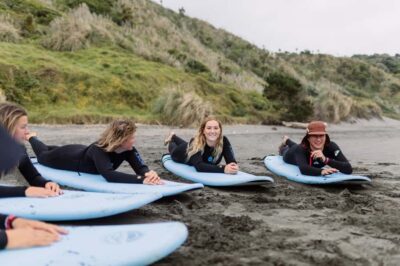
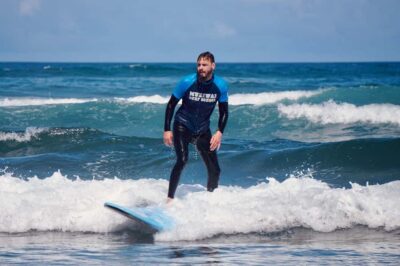
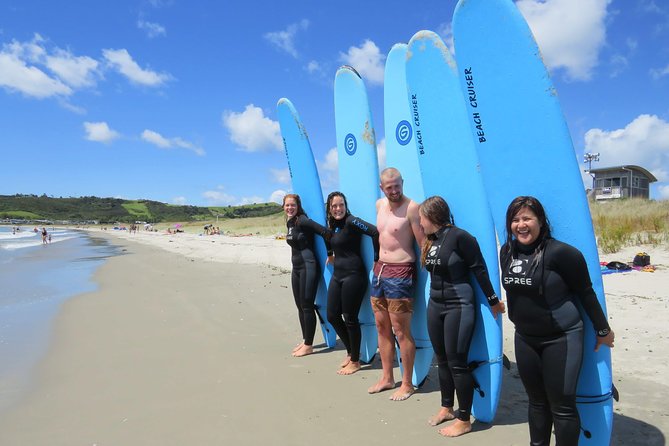
The best part of this lesson is its gentle introduction to surfing. You begin on the sand, learning safety, board handling, paddling, and the pop-up before entering the water at a beginner-friendly beach. With groups capped at 12 people, instructors such as Locke, Lydia, and Kirsty have room to give useful corrections rather than simply sending everyone into the surf.
I like the included wetsuit and surfboard, since you do not need to bring specialist gear. I also like the tide-based lesson times and the friendly, patient teaching style described by past participants, especially for children and nervous first-timers. The main point to check is the beach name: the meeting address is in Te Arai, while the experience description refers to Omaha Beach, so confirm the exact water location before you set out.
Key points to know before you book
- Beginner-focused instruction: Learn beach safety, equipment use, paddling, and pop-up skills before heading into the water.
- Small group size: A maximum of 12 people gives instructors a better chance to adjust the lesson to your ability and fitness.
- Te Arai and Omaha details: The meeting point is 708 Te Arai Point Road, while the lesson information also names beautiful Omaha Beach.
- Gear is included: Your surfboard and wetsuit are supplied, making this easier to arrange as a day trip from Auckland.
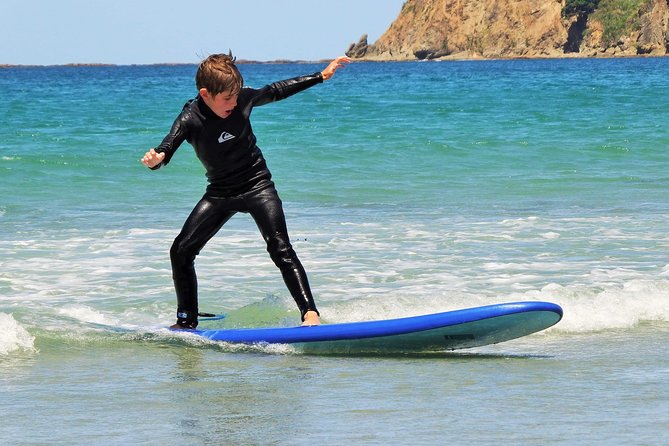
- Good for families: Children aged 10 and 12 have taken the lesson, and the activity is described as suitable for most participants.
- Weather matters: Poor conditions can lead to a new date or a full refund, while cancellations made at least 24 hours ahead are free.
Why this is a useful first surf lesson near Auckland
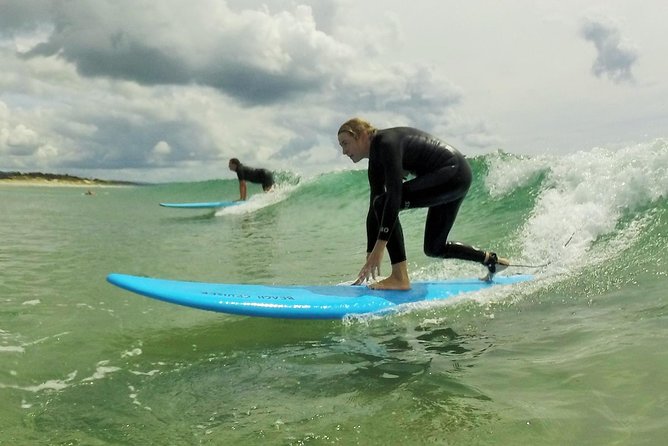
Surfing can look simple from the beach. In practice, standing up is only one small part of the job. You need to know how to carry and position the board, where to wait, how to paddle, and how to respond when a wave reaches you. A first lesson is much better when those basics are explained before you are in waist-deep water trying to remember everything at once.
Saltwater Eco’s two-hour format follows that sensible order. You start with beach-based instruction, then take the board into the ocean once you understand the main movements. That gives you a clear path through the lesson: stay safe, handle the equipment, paddle well, and work on the pop-up.
I also like that the teaching is adjusted to your ability and fitness. A strong, active adult may need different advice from a nervous beginner or a child. The instructors named for this activity, including Locke, Lydia, and Kirsty, are repeatedly associated with patience, calm direction, and useful individual help. That matters more than flashy surf talk when you are trying to stand on a board for the first time.
The setting adds to the appeal. Omaha Beach is described as a clean, beautiful beginner beach with white sand and clear water. The meeting address, however, is at 708 Te Arai Point Road in Te Arai. Since the supplied details use both Te Arai and Omaha, I would confirm the exact beach and meeting instructions after booking. It is a small but important point when you are driving from Auckland.
A few more Auckland half-days to weigh up
- Waiheke Island: Ferry & Hop-On Hop-Off Explorer Bus Tickets
★ 4.6 · 3,311 reviews - Hobbiton & Waitomo Caves Guided Day Trip from Auckland incl lunch
★ 5.0 · 2,677 reviews - From Auckland: Hobbiton & Waitomo Caves Day Trip with Lunch
★ 4.9 · 2,505 reviews
What happens during the two-hour lesson
Starting on the beach with safety first
The lesson begins with beach and water safety. This is not filler. Surf conditions can change, and beginners need to know how to use the board without putting themselves or someone else in trouble.
You should expect the instructor to cover basic awareness around waves, safe board use, and the right way to approach the water. The session is timed around the tides, which is a useful sign that the lesson is planned for the conditions rather than run at one fixed time regardless of the sea.
The beach session is also where you get familiar with the equipment. Your board and wetsuit are included, so the instructor can show you how to use the gear supplied for the lesson. This helps you spend less time worrying about setup and more time learning the movements.
Learning to paddle and position the board
Paddling is easy to underestimate. It is the engine that gets you moving and helps you catch a small wave. Poor paddling technique can leave you tired before you have had a real chance to stand.
Saltwater Eco places paddling among the core skills taught in the lesson. You will work on how to lie on the board, move through the water, and prepare for a wave. The instructor also aims to match the technique to your fitness, which is helpful because beginners often use too much effort in the wrong way.
This is one reason the two-hour length feels sensible. You have time to hear the explanation, practise on the beach, then try it in the ocean. The session is not just a quick photo opportunity with a surfboard.
Same corner of the country, a completely different day out:
- Auckland Dolphin and Whale Watching Eco-Safari Cruise
★ 4.5 · 1,790 reviews - Auckland: Hobbiton Movie Set Day Trip with Festive Lunch
★ 4.8 · 1,431 reviews - Hobbiton Movie Set Small Group Tour from Auckland
★ 5.0 · 1,380 reviews - Auckland Explorer: Sightseeing Hop-on Hop-off Tour
★ 4.0 · 1,180 reviews
Practising the pop-up before the real attempt
The pop-up is the move from lying on the board to standing. It looks quick when an experienced surfer does it, but a beginner has to coordinate hands, feet, balance, and timing in one motion.
Expect to practise the sequence on land before attempting it in the water. That gives you a chance to find a stable stance and learn the most effective movement for your body. You may still fall, of course. Falling is part of learning, and the lesson is designed to make those early attempts less intimidating.
The teaching style seems especially suited to beginners who are nervous about failing in front of a group. Locke is noted for helping a young surfer get up on the board quickly, while Lydia is associated with targeted instruction that helped a first-time surfer make progress. Those details suggest the instructors do more than give one speech to the whole class.
Taking the board into the ocean
Once you have worked through the basics, you move into the water. This is the moment most people are waiting for, but it works best because of the preparation on the sand.
You will try to paddle for waves, position the board, and use the pop-up technique. The instructor can then offer corrections based on what you are actually doing. If you are too slow, off balance, or using the wrong hand position, the feedback should be much easier to understand after you have tried it once.
The experience is not presented as an advanced surf clinic. You should book it to learn the foundations and get a real chance at catching a first wave, not to master turns or ride large surf. That honest expectation will make the lesson more enjoyable.
The beach setting and the Te Arai question
The Auckland region is a practical place to begin surfing if you are staying in the city and want a day outside town. Te Arai is far enough from central Auckland to feel like an outing, but the experience is specifically described as a convenient day trip for city visitors.
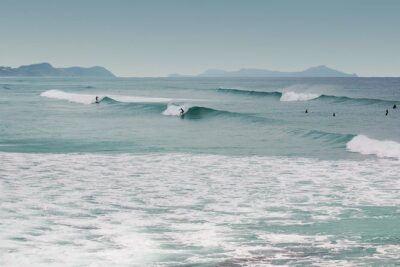
Omaha Beach is praised for its white sand, clear water, and clean conditions for beginners. Those qualities matter. A broad, attractive beach can make the first lesson feel less pressured, while clear water and a suitable wave can help you see what is happening around your board.
Still, do not assume that the named beach and meeting address are interchangeable. The activity is titled for Te Arai Beach, begins at 708 Te Arai Point Road, and also describes the lesson at Omaha Beach. I would check the final directions, parking information, and exact water location before leaving Auckland. This is especially important if you are using public transportation, since the activity is described as being near public transportation but does not include transport.
You return to the meeting point when the lesson ends. No transfer from Auckland is provided, so you must arrange your own way there and back. For a day trip, plan extra time around the two-hour class rather than treating the lesson time as the entire outing.
How the small group affects your lesson

The maximum group size is 12. That is not a private lesson, but it is small enough to offer a better chance of personal help than a large beach class.
I would pay attention to this if you are choosing between several beginner lessons. Surfing requires physical correction in the moment. A useful instructor needs to see your stance, watch your paddling, and tell you what to change before the next wave. A smaller group makes that more realistic.
The instructor names connected with the lesson include Locke, Lydia, and Kirsty. The strongest pattern in the available feedback is not advanced surfing expertise or dramatic conditions. It is patience, calm instruction, and a friendly atmosphere. That is exactly what you want when a child is learning or an adult is worried about looking awkward.
The lesson also suits people who want to continue surfing later. You will learn skills that can be practised again, including board use, paddling, and the pop-up. The class is therefore more useful than a one-off ride on a board with no explanation.
Is the $49.03 price good value?
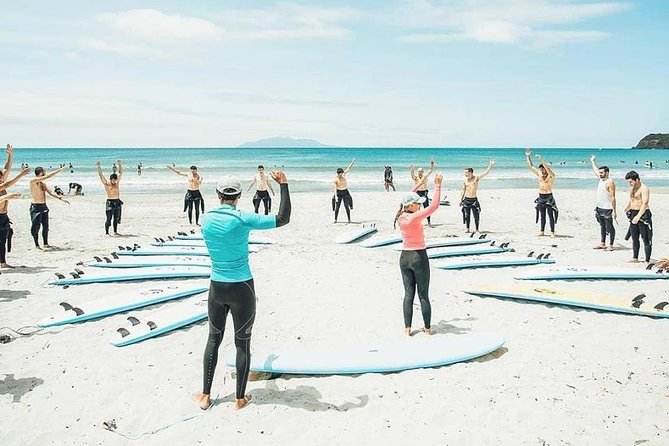
At $49.03 per person, the lesson is priced as an accessible introduction rather than a luxury activity. The value comes from what is bundled into the two hours: a surfboard, wetsuit, instruction, and souvenir photos and videos of the lesson.
The gear is a meaningful saving for a first-timer. Buying or hiring a wetsuit and board separately would add cost and create more planning. You also avoid guessing which board is suitable for a beginner, since the activity includes the equipment needed for the lesson.
The photos and videos are another useful touch. They give you a record of the experience and may help you see your stance and pop-up after the lesson. I would not book the class only for the media, but it adds value, especially for families.
Group discounts are available, which can make the price more attractive if you are booking for several people. The value is strongest when you want a guided first attempt near Auckland and do not already own equipment. If you are an experienced surfer with your own board and wetsuit, the lesson will offer less benefit.
Who should take this class?
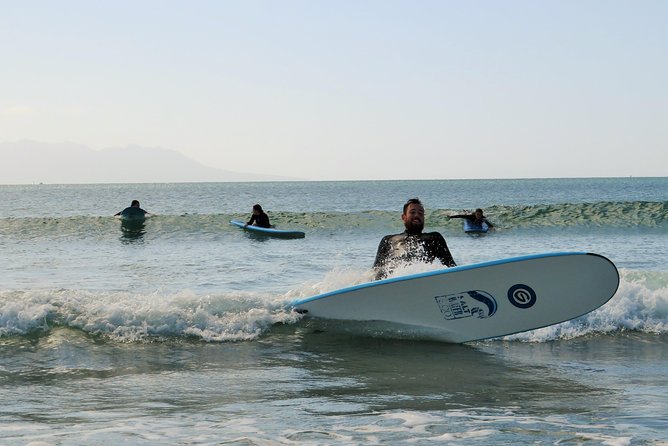
This is a good match for:
- First-time surfers who want a clear introduction
- Adults who feel nervous about trying the sport alone
- Families looking for an active day trip from Auckland
- Children who can take part in the lesson
- Visitors who want to learn a skill rather than only see the coast
- People who need boards and wetsuits supplied
The available details specifically describe children aged 10 and 12 taking the lesson. That does not establish a universal minimum age, so families with younger children should confirm the age rules before booking.
The activity is also suitable for most participants, but surfing remains a physical sport. You should be comfortable taking part in beach and water activities. The instructors can adjust technique to ability and fitness, but the lesson is not presented as a medical or specialist adaptive program.
Timing, weather, and what to plan
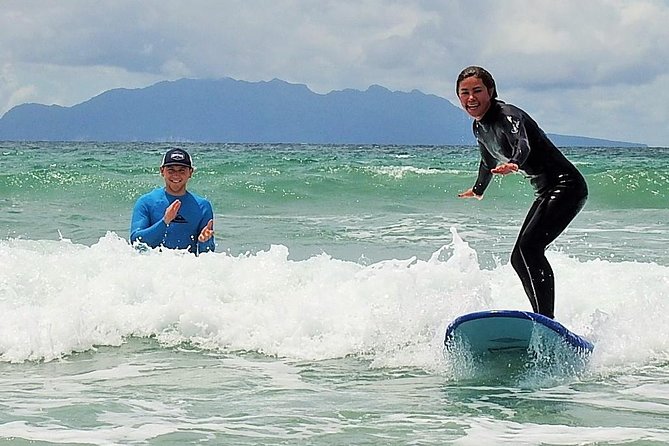
The advertised lesson time is 11:00 AM to 1:00 PM, from Monday through Sunday, with times planned around the tides. Tide timing is important because beginner lessons work best when the conditions match the level of the class.
You will receive booking confirmation at the time of reservation, and the activity accepts a mobile ticket. Bring the confirmation on your phone and allow time to reach the meeting point at 708 Te Arai Point Road.
Transport is not included. Check your route carefully, especially if you are relying on public transportation. The activity is near public transportation, but the details do not promise a transfer or state how long the trip from central Auckland takes.
Weather can affect the lesson. If poor weather causes cancellation, you can choose another date or receive a full refund. You can also cancel for a full refund if you do so at least 24 hours before the start time. Cancellations or changes made inside that window are not refunded or accepted.
How the teaching style shapes the experience
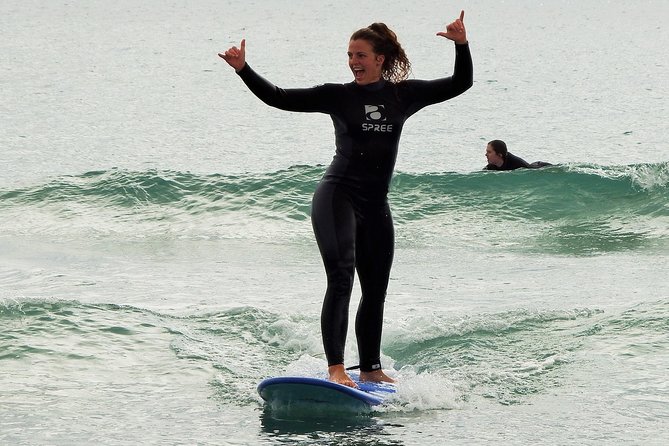
A surf lesson can feel chaotic if the instructor is rushed. Here, the most consistent strength is the human side of the class. Locke is described as exceptionally patient with beginners, Lydia as focused and encouraging, and Kirsty as calm and reassuring. Those qualities make a real difference when you are learning a movement that feels unnatural at first.
You should expect a lesson that aims to help you succeed, not simply cover a checklist. The stated goals include getting you onto a wave and helping you use an effective technique for your own ability and fitness.
That does not guarantee that everyone will stand up. Surf conditions, timing, balance, and confidence all vary. The fair expectation is that you will learn the basic process, receive guidance, and have a genuine chance to catch a beginner wave. Some people may stand on the first try. Others may leave with better paddling and a clearer idea of what to practise next.
Should you book the Saltwater Eco lesson?
Book it if you want a well-supported first surf lesson near Auckland, especially if you need equipment and prefer a small group. The combination of beach safety, board instruction, paddling, pop-up practice, ocean time, and included photos makes the $49.03 price reasonable for a first attempt.
Families and nervous adults should find the patient teaching style reassuring. The biggest practical concern is the Te Arai and Omaha naming difference, so confirm the exact lesson beach and directions before you go. If you are already an experienced surfer, or if you need transport from central Auckland included, this is probably not the right choice.
FAQ
How long is the beginner surf lesson?
The lesson lasts approximately two hours.
Where does the activity start?
The meeting point is 708 Te Arai Point Road, Te Arai 0975, New Zealand.
Does the lesson take place at Te Arai Beach or Omaha Beach?
The activity is titled for Te Arai Beach, while the description also identifies Omaha Beach as the lesson location. Confirm the exact beach and meeting instructions after booking.
What equipment is included?
A surfboard and wetsuit are included.
Is transportation from Auckland provided?
No. Transport to the lesson location is not included.
How many people can join the lesson?
The activity has a maximum group size of 12 participants.
What skills will I learn?
You will cover beach and water safety, correct equipment use, paddling, pop-up skills, and surfing technique suited to your ability and fitness.
Can I cancel for a refund?
Yes. You can cancel at least 24 hours before the start time for a full refund. If poor weather cancels the lesson, you will be offered another date or a full refund.
Just added around Auckland
- Auckland Airport Private One-Way or Round-Trip Transfer★ 4.5 · 14 reviews
- Zombie Bite Escape Room Experiences★ 5.0 · 54 reviews
- Vineyards Honey and Black Sand Beaches from Auckland★ 5.0 · 93 reviews
- Kumeu Wine Region Shuttle from Auckland★ 4.5 · 19 reviews
- Auckland’s Wild West Coast & Black Sand Beaches Tour inc Lunch★ 5.0 · 12 reviews
- West Coast Discovery Tour★ 5.0 · 37 reviews
- Wētā Workshop Unleashed – Intro to Scars and Scrapes Workshop★ 5.0 · 5 reviews
- West Coast Discovery Piha Beach Private Tour★ 5.0 · 14 reviews