
Reviewed · MUSEUMS
Auckland: Maritime Museum Entry Ticket
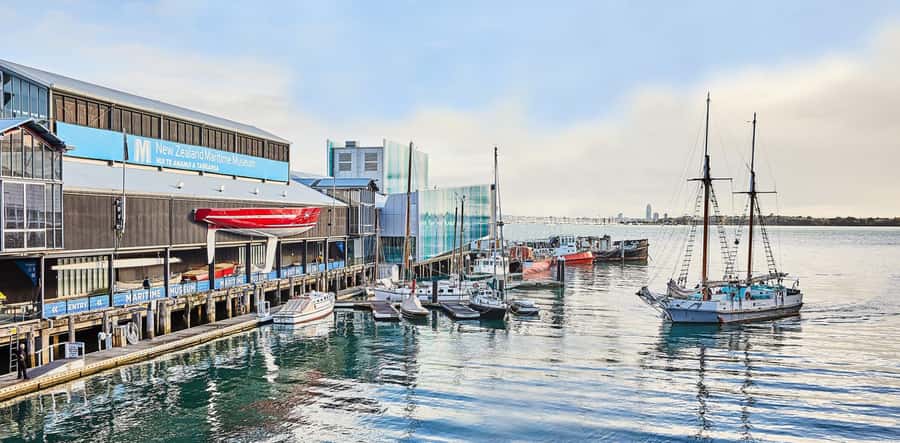
The best reason to visit Auckland’s Maritime Museum is its broad view of life on the water. You move from Pacific migration and Maori traditions to Western shipping, trade, immigration, leisure, and America’s Cup yacht design. I like that the museum treats the ocean as more than scenery. It shows how the sea shaped the people and economy of New Zealand.
I also like the hands-on displays and the freedom to set your own pace. The Viaduct Harbour location adds real waterfront atmosphere, and a visit can be especially timely during major sailing events such as the ITM New Zealand Sail Grand Prix. The main consideration is that this is a self-guided museum visit, not a narrated cruise or guided tour, so you need to read, look, and connect the stories for yourself.
Key points to know before you go
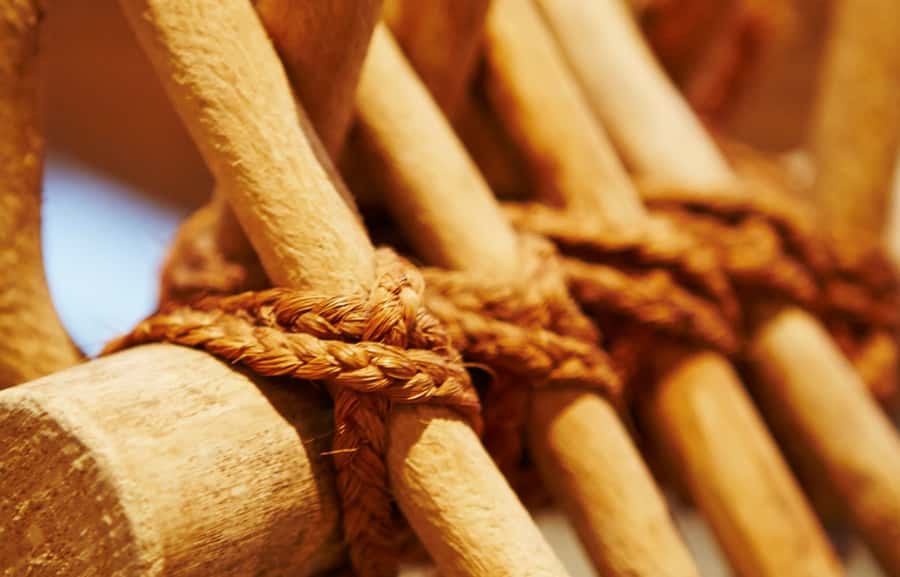
- Pacific migration takes center stage: Learn how ocean travel shaped Maori traditions and New Zealand’s settlement.
- The exhibits cover both people and technology: Expect stories about immigration, trade, shipping, leisure, and yacht design.
- America’s Cup material adds a modern edge: The museum connects maritime heritage with cutting-edge sailing innovation.
- You set the schedule: Allow 1 to 3 hours, with museum hours from 10:00 AM to 5:00 PM.
- The location helps make the visit special: Auckland’s Viaduct Harbour places the museum beside an active waterfront.
- The $14 price is easy to fit into a day: You receive museum entry, but food, drinks, and transport are not included.
Why Auckland’s Maritime Museum is worth your time
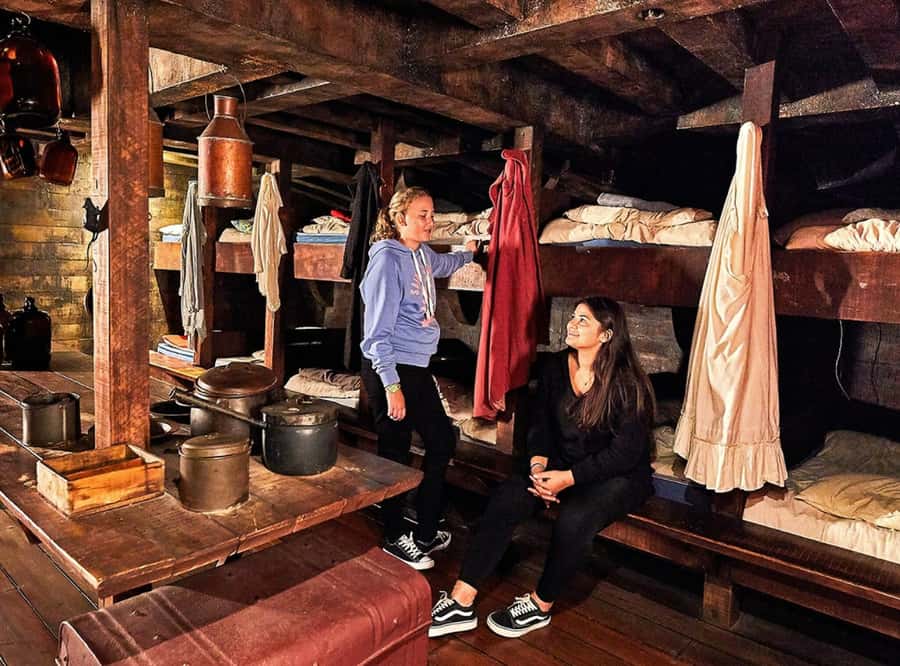
Auckland is surrounded by water, and this museum helps explain why that matters. It is not simply a collection of boats or old nautical objects. Its main subject is the relationship between people and the ocean, from long-distance Pacific migration to international commerce and modern racing technology.
That broad focus gives the visit useful range. You can begin with cultural history, move into immigration and trade, then finish with design and competitive sailing. If you have children with you, the interactive parts give them something to do while you spend more time with the written material.
I find this approach more useful than a museum that presents maritime history as a list of dates and vessels. Here, the ocean connects different subjects. It explains how people reached New Zealand, how goods moved, how communities developed, and why sailing remains part of the country’s identity.
The museum also works well for a short Auckland visit. At $14 per person, it is a modest paid attraction, and you do not have to commit to a full day. You can spend an hour on a quick visit, or stay for up to three hours if you want to read more carefully and take your time with the displays.
More Museums and Galleries in Auckland
- Auckland War Memorial Museum Entry Ticket
★ 4.5 · 293 reviews - Explore gardens & galleries filled with incredible art, Matakana
★ 5.0 · 186 reviews - Skip the Line: Auckland Museum General Admission Ticket
★ 4.5 · 183 reviews
Starting with Pacific migration and Maori traditions
One of the most important parts of the museum is its attention to Pacific migration. New Zealand’s story cannot be understood without considering the ocean routes that brought people to these islands, and the museum places that movement near the front of the experience.
You can expect displays that connect the sea with Maori traditions and Pacific cultures. This matters because it gives the museum a local starting point. The story is not limited to European ships arriving for trade or settlement. It also considers earlier knowledge, movement, and traditions tied to the Pacific.
I would give this section proper time rather than hurrying toward the modern exhibits. The objects and personal stories help turn a large subject into something more human. You may find that this part is especially useful if you are new to New Zealand history and want context before exploring later galleries.
The museum’s strength here is its sense of connection. Migration is not presented as an isolated event. It links to identity, community, and the practical skills needed to travel across a vast ocean. The information can also give you a better understanding of why the sea has such a strong place in New Zealand culture.
Moving through immigration, trade, and shipping
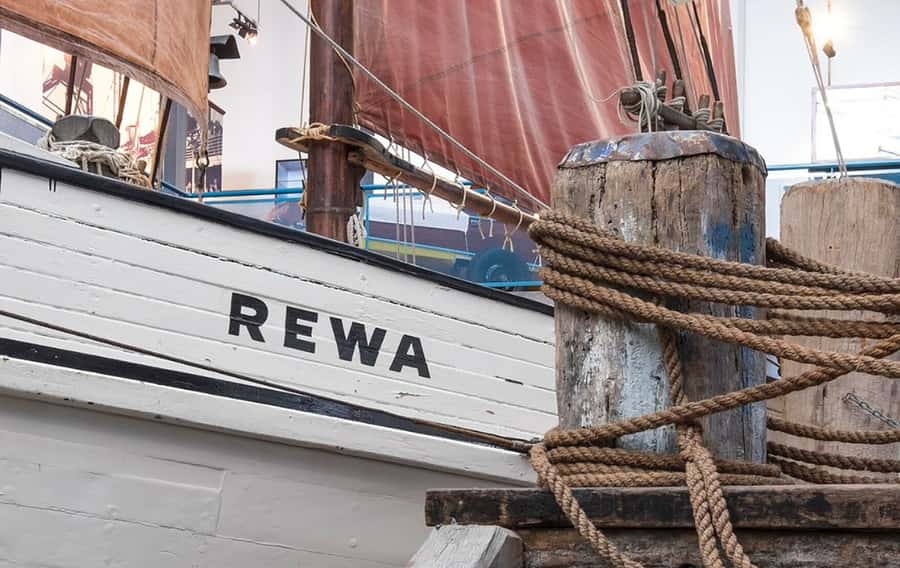
The next part of the visit broadens the picture. The ocean was not only a route for migration. It also carried workers, families, goods, ideas, and commercial opportunity. Exhibits on immigration, trade, and Western shipping show how New Zealand became linked to the wider world.
This section should suit anyone interested in how a country develops. Shipping can sound dry on paper, but the museum ties it to everyday consequences. Trade affects what people can buy, where businesses operate, and how communities connect with distant places. Immigration changes the makeup of towns and cities. The sea sits behind all of those changes.
Look for the human stories within the larger subjects. Personal accounts and artifacts help prevent the displays from becoming too technical. You are not just looking at objects from a past industry. You are seeing traces of the people who travelled, worked, traded, and built lives around the water.
The balance between Maori traditions and Western shipping is one of the museum’s more valuable features. A visit that focused only on European vessels would leave out a major part of New Zealand’s story. A visit focused only on early Pacific movement would miss the economic and technological changes that followed. This museum gives you both.
Seeing the ocean as a place of work and leisure
Maritime museums often concentrate on exploration and commerce, but this one also considers leisure. That wider view makes the subject feel closer to modern life. The ocean can be a workplace, a transport route, a source of food, a place of cultural meaning, or a setting for recreation.
You may find this section helpful if you are not a specialist in maritime history. You do not need to know the names of ships or sailing terms to understand why the sea matters. The museum uses objects, stories, and displays to show how contact with the water fits into ordinary life as well as major national events.
The leisure theme also prepares you for the museum’s modern sailing material. It shows that maritime culture did not end with older forms of transport. Sailing remains a part of New Zealand’s public life, design culture, and sporting identity.
Allow yourself room to pause here. A quick glance can make the museum seem like a collection of separate subjects, but the links become clearer when you consider the ocean as the common thread. The experience works best when you follow those links instead of rushing from one display to the next.
A few more Auckland half-days to weigh up
- Waiheke Island: Ferry & Hop-On Hop-Off Explorer Bus Tickets
★ 4.6 · 3,311 reviews - Hobbiton & Waitomo Caves Guided Day Trip from Auckland incl lunch
★ 5.0 · 2,677 reviews - From Auckland: Hobbiton & Waitomo Caves Day Trip with Lunch
★ 4.9 · 2,505 reviews - Auckland Dolphin and Whale Watching Eco-Safari Cruise
★ 4.5 · 1,790 reviews
America’s Cup design and New Zealand innovation
The America’s Cup material gives the visit a contemporary finish. The museum explores cutting-edge yacht design, showing how maritime tradition can lead into engineering, competition, and new ideas.
This is a good counterpoint to the older cultural and shipping displays. You begin with long ocean journeys and historical communities, then see how New Zealand’s relationship with sailing continues through modern design. The subject may appeal to you even if yacht racing is not normally on your list, because it connects sport with practical innovation.
The modern material also makes the museum feel relevant. You are not looking only at a finished past. You are seeing how the country still uses the ocean as a place for experimentation and achievement.
If a major sailing event is taking place at the Viaduct Harbour, the setting can add extra energy to this part of your visit. One booking in February 2026 coincided with the ITM New Zealand Sail Grand Prix, giving the visitor a chance to watch the race from the area around the museum. That kind of timing is not guaranteed, but it is worth checking Auckland’s event calendar if sailing interests you.
Hands-on displays and special exhibitions
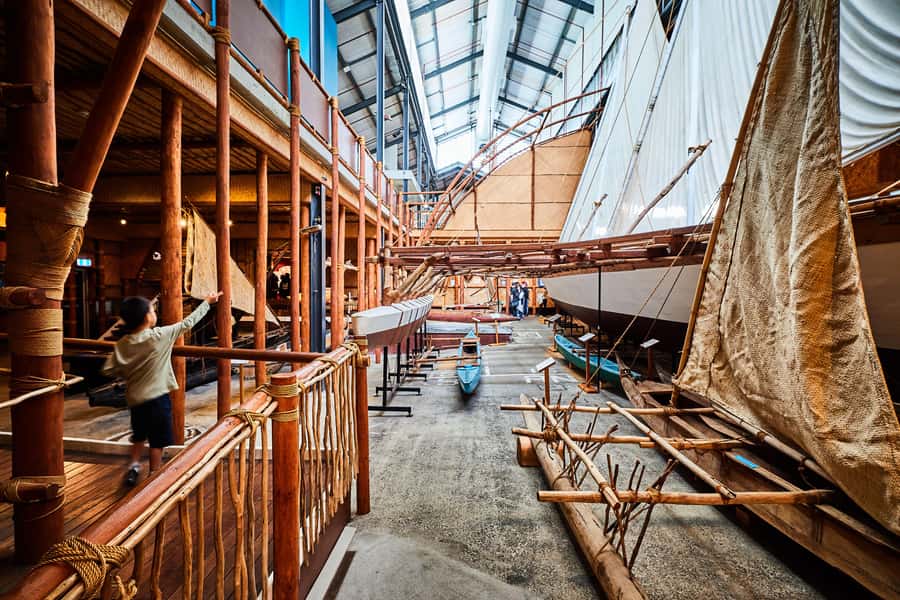
The museum combines standard gallery displays with hands-on experiences and special exhibitions. The exact mix can change, so you should expect the permanent themes to provide the main structure while temporary material adds variety.
Interactive displays are useful for families and for anyone who finds long text panels tiring. They give you another way to understand the subject, and they can help children stay involved. Still, the experience is not described as a children-only attraction. Adults interested in design, migration, national identity, and technology will find plenty to consider.
I would plan for at least an hour if you want more than a quick look. Two hours gives you a better chance to read the personal stories, examine artifacts, and spend time with the modern sailing exhibits. Three hours is sensible if you move slowly or encounter a special exhibition that catches your interest.
Do not expect every part of the visit to have the same pace. Some displays may be visually immediate, while others ask you to stop and read. That variation is normal in a museum of this size and subject. If you are visiting with a family, it may help to let each person choose a section that interests them rather than trying to maintain one exact pace.
The Viaduct Harbour setting
The meeting point is the New Zealand Maritime Museum at Auckland Viaduct Harbour. You show your voucher at the ticket counter, then explore independently. There is no hotel pickup or drop-off, so you need to make your own way to the museum.
The waterfront setting is an advantage. Maritime history feels less abstract when you are close to Auckland’s harbor, and the location makes the museum easy to pair with other time around the water. The museum can work as a planned destination or as a useful stop during a day in the Viaduct area.
The setting can also affect the feel of your visit. During a sailing event, the harbor may offer an extra spectacle outside the galleries. On an ordinary day, the location still provides a fitting backdrop, but the main value remains inside the museum.
Because the ticket is valid for a one-day visit, you have flexibility about how long you stay. The stated museum hours are 10:00 AM to 5:00 PM, with last entry at 4:00 PM. The museum is open every day except December 25. I would avoid arriving near closing time, since a 4:00 PM entry leaves limited time for the galleries.
Price, timing, and practical value
At $14 per person, this is one of the easier Auckland attractions to justify. The fee covers entry to the museum, and you can choose a visit of roughly 1 to 3 hours. That makes the cost reasonable if you want a substantial indoor activity without booking a fixed guided program.
The value is strongest for people who enjoy museums and local context. You receive several subjects in one visit: Pacific migration, Maori traditions, Western shipping, immigration, trade, leisure, and America’s Cup design. You are not paying separately for each theme.
The price is less compelling if you only want a quick photo stop by the harbor. The museum asks for attention, and its best material rewards reading and reflection. If you have no interest in cultural history, design, or sailing, the visit may feel slower than a purely scenic Auckland activity.
Food and drinks are not included, so plan those separately. Comfortable shoes are sensible because you may spend one to three hours on your feet. Bring your camera if you like photographing objects and displays, and bring a student card or passport or ID card as listed practical items.
The museum is wheelchair accessible, which makes it a useful indoor option for many visitors. Children must be accompanied by a supervising adult at all times, and unaccompanied minors are not allowed.
Who should book this museum visit?
I would recommend it to first-time visitors who want more context for Auckland and New Zealand. It is also a good match for families, design enthusiasts, people interested in migration, and anyone who wants an indoor cultural stop near the harbor.
It suits independent sightseeing because you are not tied to a guide or a group timetable. English is the listed language for the host or greeter, and the experience is mainly about exploring the museum at your own speed.
You should be comfortable with a self-guided format. There is no named guide provided, and the ticket does not include transport, food, or drinks. If you prefer a live storyteller who leads you from one object to the next, this may feel too independent. If you like choosing your own path, that same freedom is a benefit.
The visit can also work well on a rainy Auckland day. The combination of cultural stories, objects, interactive displays, and modern sailing design gives you enough range to avoid feeling like a single-topic exhibition.
How to decide if it belongs in your Auckland plans
Book the Maritime Museum if you want to understand how the ocean shaped New Zealand, not just look at boats. The Pacific migration material, Maori traditions, shipping stories, and America’s Cup design create a useful progression from early movement to modern innovation.
I especially recommend it when you have 1 to 3 hours near Viaduct Harbour and want a flexible, reasonably priced cultural activity. Check for sailing events if the modern side of the museum interests you, since a race such as the ITM New Zealand Sail Grand Prix can add something special to the waterfront setting.
Skip it if you are looking only for a fast attraction with little reading or interpretation. For most people who want a thoughtful introduction to Auckland’s maritime identity, though, the $14 admission is a sound buy. Show your voucher at the counter, wear comfortable shoes, and give the museum enough time to connect its many stories.
FAQ
How much does entry to the Auckland Maritime Museum cost?
Entry costs $14 per person.
How long should I allow for the museum?
Allow 1 to 3 hours for the visit. The ticket duration is listed as one day.
What are the museum’s opening hours?
The museum is open from 10:00 AM to 5:00 PM, with last entry at 4:00 PM. It is open every day except December 25.
Where do I enter the museum?
Arrive at the New Zealand Maritime Museum at Auckland Viaduct Harbour and show your voucher at the ticket counter.
Is the museum wheelchair accessible?
Yes. The activity is wheelchair accessible.
Can children visit alone?
No. All children must be accompanied by a supervising adult, and unaccompanied minors are not allowed.
Just added around Auckland
- Auckland Airport Private One-Way or Round-Trip Transfer★ 4.5 · 14 reviews
- Zombie Bite Escape Room Experiences★ 5.0 · 54 reviews
- Auckland’s Wild West Coast & Black Sand Beaches Tour inc Lunch★ 5.0 · 12 reviews
- Vineyards Honey and Black Sand Beaches from Auckland★ 5.0 · 93 reviews
- Kumeu Wine Region Shuttle from Auckland★ 4.5 · 19 reviews
- West Coast Discovery Tour★ 5.0 · 37 reviews
- Wētā Workshop Unleashed – Intro to Scars and Scrapes Workshop★ 5.0 · 5 reviews
- West Coast Discovery Piha Beach Private Tour★ 5.0 · 14 reviews
Museums, compared.


Explore gardens & galleries filled with incredible art, Matakana
Read our review →
Skip the Line: Auckland Museum General Admission Ticket
Read our review →
Māori Cultural Experience & Auckland Museum General Admission
Read our review →
Skip the Line:WWI & WWII Combo Exhibitions at the Omaka Aviation Heritage Centre
Read our review →
Knights of the Sky – The Great War Exhibition in Blenheim
Read our review →
Skip the Line: Dangerous Skies WWII Exhibition – Omaka Aviation Heritage Centre
Read our review →
Browse the lists this tour appears in