
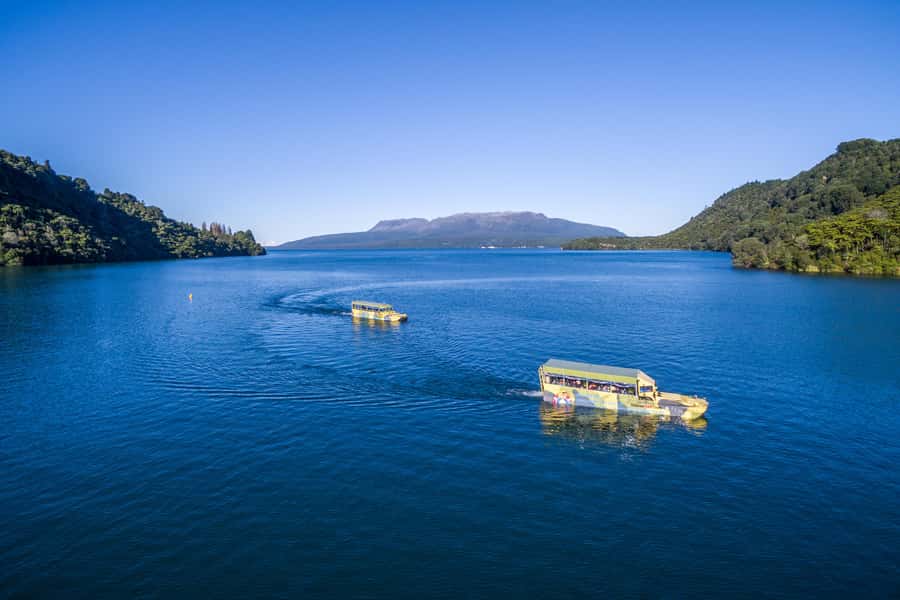
Reviewed · 2-HOUR EXPERIENCES
Tarawera and Lakes 2-Hour Duck Eco Tour
A genuine 1942 WWII amphibious Duck is the star here, not just a prop parked beside the road. You ride it through Rotorua, then splash into three lakes without changing seats, a wonderfully odd way to see the district. I like the easy mix of road travel and water time, and I like that the commentary links volcanoes, Maori migration, geothermal activity, and local stories. The main caution is the open-sided vehicle: cold wind and rain can make two hours feel brisk.
I also like the human touch. Guides including Esther, Ollie, Shelley, and Marcus have been praised for funny, clear storytelling, though one guide was considered too talkative and another’s jokes wore thin. Arrive on time at 1241 Fenton Street, dress warmly, and treat the quacker as part of the fun rather than an optional extra.
Key points at a glance
- A real wartime vehicle: Ride in a genuine WWII amphibious landing craft built in 1942, rather than a modern boat made to look historic.
- Four Rotorua lakes: Visit Okareka, Tarawera, Rotokakahi, and Tikitapu, with water entry on three of them.
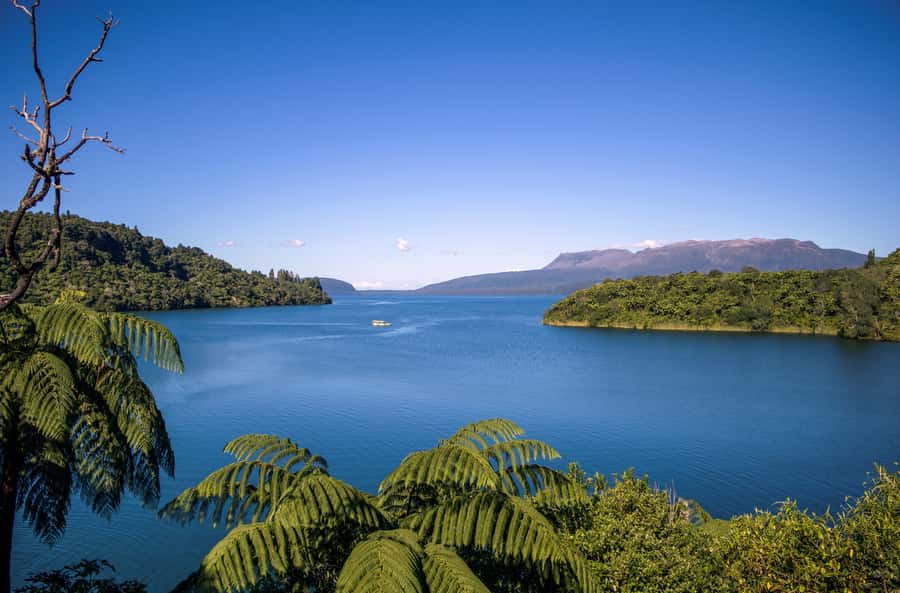
- Mt Tarawera views: The volcanic domes provide the visual centerpiece, especially from Lake Tarawera.
- Stories with local meaning: Expect talk about the 1886 eruption, Maori migration, legends, geothermal activity, and the lakes’ cultural importance.
- A family-friendly format: The ride combines sightseeing, history, jokes, and a splashdown without asking you to change vehicles.
- Weather matters: Roll-down sides keep rain out, but cold air can still enter through the open windows. Blankets are supplied on colder days.
Why this Rotorua ride is more than a novelty
Many Rotorua activities focus on one theme. You might visit a geothermal park, watch a cultural performance, or take a boat onto a lake. This tour puts several parts of the region together in one moving story, using a machine that looks as if it has taken a wrong turn from a military museum.
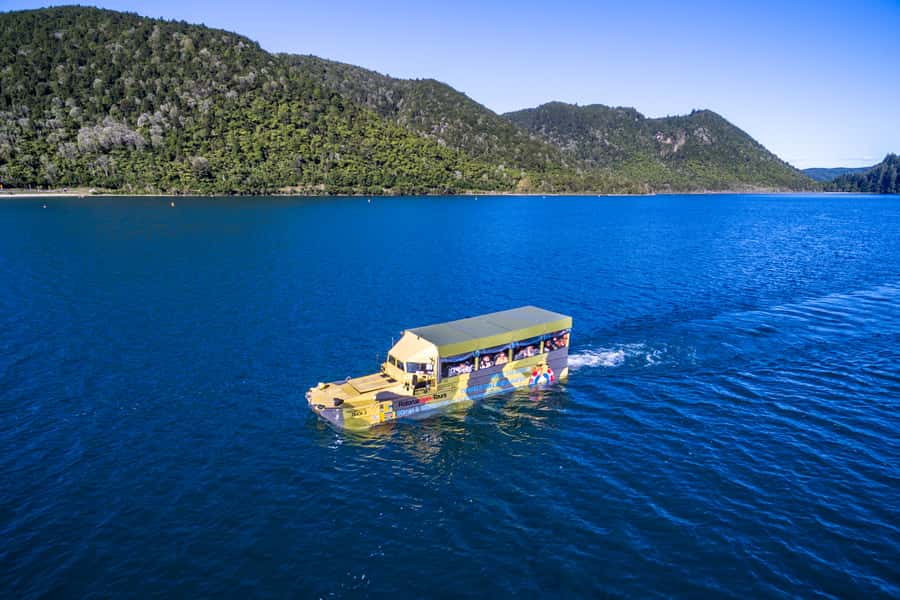
The Duck travels on ordinary roads and then enters the water. You stay in your seat as the vehicle makes its splashdown, which is the simple thrill at the center of the experience. It is not a high-speed ride, and you should not book it expecting an adventure sport. The fun comes from the strange sight of a road vehicle becoming a boat, followed by the scenery and the guide’s running commentary.
I find that format especially useful if you have only a short time in Rotorua. In two hours, you get an overview of the lakes district, a look at Mt Tarawera, and an introduction to several strands of local history. You will not leave with a detailed study of every lake, but you will understand how closely the region’s geology, culture, and settlement stories are tied together.
The tone is informal. Guides have included Esther, Ollie, Shelley, and Marcus, and the strongest reports describe them as funny, friendly, and well informed. That personality matters in a vehicle where the guide is your main source of context. The quality of the experience depends partly on how well your ConDUCKtor balances facts with humor.
A few more Rotorua half-days to weigh up
- Rotorua Canopy Tours: 2.5Hour Native Forest Zipline Adventure
★ 5.0 · 4,563 reviews - Mitai Maori Village: Cultural Experience and Dinner Buffet
★ 4.7 · 3,575 reviews - Rotorua: Wai-O-Tapu Geothermal Park Entry Ticket
★ 4.6 · 2,601 reviews
Leaving Rotorua on Fenton Street
The tour begins at 1241 Fenton Street, in Rotorua. There is no hotel pickup or drop-off, so plan your own way to the meeting point and give yourself enough time to arrive before departure.
Once aboard, you leave the city on the road toward the lakes. Rotorua’s sulphurous smell may follow you for part of the return journey, a reminder that the city sits in an active geothermal region. The road section also gives you a chance to see how quickly the built-up center gives way to forest, hills, and open lake country.
This is not a private tour. The Duck carries a group, and the experience works best if you enjoy shared reactions, jokes, and the general spectacle of a large amphibious vehicle on a public road. One past account even described traffic building behind the slow-moving Duck on a hill outside Rotorua. That is amusing if you are in a holiday mood, but it also tells you not to schedule a tight appointment immediately after the tour.
Lake Okareka provides the first splashdown
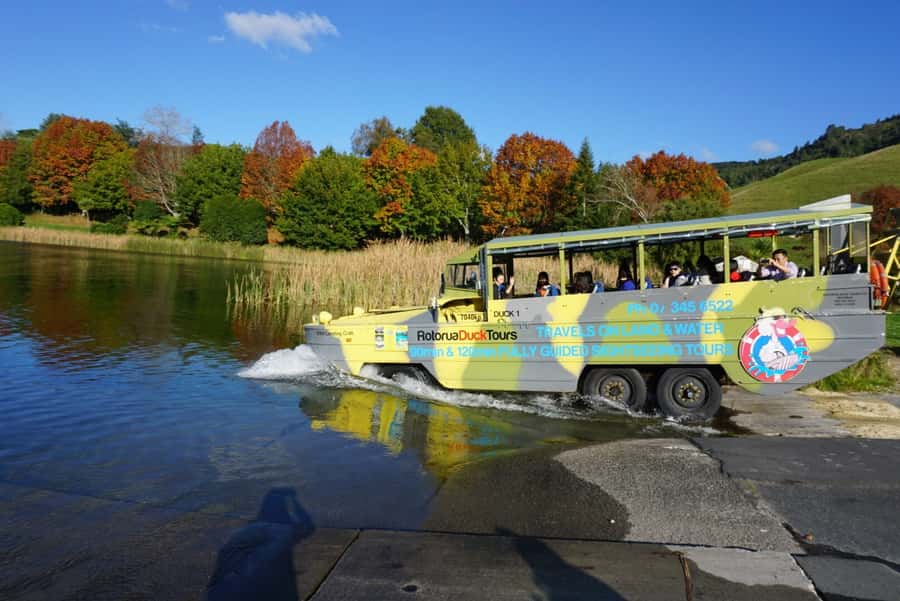
Your first water entry is at Lake Okareka, where the Duck rolls from land into sheltered water. The calm setting makes it a gentle introduction to the vehicle’s unusual second life as a boat.
The splashdown is the moment children often wait for, but adults usually enjoy it too. You do not need to climb over the side, change into special clothing, or transfer to another craft. The vehicle simply makes the transition while you remain seated.
Lake Okareka also sets the pace for the outing. The tour is not a checklist of quick photo stops. You spend time moving between places while the guide explains what you are seeing. If you prefer long walks, quiet time, or the freedom to stop whenever you wish, this will feel structured. If you want an efficient introduction to the district, the structure is a strength.
Mt Tarawera gives the trip its grand view
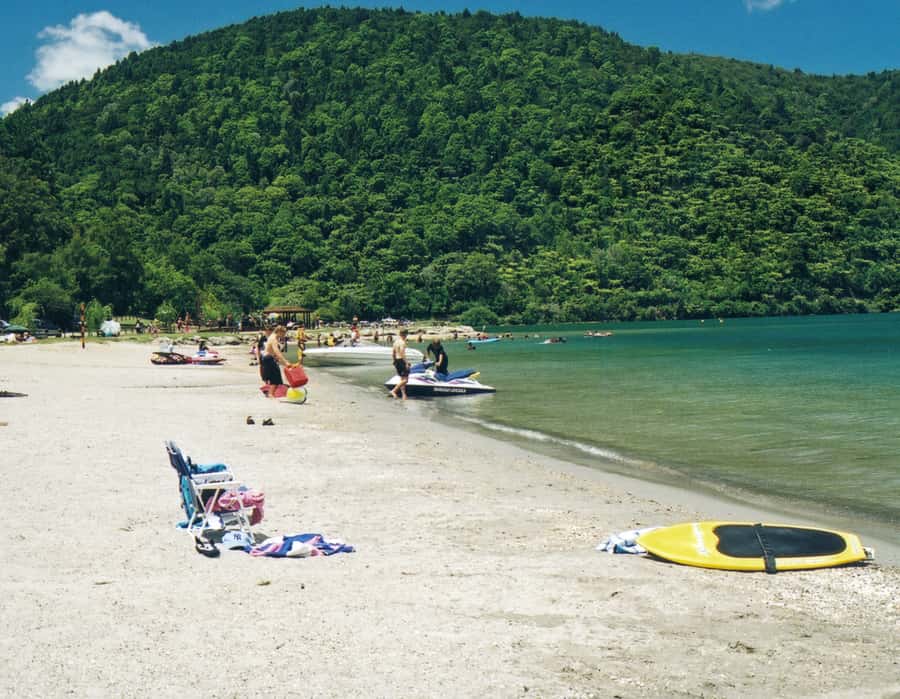
The route continues toward Lake Tarawera, with the volcanic domes of Mt Tarawera forming the main natural attraction. The mountain is closely tied to the area’s most important modern eruption story, and the guide explains the 1886 eruption as part of the region’s wider geological and human past.
This is where the tour gains weight beyond its novelty. The mountain is not simply a dramatic backdrop. Its eruption changed the area and is linked to the loss and destruction associated with the famous Pink and White Terraces, a subject often connected with Rotorua’s volcanic story. The supplied information specifically places the 1886 eruption at the center of the commentary, so you should expect the guide to give it serious attention, even while keeping the delivery light.
You also hear about geothermal activity and Maori migration to New Zealand. Those topics help place Rotorua in a broader setting. The tour connects the physical ground beneath you with the people who have lived around these lakes and interpreted them through stories and tradition.
The quality of the view depends on weather. On a clear day, the volcanic domes are the visual payoff. In rain or low cloud, the mountain may be less distinct, though the guide’s stories still give the route purpose.
Same corner of the country, a completely different day out:
- Rotorua’s Ultimate Zipline: 6 ziplines, 400 m Tandem, Cliff Walk
★ 5.0 · 2,557 reviews - Rotorua Rafting: Kaituna River White Water Rafting & Free Sauna
★ 5.0 · 1,952 reviews - Cultural Experience & Seasonal Māori Cuisine at Te Pā Tū
★ 5.0 · 1,546 reviews - Mitai Maori Village Cultural Experience in Rotorua
★ 4.5 · 1,294 reviews
Lake Tarawera is the main water experience
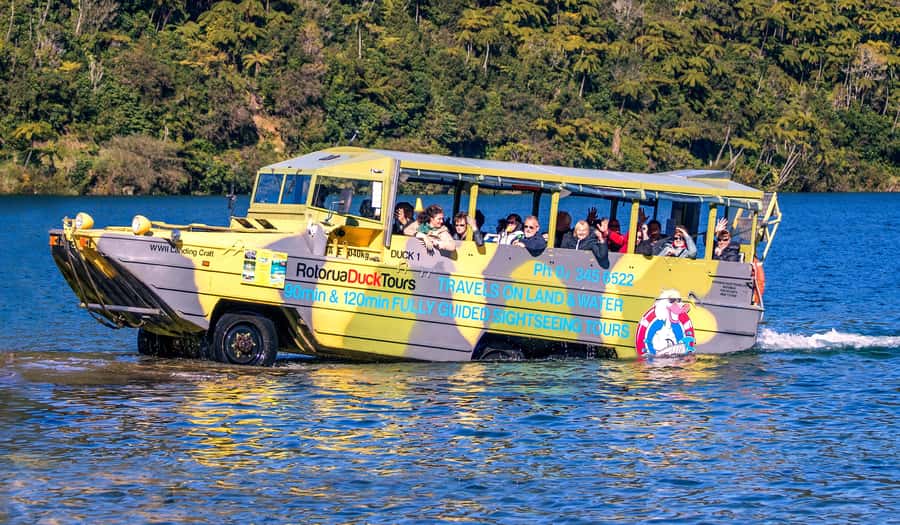
At Lake Tarawera, the Duck makes its second splashdown. The lake sits at the base of Mt Tarawera, so this section combines the strongest scenery with the most direct link to the eruption story.
You are seeing the volcanic forms from the water rather than from a roadside lookout. That change in angle matters. The lake gives you a broader view of the mountain and a sense of how the water, forest, and volcanic ground fit together.
Do not expect an extended cruise with time to swim or explore the shore. This is a guided vehicle tour, and Lake Tarawera is one part of a larger circuit. Its value lies in the combination of access, storytelling, and the novelty of floating in a military landing craft.
The water may also feel cool even on a pleasant day, particularly with the vehicle’s open windows. A warm layer is sensible in every season. Blankets are provided in colder conditions, but I would still bring a jacket rather than rely on one shared comfort item.
Rotokakahi is seen, not splashed into
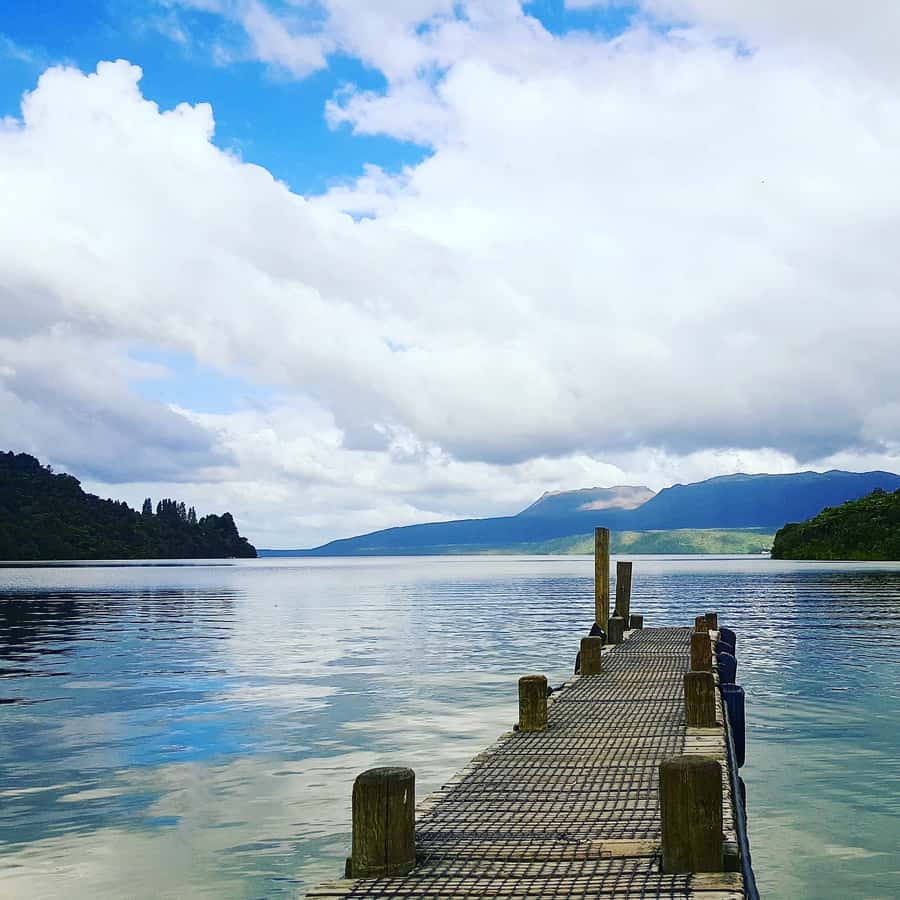
The return route takes you past Lake Rotokakahi, known as the Green Lake and described as sacred. Unlike the other water sections, this lake is viewed rather than entered.
That distinction is important. The tour is not trying to force every lake into the same activity. Seeing Rotokakahi from the road allows the guide to explain its cultural importance while respecting the fact that it is not simply another recreational stop.
The brief view may frustrate you if you want to photograph every corner or spend time at the shore. It works better if you see it as part of the area’s cultural story. The tour’s value comes from showing different kinds of relationships with the lakes, including places that carry meaning beyond sightseeing.
The guide’s commentary is central here. Several of the strongest descriptions of the experience praise the local geology, Maori legends, and clear explanations. Listen closely, because this is one of the places where the spoken story adds more than the view alone.
Tikitapu, the Blue Lake, closes the water circuit
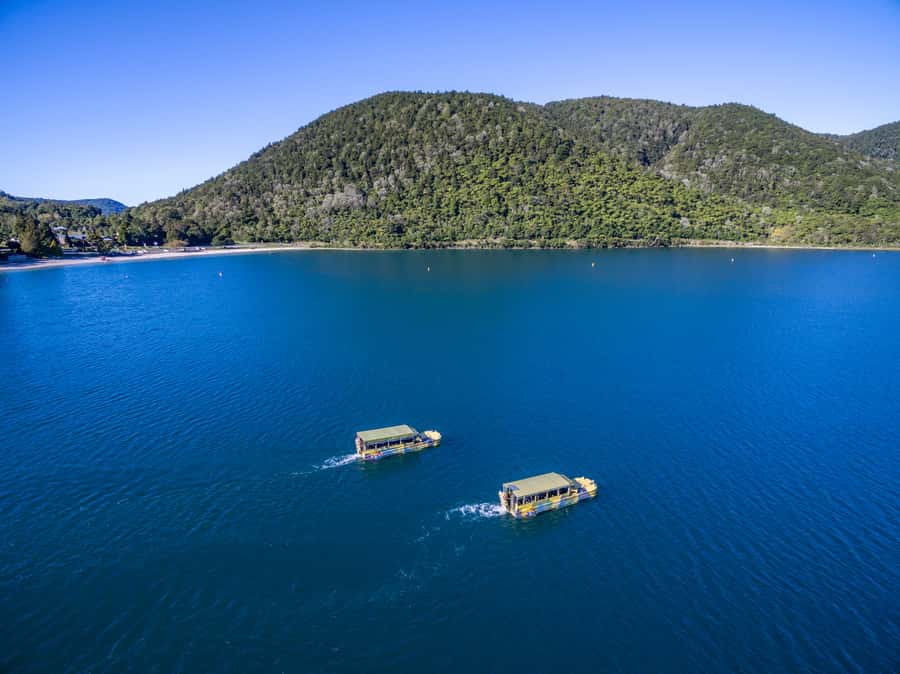
The final lake visit is Tikitapu, commonly called the Blue Lake. The Duck splashes down here before beginning the trip back to Rotorua.
With its name contrasting with Rotokakahi’s Green Lake, Tikitapu gives the route a memorable finish. You see four lakes during the outing, but you enter only three: Okareka, Tarawera, and Tikitapu. That pattern keeps the tour varied and gives the guide a natural way to compare the lakes and their different roles.
Again, this is a sightseeing ride rather than a stop-heavy day trip. You should not expect a long shore break, a picnic, or time to walk around each lake. The advantage is that you can cover a broad section of the district in two hours without arranging separate transport.
The final splashdown also gives the ride a playful ending. If you are bringing children, this sequence helps keep their attention. If you are an adult who has already seen plenty of scenic viewpoints, the vehicle’s movement provides an extra reason to stay engaged.
The guide can make or break the two hours
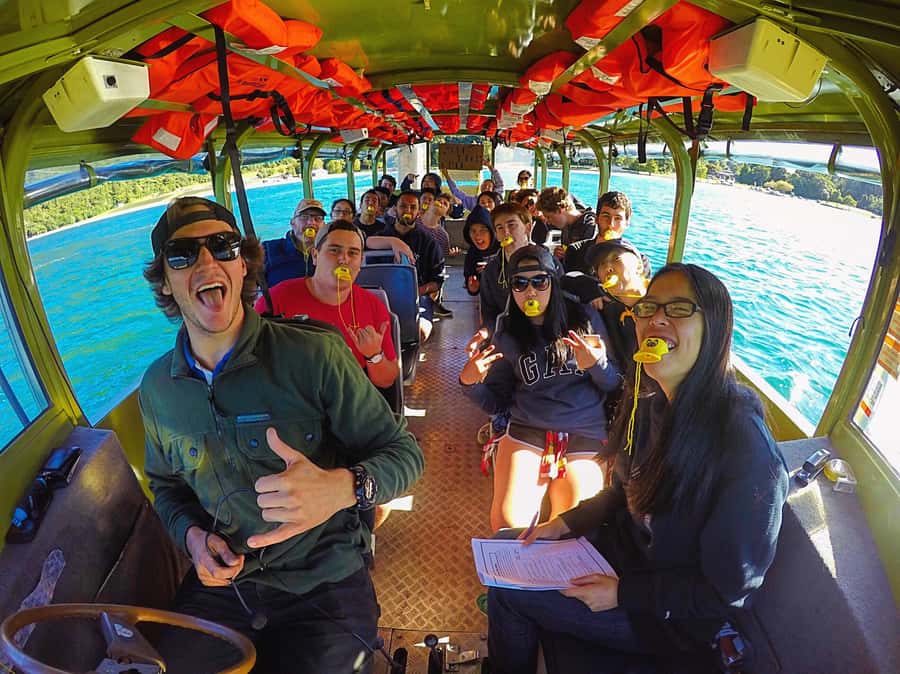
The ConDUCKtor is both driver and storyteller. You are not simply being transported to the lakes, so the guide’s timing, voice, humor, and ability to explain local subjects shape the experience.
The best balance seems to be a guide who can switch between geology, Maori legends, the eruption, and jokes without letting one topic take over. Esther was praised for keeping people entertained, while Ollie was described as friendly and well informed. Shelley, also spelled Shelly in one account, was remembered for humor, and Marcus received credit for an informative and hilarious commentary.
There is a small risk of mismatch. One person found a newer guide talked too much, while another found the comedic delivery tiring. That is not a fault you can predict in advance, but it is worth knowing if you prefer quiet sightseeing or a low-key guide.
The included duck quacker adds to the group atmosphere. It is a silly detail, but it fits the machine and the tour’s tone. You can expect laughter, noise, and a few groan-worthy jokes along with the facts.
Weather and comfort deserve real attention
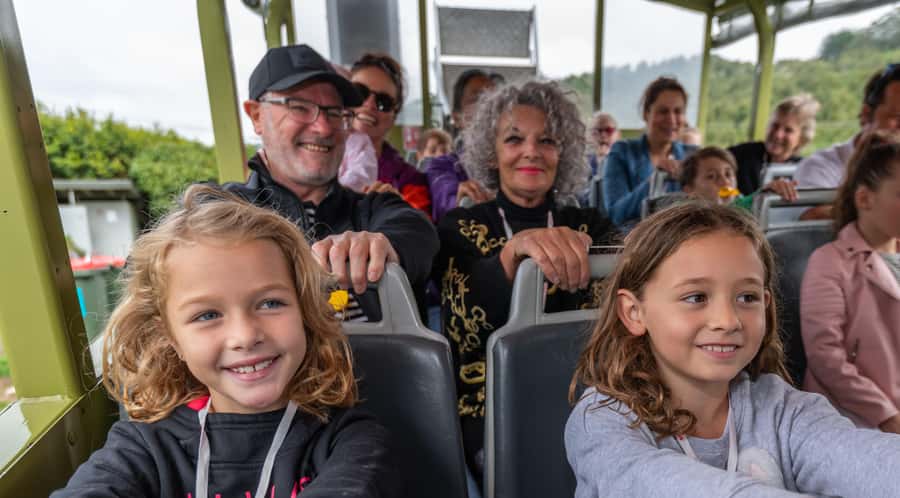
The Duck operates in all weather. Clear roll-down sides help keep you dry in rain, but the open windows mean wind can still make the ride cold. On colder days, blankets are available, though you should dress as if you will spend two hours outside.
Comfortable shoes are the only stated item to bring. I would add warm layers, especially if you are visiting outside summer or if the forecast is wet. The road and water portions are both exposed enough that weather can change how much you enjoy the trip.
Rain does not cancel the outing, but it can soften the mountain views and make photography harder. One positive account came from a stormy-weather ride, but another plainly wished for better conditions. That is the honest trade-off with an all-weather outdoor activity.
The seating arrangement and vehicle design are not presented as luxury features. This is an old military craft adapted for sightseeing. Book it for character and access, not for a polished coach interior or a silent cruise.
Is $65 good value for two hours?
At $65 per person, the tour sits in the moderate range for a guided Rotorua activity. The price covers a two-hour outing, the vehicle, three splashdowns, four lake visits, and live English commentary.
The strongest value comes from combining several experiences. You get road transport into the lakes district, water access on Lake Okareka, Lake Tarawera, and Tikitapu, a view of sacred Rotokakahi, and an explanation of the 1886 eruption and local culture. If you arranged separate transport and a lake activity, you could easily spend more time and money for less context.
The tour is less valuable if you want a long boat ride, a private guide, or an active outdoor experience. You are paying for a moving overview and a memorable vehicle, not for hiking, swimming, or a full cultural program.
The free cancellation option up to 24 hours before departure and reserve-now-pay-later booking make it easier to fit the ride into a changing Rotorua schedule. Still, the practical issue is timing. Allow some flexibility after the tour because road traffic or a slower return can occasionally affect the finish.
Who should book the Duck tour?
I would recommend it to families, first-time visitors to Rotorua, and anyone who enjoys unusual transport. It is also useful if you want a broad introduction to the lakes district without spending a full day on separate excursions.
The tour suits you if you like learning while moving. The history, geology, Maori legends, and ecological information give the ride substance, while the splashdowns keep it playful.
You may want another activity instead if you dislike group entertainment, cold air, road travel, or repeated commentary. You should also choose a longer dedicated lake cruise or a walking trip if your priority is stillness and time beside the water.
Should you book the Tarawera and Lakes Duck tour?
Book it if you want Rotorua scenery with a strong sense of place, delivered in a format you will remember. The authentic 1942 vehicle, three splashdowns, and views of Mt Tarawera make it different from a standard sightseeing bus.
I would book early enough to choose a suitable time, arrive promptly at 1241 Fenton Street, and wear warm clothing even if the city feels mild. Go in expecting jokes, group energy, and a guide-led overview rather than a quiet expedition.
At $65, it is a fair choice for a compact tour that joins four lakes, volcanic history, cultural context, and a genuinely unusual ride. If the weather is poor, the views may suffer, but the covered sides and lively commentary keep the outing worthwhile for most people who come prepared.
FAQ
How long is the Tarawera and Lakes Duck tour?
The tour lasts two hours.
Where does the tour begin?
It begins at 1241 Fenton Street in Rotorua, New Zealand.
Does the tour include hotel pickup and drop-off?
No. Hotel pickup and drop-off are not included.
Which lakes does the tour visit?
The route visits Lake Okareka, Lake Tarawera, Lake Rotokakahi, also called the Green Lake, and Tikitapu, also called the Blue Lake.
Which lakes does the Duck enter?
The Duck splashes into Lake Okareka, Lake Tarawera, and Tikitapu. Rotokakahi is viewed from the route.
Is the tour guided in English?
Yes. The tour includes a live English-speaking guide and commentary.
What topics does the guide cover?
The commentary covers the 1886 eruption of Mt Tarawera, Maori migration to New Zealand, Maori legends, geothermal activity, local geology, culture, ecology, and Rotorua’s history.
What should I bring?
Bring comfortable shoes and warm clothing, especially on cold days. The open windows can let in wind, though roll-down sides help keep you dry in rain and blankets are provided on colder days.
Can I cancel the booking?
You can cancel up to 24 hours before the tour for a full refund. Reserve-now-pay-later booking is also available.
Just added around Rotorua
- Thrilling Riverbug Adventure on the Rangitāiki River★ 5.0 · 4 reviews
- Te Puia: Te Rā Guided Day Tour and Haka Performance★ 5.0 · 4 reviews
- Te Puia: Te Pō Combo: Te Rā, Dinner, and Haka Performance★ 4.6 · 5 reviews
- Rotorua: Waimangu Volcanic Valley Ticket & Self-Guided Walk★ 4.8 · 104 reviews
- Rotorua: White Island, Mount Tarawera & Waimangu Volcanic …★ 4.4 · 5 reviews
- Rotorua: Velocity Valley – Two Ride Pass★ 4.6 · 8 reviews
- Rotorua: Wai Ariki Hot Springs & Spa 1hr Restorative Bathing★ 4.8 · 16 reviews
- Rotorua: Velocity Valley – NEW Vertigo 43m drop★ 5.0 · 3 reviews
2-Hour Experiences, compared.
2-Hour Cathedral Cove and Volcanic Coast Cruise
Read our review →
2 Hour Cathedral Cove and Volcanic Coast Cruise with Shade Canopy
Read our review →
America’s Cup 2-Hour Sailing Experience Waitemata Harbour
Read our review →
Browse the lists this tour appears in