

Reviewed · NAPIER TOURS
Napier: Cape Kidnappers Gannet, Nature & Sightseeing Tour
Cape Kidnappers is one of New Zealand’s best close-up wildlife experiences. The main event is a mainland gannet colony where thousands of birds nest only a few feet from the viewing area, their pale gold crowns, black eye markings, and broad wings easy to see without binoculars. I especially like the up-close access and the way the drive crosses private farm country that you could not otherwise enter.
I also like the local storytelling. Guides including Jan, Marcus, Trevor, Tom, and Marty have been praised for mixing bird facts with Maori legends, farm stories, conservation work, and humor. The main thing to consider is the ride: parts of the route can be bumpy, seats may feel tight in the back, and wind at the cape can be cold. Bring a jacket.
Key points at a glance
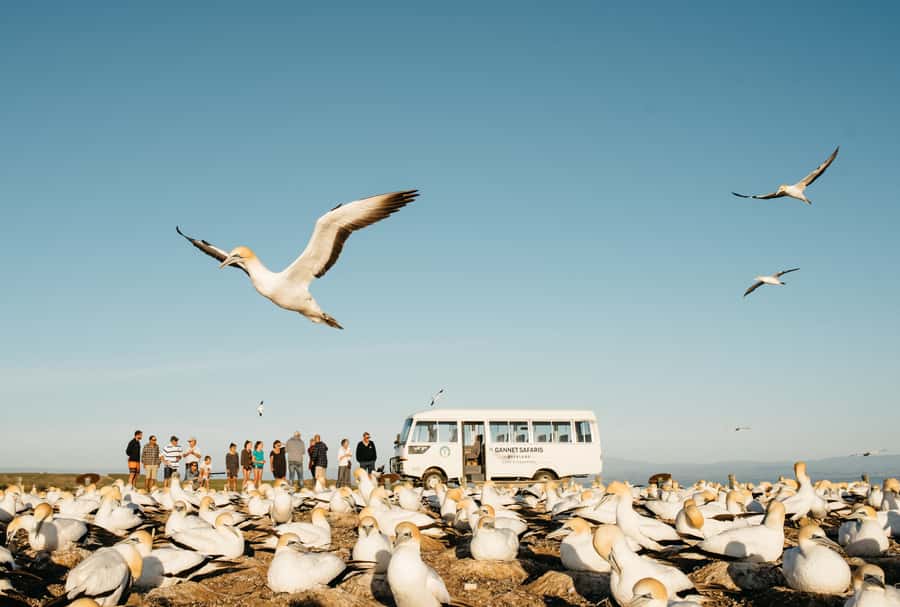
- 20,000 gannets at close range: See adults, chicks, courtship rituals, and fish-carrying flights from just a few feet away.
- A 3-hour 4×4 journey: The ride across Cape Kidnappers includes scenery, commentary, and access to private land.
- No required walking: You are driven close to the colony, though optional stops and uneven ground may still involve some effort.
- Birds from September to early April: January is especially appealing if you want to see chicks at the colony.
- More than a bird stop: The route includes a predator-proof reserve, native forest, production forest, and views of the cliffs.
- Strong value at $59: The price covers transport, a guide, refreshments, and access to a place that is not simple to reach independently.
Why Cape Kidnappers is such a special bird stop
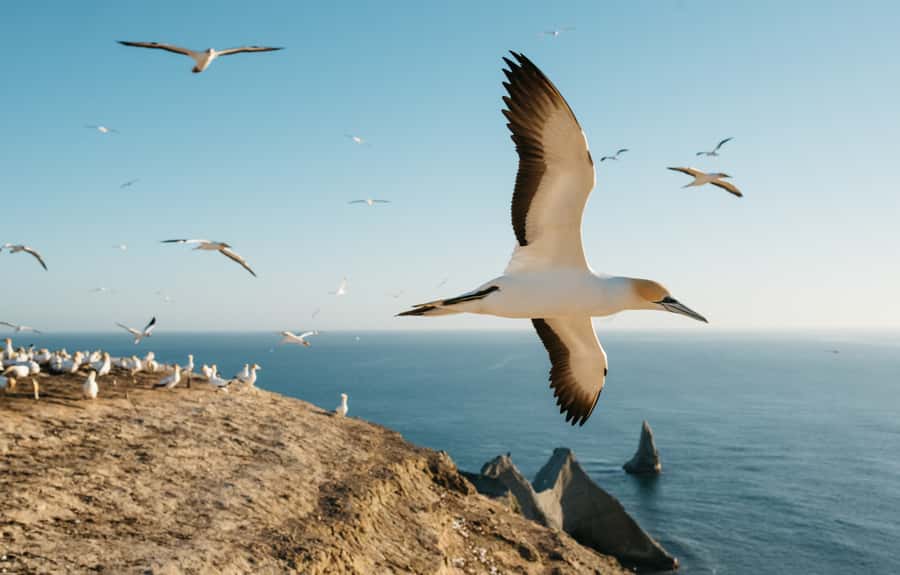
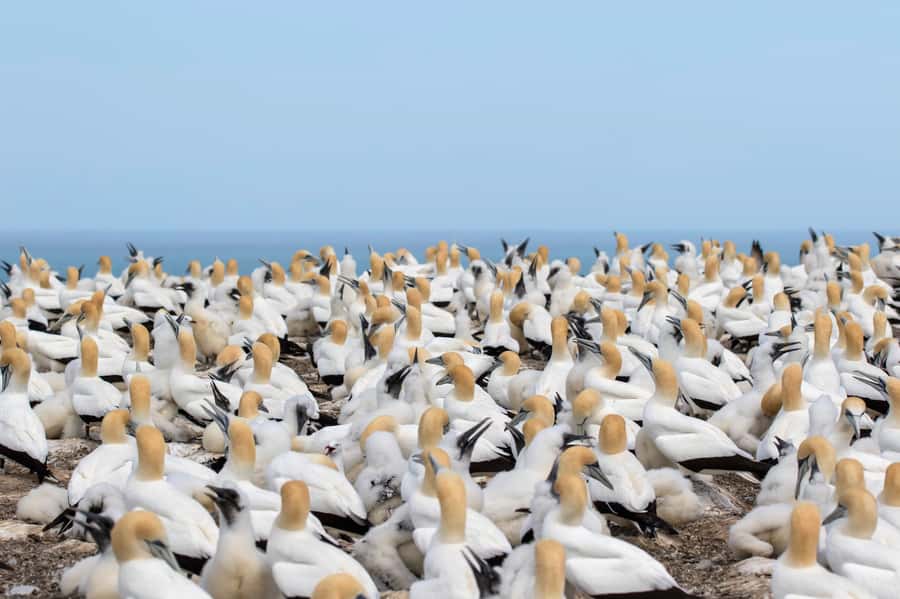
The cape is home to the largest and most accessible mainland gannet colony in the world. That wording matters. You are not looking at distant specks on a cliff face. You can watch pairs preen, call, and perform the small recognition dance they use when greeting one another.
Gannets belong to the booby family. They are striking birds, with black markings around the eyes and a soft gold crown that shows clearly at close range. Their wings can reach about 6 feet, or 2 metres, and the sight of them sweeping overhead before dropping toward the sea is one of the tour’s best moments.
The colony holds roughly 20,000 birds. That number becomes real when you see adults and young birds packed into orderly rows, each pair tending its patch of ground. The scene is busy without feeling like a staged animal encounter. The birds carry on with nesting, feeding, grooming, and calling while you watch from the designated area.
You should also prepare for the smell. A large seabird colony is not perfume country, especially when many birds are nesting close together. That is part of the honest wildlife experience, and it comes with excellent photo opportunities.
A few more Napier half-days to weigh up
- Top-Rated Hawke’s Bay Wine Tour – Small Group
★ 5.0 · 256 reviews - Shore Excursion: Scenic Rafting from Napier
★ 5.0 · 179 reviews - Guided 10am Morning Art Deco Walk From Napier Art Deco Trust
★ 4.5 · 167 reviews
The 3-hour ride across private Cape Kidnappers land
The trip begins at Gannet Safaris Overland, 396 Clifton Road in Te Awanga. Look for the Gannet Safaris sign beside the road. Hotel pickup is not included, so you need to arrange your own way to the meeting point.
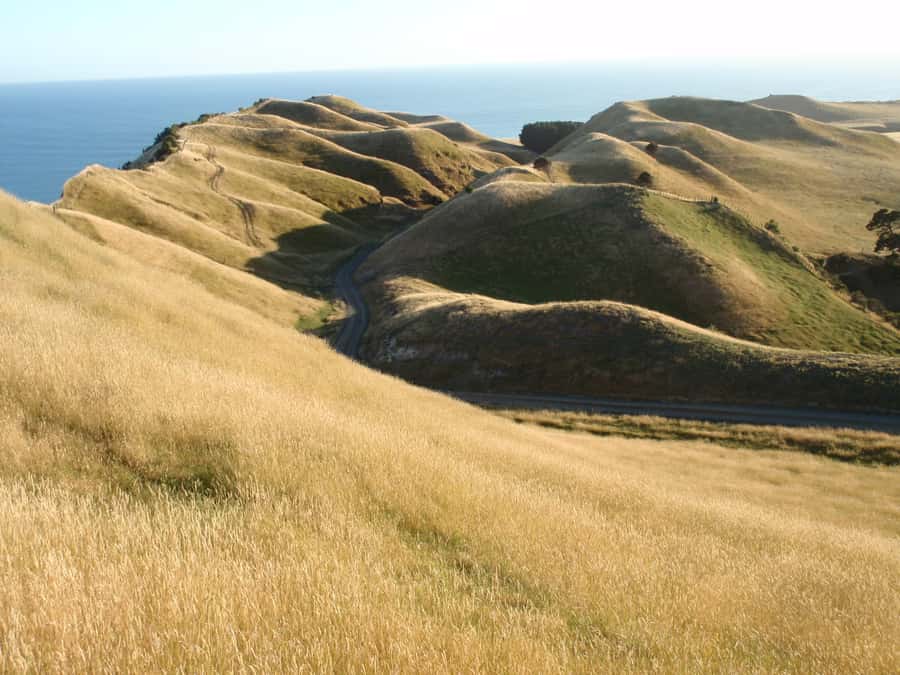
From there, you board a comfortable air-conditioned 4×4 coach. The vehicle is important because the route crosses private land and reaches terrain that is not available to casual visitors. Several parts of the trip are as interesting as the colony itself, with views of the cliffs, farmland, geological formations, and the wider Hawke’s Bay area.
Your driver is also your guide. The best guides make the drive feel like part of the tour rather than a transfer. Jan, for example, has been praised for local knowledge and an engaging running commentary. Marcus is known for adding humor to the bird and conservation information, while Trevor has been praised for making the journey itself entertaining. The exact guide depends on the day, but the experience relies heavily on that person’s storytelling.
Expect a mixture of natural history, local history, Maori legends, and information about the land. One guide grew up on a nearby farm and could explain how the area changed over time, along with present-day pest control and wildlife protection. That local perspective gives the drive a stronger sense of place.
The ride is not perfectly smooth. This is an overland route, not a polished highway. One passenger found the back row cramped and the sound harder to hear there, while another found the coach warm when the air conditioning was switched off. If you have a choice of seat, sitting closer to the guide may make it easier to follow the commentary.
Forest, reserve, and views before the gannets
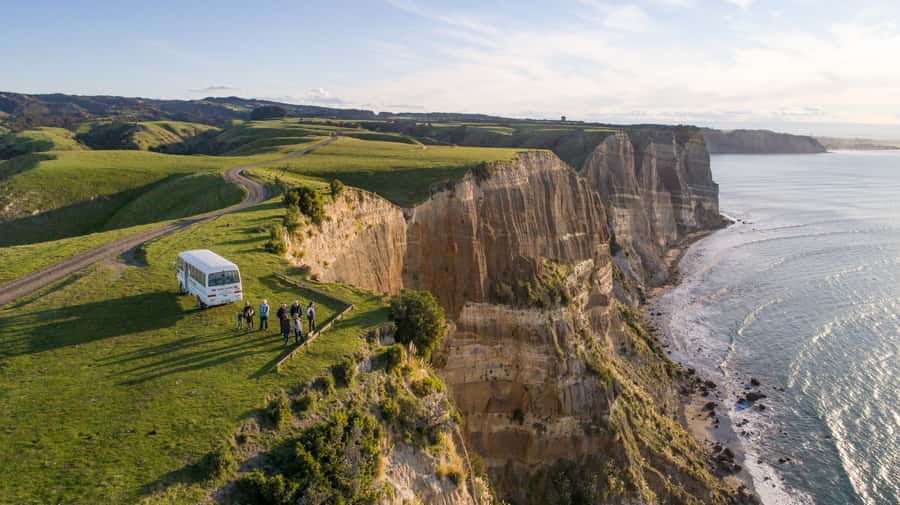
The route includes a native New Zealand forest and a production forest. These stops help show that the area is more than a single bird colony. Native forest is especially valuable in New Zealand because protecting habitat is tied closely to protecting native birds.
You also view a predator-proof reserve. The fencing and pest-control work are not decorative extras. New Zealand’s native birds evolved with few land predators, so introduced predators can have a major effect on eggs, chicks, and adult birds. The reserve gives you a practical look at how conservation groups and landowners help native species survive.
The tour also passes through broad geological scenery and reaches high viewpoints. Cape Kidnappers is known for its dramatic cliffs, and the changing shapes of the land make the journey feel like a proper sightseeing outing. Bring your camera even if birds are your main reason for booking.
Some parts of the track can feel steep or daunting. The bus handles the route, and you are not expected to walk up to the colony, but the stops may include uneven ground or exposed areas. The practical message is simple: wear comfortable shoes, keep a steady pace, and tell the guide if you would prefer to avoid optional walking.
Getting within feet of the gannet colony
The vehicle takes you close to the birds, so this tour works well if you want a major wildlife experience without a long hike. The information says walking is not required, and that is a real benefit for people with limited stamina or anyone saving energy for a longer New Zealand itinerary.
Once near the colony, you can watch the birds at close range. Adults return with fish, chicks wait for food, and pairs carry out their recognition ritual. The adults’ flight is particularly impressive because the birds appear heavy on the ground but graceful in the air.
The colony season runs from September to early April. In September, gannets return after their winter period away and begin rebuilding nests. Chicks arrive around December and January, then grow quickly before their first flight in late April.
For the classic crowded-colony scene, January is an excellent choice because you may see many chicks among the adults. September and October offer a different feel, with nesting activity and birds settling back into the colony. By early April, the season is nearing its end. If the gannets are the main reason for your visit, check the seasonal dates before booking.
You should keep expectations realistic. This is close viewing, not physical contact with the birds. The attraction comes from being near their daily life while allowing them space to nest and feed. Safety for both people and birds is treated as a priority, and you should follow the guide’s instructions around the viewing area.
Same corner of the country, a completely different day out:
- Napier: Afternoon Winery & Gin Tasting Tour Thu Fri Sat
★ 4.8 · 143 reviews - Napier: Afternoon Wine Tasting + visit Silky Oaks Chocolates
★ 5.0 · 135 reviews - Premium 4 -Best Wineries Napier Hawke’s Bay Tour, 5.5h – 6Hours
★ 5.0 · 134 reviews - Scenic Te Mata Peak Tour by Supertrike
★ 5.0 · 100 reviews
Light refreshments and the practical comfort level
Light refreshments are included. A past outing included a hot drink and biscuit, which can be welcome after time in the wind. Food is not included, so eat beforehand or bring anything else you need for the three-hour trip.
The coach is air-conditioned, but comfort can vary. Most of the feedback about transport is positive, though the back row has been described as cramped and the ride can be bumpy. The air conditioning has also been inconsistent on at least one outing. These are modest drawbacks, but they matter if you are tall, sensitive to motion, or expecting a quiet luxury vehicle.
The cape can be windy and chilly even when the day begins warmly in Napier. Pack a jacket or jumper. Comfortable shoes are sensible, even though the tour does not require a long walk.
English is the tour language, with a live guide providing commentary. If you sit at the rear, the guide’s voice may be harder to hear, especially when the vehicle is moving over rough ground. The commentary is a major part of the experience, so choose a seat near the front if possible.
Is $59 a fair price for three hours?
At $59 per person, the tour offers good value for a focused wildlife outing. You are paying for the 4×4 transport, an experienced guide, access across private land, the gannet viewing, refreshments, and several nature and sightseeing elements along the way.
The value becomes clearer when you consider access. You cannot simply drive yourself across the private Cape Kidnappers property and park beside the colony. The vehicle gets you there without a demanding hike, while the guide explains the birds, land, conservation work, and local stories.
This is not the cheapest way to spend three hours if you only want a scenic drive. It is a strong deal if you want close wildlife viewing and do not have your own way to reach the colony. It also suits people who would struggle with a longer walking route.
The tour does not include hotel transfers, food, or cruise ship pickup through this booking arrangement. Cruise ship passengers need the separate cruise excursion available directly through the operator’s website. That restriction is important, since arriving at the standard meeting point may not fit a ship’s schedule or transport plan.
Who will get the most from this tour?
I would choose this tour for bird lovers, photographers, families, and anyone who wants to see New Zealand wildlife without committing to a strenuous walk. Children can find the huge number of birds exciting, and the drive adds enough variety to keep the outing from becoming a single lookout stop.
It is also a good choice for visitors interested in conservation. The predator-proof reserve and forest stops show how native species are protected, while the gannet colony provides a direct example of a successful breeding site.
You will get the most from it if you enjoy listening to a guide. The commentary is central, and the strongest guides add stories, humor, and local detail. If you sit far from the driver, fast speech or road noise may make some information harder to catch.
I would be more cautious if you dislike bumpy roads, need a lot of legroom, or want complete control over the pace. The tour follows a set route, and the drive can feel long if your only interest is reaching the birds. In practice, the scenery and commentary help make the journey worthwhile.
Booking tips for the right season and seat
Plan around the bird calendar. September to early April is the viewing period, with January a particularly good month for seeing chicks. The colony is active in other parts of the season too, but the birds’ behavior and the balance of adults, nests, and young will change.
Bring a warm layer even in summer. Wind at the cape can quickly chill you, and a hot drink is more useful when your fingers are cold than when you are sitting in Napier sunshine.
Wear comfortable shoes rather than beach sandals. You may not need to walk far, but some viewing areas and stops can involve uneven or steep ground.
Arrive at the Te Awanga meeting point, not a Napier hotel, unless you have arranged a different transfer directly with the operator. The listed tour does not include hotel pickup and drop-off. Cruise ship passengers should book the separate ship excursion through the operator’s own website.
The booking terms are flexible: you can cancel up to 24 hours before departure for a full refund, and you can reserve now and pay later. Starting times vary, so check availability for your date.
Should you book the Cape Kidnappers gannet tour?
Yes, I would book it if close wildlife viewing is high on your Hawke’s Bay list. The chance to sit within feet of thousands of gannets is the clear reason to go, but the private-land access, Maori stories, conservation stops, forest, and cliff scenery give the three-hour outing more substance.
The main cautions are the bumpy ride, occasional seat and air-conditioning issues, cold wind, and the lack of included hotel transfers. Those are manageable if you dress warmly, meet at the correct location, and understand that this is a practical overland safari rather than a luxury coach trip.
For $59, this is a sensible choice for seeing Cape Kidnappers without a long walk or complicated access arrangements. If you are in Hawke’s Bay during the September to early April season, especially around January when chicks are present, it deserves a place near the top of your day-trip list.
FAQ
How long is the Cape Kidnappers gannet tour?
The tour lasts three hours, including the 4×4 journey, nature and sightseeing stops, commentary, and time at the gannet colony.
Where does the tour meet?
Meet at Gannet Safaris Overland Ltd, 396 Clifton Road, Te Awanga 4172, New Zealand. Look for the Gannet Safaris sign on the side of the road.
Is walking required?
No. You are driven close to the gannet colony, and walking is not required if you do not want to. Some optional stops or viewing areas may include uneven or steep ground.
When can I see the gannets?
The gannets can be seen from September to early April. They return in September, chicks arrive around December and January, and young birds leave for warmer climates in late April.
Is hotel pickup included?
No. Hotel pickup and drop-off are not included. Transfers are available with direct bookings through the operator’s website.
Can cruise ship passengers book this tour?
This booking is not available for cruise ship passengers. The operator offers a separate cruise ship excursion directly through its website.
Just added around Napier
- Wine Tour and Tastings in Hawkes Bay★ 5.0 · 67 reviews
- Half Day Sightseeing and Taste Tour★ 5.0 · 35 reviews
- Small group – Napier Premium Winery , Beer & Cider + 5.5h to 6h.★ 5.0 · 43 reviews
- Napier and Hawkes Bay Scenic and Art Deco Tour by VW Kombi★ 5.0 · 21 reviews
- Taste Hawke’s Bay – A Sweet treat food Tour★ 5.0 · 3 reviews
- Shore Excursion: 4 Hour Premium Hawke’s Bay, Napier Art deco Tour★ 4.0 · 37 reviews
- Scenic Te Mata Peak Tour by Supertrike★ 5.0 · 100 reviews
- Shore excursion – Napier sight seeing/Art Deco Tour,★ 4.5 · 3 reviews
Napier Tours, compared.
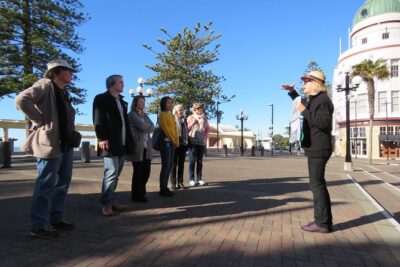
Guided 10am Morning Art Deco Walk From Napier Art Deco Trust
Read our review →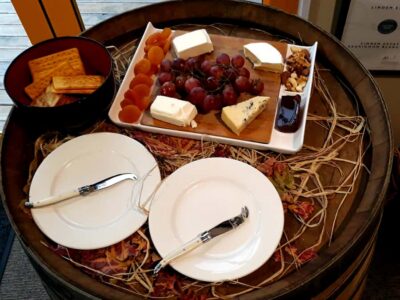
Afternoon Winery & Gin Tasting Tour Thu Fri Sat
Read our review →
Afternoon Wine Tasting + visit Silky Oaks Chocolates
Read our review →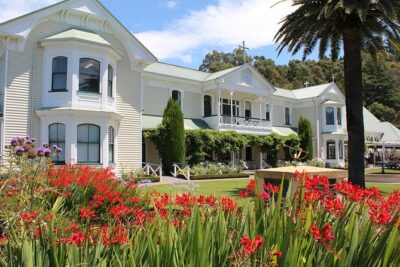
Premium 4 -Best Wineries Napier Hawke’s Bay Tour, 5.5h – 6Hours
Read our review →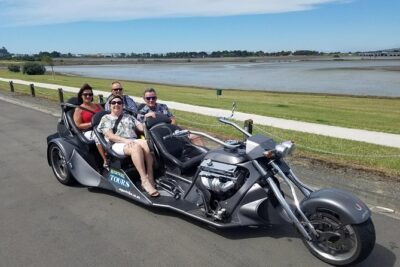
Art-Deco + Te Mata Peak+ Garden Walk + Wine Tasting
Read our review →Browse the lists this tour appears in