
Reviewed · CYCLING TOURS
Queenstown: Arrowtown To Queenstown Biking Adventure
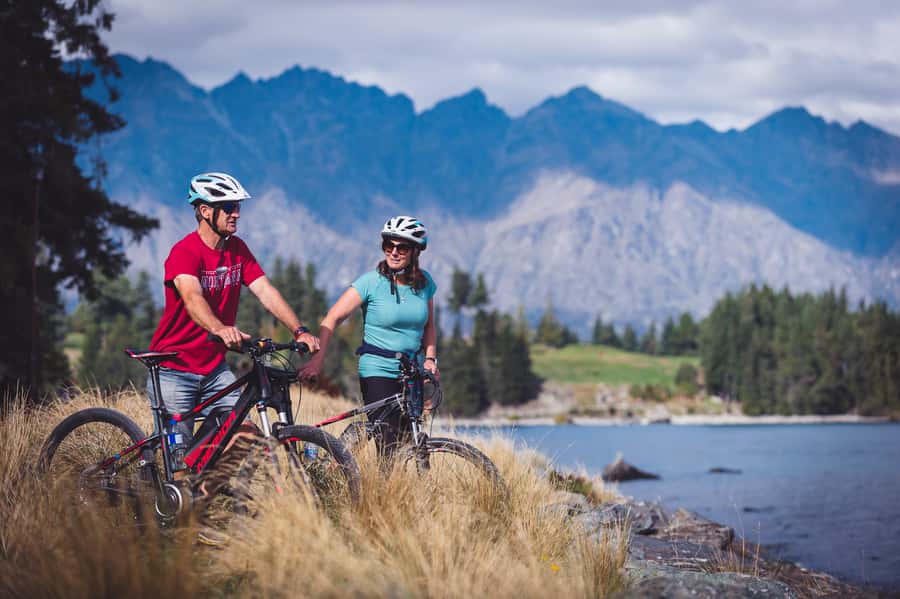
The best part of this outing is the route itself: a 35-kilometre one-way ride from gold-rush-era Arrowtown to Queenstown, with river crossings, old bridges, lake views, and the Remarkables in the distance. You set the pace, stop for coffee or a picnic, and finish in central Queenstown.
I like the freedom of a self-guided ride and the useful setup, with a shuttle, bike, helmet, map, and clear briefing all handled for you. I also like the changing scenery, from the Arrow River to the Kawarau and Shotover rivers, then the shore of Lake Whakatipu. The catch is simple: this is not a gentle spin for everyone. The gravel, hills, and 35-kilometre distance call for good fitness, and an e-bike is a smart choice for many riders.
Key points to know before you ride
- The route is one-way: A scheduled 25-minute shuttle carries you from Queenstown to Arrowtown, so your ride brings you back to the starting point.
- Expect at least 35 km: The trail includes several decent hills and rougher gravel sections, despite some stretches being easy and mostly downhill.
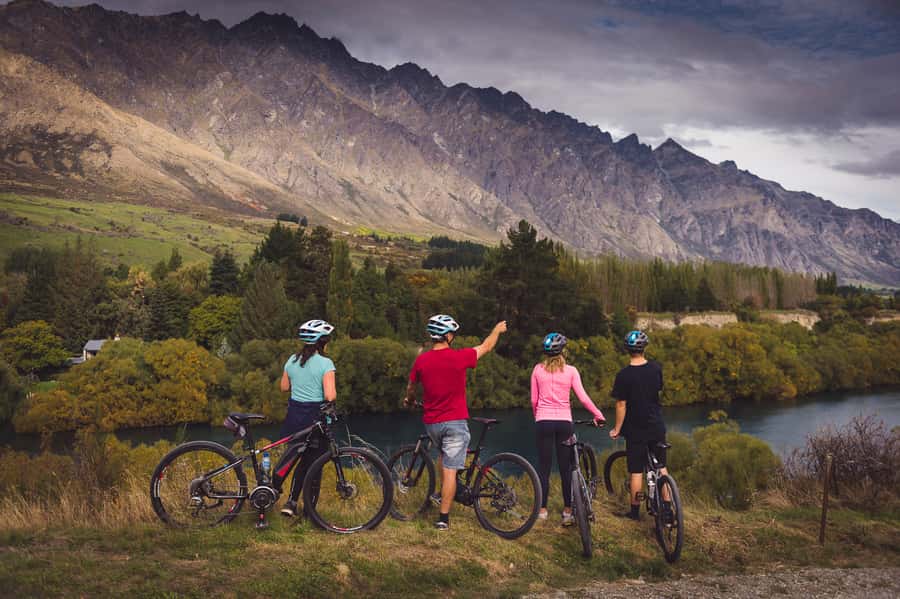
- The scenery keeps changing: You ride beside the Arrow, Kawarau, and Shotover rivers before reaching Lake Whakatipu.
- An e-bike is worth serious thought: It helps on climbs and lets you spend more energy looking around instead of pushing hard.
- You are on your own after the briefing: Staff explain the route and provide a map, but no guide rides with you.
- Bring food and water: Much of the route is rural, with limited places to buy supplies before the final Queenstown section.
Starting at 3 Searle Lane in Queenstown
You check in at Around The Basin’s shop at 3 Searle Lane, ten minutes before your scheduled shuttle departure. The timing matters because this is a point-to-point ride, not a flexible rental where you can simply arrive whenever you like.
The shuttle takes about 25 minutes to Arrowtown. Your bike travels with you, and the transfer is a practical way to avoid arranging a taxi or figuring out a separate return vehicle. Once in Arrowtown, staff fit you out with a mountain bike or e-bike, helmet, map, and the basic tools needed for the ride.
The briefing is about ten minutes. Pay close attention here. You need to understand the trail changes, bridge crossings, hills, and the colored route markers. One rider accidentally stayed with the orange markers after the route changed to blue and added roughly five extra kilometres. That is an avoidable mistake when you are already several hours into a ride.
The staff have earned praise for explaining the bikes clearly, including the e-bike controls. The team at the Queenstown shop handles check-in, while the Arrowtown staff prepare you for the trail. An earlier booking specifically credits Annie with giving a clear and friendly explanation, though staff names may vary by departure.
More Bike Tours in Queenstown
- Queenstown ATV Quad Bike Adventure Tour
★ 5.0 · 842 reviews - Queenstown: Quad Biking Experience
★ 4.9 · 436 reviews - Otago Central Rail Trail One Day Wonder Cycle tour
★ 5.0 · 300 reviews
A coffee stop in Arrowtown
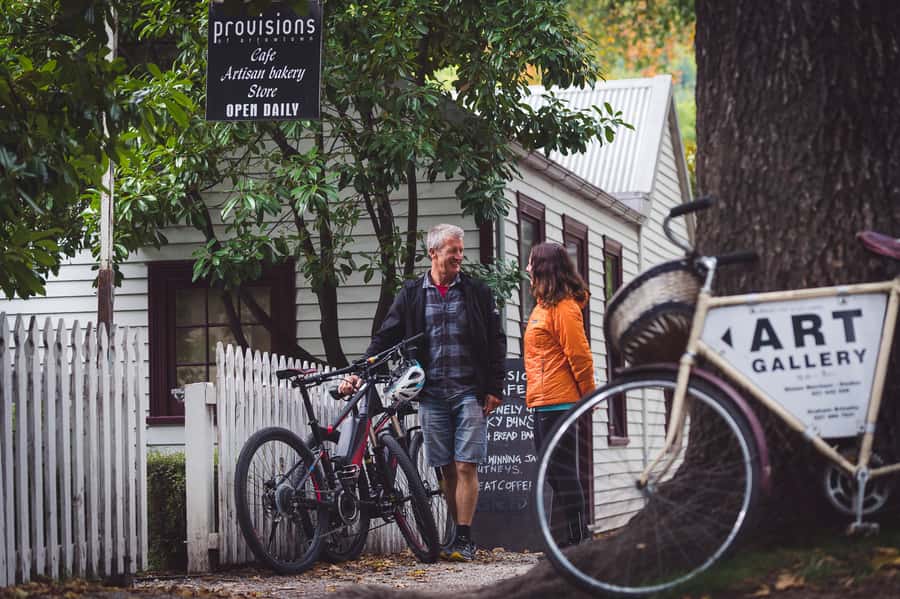
Arrowtown is more than a launch point. This former gold-mining settlement has a compact old center and makes a pleasant place to get coffee before you ride.
The planned stop is around 30 minutes, enough to stretch your legs, look around, and get some food into you. I would not treat it as a full sightseeing visit, though. If you want a proper look at Arrowtown, you need to leave enough time for the riding ahead.
This is also your best chance to buy anything you forgot. Once you leave town, much of the route runs through open country. Bring water, lunch, and small snacks even if you plan to stop at a café later. Several riders found that there were no easy places to refill along the main rural section.
Following the Arrow River downstream
The ride begins on the Arrow River Trail, heading downstream from Arrowtown. This opening section gives you a good feel for the day: broad gravel tracks, open views, and a route that is easy to follow once you get moving.
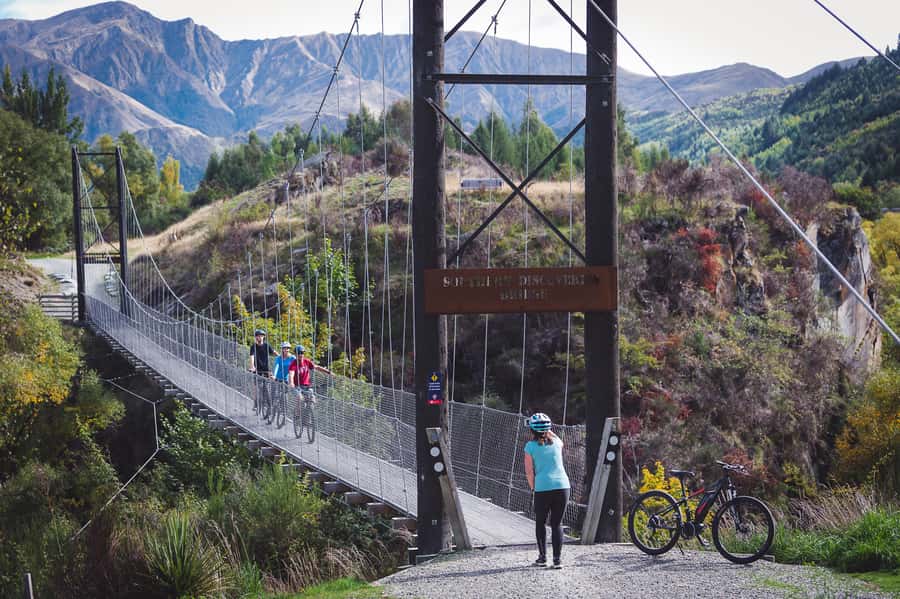
You cross the river on several bridges as you make your way toward Morven Ferry. The bridges are part of the fun, not just a way to get from one bank to another. They open up views along the river and give the ride a little variety before the route joins the Twin Rivers Trail.
Do not read downstream as effortless. Some sections are forgiving, but the full route has climbs and uneven surfaces. Standard bikes are suitable for strong, confident riders, yet several fit cyclists found the hills harder than expected. Commuting by bike at home does not always prepare you for a long gravel ride with repeated climbs.
The trail is generally wide, and the route is graded either 2 or 3. That makes it approachable for experienced recreational riders, but it is not a smooth paved cycleway. Loose or rocky sections can slow you down, especially on descents. If you are used to road cycling, take care on the rougher parts and allow more time than a road distance calculator would suggest.
The Twin Rivers Trail and its old bridges
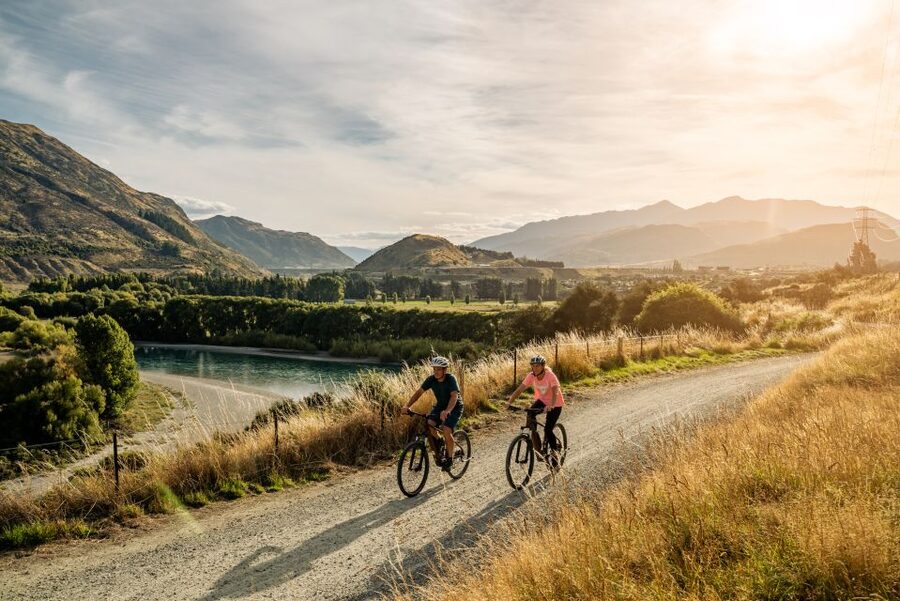
After Morven Ferry, the route follows the Kawarau and Shotover rivers. This is one of the strongest sections of the ride because the scenery opens up and the route feels properly remote without being an expedition.
The trail passes near the foothills of the Remarkables. You get broad alpine views, river valleys, and changing angles on the surrounding mountains. The setting does much of the work here. You are not rushing from one attraction to another. The pleasure comes from the steady movement, the quiet trail, and the chance to stop when a view deserves more than a quick glance.
The Old Shotover Bridge is a particularly good pause point. It has crossed the river for more than a century and gives you views toward two ski areas. This is the kind of detail that makes the ride feel connected to the area rather than just scenic exercise.
The route also gives you room to make the day your own. You might stop beside the river for lunch, take a swim where appropriate, or simply sit for ten minutes and watch the water. The map includes suggested stopping points, which helps you judge how much time to spend away from the bike.
A few more Queenstown half-days to weigh up
- Queenstown: Walter Peak Gourmet BBQ & Lake Whakatipu Cruise
★ 4.8 · 2,713 reviews - Queenstown: Milford Sound Coach & Cruise Full-Day Trip
★ 4.7 · 2,592 reviews - Shotover River Extreme Jet Boat Ride in Queenstown
★ 5.0 · 2,540 reviews - Small Group, Award Winning Milford Sound Day Experience & Cruise
★ 5.0 · 2,416 reviews
Why the e-bike upgrade makes sense
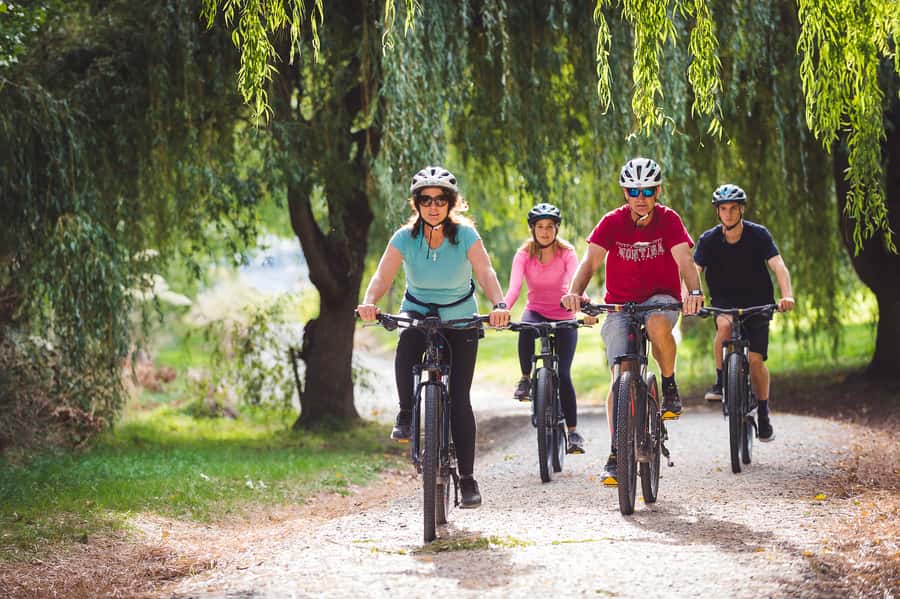
The provider recommends an e-bike for this route, and I agree for most people. The assistance does not remove the ride. You still pedal, steer, manage gravel, and cover 35 kilometres. It simply makes the hills less demanding and gives you more control over your energy.
That matters because the ride is long enough for small climbs to add up. With an e-bike, you can look at the mountains, stop for photos, and enjoy a picnic without worrying as much about the final miles into Queenstown. Parents riding with children and people managing old injuries have found the extra help especially useful.
A standard bike can work well if you are fit and comfortable on gravel. One rider completed the route on regular bikes and found much of it easy and mostly downhill. Another rider, also experienced on a bike, was surprised by the steep sections and rough surface. Your choice should depend less on how confidently you ride on pavement and more on how you feel about hills, gravel, and four hours of steady activity.
The e-bikes supplied have generally been described as easy to operate and in good condition. Still, mechanical problems can happen. A chain came off repeatedly on one ride, and another e-bike stopped working before restarting after the battery was adjusted. A flat tire was dealt with by sending out a replacement bike. These incidents appear to be exceptions, but they are worth remembering on a self-guided route.
Reaching Lake Whakatipu and the Queenstown finish
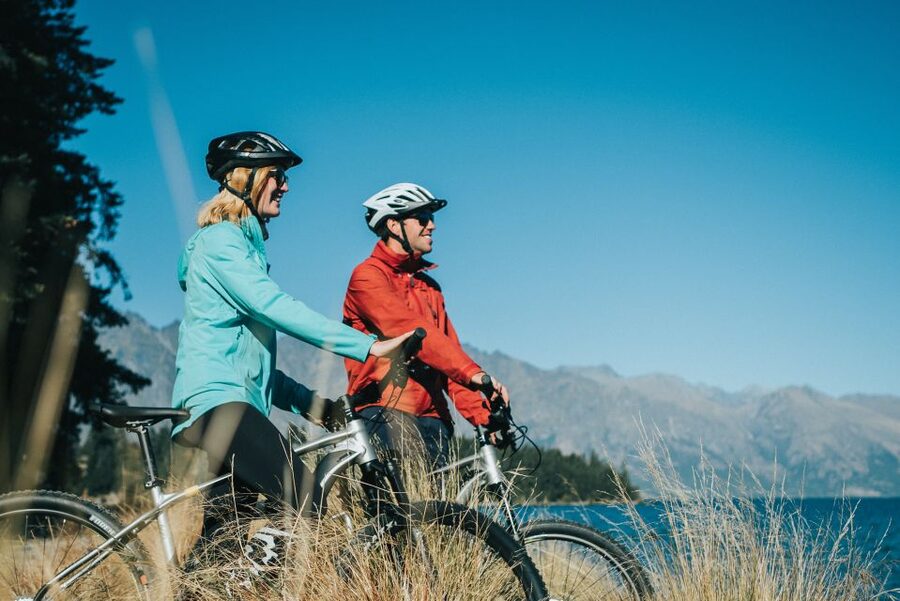
The final stage becomes gentler as you approach Lake Whakatipu. The trail runs along the lake edge and leads you toward Queenstown, with cafés and a brewery available near the latter part of the route.
This change of pace is welcome. After the rural river trails, the lake section feels more social and convenient. You have more opportunities to stop, buy a drink, or take a break before returning the bike in central Queenstown.
There is an important route change for most of 2026. The Frankton Track beside the lake is closed, so the ride uses a pedestrian footpath beside the main road instead. That means the last part will not have quite the same quiet lakeside feel described for the usual route. Follow staff instructions carefully and be considerate around pedestrians.
The tour finishes back at 3 Searle Lane. The advertised duration is five hours, including transport, the briefing, coffee time, and about four hours of riding. Your actual ride time can vary with stops, fitness, weather, mechanical delays, and how quickly you handle the hills.
What to pack for a rural 35-kilometre ride
I would treat packing as part of the planning, not an afterthought. The route has long rural stretches, so you should carry:
- Plenty of water
- A packed lunch or substantial snacks
- Sun protection, especially in summer
- A phone for essential contact
- Comfortable clothing for several hours on a bike
One rider specifically wished for more warning about sun exposure. New Zealand’s bright summer conditions can make an exposed trail feel hotter than expected, even when the air is cool.
Mudguards are not fitted to every bike. After wet conditions, spray can reach your back, so a spare layer or clothing you do not mind dirtying may be useful. A padded cycling layer could also make the ride more comfortable. One rider found the saddle very uncomfortable after hours on a bumpy surface.
Navigation is easy, but not automatic
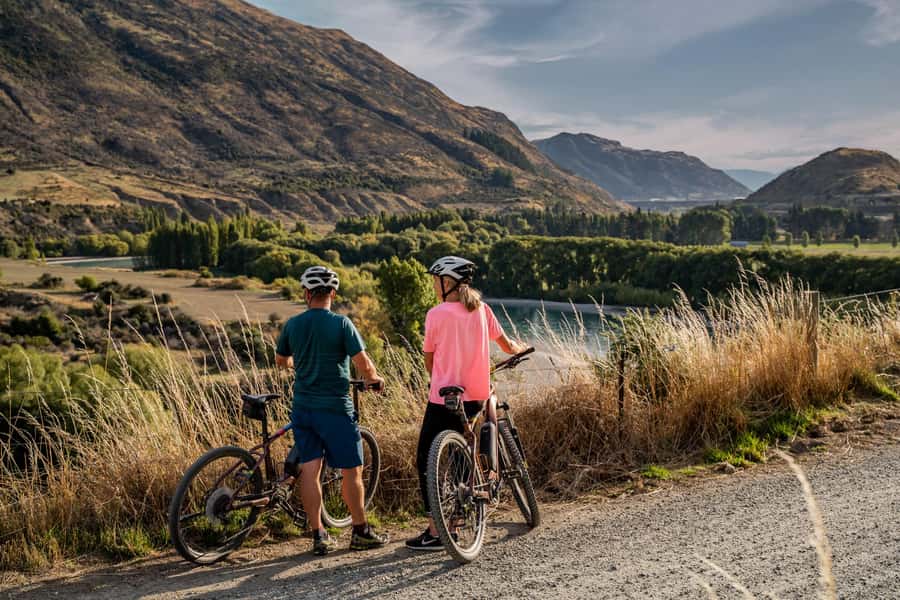
The route is designed for independent riding. You receive a map, staff explain the key turns, and trail signage usually makes the way clear. This arrangement is ideal if you dislike being tied to a guide’s speed or a large group.
Still, you need to stay alert. Trail colors change, and a missed turn can add distance. Keep the map accessible and compare it with the signs at junctions. The briefing is friendly and thorough, but it happens before you have seen the trail, so it is wise to ask questions if any part feels unclear.
This is not a guided sightseeing tour with someone riding beside you to manage every decision. It is a supported independent adventure. You get the equipment and route help, then the day belongs to you.
Who will enjoy this ride most
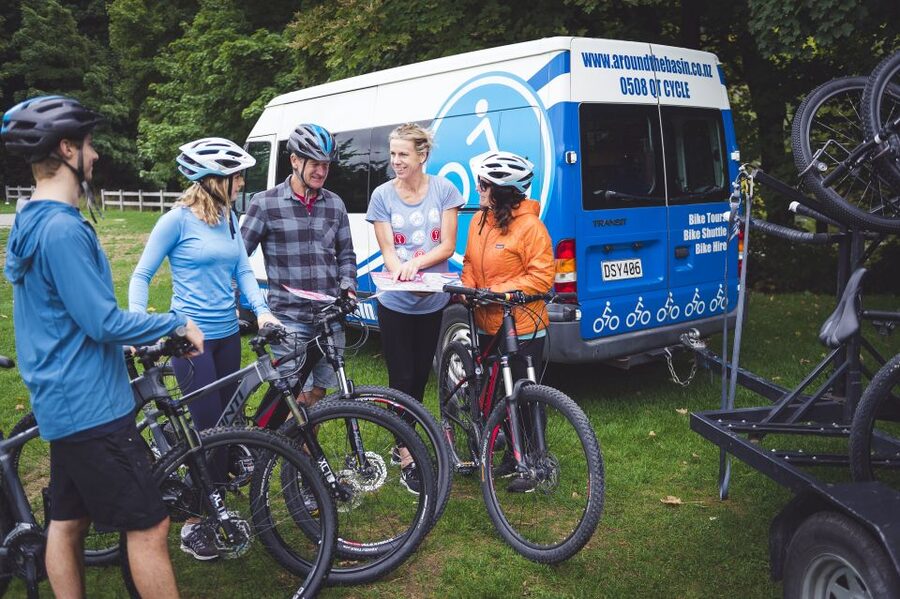
I would recommend it to confident recreational cyclists, active couples, families with older children who can manage a long ride, and solo riders who are comfortable following a marked route. The self-guided format works well for people who want to stop for photographs, lunch, a river break, or a café without holding up a group.
An e-bike broadens the appeal. It can help riders with modest fitness, old injuries, or limited experience on hills, though you still need to be able to ride safely on gravel. The activity is not suitable for anyone who cannot ride a bike or who has a low level of fitness.
I would not choose it as a casual first bike ride in Queenstown. The distance is fixed at a minimum of 35 kilometres, and the route includes steep and rocky sections. If you are unsure, the e-bike is the safer and more enjoyable choice, not a sign that you have failed a fitness test.
Is $56 good value?
At $56 per person, the package includes the shuttle from Queenstown to Arrowtown, bike or e-bike rental, helmet, map, route briefing, and the freedom to spend the day at your own speed. For a full half-day outing covering two well-known South Island towns and several river and lake corridors, that is a fair price.
The value is strongest if you would otherwise need to organize transport, bike hire, and a way back to Queenstown. It is also good for couples or families who want an active day without paying for a private guide.
Remember that food, drinks, and any e-bike upgrade are extra. The activity also asks you to provide your own navigation and pacing. You are paying for a well-supported route, not for personal guiding or a fully catered excursion.
Flexible booking helps reduce the risk. You can cancel up to 24 hours before departure for a full refund, and the reserve-now, pay-later option keeps your plans open. Check the available start times before booking, since shuttle departures are scheduled.
Should you book the Arrowtown to Queenstown ride?
Yes, if you want a scenic, active way to connect Arrowtown and Queenstown and you are ready for a genuine 35-kilometre gravel ride. I especially recommend it with an e-bike for anyone who wants to enjoy the views rather than measure the day by how much energy remains for the next hill.
Choose a standard bike only if you are confident on uneven trails and comfortable riding for several hours. Pack water, food, sun protection, and patience for the rough sections. If the 2026 Frankton Track detour affects your dates, expect the final approach to use a footpath beside the main road.
This is a strong choice for independent riders who value scenery and flexibility. It is a poor match for anyone seeking a short, flat, guided cycle. Know that distinction before you book, and the ride can become one of the most memorable active days in Queenstown.
FAQ
How long is the Arrowtown to Queenstown bike ride?
The minimum riding distance is 35 kilometres, or about 21 miles. The full activity lasts about five hours, including the shuttle, briefing, coffee stop, and riding time.
Where does the activity begin?
You check in at Around The Basin’s shop at 3 Searle Lane in Queenstown, ten minutes before the scheduled shuttle departure.
How do I get to Arrowtown?
A scheduled shuttle takes you from the Queenstown shop to Arrowtown. The bus journey takes about 25 minutes.
Is the ride guided?
No. This is a self-guided ride. You receive a route briefing, map, bike or e-bike, helmet, and tools, but no guide rides with you.
Are standard bikes and e-bikes available?
Yes. You can choose between a regular mountain bike and an e-bike. An e-bike upgrade is recommended because the route includes several decent hills.
Is the trail suitable for beginners?
The ride is recommended for confident riders with a good level of fitness. It is not suitable for people who cannot ride a bike or have a low level of fitness.
What kind of surface does the route use?
The route uses wide gravel trails graded either 2 or 3. Some sections are rocky or steep, so the ride is not the same as a flat paved cycleway.
Should I bring lunch and water?
Yes. Much of the route is rural, and there may be nowhere to buy water or food during the main trail section. Bring enough water, lunch, and snacks for the ride.
Is the Frankton Track open during 2026?
For most of 2026, the Frankton Track beside the lake is closed. The route uses a pedestrian footpath beside the main road during the detour.
Just added around Queenstown
- Scenic Queenstown Lake Cruise★ 4.5 · 22 reviews
- Full-Day Small-Group Routeburn Valley Hike★ 5.0 · 11 reviews
- Scenic Guided eBike Tour Ride to the Lake★ 5.0 · 67 reviews
- Routeburn Track Guided Hike (Full Day)★ 5.0 · 27 reviews
- Queenstown Memories Helicopter Flight★ 5.0 · 36 reviews
- E-Bike Adventures Through the Wineries in Gibbston★ 5.0 · 22 reviews
- Routeburn Track Guided Walk (Half-Day)★ 4.5 · 17 reviews
- 6 Hour’s – Queenstown’s Helicopter Gin Tour★ 5.0 · 8 reviews
Cycling Tours, compared.

The Classic: our most popular electric bike tour of Auckland’s Highlights
Read our review →
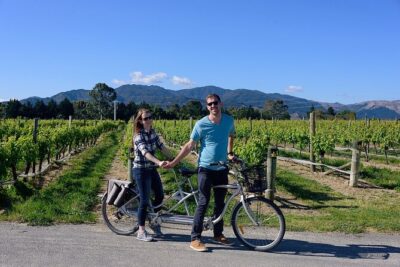
Self-Guided Wine Tours by Bike with Lorelle & Greg
Read our review →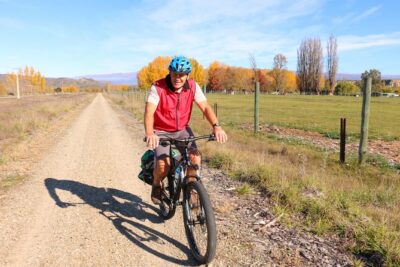
Otago Central Rail Trail One Day Wonder Cycle tour
Read our review →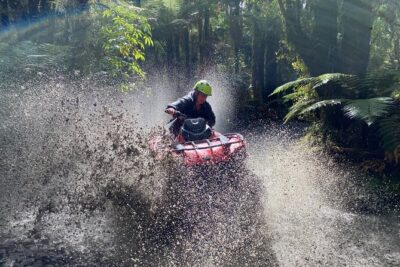
Off Road Quad Bike Adventure Tour in Franz Josef
Read our review →
Browse the lists this tour appears in