Reviewed · TICKETS
Kiwi Park Admission Ticket
Queenstown’s Kiwi Park gives you something many New Zealand visitors hope for but may not manage in the wild: a guaranteed kiwi sighting. Inside the specially built nocturnal house, the room is dark and quiet, and your eyes need a moment to adjust. Then a kiwi may wander into view, sometimes busy with a tube or other object in its enclosure.
I like two things here. First, the park makes conservation part of the visit rather than a footnote. Second, the 30-minute free-flight conservation show turns serious lessons about introduced rats, possums, and other pests into an entertaining presentation. The main consideration is scale. This is a compact wildlife park, not a full-day zoo, and many people will see it comfortably in one to two hours.
Key points at a glance
- Guaranteed kiwi viewing: Enter a dark nocturnal house designed to give you a strong chance of seeing New Zealand’s iconic bird.
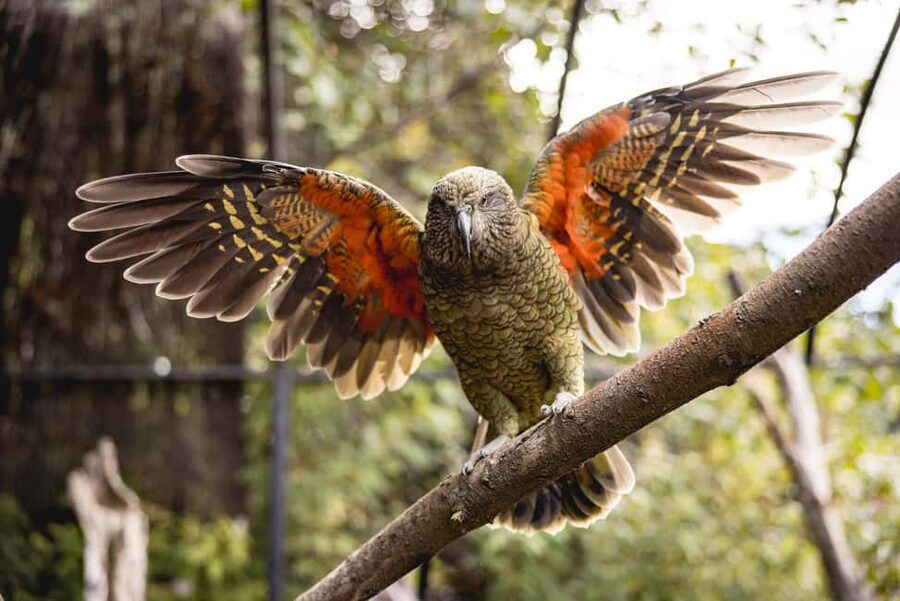
- A 30-minute conservation show: Watch native birds fly freely while staff explain the threats facing New Zealand wildlife.
- Five acres in central Queenstown: Walk among native plants, birds, reptiles, and small wildlife exhibits without leaving town.
- Multilingual audio tour: Use the complimentary guide in English, Chinese, French, German, or Japanese.
- Honey tasting included: See a transparent beehive and sample different New Zealand honey flavours and grades.
- Easy to fit into your day: The ticket is valid for one day, but the visit itself commonly takes about one to two hours.
Why the kiwi encounter matters
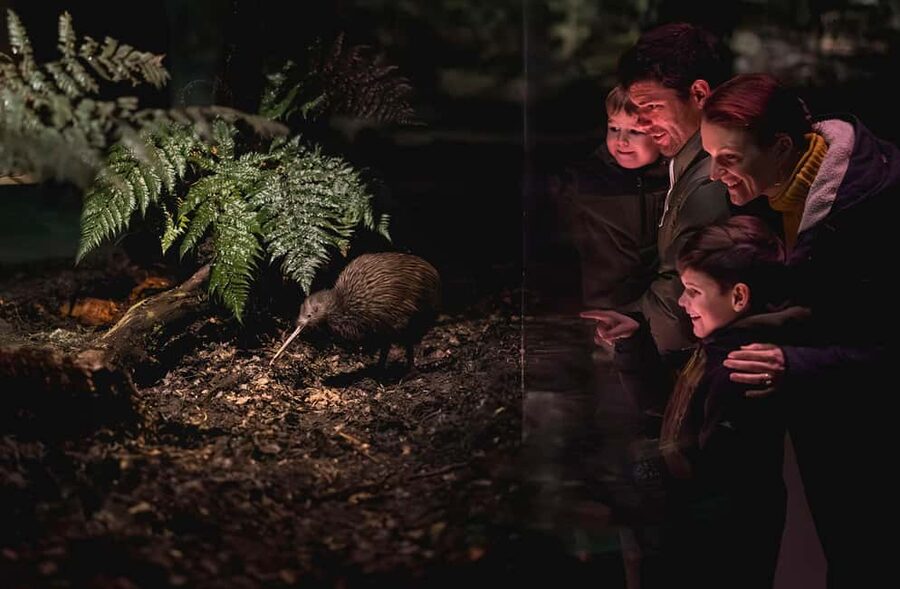
The kiwi is one of New Zealand’s defining animals, yet seeing one in the wild is difficult. These birds are nocturnal, shy, and threatened, so a woodland walk or scenic drive does not promise a sighting. At Kiwi Park, the nocturnal house removes that uncertainty.
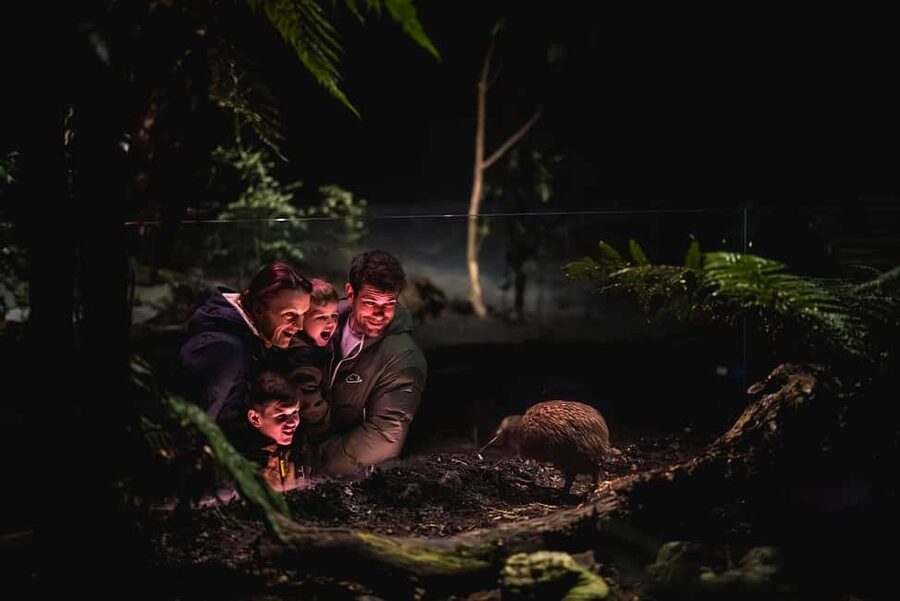
You enter a low-light enclosure where photography is not allowed. That rule is practical, not fussy. Flash and camera screens would disturb the birds, and the dark setting is part of the kiwi’s normal rhythm. Give your eyes time to adjust before deciding there is nothing to see.
The kiwi may appear on the other side of the enclosure, moving quickly through the shadows. You might see it investigating an object, searching around the ground, or simply crossing your view for a few seconds. This is not a staged animal performance, so patience helps.
The park presents the encounter as a guaranteed sighting, which is a useful feature if seeing a kiwi is one of your main reasons for visiting New Zealand. You still need to watch carefully. Guaranteed does not mean the bird will pose in a bright, open space like a zoo mascot.
The kiwi house is the strongest part of the visit for many people. It also gives you a better sense of the bird’s unusual habits than a static display would. The dark room, quick movements, and quiet viewing area make the experience feel distinct from seeing more familiar daytime birds.
A few more Queenstown half-days to weigh up
- Queenstown: Walter Peak Gourmet BBQ & Lake Whakatipu Cruise
★ 4.8 · 2,713 reviews - Queenstown: Milford Sound Coach & Cruise Full-Day Trip
★ 4.7 · 2,592 reviews - Shotover River Extreme Jet Boat Ride in Queenstown
★ 5.0 · 2,540 reviews
A compact five-acre wildlife park in Queenstown
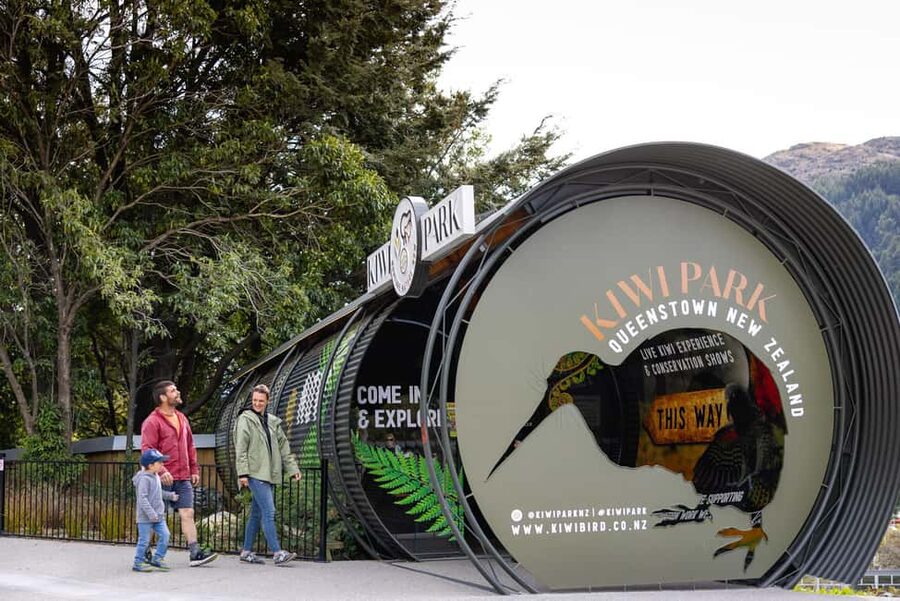
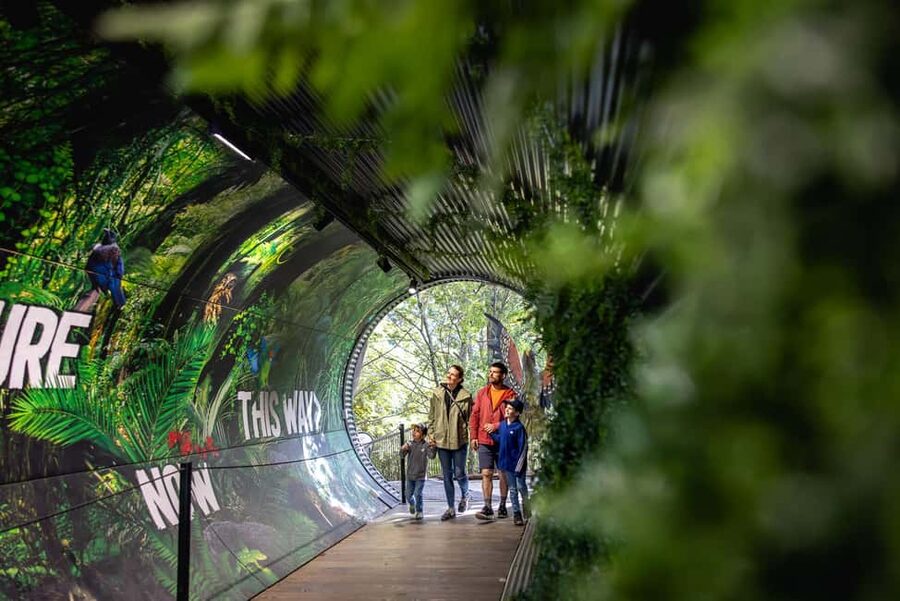
Kiwi Park is a family-owned and operated wildlife centre on Upper Brecon Street, close to central Queenstown. Look for the large tunnel marked Kiwi Park, then walk through it to reception. You do not need to arrange transport as part of this ticket.
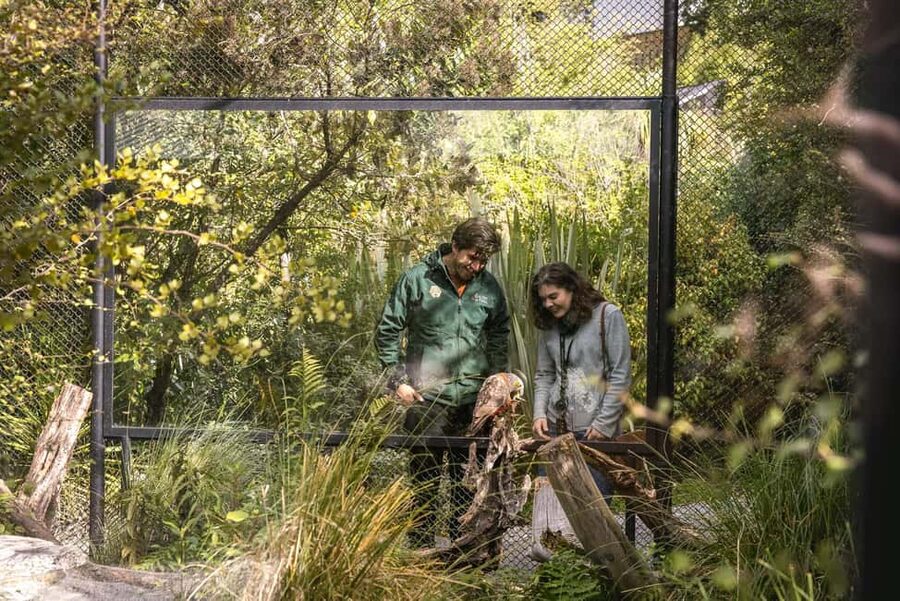
The park covers five acres, so you get a real walk through planted areas rather than a single indoor exhibit. The setting includes native flora and displays featuring New Zealand birds and reptiles. It is large enough to feel like a proper outing, but small enough that you can keep the visit manageable with children or fit it between other Queenstown plans.
The self-guided audio tour and map help you set your own pace. This suits you if you like stopping for a while at one enclosure and moving quickly through another. The audio is available in English, Chinese, French, German, and Japanese, which makes the park more accessible to international visitors.
You may see tuatara, ruru, and a range of native birds. The tuatara is especially worth seeking out. It is not a lizard, despite its lizard-like appearance, and it represents a very old branch of New Zealand’s wildlife. The park’s displays also help explain why native species need protection in a country where introduced predators have caused major losses.
A few enclosures may reward careful looking more than quick scanning. Reptiles can hide among branches, rocks, and plants, and well-designed habitats sometimes make them harder to spot. That is good for the animals, but it can test the patience of a child who wants immediate action.
The park’s care is visible in the way its birds and reptiles are presented. At the same time, some people may wish that certain enclosures were larger. I would treat this as a small wildlife centre focused on conservation and close observation, not as a place built around huge open-range habitats.
The conservation show brings the park to life
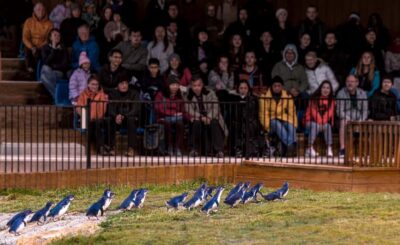
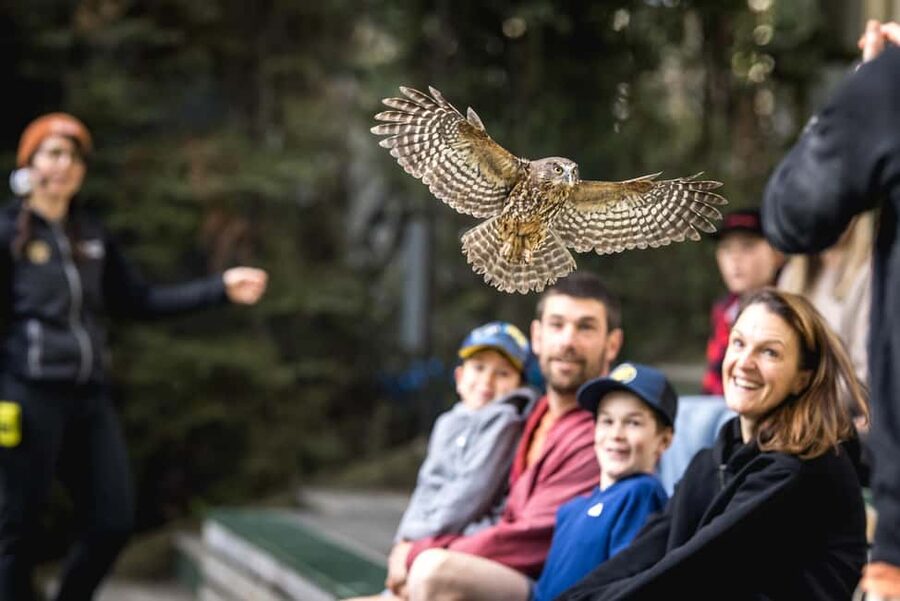
The conservation show lasts about 30 minutes and is included in your admission. Skilled wildlife staff present native animals and birds, with a mix of flight demonstrations, explanation, and audience-friendly humour.
This is likely the best scheduled activity for understanding the park’s purpose. You hear about the damage caused when Europeans introduced rats, possums, and other pests to New Zealand. The presentation also covers extinct birds and species that came close to disappearing but now benefit from captive breeding efforts.
The free-flight format gives the show energy. Instead of only looking through mesh or glass, you see birds move through the presentation space. That makes their size, speed, and flight patterns easier to appreciate. It also keeps the conservation message from feeling like a classroom lecture.
The show is especially useful for families. Children get movement and surprises, while adults get the wider story of habitat loss, introduced predators, and breeding programs. The tone is entertaining, but the point is serious: many native species need active protection because they evolved without the mammalian predators now found across New Zealand.
Show times change with the season:
- From October through May, shows are scheduled at 11:30am, 1:30pm, and 3:30pm.
- From May through September, shows are scheduled at 11:30am and 3pm.
Because the seasonal schedules overlap in May, check the current time before you plan your route through the park. I would build your visit around the conservation show, then see the kiwi and other exhibits before or after it.
How to plan the kiwi and show times
Kiwi Encounters run more often than the conservation show. From October through May, scheduled encounters are at 10am, 11am, 12:15pm, 1pm, 2:15pm, 3pm, 4:15pm, and 5pm.
From May through September, the times are 10am, 11am, 12:15pm, 1pm, 2pm, 3:45pm, and 4:30pm.
The simplest plan is to arrive with enough time to find reception, collect your map and audio guide, and walk through a few exhibits before your chosen encounter. After seeing the kiwi, continue around the park and attend the conservation show later.
You can also reverse the order. If you arrive close to show time, attend the presentation first, then explore the grounds while waiting for the next kiwi encounter. The ticket is valid for one day, so you are not forced to rush through every exhibit in one circuit.
Allow at least one hour if your schedule is tight, but two hours gives you a more comfortable visit. The park is not built as an all-day attraction with a long chain of rides or large food areas. Its value comes from slowing down, listening to the audio tour, waiting for animals to appear, and attending the presentations.
If you are visiting in a busy Queenstown season, arriving with the schedule in mind will make the experience calmer. You will spend less time standing around wondering when the next encounter starts and more time looking at the animals.
Same corner of the country, a completely different day out:
- Small Group, Award Winning Milford Sound Day Experience & Cruise
★ 5.0 · 2,416 reviews - Milford Sound Fly-Cruise-Fly Tour from Queenstown
★ 5.0 · 1,792 reviews - Queenstown: Shotover River and Kawarau River Jet Boat Ride
★ 4.7 · 1,682 reviews - From Queenstown: Milford Sound Full-Day Trip by Plane & Boat
★ 4.9 · 1,558 reviews
Honeybees add a welcome change of pace
The Honeybee Centre is a smaller part of the visit, but it gives you something different from the bird and reptile displays. A see-through hive lets you watch the bees at work, and a complimentary honey tasting introduces different New Zealand honey flavours, grades, and combinations.
This stop works well after the dark kiwi house or the conservation show. It is a reminder that the park is about New Zealand wildlife more broadly, not only the bird in its name.
The tasting is included, but other food and drink cost extra. If you want a full meal, do not assume admission covers it. The supplied information does not present the park as a dining destination, so plan food around your wider Queenstown day.
What the visit feels like for families
Kiwi Park is a good choice if your group includes different ages and interests. Children can watch birds fly, look for reptiles, and enjoy the honey centre. Adults get useful context about conservation, extinct species, and captive breeding.
The park is also a practical stop for anyone who has spent the morning on a more active Queenstown outing. You can walk at your own speed, take breaks, and choose how much information to hear through the audio guide.
The kiwi house requires a little quiet and patience. Very young children may find the dark room less exciting if the bird stays in the shadows, while older children often enjoy the search. The conservation show helps balance that uncertainty because the birds are active and the presentation has a clear beginning and end.
The park is wheelchair accessible, which is useful for mixed-ability groups. The ticket includes a host or greeter in English, while the audio guide provides the five listed language choices.
Price, value, and what is included

Admission costs $35 per person. That is not the cheapest short attraction in Queenstown, but it covers several separate elements: entry to the five-acre park, the audio tour and map, kiwi viewing, the conservation show, and the Honeybee Centre.
The value depends on how you use the ticket. If you walk through quickly and skip the show, the price may feel high for a compact attraction. If you attend the presentation, take your time with the audio tour, wait patiently in the kiwi house, and explore the native birds and reptiles, the fee supports a fuller visit.
I see the ticket as good value for three types of visitors. First, it suits anyone who wants a reliable kiwi sighting without booking a separate evening wildlife excursion. Second, it works for families who need a straightforward central Queenstown activity. Third, it is useful for visitors who want to understand New Zealand conservation instead of only photographing scenery.
The conservation purpose also matters. Your admission supports a family-run wildlife centre dedicated to endangered native species. That does not turn the ticket into a donation, but it gives the visit more weight than a simple collection of animal displays.
There are limits. Food and drink are not included, and the attraction may not fill an entire day. Some reptile habitats can make animals hard to spot, and some people may prefer larger enclosures. Those are fair reasons to compare this with other Queenstown activities, especially if your time or budget is tight.
Practical advice before you go
Start by checking the date-specific show schedule. The seasonal times are different, and the conservation show has fewer sessions in the colder months.
Bring patience for the kiwi house. Photography is not permitted there, so put your phone away and use your eyes. The dark enclosure is designed for viewing, not for collecting pictures.
Pick up the complimentary audio guide and map at reception. Five languages are listed: English, Chinese, French, German, and Japanese. The audio tour lets you explore without having to stay with a group.
Plan for about one to two hours. The attraction is valid for one day, so you can take your time, but you do not need to reserve a whole day unless you prefer a slow visit.
The meeting point is easy to find: Upper Brecon Street in Queenstown, at the large tunnel with Kiwi Park written on the side. Walk through the tunnel to reception.
Free cancellation is available up to 24 hours before the activity for a full refund. That gives you some flexibility if your Queenstown plans change.
Who should book Kiwi Park?
Book this experience if you want to see a kiwi with a strong chance of success, especially if a wild sighting is unlikely to fit your itinerary. The conservation show is another strong reason to go, since it explains New Zealand’s wildlife crisis in a clear and engaging way.
It is also a smart pick for families, wildlife fans, and anyone looking for a central activity that does not depend on good weather. You will see more than kiwis, including native birds, tuatara, ruru, and bees, and the audio guide gives the visit more substance than a quick walk around exhibits.
Skip it if you are seeking a large zoo, a full-day attraction, or extensive open enclosures. The park is compact, some animals can hide, and the visit is best viewed as a focused conservation stop. For many people, that focus is exactly why the $35 admission earns its place in a Queenstown schedule.
FAQ
How long does a visit to Kiwi Park take?
Most people can walk around the park in about one to two hours. The ticket is valid for one day, so you can plan around the scheduled kiwi encounters and conservation show rather than rushing.
Is seeing a kiwi guaranteed?
The Kiwi Encounters are advertised as providing guaranteed kiwi sightings. You will view the birds in a specially designed nocturnal house, where photography is not permitted.
What are the conservation show times?
From October through May, the conservation shows are at 11:30am, 1:30pm, and 3:30pm. From May through September, they are at 11:30am and 3pm.
What languages are available for the audio guide?
The complimentary self-guided audio tour is available in Chinese, English, French, German, and Japanese.
Is Kiwi Park wheelchair accessible?
Yes. The activity is listed as wheelchair accessible.
What is included in the $35 admission?
Admission includes access to the park, the self-guided audio tour, kiwi encounters, the conservation show, and the Honeybee Centre. Food and drink cost extra.
Just added around Queenstown
- Scenic Queenstown Lake Cruise★ 4.5 · 22 reviews
- Scenic Guided eBike Tour Ride to the Lake★ 5.0 · 67 reviews
- Routeburn Track Guided Hike (Full Day)★ 5.0 · 27 reviews
- Full-Day Small-Group Routeburn Valley Hike★ 5.0 · 11 reviews
- Queenstown Memories Helicopter Flight★ 5.0 · 36 reviews
- E-Bike Adventures Through the Wineries in Gibbston★ 5.0 · 22 reviews
- Routeburn Track Guided Walk (Half-Day)★ 4.5 · 17 reviews
- 6 Hour’s – Queenstown’s Helicopter Gin Tour★ 5.0 · 8 reviews
Tickets, compared.