
Reviewed · SKYDIVING
Wanaka: Tandem Skydive Experience
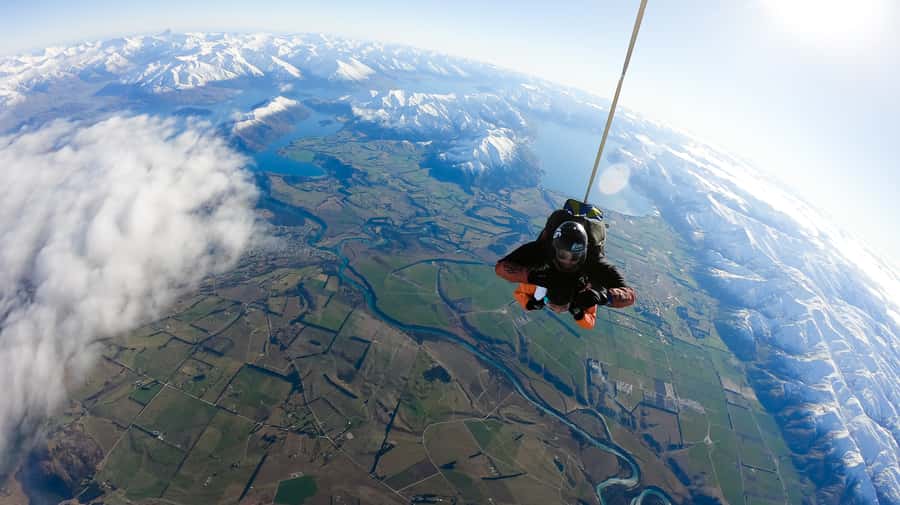
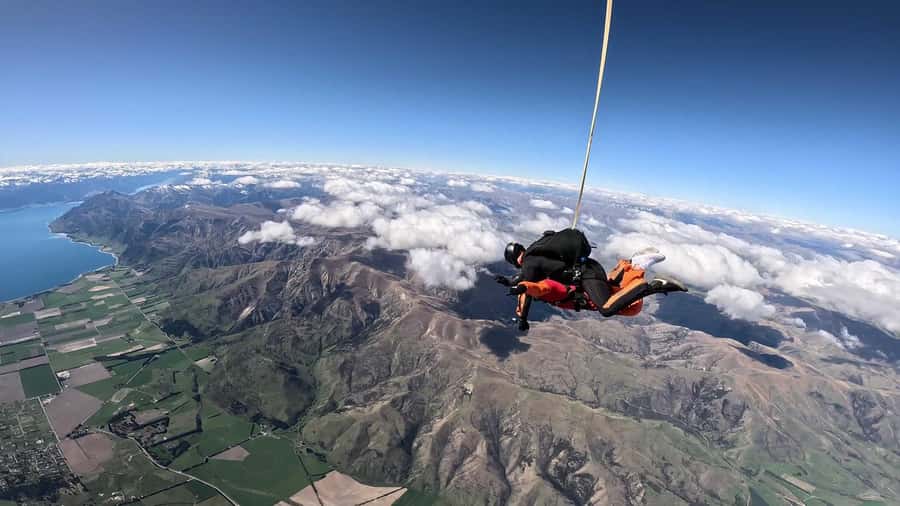
Wanaka puts the drama where you want it: beneath your feet. After a scenic flight over the Southern Alps, you step from a plane and fall at up to 200kph, with six lakes and the Central Otago countryside spread below. The setting is far more than a backdrop. It is the reason to choose Wanaka for your first tandem skydive.
I like the choice of three altitudes, and I like the calm, friendly handling from instructors such as Chris, Jamie, Ben, Lucas, and Rory. The main drawback is cost: the $214 starting price covers the jump, but photo and video packages cost extra and can add a sizeable amount.
Key Points Before You Book
- Choose your freefall time: 9,000 feet gives 25 seconds, 12,000 feet gives a longer 45-second fall, and 15,000 feet offers up to 60 seconds.
- See far beyond Wanaka: The plane flight can reveal Mount Cook, Mount Aspiring, the Southern Alps, several lakes, and the Clutha River.
- Expect a three-hour commitment: Allow time for check-in, briefing, equipment, flight, jump, landing, and waiting for media files.
- The instructors are the strongest part: Chris, Jamie, Ben, Lucas, Rory, and others are repeatedly praised for calm instructions and upbeat support.
- Bring only the basics: Wear closed-toe shoes. Cameras are not allowed, so you need to purchase the operator’s photo or video package if you want a record.
- Plan for weather changes: A cancelled jump can sometimes mean a move to Queenstown, but schedules may shift and waiting times can occur.
Why Wanaka Is Such a Good Place to Jump
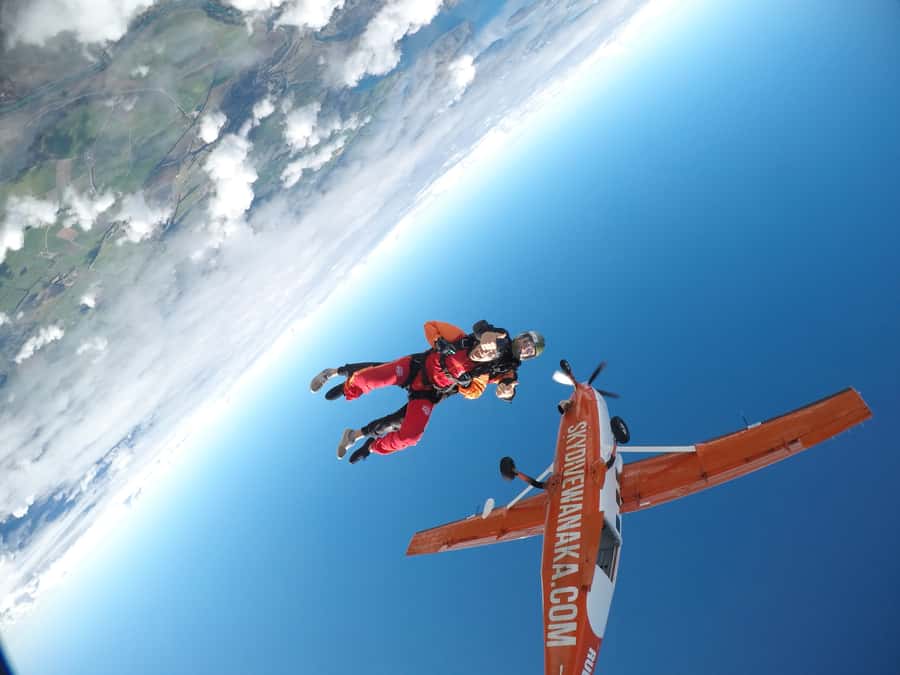
Many first-time jumps are mainly about nerve. Wanaka gives you something else to focus on once the aircraft climbs: a vast view of water, peaks, braided rivers, and open Central Otago country.
The setting is especially striking because the view changes as you gain height. From the ground, Wanaka feels like a small resort town beside a lake. From the air, the area opens into a much wider scene, with the Southern Alps running toward Mount Cook and Mount Aspiring. The Clutha River and several lakes help you make sense of the geography below.
You are not just paying for a few seconds of freefall. The experience includes a roughly 20-minute flight to altitude, which gives you time to look around and settle your nerves. Your tandem instructor points out landmarks during the ascent, though how much you notice may depend on your excitement and where you are seated.
I would choose Wanaka over a plain-airfield jump if scenery matters to you. The jump itself is short, but the mountain setting keeps working from check-in to landing.
More tandem jumps over Wanaka:
- NZONE Skydive Queenstown
★ 4.5 · 1,438 reviews - Queenstown: Tandem Skydive Experience
★ 4.8 · 475 reviews - Lake Taupo 12,000-Foot Tandem Skydiving
★ 5.0 · 359 reviews
Check-In at the Wanaka Drop Zone
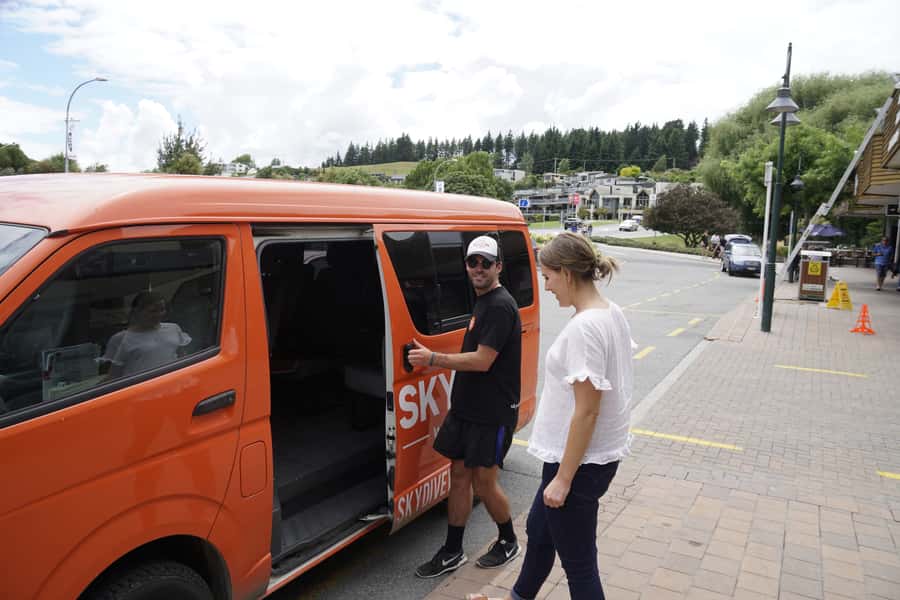
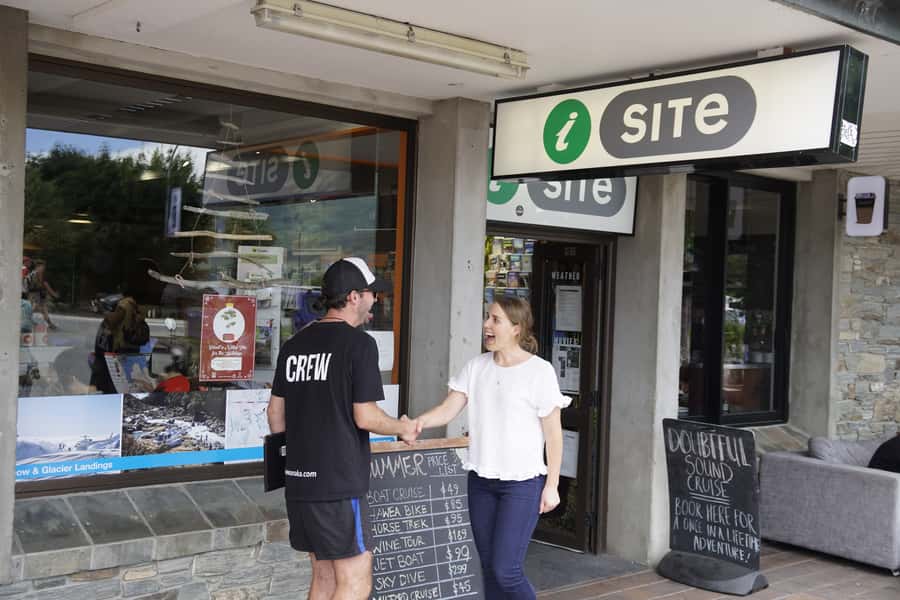
The experience begins at the drop zone, where the frontline crew handles registration, the safety briefing, and equipment. For a self-drive arrival, meet at 14 Mustang Lane 20 minutes before your scheduled time. If you use the return transfer, meet outside the Wanaka i-Site 30 minutes before departure.
The full activity takes about three hours. That does not mean three hours in the air. It includes preparing, waiting for the flight, gearing up, the aircraft trip, the jump, landing, and collecting your media. Skydiving depends on weather and aircraft timing, so keep your day flexible and avoid booking a tight afternoon plan afterward.
You receive the required equipment, including a jumpsuit, frap hat, goggles, gloves, and harness. On-site lockers are available for valuables, and the base has free Wi-Fi and internet kiosks. Bring closed-toe shoes. Leave your camera behind, since personal cameras are not permitted.
The atmosphere is designed to keep things moving, but a little waiting is normal. One person had to wait around 40 minutes for the return shuttle. Another jump shifted later because another group arrived late. These are not reasons to reject the experience, but they are good reminders not to schedule a restaurant booking or bus connection immediately afterward.
Choosing 9,000, 12,000, or 15,000 Feet
The three altitude choices let you control both the price and the intensity.
At 9,000 feet, you get about 25 seconds of freefall. This is the required option for children aged 12 and under. It is also a sensible choice if you want the experience but feel uneasy about extending the fall.
At 12,000 feet, the freefall lasts longer, around 45 seconds. This is a useful middle option for people who want more time in the air without choosing the top package.
At 15,000 feet, you can freefall for up to 60 seconds. The extra time matters because the first moments go very quickly. Once your body settles into the airflow, you have more time to take in the views, smile for the camera flyer if you have booked one, and understand what is happening.
The highest jump is the natural pick for an adrenaline-focused day, and one first-time jumper specifically chose 15,000 feet and found the instructions easy to follow. Still, the highest option is not automatically best for everyone. If the price rises with altitude, ask yourself if another 15 to 35 seconds is worth the difference.
The five-minute canopy flight is included at every altitude. After the freefall, the tandem master opens the parachute and guides you back toward the drop zone. This part is slower and gives you a chance to breathe, look around, and enjoy the scenery without the roar and rush of freefall.
One practical note: some people can feel motion sick when the canopy turns. If you are sensitive to spinning, tell your tandem master. The descent is usually the calmest part, but turns can still feel strong.
The Flight Over the Southern Alps
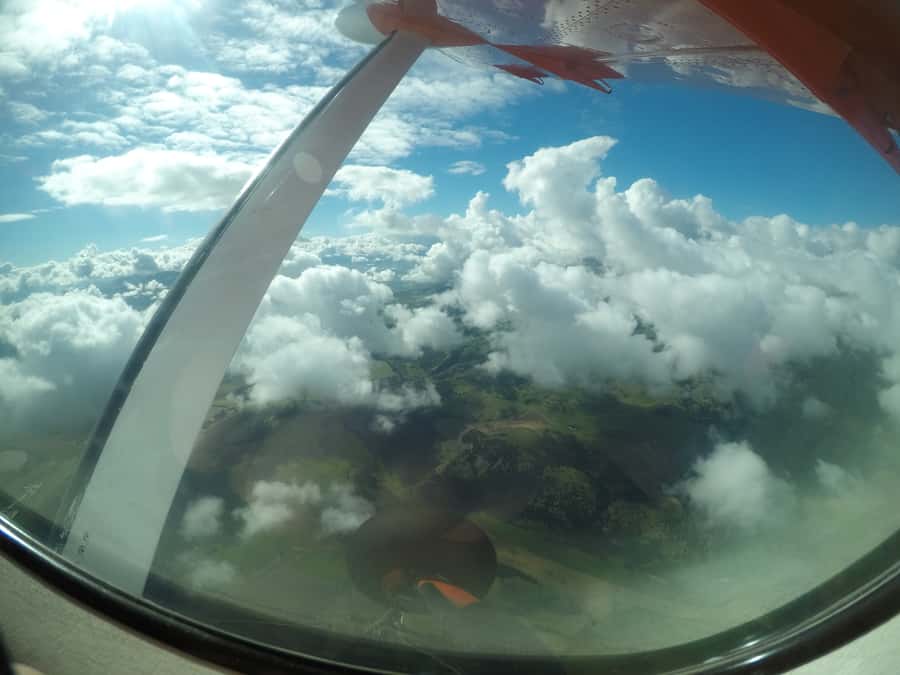
Once you meet your tandem instructor and board the aircraft, the experience changes from preparation to anticipation. The flight to altitude takes about 20 minutes, so you have a proper scenic trip before the main event.
Your instructor can point out Mount Cook, Mount Aspiring, the Southern Alps, lakes, and the Clutha River. The views are a major part of the value here. You get a high-angle look at places that are difficult to understand from a road or lakeshore.
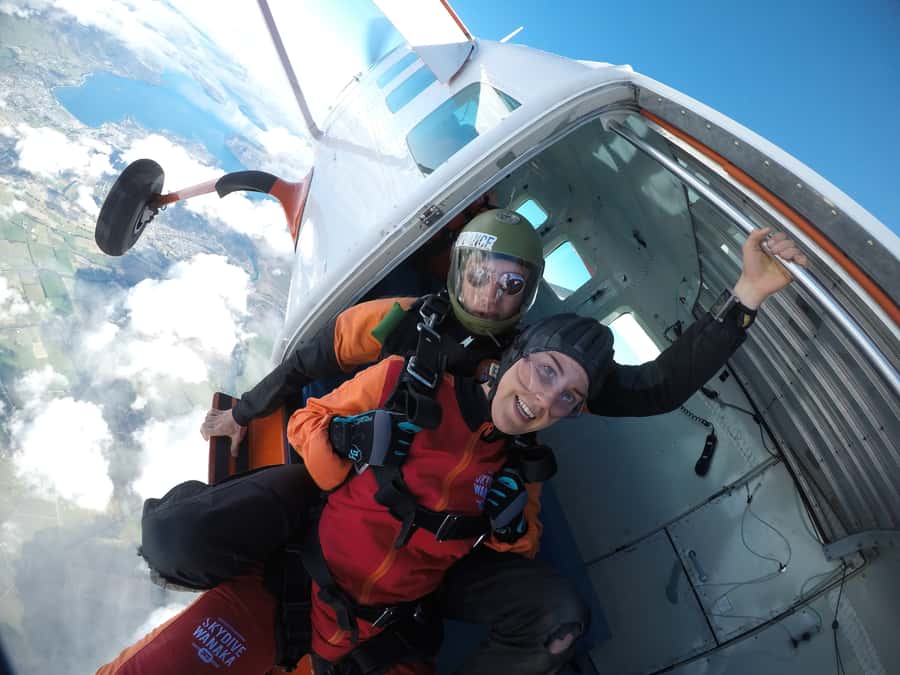
This is also when nerves often rise. You know the jump is coming, and the aircraft keeps climbing. The instructors’ role matters greatly at this point. Names vary by booking, but Chris received especially warm praise for his ability to keep people relaxed and excited. Jamie, Ben, Lucas, and Rory were also singled out for friendly, professional support.
Do not expect a private scenic flight. You are part of an operating drop zone, and the day depends on aircraft movements and other jumpers. The view is still excellent, but the pace may include some waiting.
A few more Wanaka half-days to weigh up
- Wildwire Wanaka- Level 2 (4 Hours)
★ 5.0 · 467 reviews - Bike the Wanaka and Hawea Trails
★ 5.0 · 346 reviews - Lake Wanaka Happy Hour Cruise
★ 4.6 · 313 reviews - Small Group Jet Boat Adventure on the Clutha River from Wanaka
★ 5.0 · 302 reviews
The Freefall and Canopy Ride
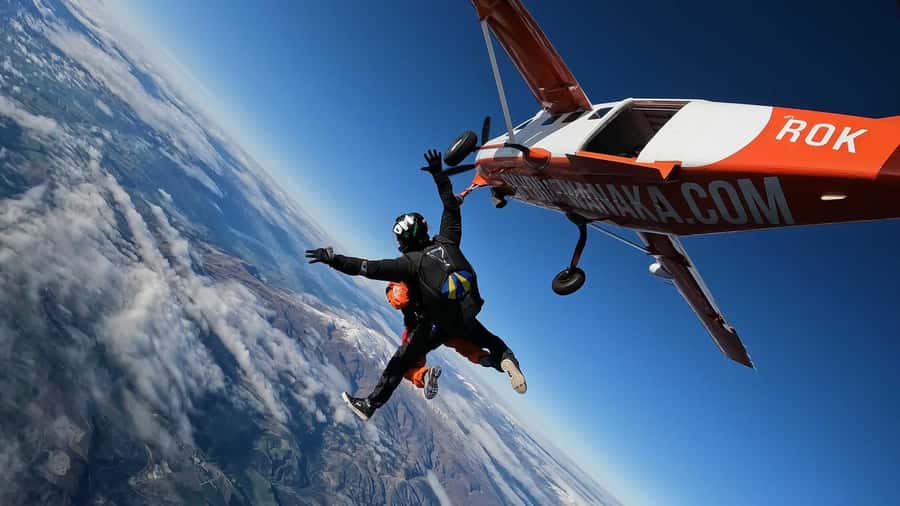
At the chosen altitude, your instructor gives the final instructions and positions you for the exit. The actual leap is the sharpest psychological moment. After that, freefall takes over quickly.
You fall at up to 200kph for 25 to 60 seconds, depending on your selected altitude. The air is loud and forceful, so you should not expect a quiet sightseeing experience. The briefing gives you the body position and basic actions you need. Your tandem master handles the parachute and the technical work.
The strongest pattern in the feedback is trust. People repeatedly describe feeling safe, well looked after, and reassured by the instructors. That does not remove the real risks of parachuting, but it does show why the tandem format suits first-timers. You are attached to an experienced tandem master and are not managing the equipment alone.
Once the parachute opens, the experience becomes smoother. You get about five minutes under canopy before landing at the drop zone. The change from intense freefall to a slower descent can feel dramatic. It also gives you time to look toward the peaks and lakes you saw from the aircraft.
The landing is supervised by the tandem master. Follow the instructions closely, especially during the final approach. Afterward, you return to the hangar, remove the equipment, and wait for any purchased photo and video package.
The Photo and Video Question
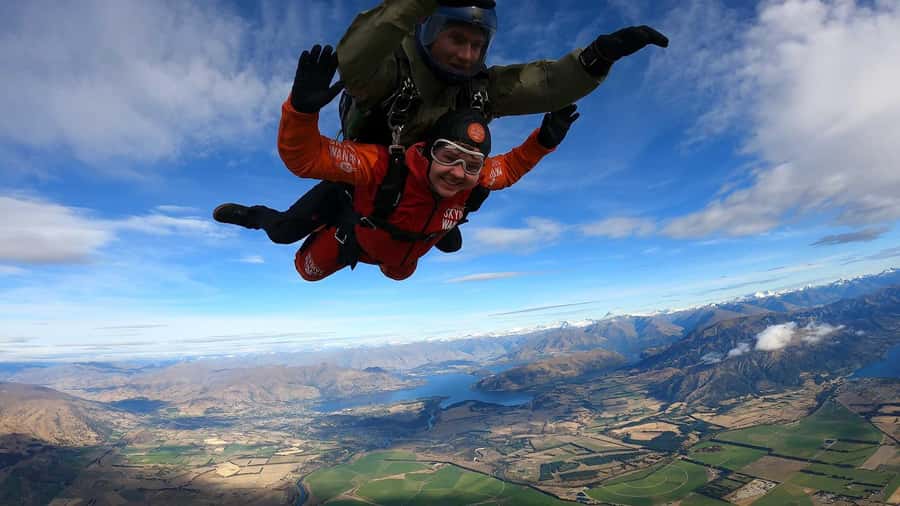
Photos and video are not included in the $214 price. You can buy them when you check in, and the media is edited for you after the jump.
I understand why many people choose this add-on. The entire event moves too fast for you to remember every detail clearly, and you cannot bring your own camera. The edited footage lets you watch the exit, freefall, parachute opening, and landing later with friends and family.
The extra cost is the weak spot. One parent felt the photo and video price of about $200 per person was too high, especially when two children were jumping. That is a serious consideration for families and couples. Ask about the current package price before you commit, and check if a shared or group option is available.
There can also be a delay before the files are ready. One person was still waiting eight hours after being told the media would arrive within about an hour. Most people should not build their evening around immediate access to the footage.
If the memory matters more than the budget, buy the package. If $214 already pushes your limit, skip it and enjoy the experience itself. You can still ask companions to watch from the base, although the jump may take place too far away for spectators to see the exit or landing clearly.
Safety, Age, Weight, and Physical Limits
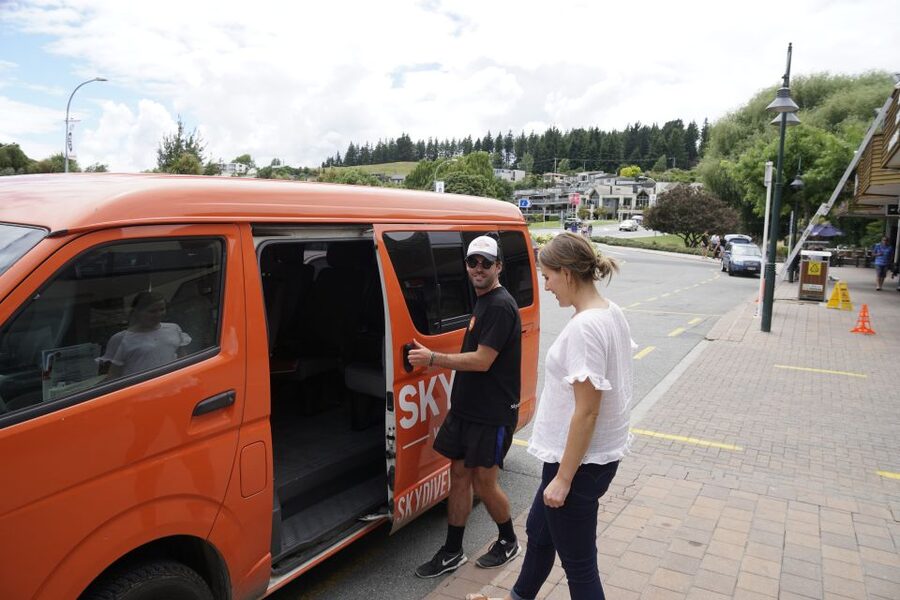
All participants are assessed by the tandem master at the drop zone. You must fit securely into the harness, which is a practical safety requirement rather than a minor formality.
The minimum age is 6, and the minimum weight is 30 kilograms, or 66 pounds. Children aged 12 and under may only choose the 9,000-foot option. The maximum stated weight is 115 kilograms, or 254 pounds.
Pregnant women cannot take part. The operator also gives a clear risk warning: parachuting is inherently dangerous, and risks can arise from weather, health conditions, aircraft problems, parachute problems, descent, or landing. You take part at your own risk.
That warning deserves a proper reading. The instructors, equipment, checks, and procedures are there to reduce risk, not to promise that it disappears. If you have a health concern, ask the operator before booking rather than hoping it will be fine at check-in.
The gear includes a jumpsuit, frap hat, goggles, gloves, and harness. Closed-toe shoes are required. Wear something comfortable beneath the supplied gear, but the provided information does not specify a special clothing list, so confirm seasonal advice when you book.
Price, Timing, and Overall Value
At $214 per person, this is a major activity expense, especially once you add media. The price includes the selected tandem jump, 25 to 60 seconds of freefall, the five-minute canopy ride, the instructor, safety equipment, lockers, and access to the base facilities.
I think the value is strongest for someone who wants one big, memorable activity in Wanaka. You get the scenic flight as well as the jump, and the mountain views make the setting feel special rather than interchangeable.
The value is less convincing if you are mainly shopping for the longest freefall at the lowest price. In that case, compare the altitude options and the total cost, including photos, video, transport, and any changes caused by weather.
The booking terms are useful for a weather-sensitive activity. You can cancel up to 24 hours ahead for a full refund, and reserve now while paying later. Pickup is available, and the transport receives a 93 percent perfect-score rating. Still, allow spare time. A late shuttle or aircraft schedule can affect the rest of your day.
Who Will Enjoy This Most
This suits you if you want a first tandem jump with major mountain scenery and a professional, social atmosphere. It is also a strong choice for couples, families with eligible children, and anyone marking a birthday or major trip.
The activity can work for nervous first-timers. Several instructors, including Chris, Ben, Rory, and Lucas, are praised for calming people before the exit and keeping the mood fun. You do not need previous skydiving experience.
It is less suitable if you dislike heights, spinning, unpredictable timing, or extra costs for media. Spectators may also find the viewing arrangements disappointing because the jump and landing can happen too far away to see from the ground.
Chinese and English instruction is available. That makes the briefing more accessible for Chinese-speaking participants, though you should confirm language availability for your preferred time.
Should You Book the Wanaka Tandem Skydive?
Book it if you want a serious adrenaline experience framed by some of New Zealand’s best mountain views. Choose 15,000 feet if maximum freefall matters, 12,000 feet for a middle ground, or 9,000 feet for younger participants and a shorter fall.
I would book early in a Wanaka itinerary, not on the day you need to catch a flight or make a fixed dinner reservation. Keep your schedule loose, check the media price before paying, wear closed-toe shoes, and accept that weather can change the plan.
For most first-timers who can afford it, the combination of the scenic flight, polished equipment, supportive tandem masters, and Wanaka views makes this a strong bucket-list choice. Just budget honestly for the extras and remember that the real product is the jump, not a guaranteed instant video package.
FAQ
How long does the Wanaka tandem skydive experience take?
Allow about three hours for check-in, the briefing, equipment, aircraft flight, jump, landing, and return to the base.
How much does the experience cost?
The stated price is $214 per person. Photo and video packages are available for an additional charge.
How high can I jump from?
You can choose 9,000, 12,000, or 15,000 feet.
How long is the freefall?
Freefall lasts about 25 seconds from 9,000 feet and up to 60 seconds from 15,000 feet. The 12,000-foot option falls between those choices.
What can I see from the aircraft?
The scenic flight can include views of six lakes, the Southern Alps, Mount Cook, Mount Aspiring, and the Clutha River.
What should I bring?
Bring closed-toe shoes. Cameras are not allowed.
Is there a minimum age and weight?
The minimum age is 6, and the minimum weight is 30 kilograms, or 66 pounds. Children aged 12 and under may only jump from 9,000 feet.
Can I cancel or pay later?
You can cancel up to 24 hours in advance for a full refund. The reserve-now, pay-later option lets you book without paying immediately.
Just added around Wanaka
- From Wanaka: Ruby Island 1-Hour Cruise and Photo Walk★ 4.6 · 43 reviews
- Queenstown to Christchurch via Franz Josef 2-Day Tour★ 4.9 · 11 reviews
- Queenstown: Private Day Trip to Wanaka, Arrowtown & More★ 4.9 · 11 reviews
- Queenstown: Half Day Private Photography Tour★ 5.0 · 4 reviews
- Lake Wānaka: 3 hour Fishing Adventure by Boat★ 4.9 · 7 reviews
- From Wanaka: Milford Sound Flight with Landing & Glaciers★ 4.4 · 7 reviews
- ebike tour lake Hawea river track to Wanaka★ 5.0 · 4 reviews
- Cardrona Valley: Horse Trekking Experience★ 5.0 · 12 reviews
Skydiving, compared.
15,000ft Tandem Skydive in Tauranga – Bay of Plenty
Read our review →
Browse the lists this tour appears in