
Reviewed · PRIVATE DRIVERS
Franz Josef: Glacier Ice Climb experience with Heli Transfer
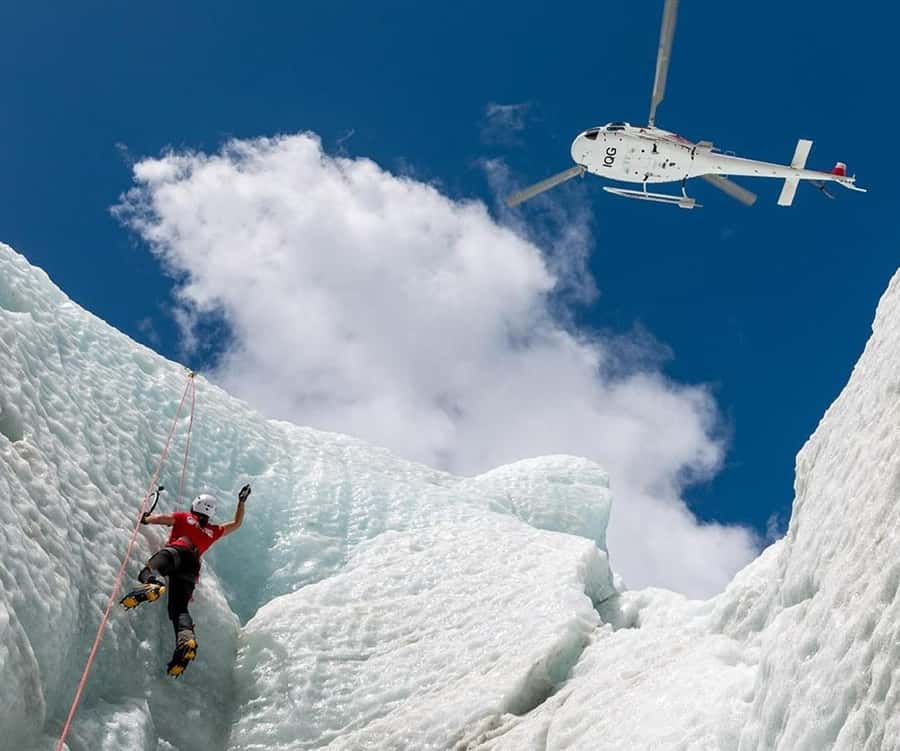
Franz Josef Glacier Ice Climb is the sort of New Zealand adventure that turns a scenic flight into a real day outdoors. After a briefing and helicopter transfer, you can spend up to six hours on the ice, hiking through glacier formations and tackling several climbing routes with an expert guide. I like the small ratio of one guide to four climbers, and I like that boots, socks, waterproof clothing, and technical climbing gear are supplied. The main drawback is that this is a serious, weather-dependent activity, not a casual sightseeing trip.
You should also plan carefully for the long day. Lunch, snacks, and a water bottle are not included, and the meeting point requires you to arrive one hour before departure. One climbing section may require climbers to go one at a time, which can reduce climbing time, but the glacier views and detailed commentary still make this a strong choice for active visitors aged 16 and over.
Key points at a glance
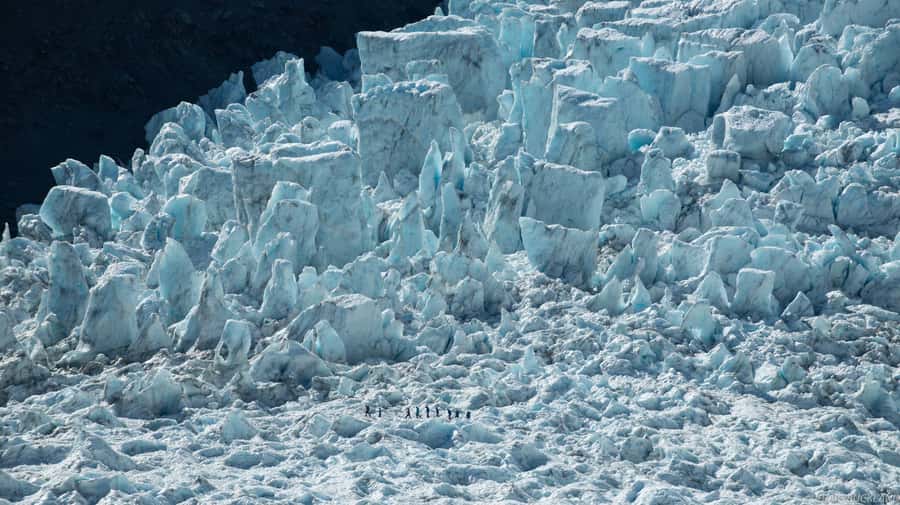
- Helicopter access to the glacier: Fly from the Glacier Base Building to the ice, with wide views of the Franz Josef area and surrounding mountains.
- Up to six hours on the ice: The day includes hiking, instruction, and several chances to practise ice climbing.
- One guide for four climbers: The small group helps your guide adjust instruction to your pace and ability.
- Technical gear is supplied: You receive climbing equipment, boots, socks, waterproof clothing, and a small day pack.
- A real outdoor challenge: You need reasonable readiness for a long day in cold conditions, plus the ability to follow safety instructions.
- Pack your own food and water: Lunch, snacks, and a reusable water bottle are your responsibility.
Why this Franz Josef climb is different
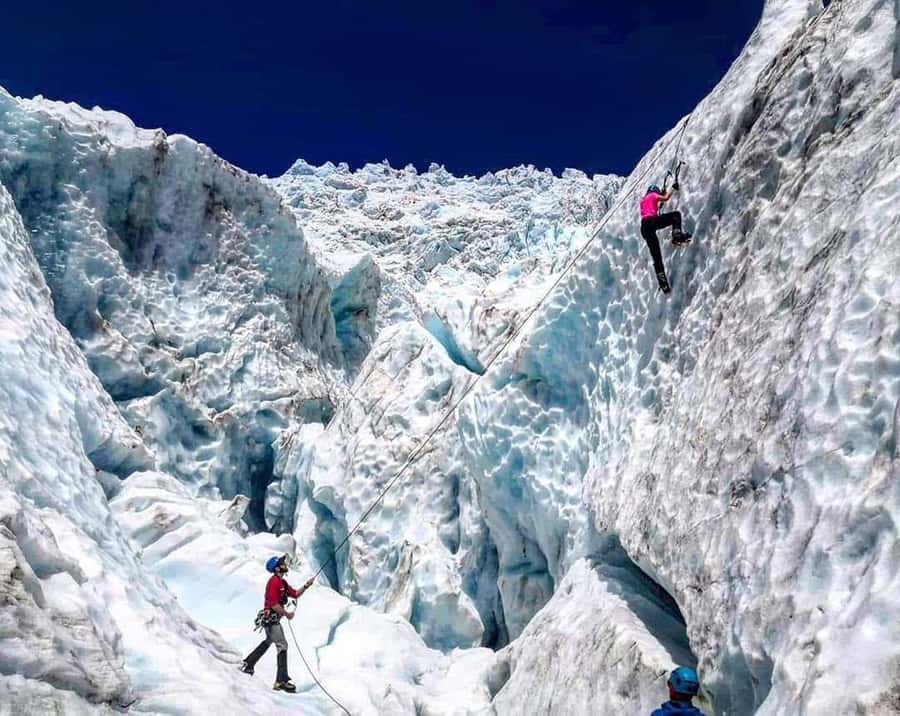
Franz Josef Glacier gives you two kinds of adventure in one booking. First comes the helicopter transfer, which gets you onto the glacier and gives you a memorable view of the ice and mountains from above. Then the pace changes completely. You leave the sightseeing role behind and learn how to move across and climb the glacier under direct instruction.
That mix is the main reason I find this experience appealing. A standard helicopter flight gives you a fine view, but this trip gives you time on the ice itself. You can look closely at the glacier, hear explanations from your guide, and use climbing equipment rather than simply taking photographs from a viewing point.
The activity is designed for a small group of no more than four participants. That matters here. Ice climbing involves technique, balance, and careful movement, so a guide responsible for four people can offer more direct help than a large group tour. You are not promised a private lesson, but the ratio gives you a better chance to ask questions and receive useful corrections.
The tone is active and instructive rather than competitive. You do not need to arrive as an experienced climber. Your guide supplies the technical equipment and works with your pace and ability, while the safety briefing sets out what you need to know before you reach the glacier.
A few more Franz Josef Glacier half-days to weigh up
- Franz Josef Glacier: Helicopter Flight & Alpine Landing
★ 4.8 · 619 reviews - Franz Josef Glacier Heli-Hike
★ 4.5 · 618 reviews - Heli Hike Fox Glacier
★ 5.0 · 563 reviews
Starting at the Glacier Base Building
Your day begins at the Glacier Base Building, where you need to arrive one hour before your scheduled departure. That early arrival is part of the tour, not dead time. It allows the team to complete the briefing, organise clothing and equipment, and prepare everyone for the helicopter transfer.
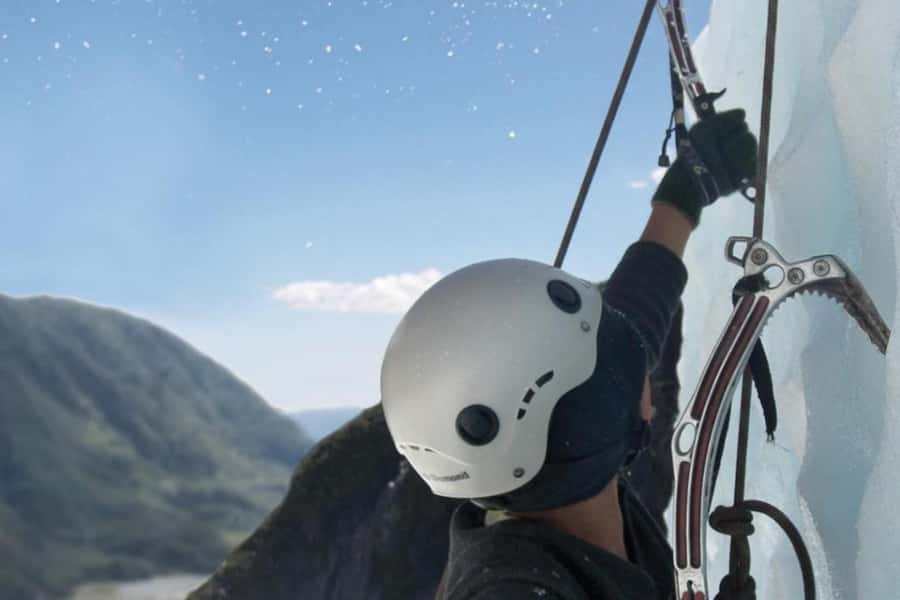
You receive waterproof clothing, boots, socks, climbing equipment, and a small day pack. This keeps you from having to bring a full set of specialist gear to New Zealand. You still need weather-appropriate layers, sunglasses, sunscreen, and your own reusable water bottle.
The safety briefing is especially important because conditions on a glacier can change. Listen closely to instructions about equipment, movement, and group procedures. You also need to tell the operator about any pre-existing medical conditions before the trip. That is a routine safety step, but it should not be treated as optional.
At this point, you should also have your lunch and snacks with you. Food and drinks are not provided, and the activity lasts about eight hours from start to finish. A long day outside can make a small packed meal feel very valuable.
The helicopter flight onto Franz Josef Glacier
The helicopter transfer is more than a way to get from the base to the climbing area. It gives you an aerial view of the glacier and the surrounding mountains before placing you directly on the ice.
This is one of the strongest parts of the experience for anyone who wants scenery as well as sport. From the air, you can take in the broad shape of the glacier and the scale of the mountains around it. Once you land, the view changes from wide and distant to close and textured.
The helicopter flight is also why weather matters so much. If conditions are unsuitable, the trip may not operate as planned. You should avoid booking this on the final morning of a tight South Island schedule, since a weather-related change could affect your plans. The supplied information does not promise a particular flight time or backup itinerary, so leave room in your schedule if possible.
You should also bring sunglasses. Glare from snow and ice can be strong, even when the air feels cold. Sunscreen is just as useful on a glacier as it is at the beach.
Up to six hours of hiking and climbing on the ice
Once you reach the glacier, the day can include up to six hours on the ice. That time is not six continuous hours of climbing. It covers hiking, instruction, moving between climbing areas, and practising skills with your guide.
This is useful because ice climbing is not something you learn in a single quick attempt. You need time to understand how the equipment works, how to place your feet, and how to use your arms without wasting energy. You might find that the walking sections are as tiring as the climbs, especially in cold weather and heavy gear.
The glacier itself is the setting for the lesson. You may encounter towering ice formations and changing shapes that make each section feel different. The exact formations and climbing routes can vary, since the activity depends on current glacier conditions and safety decisions.
The guide also adds value through commentary about the glacier. You are not simply being moved from one climbing spot to another. You can ask questions and gain context about the ice as you explore it. That educational side gives the day more lasting value than a short adrenaline activity.
Same corner of the country, a completely different day out:
- Franz Josef: 35min Helicopter Trip over Two Glaciers
★ 4.8 · 451 reviews - Small-Group Kayak Adventure from Franz Josef Glacier
★ 5.0 · 393 reviews - Franz Josef & Fox Glaciers Helicopter Flight & Snow Landing
★ 4.7 · 342 reviews - Pilot’s Choice: 2 Glaciers & Snow Landing – 35min
★ 5.0 · 336 reviews
Learning the basics with one guide for four climbers
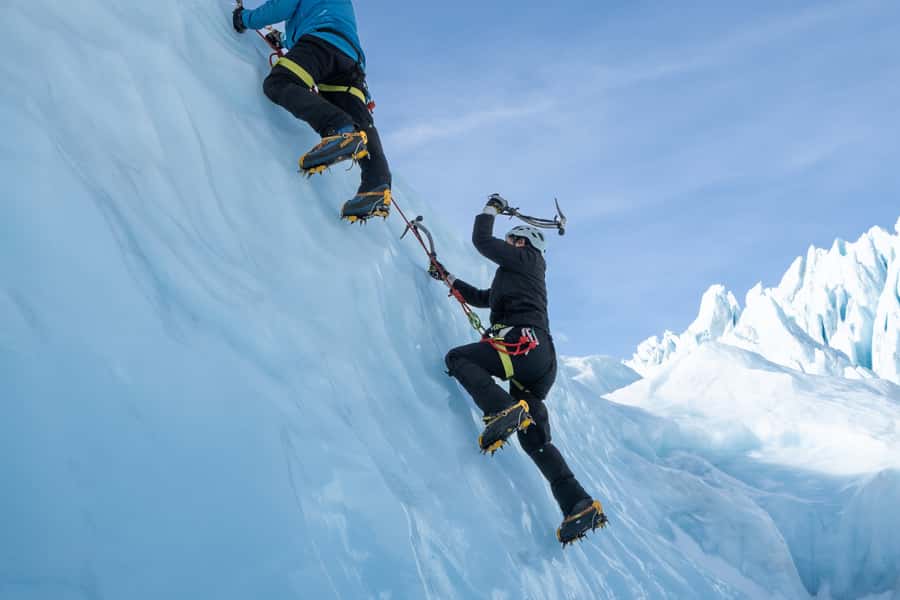
The one-to-four guide ratio is a practical strength. Your guide can watch how you move, offer corrections, and help you adjust your approach. If you are new to ice climbing, that direct support can make the difference between feeling lost and feeling in control.
The instruction is tailored to pace and ability. You may spend more time on the basics, while a stronger climber can receive more demanding guidance when conditions allow. The information provided does not guarantee a set number of climbs or a fixed difficulty level, so the final shape of your day depends on the guide, the weather, and the ice.
There are reportedly three climbing activities during the day, though their exact form can change. One section may be technically awkward, requiring people to pass through one at a time. That can create a wait and reduce the amount of time you spend actively climbing. It is a small but important tradeoff: glacier routes must be handled safely, even when that means the group moves more slowly.
The best way to approach the day is to value the whole experience, not count every minute spent on a wall. Hiking, learning, listening, and seeing the glacier at close range are all part of the product.
The equipment provided, and what you still need
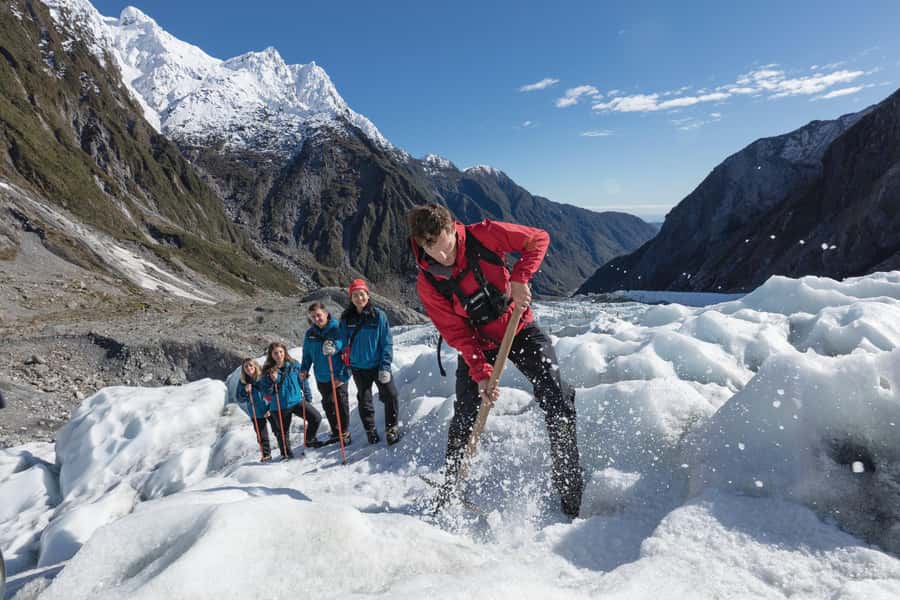
The supplied equipment covers the expensive and specialised items. You receive climbing gear, waterproof clothing, boots, socks, and a small day pack. That makes this easier to book if you are visiting New Zealand with ordinary sightseeing luggage rather than a complete mountaineering kit.
You still need to dress for cold and changing weather. Bring suitable layers rather than relying on one thick item. Sunglasses and sunscreen are specifically required, and a reusable water bottle is essential because water is not included.
Keep valuables to a minimum. Valuables are not allowed on the trip, so do not bring anything you cannot afford to leave behind. Pack only what you need for the day.
Your food deserves a little planning. Lunch and snacks are not supplied, and the eight-hour duration means you should buy or pack them before arriving. Do not assume there will be a convenient food stop during the activity.
Is $654 good value?
At $654 per person, this is an expensive day. You are paying for more than a climbing lesson. The price includes helicopter transfers, up to six hours on the glacier, specialist climbing equipment, waterproof clothing, boots, socks, a day pack, a safety briefing, and an expert guide.
The helicopter transfer is a major part of the cost, but it also gives the experience its unusual access. You are not simply paying to stand near Franz Josef Glacier. You are paying to reach the ice by air and spend a substantial part of the day moving and climbing there.
The small group improves the value. With only four participants and one guide, you receive a more personal lesson than you would on a large group outing. That matters most if you want to learn rather than simply pose for a photograph.
Still, I would not call it a bargain. If you mainly want views, a shorter scenic flight or glacier walk may suit your budget better. If you specifically want instruction, technical equipment, and time climbing on real glacier ice, the package is easier to justify.
Who should book this activity?
This experience suits active adults and older teenagers who want a serious outdoor day. The minimum age is 16, so it is not designed for younger children. It is also not suitable for pregnant women or anyone over 254 pounds, or 115 kilograms.
You should be comfortable with a long day in outdoor clothing and willing to follow directions carefully. The supplied details do not set out a required fitness level, so I would not invent one. Still, six hours on a glacier can be demanding, and ice climbing requires patience as well as strength.
It is a good fit if you want:
- A hands-on glacier experience rather than a short photo stop
- A small group with direct guide support
- A helicopter flight plus time on the ice
- Instruction that can adjust to your pace
- A memorable activity in the Franz Josef area
It may not suit you if you dislike cold conditions, need a guaranteed departure in all weather, or prefer an easy sightseeing tour. The day is weather-dependent, and the climbing portion can include pauses while people move through a difficult section.
Practical planning for an eight-hour day
Treat this as a full-day commitment. Arrive at the base one hour before departure, allow time for the briefing and equipment fitting, and expect the whole activity to last about eight hours.
Pack lunch, snacks, and a reusable water bottle before you arrive. Add sunglasses, sunscreen, and clothing suited to the forecast. Keep your belongings simple, since valuables are not permitted.
You can cancel up to 24 hours before departure for a full refund, and the reserve-now, pay-later option can help if you are still arranging a South Island itinerary. You should still check the available start times and confirm the weather policy when booking.
The tour operates in English. If you need to report a medical condition, do so before the trip rather than waiting until the briefing.
What the strongest praise gets right
The most consistent praise focuses on the guide, the views, and the quality of the day as a whole. That matches the design of the activity. The small group gives the guide room to offer personal support, while the helicopter and glacier setting provide the visual drama.
The guide’s role is not just technical. Good instruction helps you feel safer, but useful commentary also helps you understand where you are. The glacier becomes more than a wall of blue-white ice. You get a closer look at its formations and a better sense of how the setting changes as you move through it.
The experience is not perfectly smooth at every moment. A difficult climbing section can slow the group and cut into active climbing time. I would see that as a realistic part of a glacier activity rather than a flaw in the basic concept, but it is worth knowing before you book.
Should you book the Franz Josef Glacier Ice Climb?
Book it if you want a full day of active glacier travel and you are willing to pay for helicopter access, specialist gear, and a small guide-led group. The combination of aerial views, up to six hours on the ice, and close instruction makes this far more involved than a standard scenic outing.
Skip it if you want a low-cost view of Franz Josef Glacier, dislike uncertain weather, or do not want to carry your own food and water. For the right person, though, this is a strong New Zealand adventure: demanding enough to feel earned, yet structured enough for a first ice-climbing experience.
FAQ
How long does the Franz Josef Glacier Ice Climb last?
The activity lasts about eight hours, including the briefing, helicopter transfers, and time on the glacier.
How much time will I spend on the ice?
You can spend up to six hours on the ice. This includes hiking, climbing, instruction, and moving between climbing areas.
How many people are in each group?
The group is limited to four participants, with one highly experienced guide for every four climbers.
Is climbing equipment provided?
Yes. The operator provides all climbing equipment, technical gear, waterproof clothing, boots, socks, and a small day pack.
What should I bring?
Bring sunglasses, sunscreen, weather-appropriate clothing, a reusable water bottle, lunch, and snacks. Valuables are not allowed.
Is the activity suitable for children?
No. The experience is not suitable for children under 16 years old.
What happens if the weather is poor?
The activity is weather-dependent. Check availability and conditions with the local operator before departure, and allow flexibility in your South Island schedule.
Just added around Franz Josef Glacier
- Ultimate Discovery: 3 Glaciers & Snow Landing – 45min★ 5.0 · 112 reviews
- Fox Glacier: Twin Glacier Helicopter Flight with Snow Landing★ 4.5 · 33 reviews
- Twin Glacier Fox and Franz, Snow Landing (allow 30 mins – departing Fox Glacier)★ 4.5 · 10 reviews
- Tandem Skydive 18,000ft from Franz Josef★ 4.5 · 29 reviews
- Tandem Skydive 16,500ft from Franz Josef★ 5.0 · 19 reviews
- Tandem Skydive 10,000ft from Franz Josef★ 5.0 · 4 reviews
- Fox Glacier & Mount Cook 35-Minute Helicopter Flight★ 4.5 · 8 reviews
- 2-Hour Scenic Cruise in Lake Mapourika★ 5.0 · 105 reviews
Private Drivers, compared.

Arrival Transfer: Auckland Airport to Auckland Central City Centre
Read our review →
2.5 Hour Glacier Hike with Helicopter Transfer
Read our review →

Departure Transfer: Auckland Central City Centre to Auckland Airport
Read our review →
Private Auckland Airport Transfer: to/from City Hotels in Minivan
Read our review →
Private Transfer From Auckland International Airport To Auckland City
Read our review →
Arrival Transfer: Christchurch Airport to Christchurch Central City Hotels
Read our review →
Private Auckland Airport Transfer to/from Auckland Hotels -SUV
Read our review →Browse the lists this tour appears in