
Reviewed · HIKING & TREKKING
Premium Mt Ruapehu Summit Plateau Guided Group Hike
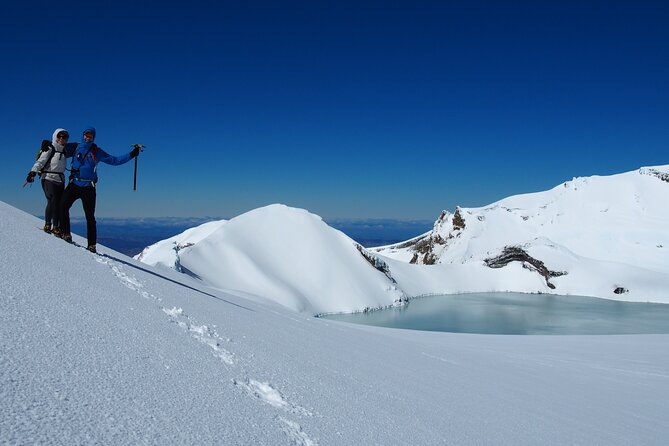
Mt Ruapehu’s crater lake is the prize at the end of a demanding climb over volcanic ash, scoria, rocks, and snow. With a guide leading the way, you can focus on the mountain instead of route-finding, while learning why this active volcanic area matters to Māori culture and the wider Tongariro National Park region.
I like the included winter equipment, especially for anyone who has never used crampons or an ice axe. I also like the practical support at the Adrift Tongariro base, where guides check conditions, assess your gear, and supply boots or clothing if needed. The catch is clear: this is not a smooth, standard walking track. You need strong fitness, steady footing, and comfort with steep, uneven ground.
Key points before you commit
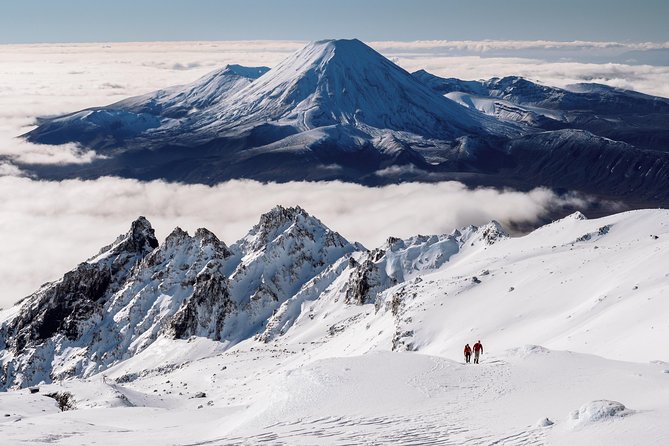
- Reach Mt Ruapehu’s crater lake on a guided 10-kilometre return route, or shorten the walk to about 7 kilometres when the chairlift is used.
- Expect six to seven hours of walking within an overall day of about eight hours.
- Use supplied crampons and ice axes in snow or ice, with instruction from your guide before you set off.
- Meet at 53 Carroll Street in National Park Village, where transport to the mountain and back is included.
- Bring your own water and lunch, or order a picnic lunch for an extra charge.
- Book only if you have good fitness, since the route is steeper and less stable than the Tongariro Alpine Crossing.
Why Mt Ruapehu feels different from a normal day hike
This is a mountain day, not a casual scenic stroll. Mt Ruapehu is New Zealand’s largest active volcano, and the route takes you through a raw mix of volcanic rock, ash, scoria, snow, and steep slopes. The scenery changes with altitude and weather, but the main reward is the wide view from high on the mountain and the sight of the crater lake.
The guided format matters here. You are not simply following a marked path with a sign at every turn. The route can be uneven and unstable, and snow conditions shift from one day to the next. A qualified guide can choose the safest practical line, judge the day’s conditions, and help you use equipment that may be new to you.
I also like that the guide talks about the cultural importance of this geothermally active place. That adds meaning to the climb. You are not just collecting a summit photograph. You are learning how the mountain fits into the identity and traditions of the region.
The views are the headline, but the physical challenge shapes the whole day. If you enjoy working hard for a mountain payoff, this has real appeal. If you prefer a firm, well-formed path, the terrain may feel like too much work.
More Tongariro crossings and park days:
- Premium Tongariro Crossing Guided Group Walk
★ 4.5 · 221 reviews - Tongariro Alpine Crossing: Premium Guided Hike
★ 4.6 · 189 reviews - Tongariro Crossing Park & Ride (Ketetahi)
★ 4.0 · 98 reviews
Starting at Adrift Tongariro in National Park
The morning begins at the Adrift Tongariro base at 53 Carroll Street, National Park Village. The base stop itself is brief, around 10 minutes, but it is an important part of the outing. Guides check everyone in, review the day’s conditions, and assess what each person needs before transport leaves for the mountain.
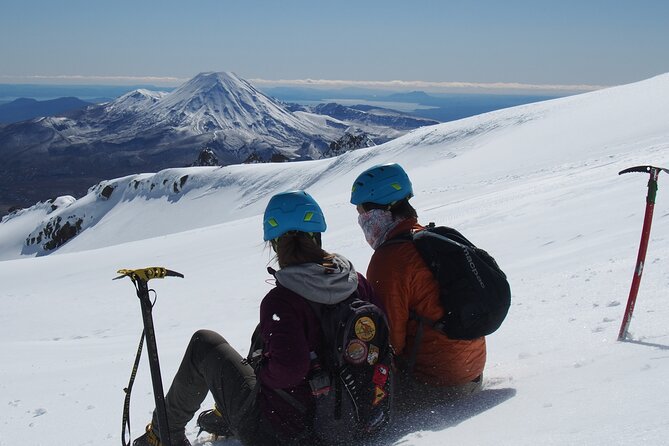
This is where the included gear becomes useful. Footwear and clothing can supplement your own kit up to a NZD60 allowance. In winter, or whenever snow is present, the guides can provide crampons and ice axes. You receive instruction on how to use them correctly, which is particularly helpful if you have never walked in crampons before.
Past trips have been led by guides including Stewart, Dan, Martin, Stu, and Hiro. Names and guide assignments can change, but the experience depends heavily on having a calm, attentive leader. Stewart has been praised for his mountain experience, good humour, and ability to put people at ease. Dan has been especially patient with a first-time mountain hiker. Martin has also been noted for steady, professional support.
You must phone the base between 10:00am and 5:00pm the day before your trip. Use that call to confirm the departure time and exact schedule, since mountain conditions affect the day. You also need to complete a waiver before arrival. The waiver link or QR code is sent about three days before the hike.
Transport keeps the day simple
Transport between the Adrift base and the start and end of the hike is included. That saves you from sorting out mountain access on your own and keeps the day together from check-in to return.
The tour starts and finishes at the National Park Village base. Extra transfers from Taupo CBD, Turangi, and Whakapapa Village can be arranged for an additional fee, with at least two people required for those transfers.
For a trip of this length, a clear meeting point is a real advantage. You can arrive, sort out equipment, hear the safety briefing, and leave with the group. The main thing to remember is that the listed meeting point is not optional in the basic price. If you are staying outside National Park Village, allow extra time and budget for a paid transfer.
The group size can reach 60 people. That is a fairly large maximum for a mountain outing, so do not book this expecting a private or small-group feel. The guide team manages the group and checks people along the way, but the scale may matter if you prefer quiet, highly personal guiding.
The climb across volcanic rock and snow
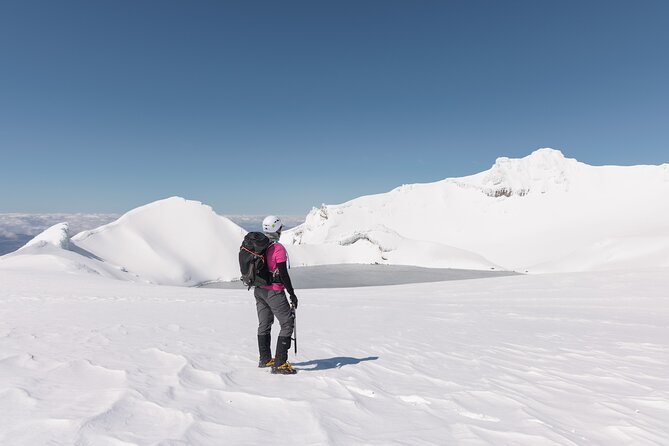
The walk itself takes about six to seven hours. The standard route is roughly 10 kilometres return, though it can be about 7 kilometres return when the chairlift is used. The chairlift option can make a major difference, but its use depends on the conditions and the day’s operating arrangements.
The route is described as less stable than the Tongariro Alpine Crossing. That is an important comparison. Even if you have completed the Crossing, do not assume this will feel easier. The ground can be steep and broken, with loose volcanic material underfoot. In snow, the surface changes again, and you may need crampons and an ice axe.
Your guide gives instruction before you need to use the winter equipment. This is one of the strongest reasons to choose a guided trip. Crampons can feel awkward at first, and an ice axe is not simply a walking stick. The training helps you move with more confidence and gives the guide a chance to check that the group understands the basics.
The route may feel hot even in snowy conditions. One participant described being surprised by the heat while walking on the snow-covered mountain. That is a useful warning: cold surroundings do not mean you can ignore sun protection or layering. Carry sunscreen, sunglasses, and enough water, and be ready to remove a layer while climbing.
If the full route feels beyond your limits, it may be possible to walk as far as Knoll Ridge Cafe instead. That shorter option is worth discussing honestly with the guide. The staff can assess the day, but you should not count on a full summit outing if your fitness is uncertain.
A few more Tongariro National Park half-days to weigh up
- Franz Josef Glacier Heli-Hike
★ 4.5 · 618 reviews - Heli Hike Fox Glacier
★ 5.0 · 563 reviews - Queen Charlotte Track: Cruise & Self-Guided Hike from Picton
★ 4.8 · 383 reviews - Franz Josef: 2.5 Hour Glacier Hike with Helicopter Transfer
★ 4.7 · 322 reviews
The crater lake is the payoff
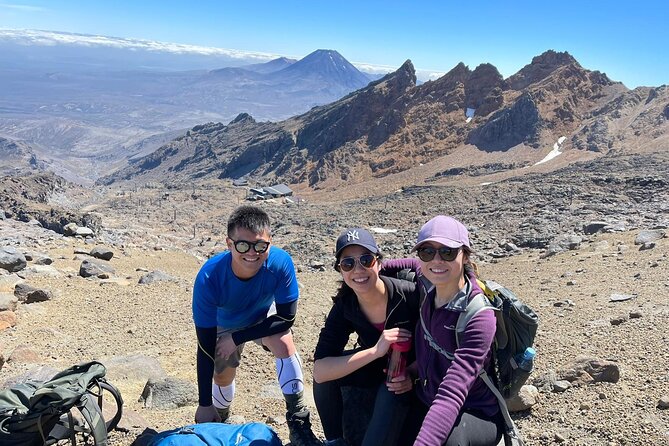
The crater lake gives the day a clear goal. From high on Mt Ruapehu, you get views across the mountain country and a close look at a volcanic feature that is both beautiful and geothermally active.
The setting is powerful because it feels exposed and elemental. You are walking across material shaped by volcanic forces, with snow and rock often sharing the same route. The scenery is not polished or landscaped. It is stark, open, and dependent on the weather.
Good conditions can give you excellent mountain and lake views, but the experience cannot promise a clear summit. Wind, rain, snow, and visibility all affect what you see. The operator runs trips in difficult conditions, but the route and final views still depend on what the mountain allows that day.
That uncertainty is part of the appeal, though it also explains the need for a guide and flexible timing. The trip is built around conditions rather than a fixed sightseeing schedule. You may have a bright, crisp day, or you may spend more time concentrating on the next safe step.
What to wear and carry in summer
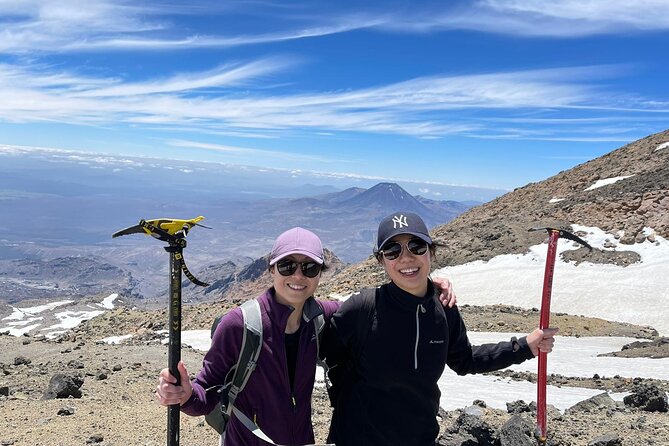
For summer, bring 1.5 to 2 litres of water, lunch, personal medication, sunscreen, sunglasses, and a sun hat. You also need a backpack, hiking boots or shoes, walking trousers, a light top, two warm layers, and a waterproof raincoat.
The layer list may look generous for a summer hike, but Mt Ruapehu can bring changing conditions. Wool, merino, thermals, fleece, and soft-shell layers are all suitable choices. A waterproof outer layer is not just for rain. It also gives you protection from wind.
Lunch is not included. You can bring your own, or arrange a picnic lunch for an added fee. Snacks and drinks are also your responsibility. Do not rely on buying food during the walk.
Blister protection is a smart addition, along with any personal medicine such as an asthma inhaler. The uneven surface puts more strain on feet than a flat path, and you will be glad to have a small first-aid item if a hot spot develops.
What changes in winter
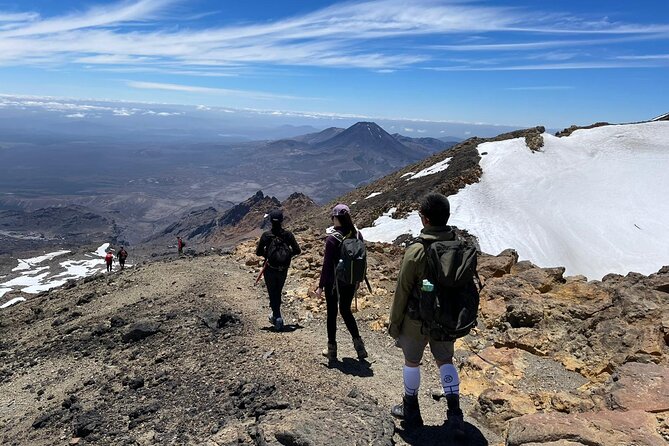
Winter requires a more serious clothing plan. Bring 1 to 1.5 litres of water, lunch, medication, sunscreen, sunglasses, hiking boots, thermal long underwear or walking trousers with over-trousers, three warm upper layers, a waterproof raincoat, a warm hat, and gloves.
The lower water recommendation for winter does not mean hydration is unimportant. Cold air and hard exertion can still leave you short of fluids. Use a bottle that you can reach easily and check that it will work in the conditions.
Crampons and ice axes are supplied if winter conditions require them. The guide demonstrates their use, but you still need to move carefully and listen closely. Snow and ice can turn a manageable slope into a much more technical walk, so winter is the season when your fitness and confidence matter most.
Past outings have included sliding downhill on snow, which can be a memorable bonus when conditions allow. It should not be treated as a guaranteed part of the trip, but it shows how the day can include playful moments as well as hard climbing.
The price: what you receive for $315.25
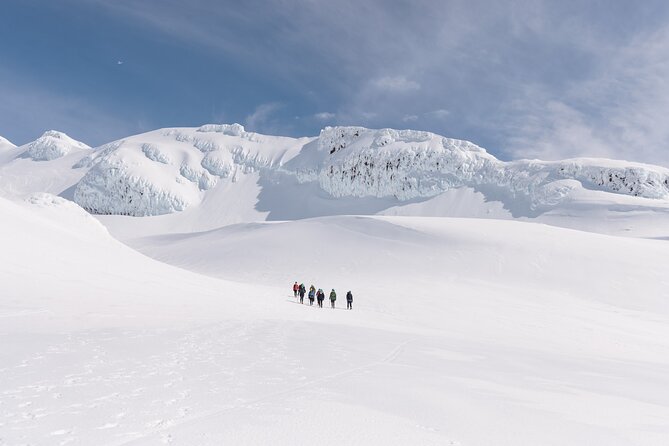
At $315.25 per person, this is not a cheap walk. You are paying for a full day, a qualified guide, transport from National Park Village, route judgment, safety support, and access to winter equipment when required.
The gear allowance is also useful. Boots and extra clothing can supplement your own kit up to NZD60, while crampons and ice axes are provided when the conditions call for them. Renting or buying suitable equipment separately could add cost and hassle, especially if this is your only alpine hike in New Zealand.
The price makes the most sense for people who want to attempt Mt Ruapehu without managing the route and equipment alone. It is less attractive if you already have strong alpine skills, your own winter gear, and confidence in changing mountain conditions.
Lunch costs extra, and drinks, water, and snacks are not included. Transfers from Taupo, Turangi, or Whakapapa also cost more. Add those items before comparing this tour with other mountain activities.
The booking pattern suggests that people often reserve about a month ahead, with an average lead time of 31 days. That is a useful planning clue, particularly if your trip dates are fixed. The minimum is two people, and the maximum is 60. A departure can still be canceled if the minimum is not met, though you are offered another date or a full refund in that case.
Who should book this Mt Ruapehu hike
This outing suits an active adult or teenager aged 12 and over who already has some hiking experience and wants a genuine mountain challenge. You should be comfortable walking for most of a day, handling steep ground, and adjusting your pace to the group.
It can also suit a family with a fit older child. One guide, Dan, was praised for supporting a daughter on her first mountain hike without rushing her. That does not make the trip easy for children, but it shows the value of telling the guide in advance when someone is new to this type of walking.
Solo hikers can fit into the group. The format brings people together at the base and on the route, though the possible group size means you should not expect a private guide.
Think carefully if you have back, neck, lower back, joint, or muscular problems. The information for the trip also calls for good circulation and healthy, unobstructed breathing. If any of those points apply to you, get medical advice before booking.
Practical booking advice and cancellation terms
The experience is non-refundable and cannot be changed for any reason once booked. That makes travel insurance worth considering, especially if your wider itinerary is tight.
The operator can cancel for poor weather or because too few people have booked. In those cases, you are offered a different date or experience, or a full refund. You must still call the base the day before to confirm the exact departure time and discuss conditions.
I would book this after checking three things: your fitness, your footwear, and your schedule flexibility. I would also save the base phone number, +64 7892 2751, somewhere easy to reach.
Should you book the Premium Mt Ruapehu hike?
Book it if you want a demanding, guided route to Mt Ruapehu’s crater lake and value the reassurance of supplied winter gear. The combination of transport, qualified guides, route support, and striking volcanic scenery gives the $315.25 price a fair case, especially if you do not own alpine equipment.
Skip it if you want a gentle walk, a guaranteed clear view, or a firm track like the Tongariro Alpine Crossing. The route is steep and uneven, the weather can change, and the full day asks a lot from your legs.
For fit hikers who want something more rugged and less routine, this is a strong choice. Call the base the day before, bring proper layers, pack enough water and food, and be honest about your fitness. That preparation gives you the best chance of enjoying the crater lake rather than simply surviving the climb.
FAQ
Where does the Mt Ruapehu hike start and finish?
The tour starts and ends at the Adrift Tongariro base at 53 Carroll Street, National Park 3948, New Zealand.
How long does the experience take?
The overall experience lasts about eight hours. Walking time is about six to seven hours.
How far is the hike?
The standard walking distance is about 10 kilometres return. It can be about 7 kilometres return when the chairlift is used.
Is winter equipment provided?
Yes. Crampons and ice axes are provided when winter conditions require them, and the guide explains how to use them. Footwear and clothing can supplement your own gear up to a NZD60 allowance.
Is lunch included?
No. You can bring your own lunch, or arrange a picnic lunch for an additional fee. Water, snacks, and other drinks are also not included.
What fitness level is required?
You need a strong level of physical fitness and hiking experience. The route is steep and uneven, and it is less stable than the Tongariro Alpine Crossing.
What is the minimum age?
The minimum age is 12 years.
Just added around Tongariro National Park
- Private Tongariro Crossing Guided Walk★ 4.5 · 26 reviews
- Half Day Tongariro Alpine Guided Group Walk★ 4.5 · 16 reviews
- Tongariro Crossing : PRIVATE TRANSFER Leaving AUCKLAND★ 5.0 · 3 reviews
- Tongariro Alpine Crossing: Round-Trip Shuttle Service★ 4.6 · 44 reviews
- Tongariro Alpine Half Day Guided Group Walk★ 4.9 · 12 reviews
- Taumarunui: Forgotten World Rail Cart Tour with Lunch★ 5.0 · 12 reviews
- Taumarunui: Railcart and Jetboat Adventure with lunch★ 4.7 · 6 reviews
- Tongariro River: Grade 3 Whitewater Rafting★ 4.9 · 37 reviews
Hiking & Trekking, compared.
Queen Charlotte Track: Cruise & Self-Guided Hike from Picton
Read our review →
2.5 Hour Glacier Hike with Helicopter Transfer
Read our review →
Rotorua Hiking: Mt Tarawera Guided Volcanic Crater Experience
Read our review →
Cardrona High Country Pub Trail Horse Riding Trek (Intermediate+)
Read our review →
Volcanic Valley Self Guided Walking and Hiking at Waimangu
Read our review →Browse the lists this tour appears in