
Reviewed · HANMER SPRINGS TOURS
Hanmer Springs Star Tours at Manuka Skies
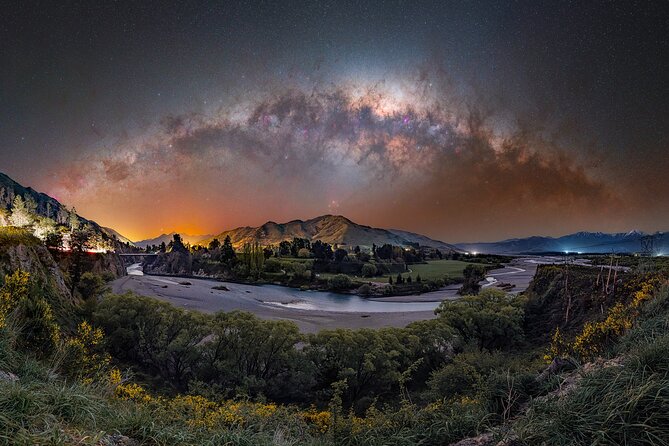
Manuka Skies takes you beyond Hanmer Springs into a dark, forested sanctuary where the stars share the stage with a spring-fed stream and native morepork owls. The evening begins with simple naked-eye navigation before moving to telescopes and binoculars.
I like the small maximum of 10 people, which gives the guide room to answer questions, and I like the mix of guided astronomy and free-roam viewing. The offered pickup from Hanmer Springs also saves you from sorting out transport after dark.
The main drawback is the weather. Clouds can cancel the entire evening, and a two-hour tour is too short to guarantee every object will be visible. Still, the provider offers another date or a full refund when poor weather forces a cancellation.
Key points to know before you book
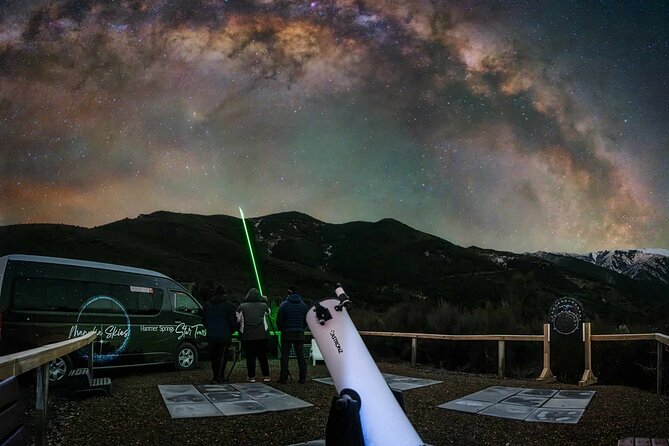
- Manuka Skies is a forest sanctuary: Expect a spring-fed stream, native bush, and the possibility of hearing morepork owls while you observe the sky.
- The tour starts with the naked eye: You learn stars and constellations such as the Southern Cross before using equipment.
- Several viewing tools are available: A Celestron electronically guided telescope, manual telescopes, astro binoculars, lounges, and an interactive star finder all form part of the experience.
- Groups are capped at 10 people: This is a useful size for a personal astronomy session rather than a crowded lookout.
- Pickup is offered from Hanmer Springs: You can book a ride to the surrounding hills instead of arranging your own evening transport.
- Weather matters: You can cancel for a full refund up to 24 hours before the start, and weather cancellations bring a new date or full refund.
Leaving Hanmer Springs for Manuka Skies
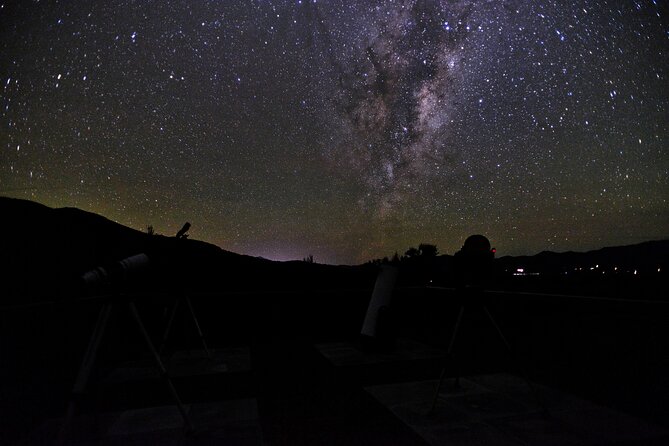
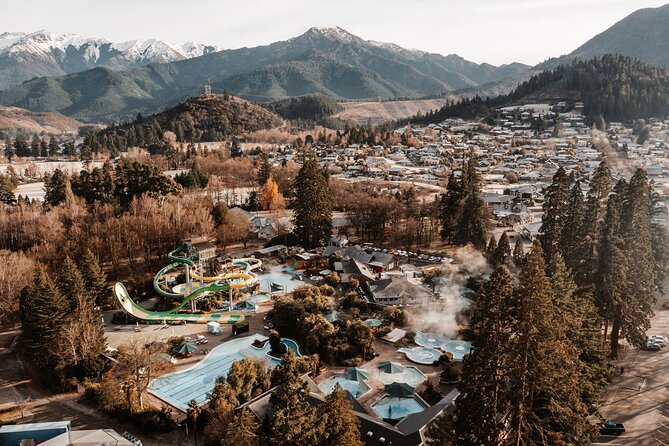
The evening begins in Hanmer Springs, with pickup offered before the trip continues into the surrounding hills. That short transfer matters. The town has plenty of nighttime appeal, but Manuka Skies gives you a quieter setting away from the brighter areas where artificial light can wash out faint stars.
You are not simply being taken to a viewing platform. Manuka Skies is described as a sanctuary for astronomy and wildlife, with native forest around the site and a spring-fed stream running down the mountain. The setting gives the tour a pleasant sense of place before the astronomy even begins.
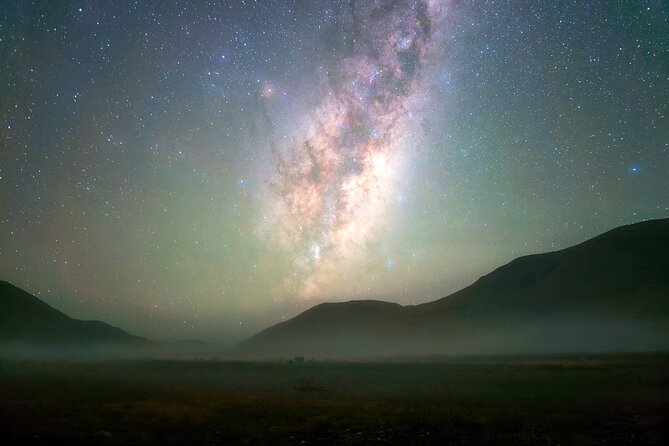
You should expect darkness to be part of the experience, not a minor detail. Once your eyes adjust, the sky becomes easier to read. The sound of flowing water and the chance of hearing a morepork owl add a New Zealand character that a standard telescope session in a town center cannot offer.
The group limit of 10 is another practical advantage. Astronomy works best when you can see through the equipment without a long wait and ask a question without trying to speak over a large crowd. A group of this size should also make it easier to move between the different viewing stations.
The exact pickup arrangements are not detailed, so check the booking information for the meeting instructions you receive. Confirmation is sent at the time of booking.
A few more Hanmer Springs half-days to weigh up
- Hanmer Springs Thermal Pools & Spa
★ 4.5 · 218 reviews - Amuri Adventure Jet Boating in Hanmer Springs
★ 5.0 · 191 reviews - Hanmer Springs: Thermal Pools Single or Return Entry Ticket
★ 4.7 · 107 reviews
First, learn the sky without equipment
The tour begins with the naked eye. This is the right order for a beginner because a telescope can show you a remarkable object without telling you how that object fits into the wider sky.
Your guide introduces stars and constellations, including the Southern Cross, and explains how to use them for night-sky navigation. The Southern Cross is one of the most useful features of the southern sky, especially for visitors who have spent most of their lives observing from the Northern Hemisphere.
This first section should appeal even if you know little about astronomy. You do not need to arrive with a list of star names or an understanding of celestial coordinates. The guide helps you get your bearings, then the equipment adds detail once you know what you are looking at.
I also like the practical nature of this approach. After the tour, you may not remember every object you see through a telescope, but you can carry away a better sense of how to recognize the Southern Cross and other constellations. That makes the evening useful beyond the two-hour visit.
The sky changes through the year, so the exact stars and objects available will depend on the season, time, and weather. The experience is not a fixed stage show. Your guide works with what is visible on the night.
Looking farther with the Celestron telescope
The main telescope is a quality Celestron model with electronic guidance. Its value is simple: it helps point you toward objects that are too faint or distant to pick out with your eyes alone.
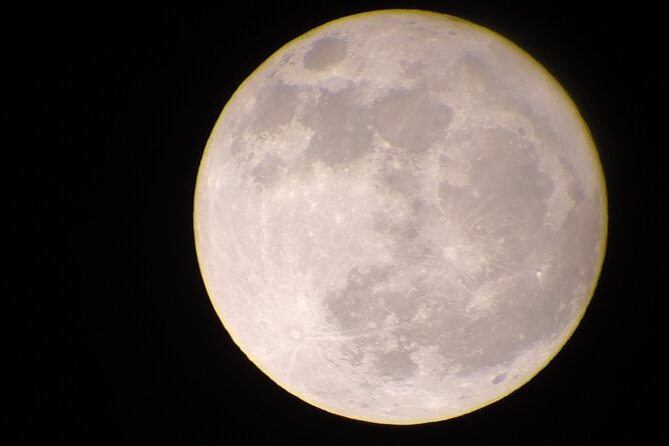
The examples given include the Omega Cluster and the Sombrero Galaxy. These are very different targets. A cluster can appear as a concentrated gathering of stars, while a galaxy is much farther away and may look more subtle through the eyepiece. What you see will depend on the conditions, but the telescope gives you a chance to look beyond the obvious bright stars.
An electronically guided scope is especially helpful if you are new to stargazing. You do not have to spend the evening learning how to manually locate every target before you can view it. The guide can direct the scope, explain the object, and help you understand why it matters.
There is a small tradeoff. Electronic guidance can make the process efficient, but it can also feel less hands-on than searching the sky yourself. That is why the second set of equipment is important. Manuka Skies does not make the entire evening dependent on one computerized telescope.
Free-roam viewing with manual telescopes and binoculars
Manual telescopes give you a more active way to explore. Instead of simply waiting for the main scope to be pointed at the next object, you can use these instruments for a freer search of the sky.
That option suits curious people who like to test their own sense of direction. It also gives families and mixed-interest groups another way to stay involved while the electronically guided telescope is being used.
The astro binoculars are designed to be used from lounges, where you can lie back and look upward. This is a comfortable detail, but it is also useful. Looking through binoculars while reclined can make a broad sweep of the stars feel more relaxed than standing at a telescope for the whole evening.
An interactive star finder adds a hands-on navigation challenge. You can use it to test whether you can match what you have learned with the stars overhead. If you enjoy learning by doing, this may be the part that stays with you longest.
The equipment does not promise the same view through every instrument. Telescopes, binoculars, and naked-eye observation each show the sky in a different way. That variety is the point. You get guided detail, independent searching, and a wide view rather than one repeated look through a single eyepiece.
Same corner of the country, a completely different day out:
- Hanmer Springs Quad Bikes
★ 5.0 · 104 reviews - Hanmer Springs Jet Boat Adventure Tour
★ 4.9 · 81 reviews - Hanmer Springs Bungy Jump, New Zealand
★ 5.0 · 57 reviews - Amuri Jet Adventures – Hanmer Springs Quad Biking tour
★ 5.0 · 49 reviews
A night shaped by forest, water, and wildlife

The setting is one of the strongest reasons to choose this experience. Manuka Skies acts as kaitiaki, or guardian, of the sanctuary. Its stated vision is to reconnect the sky with the earth through the surrounding forests.
That idea is reflected in the pace of the evening. You are not only identifying distant stars. You are also standing beside a spring-fed stream and listening for native morepork owls that nest in the area.
The wildlife element needs the right expectations. This is not described as a dedicated animal-spotting tour, and there is no promise that you will see an owl. You may hear a morepork, but the main focus remains astronomy. Even so, the natural sounds give the night a stronger New Zealand identity.
I find that combination more memorable than a telescope in an ordinary parking area. The stream provides a steady soundtrack, the forest frames the sky, and the darkness serves both the astronomy and the sanctuary. You get a reason to pay attention to the ground around you as well as the stars overhead.
Weariness can also be part of the setting. It will be dark, and the evening takes place outdoors in a forest environment. The supplied information does not specify clothing or accessibility arrangements, so bring the practical outdoor layers you would normally want for a nighttime visit and check directly if you have particular mobility needs.
What the two-hour schedule gives you
Two hours is enough time for a clear introduction without turning the evening into a full astronomy course. The planned flow moves from the naked-eye sky to the guided telescope, then to manual telescopes and binoculars.
The advantage of a compact schedule is focus. You can learn a few key constellations, see selected deep-sky targets, and try the different equipment without needing to devote an entire night to the activity.
The limitation is that time and weather place a ceiling on how much you can see. If clouds move in halfway through the session, the guide may have fewer targets to show. Even on a clear night, you cannot expect a long list of objects through every instrument.
That is why I would book this as a guided introduction rather than a private observatory session. It is built to help you understand the sky and enjoy several ways of viewing it. If you already spend many nights operating your own telescope, you may want a more technical or longer program.
For a first encounter with the southern sky, the format makes sense. You receive context before the equipment appears, and the experience includes enough variety to keep the evening from becoming a lecture.
The guide and the feel of the group
Brent is named as a guide for the experience, and the tour suits a guide who can connect astronomy with the local setting. The evening depends on clear explanations, careful use of the telescopes, and the ability to adjust the plan when the sky changes.
The small group helps here. With no more than 10 people, you should have a better chance to hear the explanations and take a turn with the equipment. It also reduces the awkwardness that can come with a large astronomy crowd, where some people are waiting while others occupy the telescope.
The experience is suitable for most people, according to the booking information. That broad participation note does not mean every part will suit every visitor equally. Young children may enjoy the equipment and wildlife sounds, while people who want a highly technical account of galaxies may prefer a more advanced astronomy program.
Couples, families, and solo visitors can all find a reason to book. The tour has enough instruction for beginners, but the manual telescopes and star finder provide extra interest for anyone who wants to take a more active role.
Is $80.05 a fair price?
At $80.05 per person, this is not the cheapest way to look at the night sky. You are paying for more than a view. The price includes a roughly two-hour guided session, access to several types of equipment, a small group capped at 10, and offered pickup from Hanmer Springs.
The value improves if you would otherwise need to arrange evening transport to the hills. It also improves if you are new to astronomy and want someone to explain what you are seeing rather than simply borrow a telescope.
The price is harder to justify if you only want a quick look at the stars or if poor weather is a serious concern during your visit. The experience relies on clear conditions, and clouds can remove the main attraction even though the natural setting remains pleasant.
I would compare the cost with your interest level. If you want a guided introduction to the southern sky, several viewing tools, and a quiet sanctuary setting, the price is reasonable for a specialized two-hour activity. If you already know the constellations and have your own equipment, you may not get as much from it.
The 100 percent recommendation rate and five-star score attached to the experience suggest strong satisfaction, but the sample is small, with 11 ratings. I would treat that as encouraging rather than as a guarantee. The most reliable sign of value is the clear structure and the equipment range, not the rating alone.
Weather planning and cancellation
Weather is the one issue you should plan around. The experience requires good weather, and poor conditions can lead to cancellation.
You can cancel up to 24 hours before the start time for a full refund. Cancellations made less than 24 hours before the start are not refunded, and changes inside that window are not accepted.
If the provider cancels because of poor weather, you are offered another date or a full refund. One useful lesson is to leave some flexibility in your Hanmer Springs schedule if stargazing is a priority. A visitor who had no extra time could not take the tour when conditions failed, but received strong communication and a refund.
That policy makes advance planning easier, but do not wait until the last night of a short stay if the stars are high on your list. The experience is booked an average of 44 days ahead, which suggests that popular dates may fill well before arrival.
Who should book Manuka Skies?
I would choose this tour if you are new to the southern sky, want a guide to explain the basics, or prefer a natural setting to a town-based activity. It is also a good fit if you want to combine astronomy with the sound of a stream and the possibility of hearing native wildlife.
Families can benefit from the equipment variety. The naked-eye lesson, guided Celestron telescope, manual scopes, binoculars, and star finder offer different levels of involvement, so not everyone has to enjoy the same part of the evening.
It may be less suitable if you need a guaranteed list of celestial targets. Clouds and visibility control the program, and the tour does not promise that every named object will be visible.
I would also think carefully if you dislike outdoor nighttime conditions or want a completely indoor experience. The sanctuary setting is a key part of the appeal, so the forest and darkness are features, not inconveniences to be removed.
Should you book Hanmer Springs Star Tours?
Book it if you want a gentle, well-structured introduction to stargazing in a place where the sky feels connected to the forest below. The strongest reasons are the small group, the variety of viewing equipment, the offered pickup, and the chance to hear a morepork owl beside a spring-fed stream.
Skip it if your schedule cannot handle a weather change or if you are looking for advanced telescope work. For everyone else, Manuka Skies offers a thoughtful two-hour night out, with enough guidance for beginners and enough equipment to keep curious observers involved.
FAQ
Where does the Hanmer Springs star tour begin?
The tour begins in Hanmer Springs, New Zealand. Pickup is offered.
How long does the experience last?
The stargazing experience lasts approximately two hours.
How much does the tour cost?
The listed price is $80.05 per person.
How many people can join the tour?
The activity has a maximum of 10 participants.
What can I see during the stargazing session?
You learn to identify stars and constellations such as the Southern Cross with the naked eye. The equipment may also be used to view deep-sky objects such as the Omega Cluster and Sombrero Galaxy, depending on visibility.
What equipment is available?
The experience includes a Celestron electronically guided telescope, manual telescopes, astro binoculars, lounges for reclining while viewing the sky, and an interactive star finder.
What happens if the weather is poor?
The experience requires good weather. If it is canceled because of poor conditions, you can choose a different date or receive a full refund. You can also cancel up to 24 hours before the start time for a full refund.
Just added around Hanmer Springs
- Hanmer Springs Rafting and Quad Bike combo★ 5.0 · 14 reviews
- Hanmer Springs Bungy Jump, New Zealand★ 5.0 · 57 reviews
- Amuri Jet Adventures – Hanmer Springs Quad Biking tour★ 5.0 · 49 reviews
- Hanmer Springs: River Jet Boat Ride★ 4.5 · 6 reviews
- Hanmer Springs: Waiau Gorge Rafting Tour★ 4.3 · 24 reviews
- Hanmer Springs 2-Hour Quad Bike Safari★ 4.4 · 45 reviews
- Hanmer Springs Jetboat & Quad Bike Combo★ 4.8 · 10 reviews
- Hanmer Springs: 35-Meter Bungy Jump off Waiau Bridge★ 4.9 · 18 reviews
Hanmer Springs Tours, compared.





Amuri Jet Adventures – Hanmer Springs Quad Biking tour
Read our review →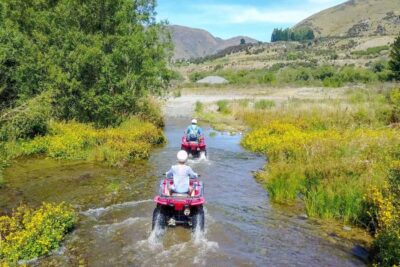
Browse the lists this tour appears in