
Reviewed · MāORI CULTURAL TOURS
Māori Cultural Experience & Auckland Museum General Admission
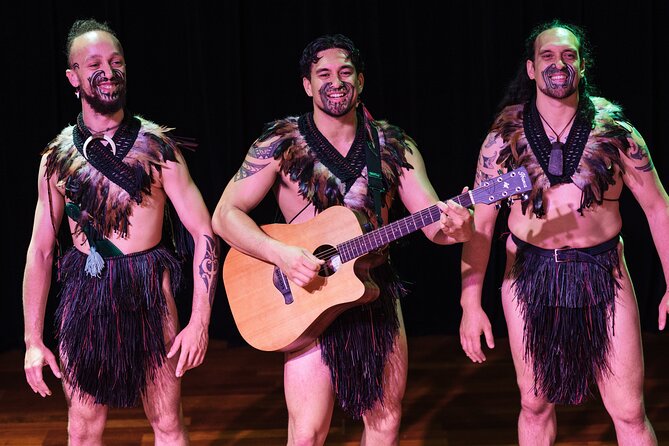
The most memorable part of this Auckland experience is the live Māori presentation, where song, movement, poi, storytelling, and haka traditions explain culture rather than simply display it. I like the clear cultural context and the fact that one ticket also opens Auckland Museum’s natural history and New Zealand heritage collections. The main catch is timing: the performance may last about 30 minutes, and some sessions include only a brief haka.
I also like the location. You can reach the Auckland War Memorial Museum in Parnell by public transport, then spend several more hours exploring at your own pace. Just check the current gallery closures before booking, especially if the Māori Court and Pacific Galleries are important to you.
Key points to know before booking
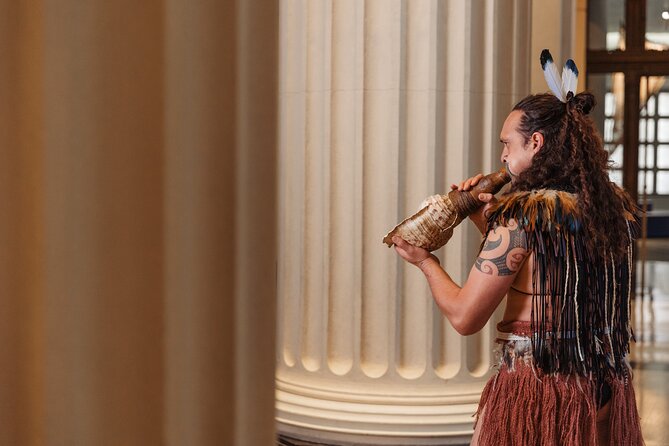
- Live Māori presentation: Expect waiata, poi, storytelling, dance, and an explanation of haka traditions from indigenous artists and orators.
- Museum admission included: General entry covers natural history, New Zealand heritage, and cultural collections after the performance.
- Performance length varies: The full booking can take 45 minutes to three hours, but the cultural presentation itself may be around 30 minutes.
- Haka expectations matter: The haka is discussed and may be performed in abbreviated form, but some sessions have not included the full haka people expected.
- Good value at $38.48: The combined ticket can cost less than booking museum admission separately, especially if you plan to stay for several hours.
- Current closures: The Māori Court and Pacific Galleries are temporarily closed for essential maintenance, so the museum portion may feel incomplete.
What the Māori performance actually gives you
This is a short introduction, not a full-day study of Māori life. That distinction matters. In roughly half an hour, the performers present several connected parts of Māori culture and explain what you are seeing, so you are not left guessing at the meaning of a song, gesture, or implement.
The performance includes waiata, or traditional songs. The singing is a central part of the presentation, and the explanations help you understand that Māori performance is not just stage entertainment. Songs can carry identity, memory, welcome, and connection.
You will also see poi skills, with performers handling the swinging balls on cords in precise patterns. The poi section is visually striking, but the explanation of its traditional uses is just as useful. It gives you a better sense of why these objects belong in a cultural presentation rather than treating them as a novelty.
Storytelling links the separate pieces together. The artists and orators describe Māori endurance, beliefs, customs, and the importance of maintaining cultural identity in modern New Zealand. The narration is structured and welcoming, though the amount of historical detail is limited by the short format.
For me, the strongest feature is the direct connection between the movements and their meaning. The performance does not assume you already understand Māori culture. It offers an accessible first step, with enough explanation to make the songs, gestures, costumes, and dance feel connected.
More Māori Cultural Tours in Auckland
- Waitomo Caves & Rotorua – Te Puia Small-Group Tour from Auckland
★ 4.5 · 681 reviews - Auckland: Waitomo Caves & Rotorua – Te Puia Small-Group Tour
★ 4.8 · 223 reviews - Hobbiton & Rotorua Small Group Tour including Te Puia from Auckland
★ 5.0 · 190 reviews
Understanding the haka before you see it
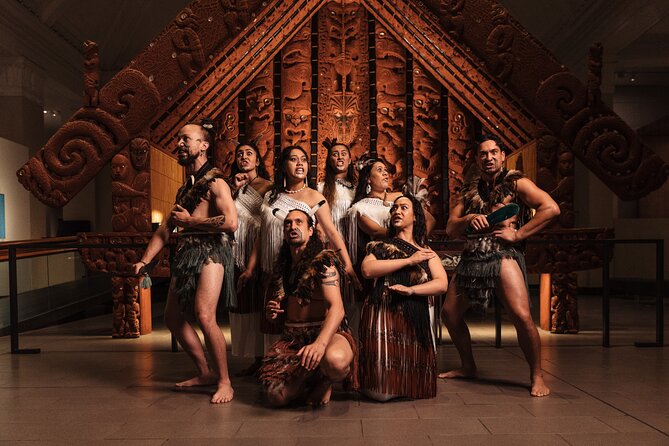
Many people book this experience mainly for the haka. It is easy to understand why. The haka is one of New Zealand’s best-known cultural expressions, often reduced overseas to a fierce pre-match dance.
Here, the presentation explains its origins, traditional uses, and different forms. You learn that the haka is tied to strength, unity, identity, and ritual. That context is valuable because it moves the haka beyond the familiar facial expressions and forceful movements.
You should set your expectations carefully. The activity description includes the haka, but several accounts describe a shortened version, and some sessions reportedly did not contain the full haka expected. Other performances found the haka moving and powerful. The exact balance can vary, so book this for a broader Māori introduction, not solely for a long, dramatic haka.
The language may not always be translated line by line. One useful point raised about the presentation is that the concepts and dances are explained, even though Māori words and song lyrics do not always translate neatly into English. That is a fair trade in a short program, but you should not expect a printed translation of every lyric.
Why the Auckland Museum setting improves the experience
The museum gives the performance a useful home. You are not watching an isolated cultural show and then heading straight back to the street. Your ticket lets you continue into a major New Zealand museum, where you can connect the presentation with exhibits on natural history, national heritage, and treasured taonga.
The word taonga means treasure or something prized. In this setting, it refers to cultural treasures as well as the wider idea of Māori culture as a living part of Aotearoa New Zealand. That idea helps explain why the performance is presented as more than a historical reenactment.
The museum portion is flexible. You can attend the cultural experience and then spend 45 minutes looking around, or stay for several hours if museums are your kind of travel. The stated total duration ranges from 45 minutes to three hours, so plan around your own pace rather than treating the booking as a tightly timed tour.
The museum also covers subjects beyond Māori culture. You can see natural history and New Zealand heritage displays, along with material connected to the country’s war history. If you want a broad first stop in Auckland, this combination works well because it introduces both the land and the people who shaped its story.
There is one important limitation. The Māori Court and Pacific Galleries are temporarily closed for essential maintenance. Those spaces would naturally be a major part of a cultural visit, so check their status before you go. General admission remains included, but the museum experience may not match what you imagined if those galleries are unavailable.
A practical walk through the visit
The meeting and ticket redemption point is Auckland Museum, at the Auckland War Memorial Museum in Parnell. The activity ends back at the same place, so there is no complicated transfer or second meeting point to manage.
You begin with the Māori cultural presentation. The artists and orators introduce you to Māori culture through spoken explanation, song, poi, movement, and dance. The tone is intended to be respectful and welcoming, with emphasis on inclusion and the continued place of Māori culture in present-day New Zealand.
The performance has been described as lasting around 30 minutes in some sessions. The wider experience lasts longer because general museum admission is included. Allow up to three hours if you want enough time to explore the museum rather than rushing through a few rooms.
After the presentation, you can visit the general galleries at your own speed. This is where the ticket becomes more than a short show. You can place the cultural introduction beside exhibits on New Zealand’s natural world, heritage, and treasured objects.
Guided tours are not included. Neither are ticketed special exhibitions. If you want a guided museum visit or a special exhibition, you will need to arrange and pay for that separately.
More Museums and Galleries in Auckland
- Auckland War Memorial Museum Entry Ticket
★ 4.5 · 293 reviews - Explore gardens & galleries filled with incredible art, Matakana
★ 5.0 · 186 reviews - Skip the Line: Auckland Museum General Admission Ticket
★ 4.5 · 183 reviews - Auckland: Maritime Museum Entry Ticket
★ 4.6 · 29 reviews
Is $38.48 good value?
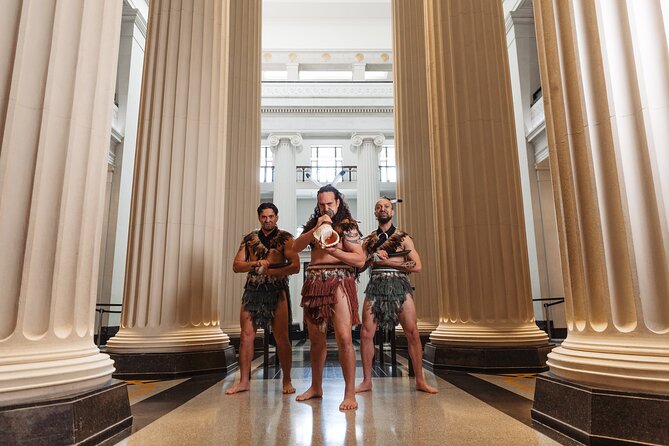
At $38.48 per person, this is a sensible combined ticket if you want both a cultural performance and a museum visit. The strongest value comes from the flexibility. A brief live presentation alone might feel expensive to some people, but general museum admission gives you a longer visit and more control over how much you see.
The combined booking has also been described as quicker and cheaper than buying museum admission through the museum website. Prices can change, so treat that as a useful comparison point rather than a permanent rule. Still, the basic value calculation is clear: the ticket works best for someone who plans to stay at the museum for at least a couple of hours.
It is less useful if you only want a full haka show. The presentation is educational and cultural, with music, explanation, and movement. It is not advertised as a long theatrical production, and the short performance time has disappointed people who expected a larger show.
I would also factor in the gallery closures. If the closed Māori and Pacific spaces are central to your plan, you may prefer to wait until they reopen or choose another cultural activity. If you are happy with a live introduction plus the museum’s other collections, the price is easier to justify.
What the presentation does especially well

The best part is the connection between explanation and action. You do not simply watch poi or a haka without context. The presenter explains traditions, meanings, and the role of cultural practices, which makes the performance easier to understand.
The singing has also made a strong impression. The voices, movement, and gestures can be genuinely moving, especially when the performers present them with focus and commitment. You may find the atmosphere more reflective than entertaining in the usual tourist-show sense.
The presentation is also useful for a first day in New Zealand. If you have just arrived and want an introduction to Māori culture before visiting other parts of the country, this gives you basic terms and ideas to carry forward. It helps you recognize that Māori culture is not a museum piece, but part of modern New Zealand identity.
The museum adds local depth. You can learn about the country’s geology and natural history, then consider how Māori traditions relate to place, ancestry, and community. That combination gives you more than a quick photo opportunity.
Where the experience may fall short

The short running time is the main weakness. Several descriptions put the presentation at about 30 minutes, with only a small portion devoted to music and dance and the rest to explanation. That structure suits someone who wants background, but not someone expecting a large-scale show.
The haka is the second issue. The program explains the haka, and some sessions include it, but the version may be abbreviated. If seeing a full haka is your top reason for booking, confirm the current format before paying.
The number of performers may also differ from the advertised setup. One account noted four Māori performers rather than eight. That does not automatically make the presentation poor, but it can affect the scale and energy of the show.
Finally, a short introduction cannot cover every part of Māori history and culture. Some people wanted more detail about history and traditions, while others appreciated the concise format. I would view this as a respectful starting point, not a complete cultural education.
Approach the performance with attention and respect. It works best when you listen to the explanations and understand that the songs and dances have meaning beyond their visual appeal.
Who should book this Auckland combination?
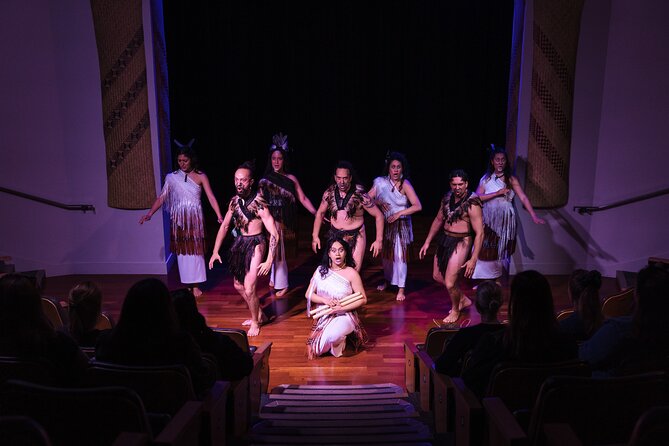
I recommend it for first-time visitors to New Zealand who want a clear, manageable introduction to Māori culture. Families, couples, and independent visitors can all make good use of the museum time, especially if the weather is poor or you want a central Auckland activity.
It is also a good choice if you are traveling with relatives from overseas. The performance offers an immediate cultural point of entry, while the museum gives everyone something else to explore afterward.
You will probably enjoy it most if you value storytelling and cultural explanation as much as spectacle. People familiar with Māori culture can still appreciate the singing, movement, and presentation, but you may find the historical coverage basic.
I would hesitate if you want a long theatrical production, a guaranteed full haka, or access to every Māori and Pacific gallery. In those cases, the short format and current maintenance closures could leave you disappointed.
Timing, transport, and booking details
The museum is in Parnell, Auckland, and the site is near public transportation. You redeem the ticket at Auckland Museum and finish at the same location, which keeps the logistics simple.
Confirmation is sent within 48 hours of booking, subject to availability. The activity requires a minimum number of participants, so a cancellation for that reason may result in another date or experience, or a full refund.
Service animals are allowed, and most people can take part. The supplied information does not provide detailed mobility notes, so contact the provider directly if you need specific access arrangements.
Free cancellation is available up to 24 hours before the start time. Cancellations or changes made less than 24 hours ahead are not accepted for a refund, and the cut-off follows local Auckland time.
Should you book the Māori Cultural Experience?
Book it if you want a short, respectful introduction to Māori culture paired with a substantial museum visit. The songs, poi, storytelling, and haka explanation give you useful context, and the included general admission makes the $38.48 price easier to defend.
Go in knowing exactly what it is: a compact cultural presentation, not an extended stage show. The haka may be brief, gallery closures reduce the museum’s cultural coverage, and the performance length can feel short.
For most first-time Auckland visitors, I think the combination is worthwhile, especially if you reserve enough time for the museum afterward. If your priority is a guaranteed full haka or an in-depth Māori history program, choose a different activity or confirm the current performance details first.
FAQ
Where does the Māori Cultural Experience take place?
It takes place at Auckland War Memorial Museum in Parnell, Auckland 1010, New Zealand.
Is Auckland Museum admission included?
Yes. General admission to Auckland Museum is included with the Māori Cultural Performance ticket.
Are special exhibitions included?
No. Ticketed special exhibitions are not included.
Are guided museum tours included?
No. Guided tours are not included with this activity.
How long does the experience last?
The overall experience takes approximately 45 minutes to three hours. The cultural presentation itself may last about 30 minutes, depending on the session.
Does the presentation include a haka?
The experience explains the origins and traditional uses of the haka, and a haka may be performed. The format can include an abbreviated haka, so a full-length haka is not guaranteed.
Are the Māori Court and Pacific Galleries open?
They are temporarily closed for essential maintenance according to the provided information. Check their current status before your visit.
Is the activity near public transportation?
Yes. Auckland Museum is near public transportation.
What is the cancellation policy?
You can cancel up to 24 hours before the start time for a full refund. Cancellations or changes made less than 24 hours before the start time are not accepted.
Just added around Auckland
- Auckland Airport Private One-Way or Round-Trip Transfer★ 4.5 · 14 reviews
- Zombie Bite Escape Room Experiences★ 5.0 · 54 reviews
- Kumeu Wine Region Shuttle from Auckland★ 4.5 · 19 reviews
- Auckland’s Wild West Coast & Black Sand Beaches Tour inc Lunch★ 5.0 · 12 reviews
- Vineyards Honey and Black Sand Beaches from Auckland★ 5.0 · 93 reviews
- West Coast Discovery Tour★ 5.0 · 37 reviews
- Wētā Workshop Unleashed – Intro to Scars and Scrapes Workshop★ 5.0 · 5 reviews
- West Coast Discovery Piha Beach Private Tour★ 5.0 · 14 reviews
Māori Cultural Tours, compared.
Mitai Maori Village: Cultural Experience and Dinner Buffet
Read our review →
Cultural Experience & Seasonal Māori Cuisine at Te Pā Tū
Read our review →
Mitai Maori Village Cultural Experience in Rotorua
Read our review →
Te Pa Tu Māori Cultural Experience with Dinner
Read our review →
Lake Taupo: Sailboat Trip to the Maori Rock Carvings
Read our review →
Lake Taupō Māori Rock Carvings Scenic Cruise aboard Ernest Kemp
Read our review →
Waitomo Caves & Rotorua – Te Puia Small-Group Tour from Auckland
Read our review →Browse the lists this tour appears in