
Reviewed · DOUBTFUL SOUND CRUISES
Doubtful Sound: Scenic Flight with 2 Landings
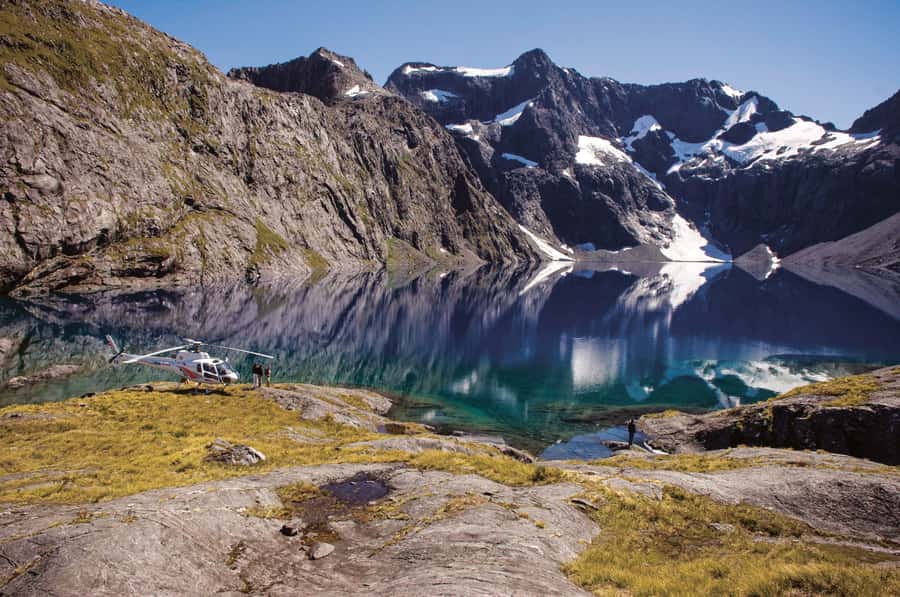
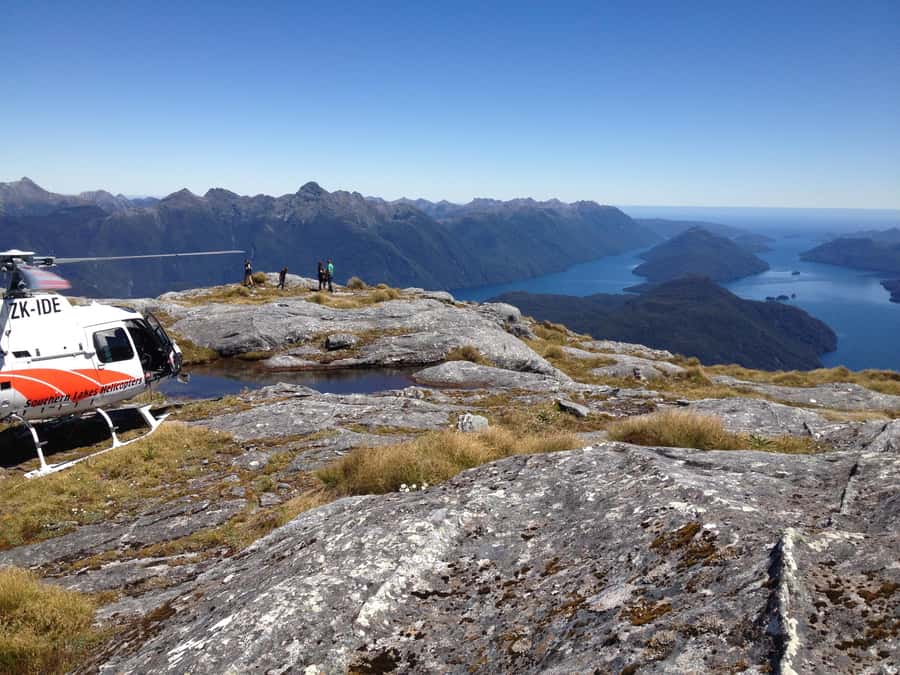
Doubtful Sound is best understood from the air, where its long, twisting waterways, dark forests, waterfalls, and steep mountains come together in one grand view. This 70-minute helicopter flight adds two remote landings, including scenic Mount Kidd, so you do more than look down from a window.
I like the route’s variety: you see Lake Manapouri and the West Arm Power Station, then cross Wilmot Pass into the fiord before reaching fairy-tale Campbell’s Kingdom. I also like the practical care shown when weather changes plans. One December flight was moved from morning to afternoon after poor conditions, with clear communication.
The main drawback is the price, $636 per person, and seating can affect your views. A full aircraft may mean a middle or rear seat with a blocked sightline, so ask about seating and rotation before you fly. Weather can also change the schedule or prevent takeoff.
Key points at a glance
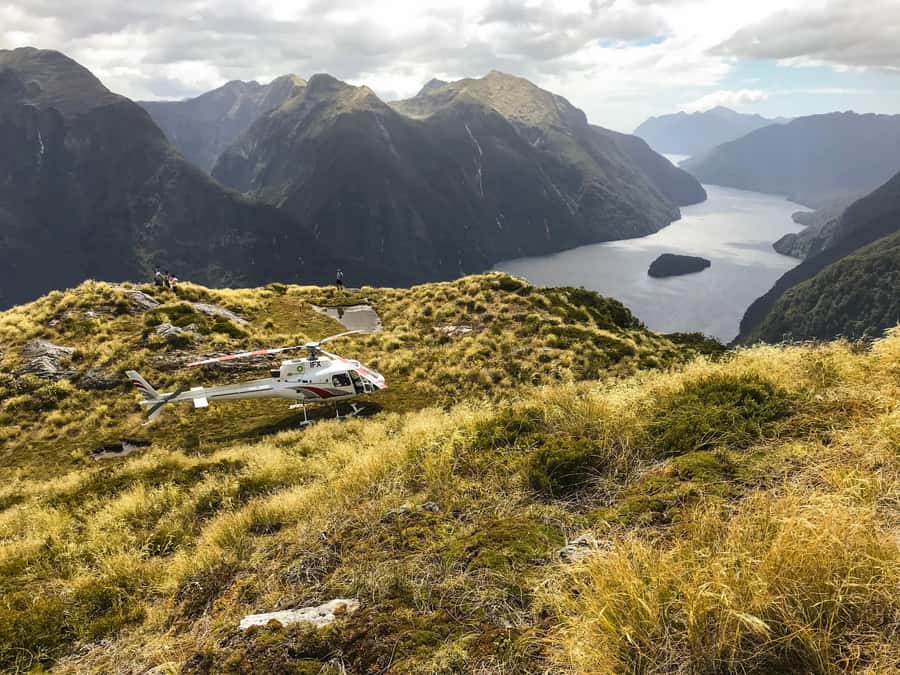
- Two remote alpine landings: Stop in Campbell’s Kingdom and at scenic Mount Kidd, weather permitting.
- A full Fiordland route: Fly above Lake Manapouri, the Iris Burn Valley, Wilmot Pass, Doubtful Sound, and Bradshaw Sound.
- A close look at Campbell’s Kingdom: See a hanging valley with its own lake and waterfall.
- English commentary in the air: Your pilot points out major features and shares information about the area.
- Useful photo advice: Charge your camera or phone fully, and consider asking for a front seat.
- Weather controls the day: Flights require suitable conditions and minimum numbers.
Why Doubtful Sound works so well from a helicopter
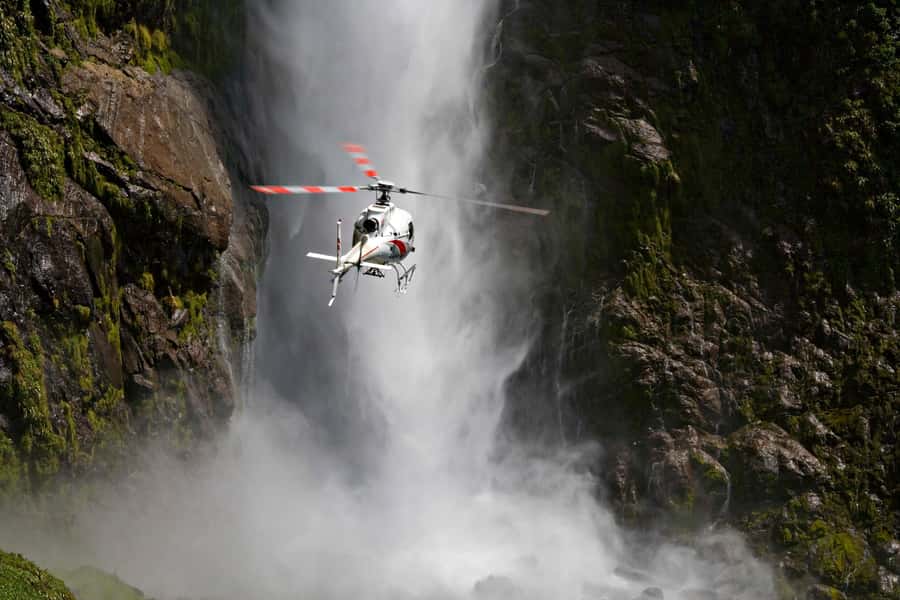
Doubtful Sound is huge, remote, and shaped by folds in the Southern Alps. From the ground or water, you experience only one slice at a time. From a helicopter, the whole pattern becomes clear.
You can see how the fiord reaches inland, how waterfalls drop from high country, and how rainforest covers the lower slopes. The flight gives you a sense of distance that is difficult to get from a single viewpoint. Doubtful Sound’s nickname, the Sound of Silence, fits the setting, though the helicopter itself is hardly silent. The stillness belongs to the surrounding country, not the cabin.
I like this kind of flight because it combines a broad view with short stops on the ground. A standard scenic flight can be spectacular, but two landings give you time to feel the cold mountain air, look around without a window between you and the scene, and take home photographs from high country.
The route also adds useful context. You are not simply flown to one postcard view and back. The pilot traces a line from Lake Manapouri through the interior of Fiordland, over Wilmot Pass, into Doubtful Sound, and back across the Southern Alps.
More Scenic Flights in Fiordland
- Scenic Flight Transfer to Queenstown from Milford Sound
★ 5.0 · 54 reviews - Te Anau: 30-Minute Fiordland National Park Scenic Flight
★ 4.8 · 41 reviews - From Queenstown: Scenic Flight to Milford Sound
★ 4.7 · 15 reviews
Starting above Lake Manapouri and the Iris Burn Valley
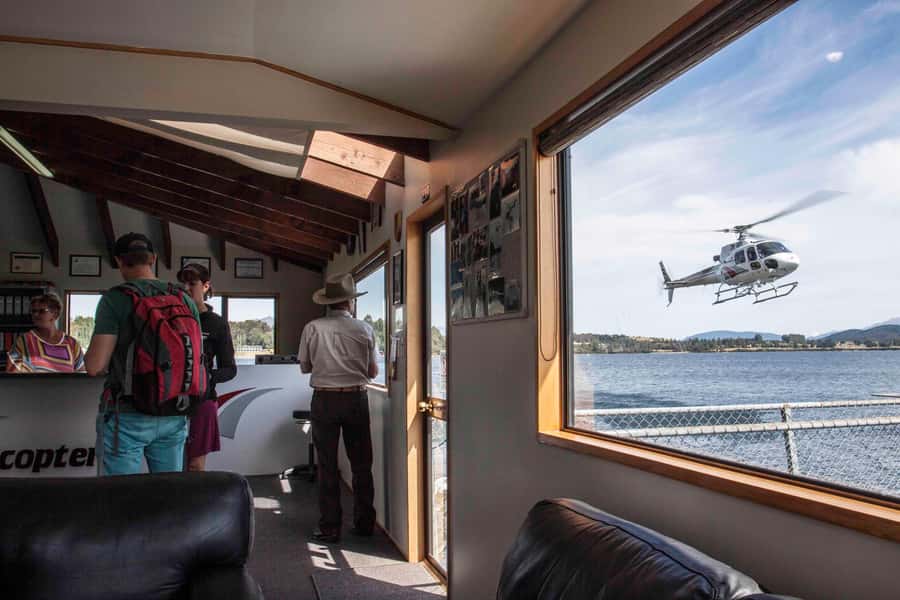
The tour begins at the Southern Lakes Helicopters office. After a full safety briefing, you board for a 70-minute flight with an English-speaking pilot providing commentary.
The first major views are above Lake Manapouri, known as the Lake of Many Islands. From above, the islands and surrounding mountain country give you an immediate sense of the lake’s scale. You also look toward the Iris Burn Valley, a long route through Fiordland’s rugged interior.
This opening section matters because it shows the transition from settled access points into more isolated country. Lake Manapouri is also connected with the West Arm Power Station, which the flight passes near or over. The power station is an unexpected part of the view. It adds a reminder that even this remote region has been shaped by major engineering works.
Your pilot’s commentary is useful here. Without it, a power station or valley can look like just another mark in a very large scene. With the points identified, you can connect the view to the area’s geography and modern use.
Keep your camera ready from the start. The helicopter’s route changes quickly, and the most interesting view may appear to one side rather than straight ahead. Sunglasses help with glare, and a fully charged phone is wise because you will likely take more pictures than expected.
Crossing Wilmot Pass into the fiord
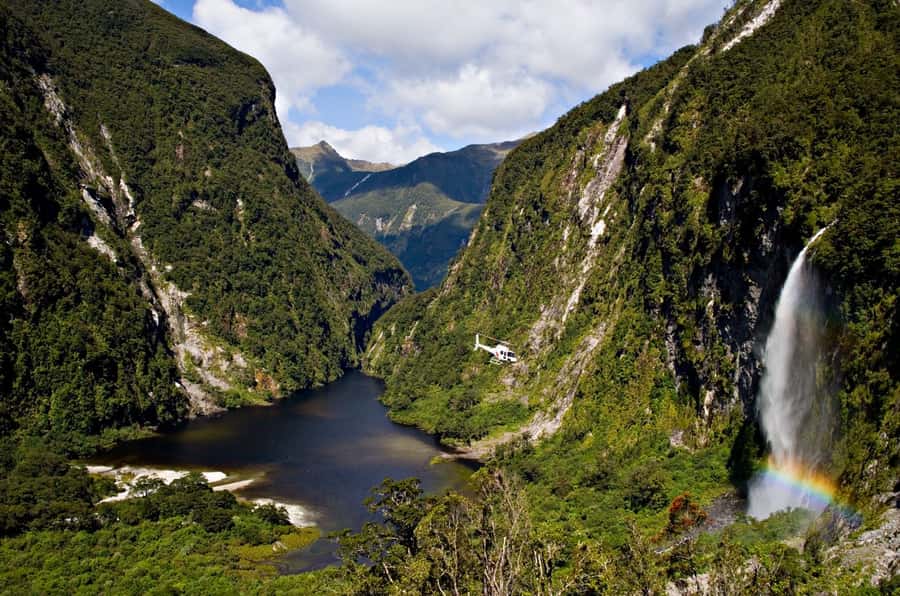
The helicopter then flies toward Wilmot Pass and crosses into Doubtful Sound. This is one of the strongest parts of the trip because the scenery shifts from inland lake and valley views to the long, dark waters of the fiord.
Doubtful Sound is one of Fiordland’s deepest fiords. Its size can be hard to judge from sea level, where steep slopes and narrow channels limit your view. From the air, you see the water reaching into the mountains and the many folds that make the area feel almost uncharted.
Waterfalls are a major feature. Rain moves down the steep rock and forested slopes into the fiord, with some falls appearing as thin white lines and others cutting more clearly through the dark terrain. The exact number and size of waterfalls depend on recent weather, but the route is built around seeing this wet, dramatic country from above.
The helicopter gives you a changing view rather than a fixed lookout. You may look along the fiord one moment, then across a ridge or down toward a waterfall the next. That constant movement is exciting, though it also makes photography tricky. Use short bursts of pictures instead of trying to frame every scene perfectly.
Campbell’s Kingdom, a valley from a storybook
The detour into Campbell’s Kingdom is the route’s most unusual scenic feature. This hanging valley contains a lake and a waterfall, creating a compact scene that feels almost designed rather than formed by ice and water.
The valley is special because it is enclosed and self-contained. You are not just looking across a broad mountain range. You are looking into a high, tucked-away place with its own water system and a strong sense of separation from the fiord below.
The flight may circle or angle into this area so you can see the lake, waterfall, and surrounding slopes from different perspectives. Listen closely to the commentary, since the pilot helps you identify the valley’s features while the helicopter moves through the area.
This is also one of the places where weather makes a real difference. Low cloud can hide upper slopes, and rain can change the appearance of the waterfall. The flight operator cannot control those conditions, so you should treat the exact view as weather-dependent rather than guaranteed.
If Campbell’s Kingdom is a priority, ask before departure how the route may change in poor conditions. The supplied information confirms that all flights depend on suitable weather, but it does not promise that every feature will be visible on every departure.
More Doubtful Sound sailings:
- From Manapouri: Doubtful Sound Wilderness Day Trip
★ 4.8 · 1,621 reviews - Doubtful Sound Wilderness Day Cruise from Manapouri
★ 4.5 · 490 reviews - From Te Anau: Doubtful Sound Coach & Cruise
★ 4.7 · 335 reviews - Doubtful Sound Wilderness Cruise from Te Anau
★ 4.5 · 286 reviews
The first alpine landing and Mount Kidd
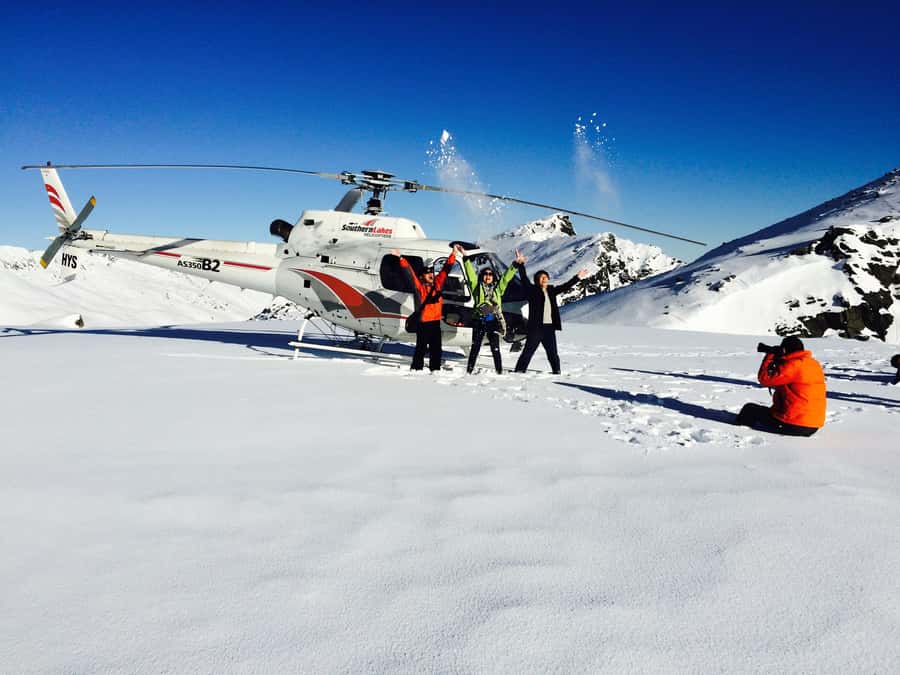
The itinerary includes two remote mountain landings. One is at scenic Mount Kidd, reached after the flight takes a look toward Bradshaw Sound and crosses the Main Divide of the Southern Alps.
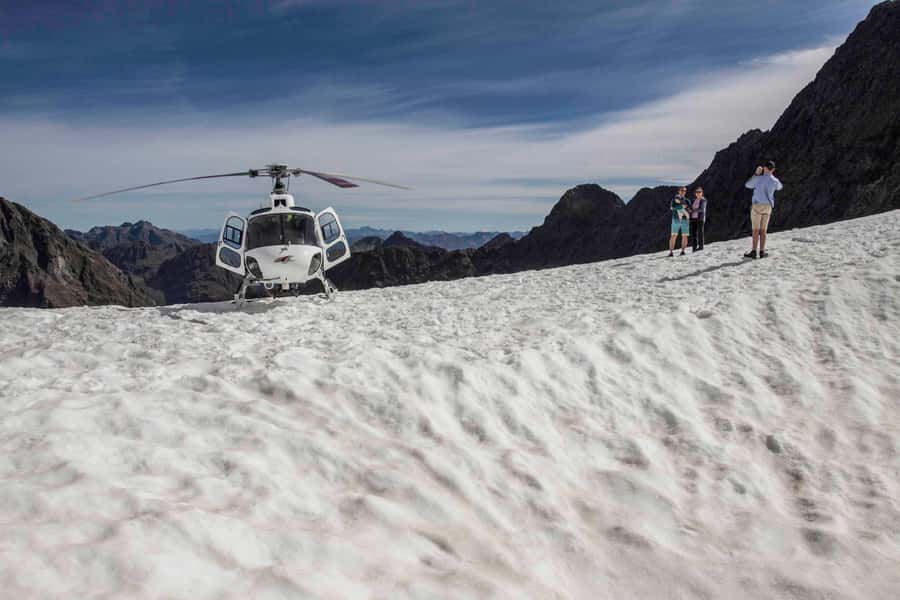
Mount Kidd gives you the chance to leave the helicopter and experience the high country directly. You are no longer viewing the mountains through glass or from a boat. You can stand on the landing site, take in the surrounding peaks, and appreciate the scale of the terrain around you.
The landing is brief compared with the total flight, but it changes the pace. You get a pause after the moving views, along with the chance to take photographs that show more than a quick blur through a window.
Wear warm clothing and closed-toe, comfortable shoes. Even if conditions seem mild at the office, an alpine landing can feel much colder. Sunglasses are also useful because open mountain light can be strong.
The other landing is part of the remote high-country portion of the route. The exact sequence can depend on the pilot, weather, and safe landing conditions. Do not expect a paved platform, visitor center, or marked attraction. The appeal is precisely that these are remote landing places in Fiordland.
Bradshaw Sound and the Main Divide
The route toward Bradshaw Sound adds another angle on the fiord system. Instead of seeing only the central waters of Doubtful Sound, you get a look into another inlet and a wider sense of how the waterways cut through the mountains.
Then comes the crossing of the Main Divide of the Southern Alps. This is a fitting setting for the second remote landing because the divide represents the high backbone of the region. It also gives the flight a clear sense of progression, from lake country to fiord, then up toward the alpine interior.
The main benefit here is perspective. The flight does not simply show isolated scenic points. It connects them. You see water, rainforest, valleys, peaks, and high ridges as parts of one large geographic system.
For me, this is where the helicopter format earns its price more strongly than a short lookout visit. You cover several types of country in a little over an hour. The tradeoff is that the time passes quickly, and a viewer who wants a long, quiet walk at each location may prefer a ground-based activity.
Seating, viewing, and photography
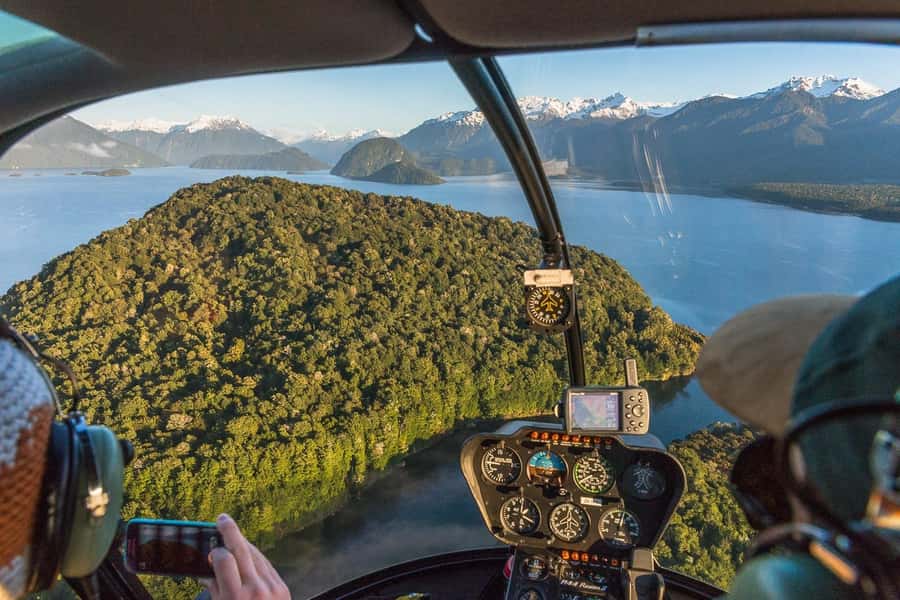
Your seat matters. One person who flew in a full aircraft found that the middle seat did not offer the clear views promised, especially when looking past the pilot and passengers in front. The flight itself was considered wonderful, but that seating issue is worth taking seriously.
Ask the office about the aircraft layout and viewing arrangements before boarding. Some flights may allow people to rotate positions, but you should not assume that every seat will provide the same view or that rotation will solve every problem.
If you can request a front seat, do so politely and early. One recent passenger specifically advised taking the front seats. The front position can give you a cleaner forward view, while side views will still depend on the aircraft and the direction of the route.
Practical camera tips:
- Charge your phone or camera fully.
- Keep the device easy to reach.
- Avoid using a selfie stick, which is not allowed.
- Do not bring a drone.
- Use sunglasses, but watch for reflections on the helicopter window.
- Take pictures in short bursts rather than holding the camera up constantly.
You will want to look with your own eyes, too. A camera can record Campbell’s Kingdom, but it cannot fully capture the way the valley appears and disappears as the helicopter moves.
The pilot and the tone of the flight
The pilot is also your guide. Commentary highlights points of interest, and the pilot’s experience matters during takeoffs, flight changes, and mountain landings.
Ben was specifically praised for clear information and smooth takeoffs and landings. The flight team has also been praised for handling a weather-related schedule change proactively and communicating well. That is important with a helicopter tour because weather decisions are part of the experience, not a minor footnote.
You should expect a professional safety briefing before takeoff. Pay attention to it, even if you have flown in a helicopter before. Remote landings require everyone to follow instructions carefully.
The language offered is English. The pilot’s commentary helps turn the flight into more than a view-finding exercise, particularly when identifying Lake Manapouri, the power station, Wilmot Pass, Bradshaw Sound, and the high valleys.
Is $636 a fair price?
At $636 per person, this is a major splurge. I would not call it a casual add-on for every New Zealand itinerary. The value depends on what you want from Fiordland and how much time you have.
The price includes 70 minutes in the air, two mountain landings, commentary, a professional pilot, and the safety briefing. You also cover a broad route that includes Lake Manapouri, Doubtful Sound, Campbell’s Kingdom, Bradshaw Sound, and the Main Divide.
That is a lot of scenery in a short time, and the two landings make the experience more than a simple flyover. If you have limited time, cannot easily reach remote high country, or want a strong overview of Fiordland, the cost may feel justified.
The value is less clear if you dislike flying, want a long stay in one place, or are mainly looking for a low-cost way to see Doubtful Sound. Weather risk also matters. A flight may be changed or cancelled if conditions are unsuitable, so avoid placing it immediately before an important onward connection.
The booking terms offer flexibility: you can cancel up to 24 hours in advance for a full refund, and you can reserve now and pay later. Those options help, but they do not remove the need to keep your day flexible for weather.
Who should book this flight?
I would recommend it most strongly to people who want a high-impact view of Fiordland and are willing to pay for access to places that are difficult to reach by other means.
It suits:
- Photographers who want changing aerial views and mountain landing pictures.
- First-time visitors seeking an overview of Doubtful Sound.
- Couples and families looking for a special holiday experience.
- People with limited time who cannot explore every valley and fiord by road or water.
- Anyone curious about remote alpine country rather than only famous viewpoints.
It may not suit you if you need a guaranteed departure time, dislike weather-related changes, or are uncomfortable with uncertain seating. It is also not the best choice for someone who wants a long walk, a quiet picnic, or plenty of time at each landing.
Minimum numbers apply, so the flight also depends on enough people booking. Ask the office about the day’s arrangements, aircraft capacity, seat positions, and the plan for rotating views if that matters to you.
What to bring and how to prepare
Dress for a mountain outing, not just an aircraft ride. Bring warm clothing, comfortable shoes, closed-toe shoes, and sunglasses. The two landing sites are remote alpine locations, so sensible footwear is more important than looking polished for the office.
Leave drones and selfie sticks at home. Both are not allowed.
Arrive ready for a safety briefing and possible weather changes. The operator requires the weight of every passenger to help balance the aircraft, so provide accurate weight information when requested. This is a normal safety measure and an essential part of planning the flight.
Before you leave the office, make sure your phone is charged and your storage space is clear. You may not get a second chance at the same combination of weather, light, and mountain views.
Should you book the Doubtful Sound flight?
Book it if you want the most complete aerial introduction to Doubtful Sound and you value the two alpine landings as much as the flight itself. Campbell’s Kingdom, Mount Kidd, Lake Manapouri, and the Main Divide give the route more variety than a short scenic loop.
I would pause if $636 would put pressure on the rest of your trip, or if a weather delay would cause trouble. Ask directly about seating, keep your schedule flexible, and wear warm shoes and clothing.
For a special Fiordland day, this is a strong choice. The route covers a remarkable amount of country, and the landings make the experience feel like an outing rather than a quick look from above.
FAQ
Where does the Doubtful Sound helicopter flight meet?
You meet at the office of Southern Lakes Helicopters.
How long is the experience?
The helicopter flight lasts 70 minutes, or 1 hour and 10 minutes.
How many mountain landings are included?
Two remote alpine landings are included.
Is Mount Kidd one of the landing locations?
Yes. The route includes a scenic landing at Mount Kidd.
What is Campbell’s Kingdom?
Campbell’s Kingdom is a hanging valley with a lake and a waterfall. The helicopter detours into this scenic area during the flight.
What places can I see from the helicopter?
The route includes Lake Manapouri, the Iris Burn Valley, the West Arm Power Station, Wilmot Pass, Doubtful Sound, Campbell’s Kingdom, Bradshaw Sound, and the Main Divide of the Southern Alps.
Is commentary provided during the flight?
Yes. An English-speaking pilot provides in-flight commentary about points of interest.
What should I wear?
Bring warm clothing, comfortable shoes, sunglasses, and closed-toe shoes.
Are drones and selfie sticks allowed?
No. Drones and selfie sticks are not allowed.
Can the flight be cancelled because of weather?
Yes. All flights depend on suitable weather conditions. Minimum numbers also apply. You can cancel up to 24 hours in advance for a full refund, according to the booking terms.
Just added around Fiordland
- Self-Guided Milford Track Day Walk – Milford Sound★ 5.0 · 17 reviews
- Milford Sound Grand Tour Helicopter Scenic Flight Departing from Milford Sound★ 5.0 · 4 reviews
- Milford Sound Mariner Overnight Cruise★ 4.5 · 159 reviews
- Milford Sound Overnight Cruise Fiordland Jewel★ 5.0 · 128 reviews
- Premium Milford Sound Cruise Including Lunch★ 4.5 · 32 reviews
- Milford Sound Extended Cruise with Southern Discoveries★ 5.0 · 9 reviews
- Milford Sound Coach & Cruise ex Te Anau Stunning Views with Lunch★ 4.5 · 121 reviews
- Milford Sound Luxury Lunch Cruise onboard The Fiordland Jewel★ 5.0 · 12 reviews
Doubtful Sound Cruises, compared.

From Manapouri: Doubtful Sound Wilderness Day Trip
Read our review →
Doubtful Sound Wilderness Day Cruise from Manapouri
Read our review →
Doubtful Sound Wilderness Cruise from Queenstown
Read our review →
From Manapouri: Doubtful Sound Overnight Cruise
Read our review →Browse the lists this tour appears in