
Reviewed · GEOTHERMAL PARK TOURS
Taupo: Orakei Korako Geothermal Park and Cave Entry Ticket
Orakei Korako is the geothermal park for people who prefer to set their own pace. After a short ferry ride, you walk among bubbling mud pools, steaming hot springs, and bright silica terraces, with no large group pushing you along. The rare Ruatapu Cave is the star: a 35-meter-deep thermal cave ending at a clear hot pool.
I like the peaceful setting and the freedom to stop whenever a plume catches your eye. I also like the close views from the boardwalk and the simple, well-marked route. The catch is that there are plenty of steps, and the colors and activity can look less dramatic on a cloudy day.
Key things to know before you go
- Ruatapu Cave drops 35 meters to a clear hot pool, making it one of the rare geothermal caves in the world.
- Up to 23 active geysers can be seen around the park, along with hot springs and mud pools.
- The ferry runs on demand, so you are not tied to a fixed boat departure.
- The self-guided walk covers about 2.5 kilometers and usually takes 45 to 90 minutes, depending on your pace.
- The boardwalk is easy to follow, but steps and uneven sections call for comfortable shoes and moderate fitness.
- Dogs are welcome, though children must stay with an adult and unaccompanied minors are not allowed.
Why Orakei Korako feels different from Taupo’s busier thermal stops
Orakei Korako, also called Hidden Valley, sits between Taupo and Rotorua in New Zealand’s Taupo Volcanic Zone. Its appeal is not a single giant eruption or one dramatic photo stop. Instead, the park gives you a sustained walk through a working geothermal area, with heat, color, steam, and changing textures around almost every bend.
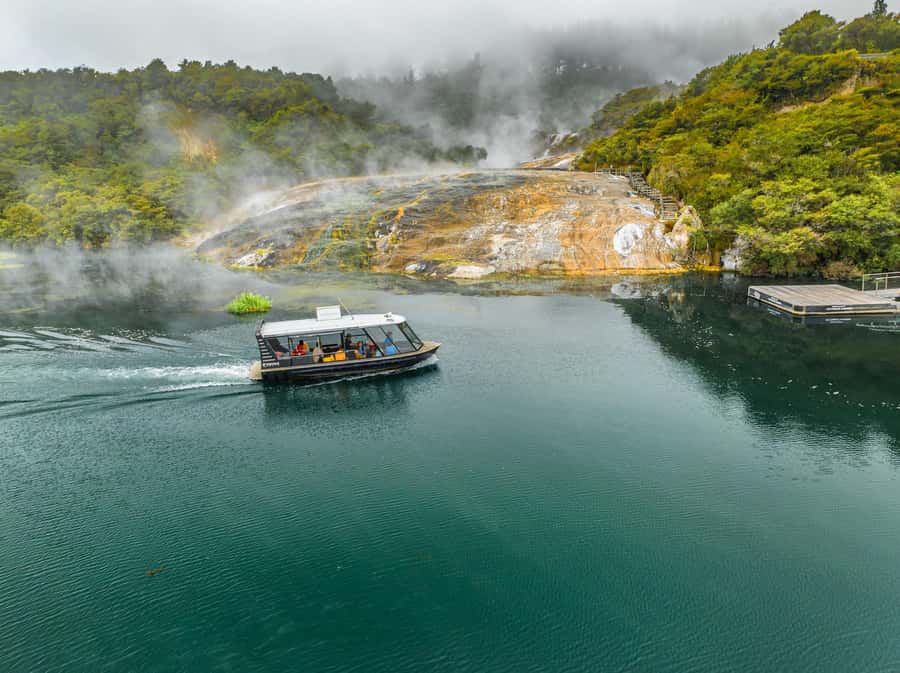
The ferry helps create that sense of separation. You check in at the visitor center, receive a short safety briefing, and cross to the thermal area in about three minutes. The ride is brief, but it turns the visit into more than simply pulling into a roadside attraction.
I would choose Orakei Korako if you want quiet time outdoors and the ability to explore independently. The park has information plaques along the route, so you can understand what you are seeing without needing a guide beside you. English is the operating language, and the visitor center staff handle check-in and practical instructions.
The park is often described as low key, and that is useful to know before booking. You may find yourself sharing the boardwalk with only a few other people, but this is not a staged show with guaranteed eruptions at a set minute. Geothermal activity changes, and one visit may look more active than another.
More geothermal parks and mud pools near New Zealand:
- Rotorua: Wai-O-Tapu Geothermal Park Entry Ticket
★ 4.6 · 2,601 reviews - Rotorua: Hell’s Gate Outdoor Mud Spa & Guided Walk
★ 4.7 · 1,140 reviews - Hell’s Gate Mud Bath & Spas
★ 4.5 · 475 reviews
Starting at the visitor center near Taupo
Your visit begins at the Orakei Korako Geothermal Park and Cave visitor center. This is where you check in, hear a short safety briefing of about two minutes, and wait for the on-demand ferry.
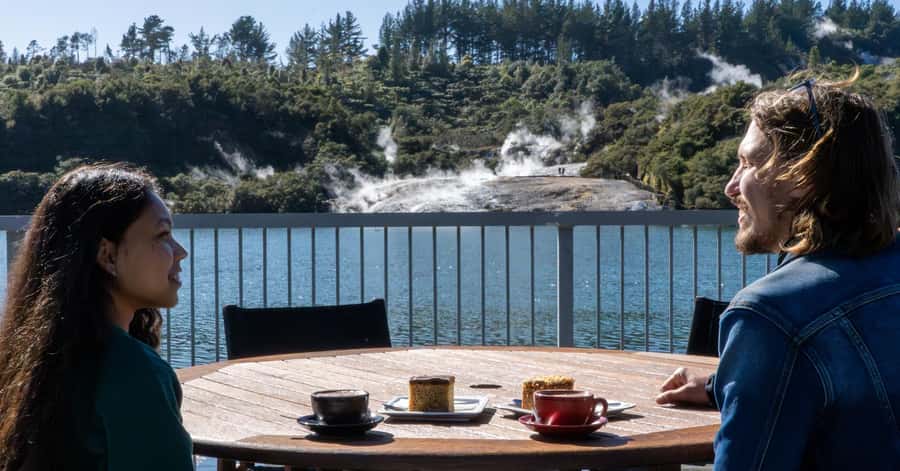
The center also has space for brunch or lunch and a shopping area. That makes the timing flexible. You can eat before crossing, return for food after the walk, or use the café as a pause if the weather turns rough.
The ferry operates from 8 am each morning. The last departures are at 4 pm in winter and 4:30 pm during Daylight Saving. Since the boat runs on demand, you do not need to plan your whole visit around a formal tour departure, but you should leave enough time for the walk and your return crossing.
The boat trip takes about three minutes. It is not a sightseeing cruise, so keep your expectations sensible. Its value is practical and atmospheric: you cross the water, leave the visitor center behind, and arrive ready to walk through the thermal area.
Following the 2.5-kilometer thermal route
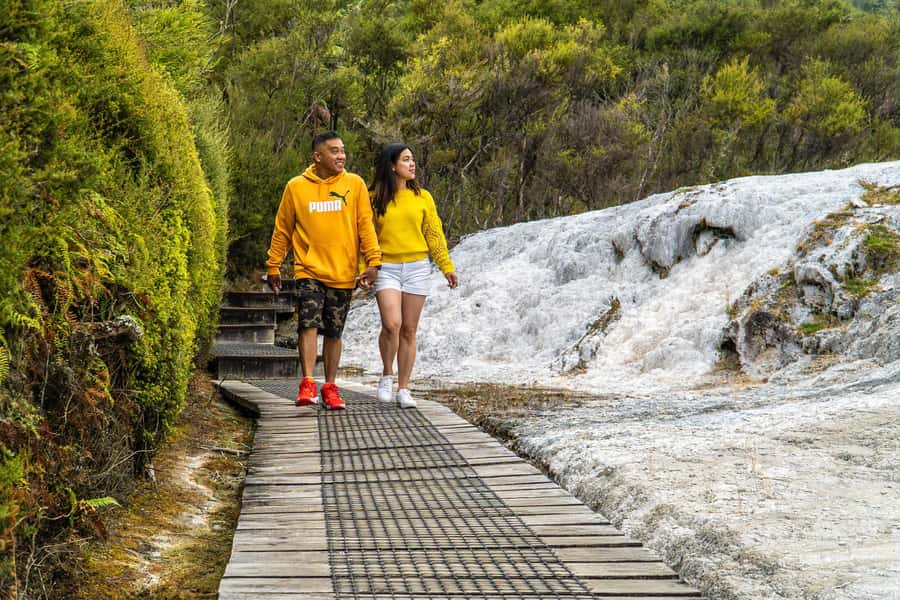
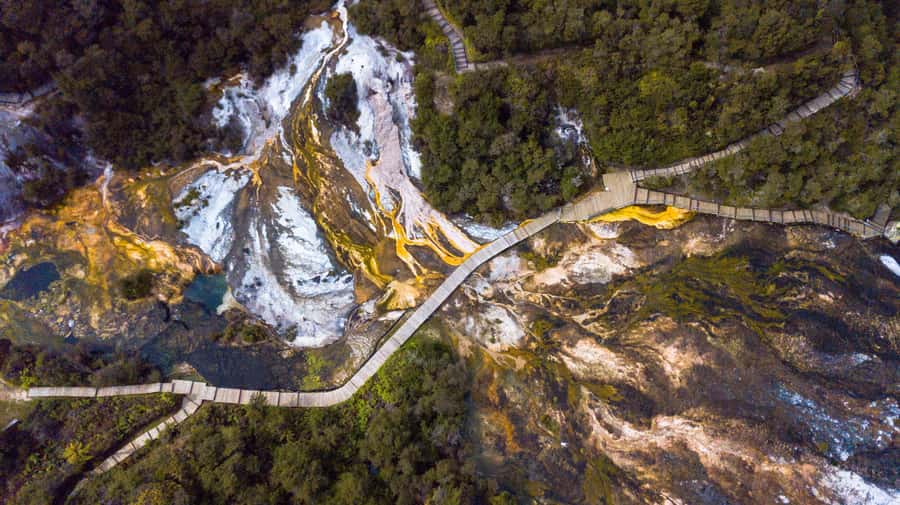
Once across, you follow a marked self-guided trail through the park. The full route is about 2.5 kilometers, although the time needed varies. A quick walk can take 45 to 60 minutes, while a slower visit with stops for photographs, signs, and views may take around 1.5 hours.
The boardwalk makes the route straightforward. You do not need to work out which way to go, and information plaques explain the features as you move along. This is a real advantage over a site that simply points you toward a viewpoint and sends you away again.
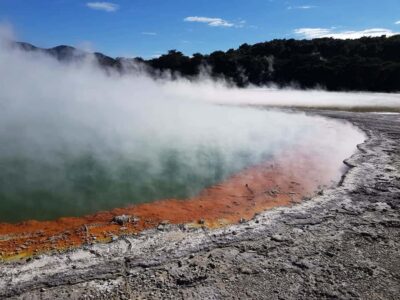
The setting changes as you walk. You may see bubbling mud, hot water pouring from the ground, steaming pools, pale mineral deposits, and terraces marked by strong natural colors. The smells are part of the experience too, adding another reminder that this is an active geothermal area rather than a garden attraction.
You should stay on the marked path. Hot springs and unstable ground are not places for shortcuts, and the safety briefing matters even if the route appears gentle.
The walk is manageable for people with moderate fitness, but it is not completely flat. There are many steps, along with sections that require steady footing. Benches are available, so you can stop and take in the views instead of treating the trail like a race.
Wear trainers or other supportive walking shoes. Flip-flops are a poor choice here, especially if the ground is wet. Carry water, since even a fairly short walk can feel warm near the hot pools.
Ruatapu Cave, the park’s unusual centerpiece
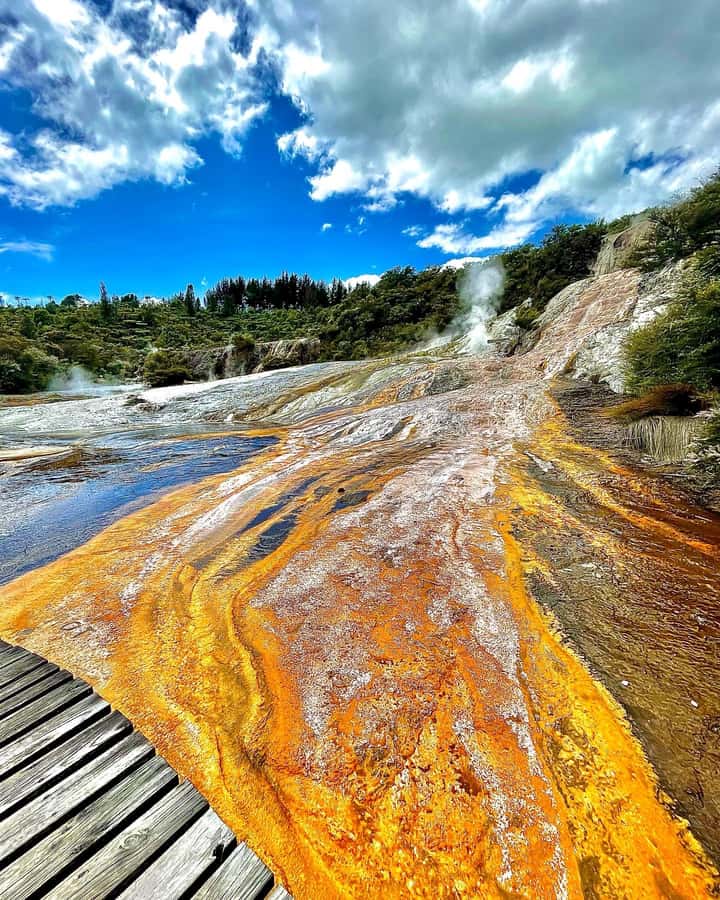
Do not skip Ruatapu Cave. Also known as the Sacred Hole, it drops about 35 meters to a clear hot pool at the bottom. The cave is described as one of only two thermal caves in the world, which gives this stop a strong sense of rarity without requiring any dramatic presentation.
The cave feels different from the open-air pools and geysers. You are looking down into a natural shaft where heat and water have shaped a space that seems almost prehistoric. It is the kind of feature that rewards a slower pause rather than a quick photograph.
The cave is also a good example of why Orakei Korako works well as a self-guided visit. You can spend a little extra time here, read the nearby information, and let other people pass without losing your place in a group.
The route does not turn Ruatapu Cave into a long technical excursion. You view it as part of the walking circuit, but the steps throughout the park still mean you need reasonable mobility.
A few more New Zealand half-days to weigh up
- Hobbiton Movie Set: Guided Tour Ticket
★ 4.9 · 8,167 reviews - Waiheke Island: Ferry & Hop-On Hop-Off Explorer Bus Tickets
★ 4.6 · 3,311 reviews - Auckland: Hop-On Hop-Off Explorer Bus Ticket
★ 4.4 · 1,064 reviews - Wellington: Wētā Workshop Guided Tour Ticket
★ 4.7 · 997 reviews
Geysers, mud pools, and silica terraces
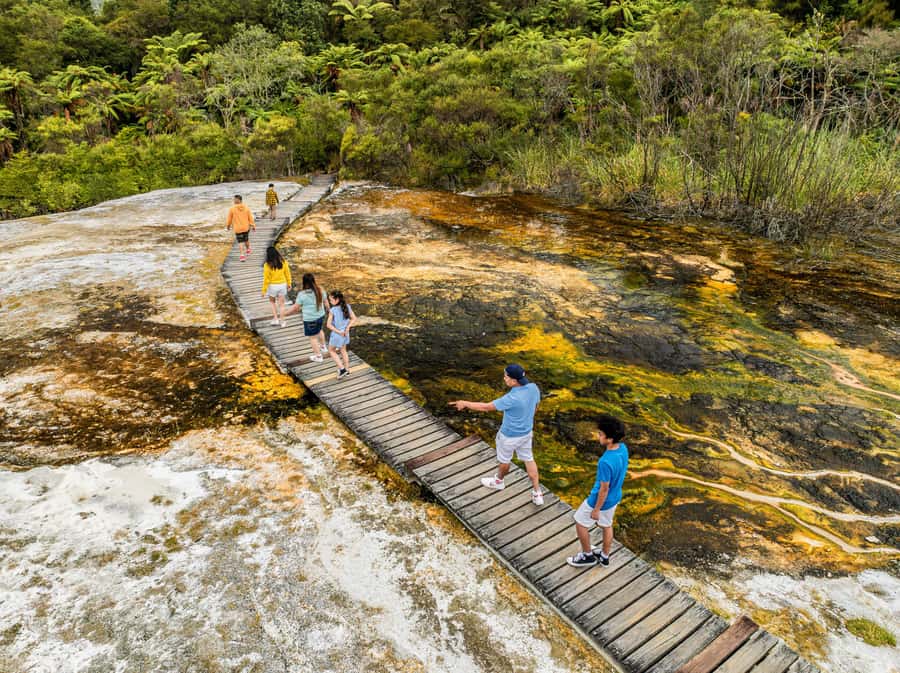
Orakei Korako has up to 23 active natural spurting geysers, giving it one of the highest concentrations of active geysers among New Zealand’s geothermal parks. That figure describes what the park can offer, not a promise that every geyser will erupt during your visit.
This distinction matters. Geothermal features follow their own timing. At times, you may see plenty of steam and moving water. At others, the area may feel quieter. One visit can also look different from the next depending on sunlight, temperature, and weather.
The silica terraces are among the most attractive parts of the route. Their pale mineral surfaces contrast with darker wet ground, steaming pools, and colored deposits. Sunlight can bring out the tones more strongly, while gray or rainy conditions may make the colors appear subdued.
Rain is not a reason to cancel automatically. Wet weather can make the warm pools especially pleasant to view, and the park operates in all weather. You will need waterproof or weather-appropriate clothing, though, and wet boards can require more care.
The mud pools and hot springs provide the constant background drama. Some areas bubble gently, while others send steam or hot water upward. The appeal is in seeing several kinds of geothermal activity close together, not just waiting for one spectacular burst.
A self-guided visit without a large group
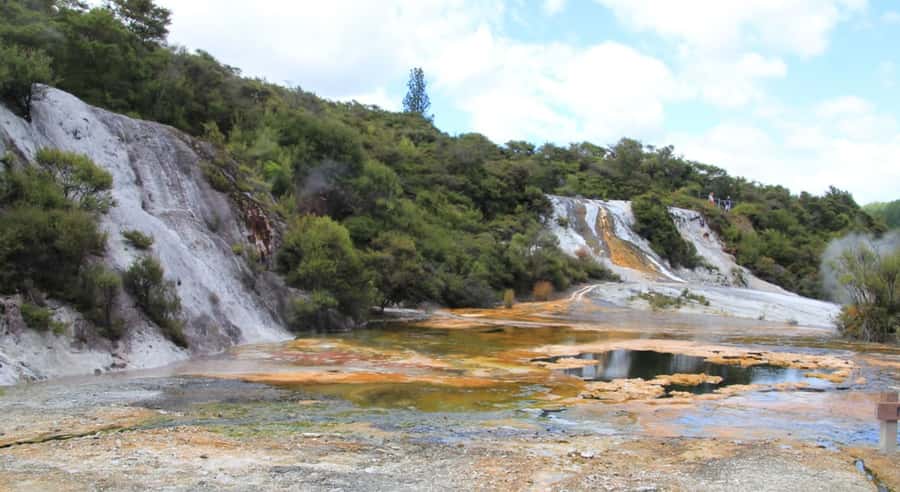
The independent format is one of the strongest reasons to choose this park. You cross by ferry, follow the signs, and decide how long to spend at each feature. That suits photographers, families with patient children, and anyone who dislikes being hurried from one viewing point to another.
You also have room to slow down. Sit on one of the benches, read the plaques, watch the steam shift, or wait for a clearer view. The route has enough structure to keep you oriented, but it does not force you into a strict schedule once you reach the thermal area.
The tradeoff is that you do not have a guide explaining every feature in real time. The written information is useful and clearly placed, but people who want detailed geology or cultural interpretation may prefer a guided experience elsewhere.
For many people, that is a fair exchange. The park is easy to understand without constant commentary, and the quiet makes the walk feel more personal. I would especially recommend it if you have already done a busier group excursion and want a calmer contrast.
How long to allow, and how to plan the day
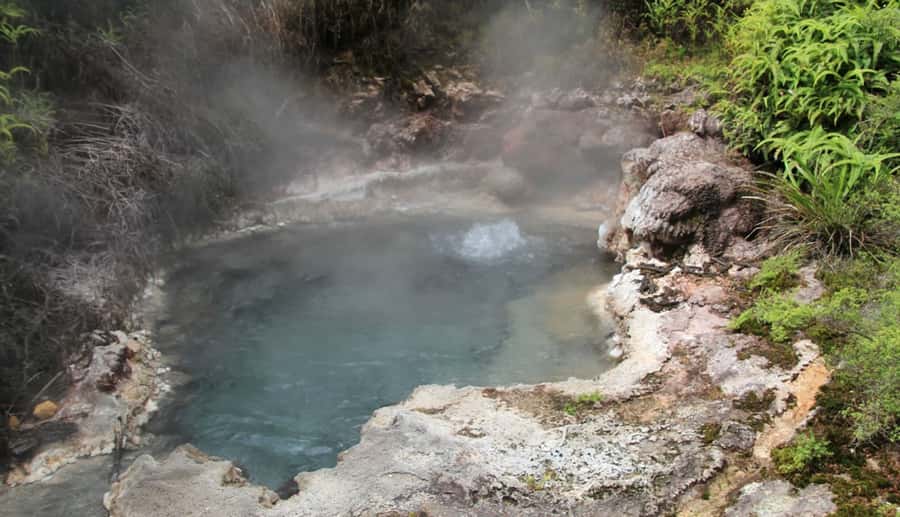
The published visit outline allows about 1.5 hours for the self-guided walk, plus the two short ferry crossings. In practice, you can finish faster if you walk steadily, but I would not schedule the park as a rushed stop between other appointments.
Allow extra time if you want to read the signs, take photographs, pause at Ruatapu Cave, or stop for food at the visitor center. The ferry takes only three minutes each way, but the on-demand system still means you should allow a little waiting time.
The park is valid for one day, so you have flexibility around the timing of your visit. The key deadline is the final ferry departure: 4 pm in winter and 4:30 pm during Daylight Saving.
Start with water, comfortable shoes, and a layer that suits the forecast. The thermal area can feel warm near the pools, while the open sections may feel cooler or windy. Sun, rain, and cloud all change how the colors appear.
Is the $34 admission good value?
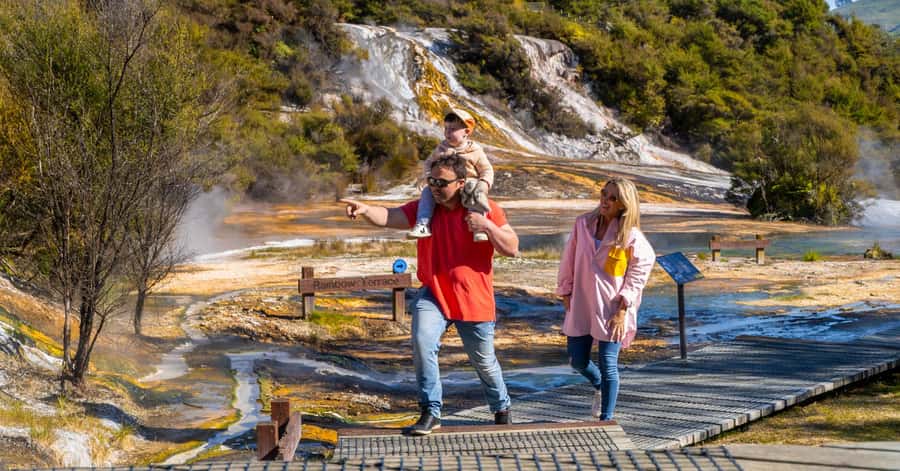
At $34 per person, the ticket includes entry to the cave and thermal park, the self-guided route, and return ferry rides. I consider that fair value for a visit that combines transport, a marked walking circuit, information plaques, and access to several different geothermal features.
The strongest value comes from the freedom to stay as long as you like within the operating day. You are not paying for a short viewpoint stop. You get time to walk, pause, eat at the center, and return to features that interest you.
The value is less clear if you want a guaranteed major geyser eruption or a highly dramatic show. Natural activity can be quiet, and some people may find the park less spectacular than expected. One four-star assessment described the features as interesting but not extremely dramatic, which is a fair warning for anyone comparing it with a more theatrical thermal attraction.
I would judge the ticket by the kind of day you want. For a quiet, close-up walk through geothermal features, $34 is reasonable. For a fast, spectacle-first visit, you may want to compare the park with other options in the Taupo and Rotorua area.
Who should book this experience?
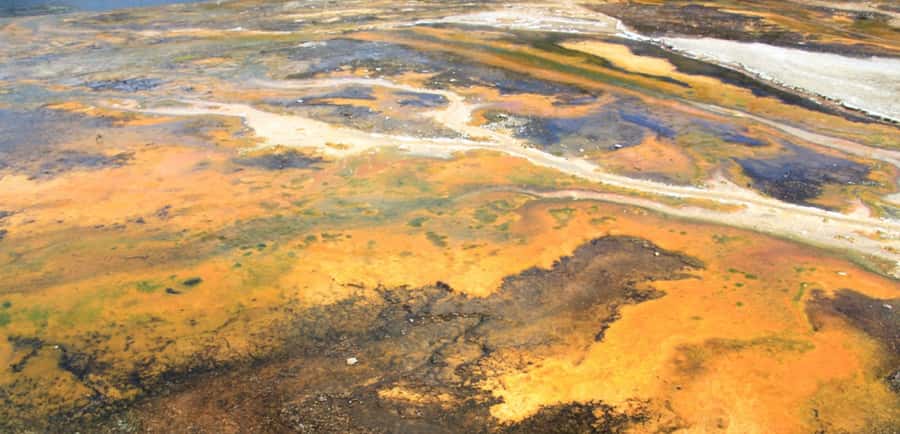
This suits families, couples, independent walkers, photographers, and people who enjoy natural sights without a constant guide. Dogs are welcome, which is a useful bonus for visitors touring New Zealand with a pet.
Children must be accompanied by an adult, and unaccompanied minors are not allowed. The route requires moderate physical fitness, so you should be comfortable with steps and a walk of up to 2.5 kilometers.
It is not suitable for wheelchair users. Anyone with limited mobility should take that seriously, since the route includes many steps even though the boardwalk is generally easy to follow.
The park also works well for visitors who want a break from crowded attractions. The quiet setting, open pacing, and short ferry crossing give the outing a relaxed rhythm.
Practical strengths and limitations
The clearest strengths are the self-guided format, the well-marked boardwalk, the friendly check-in area, and the range of geothermal features. You get close views of pools and terraces rather than simply seeing them from a distant lookout.
The main limitations are the steps, the need for weather-ready clothing, and the fact that nature does not perform on demand. The colors may be less striking under cloud, and geothermal activity may be subdued during your visit.
The park is also more about steady discovery than one huge wow moment. Ruatapu Cave may be the most unusual feature, while the terraces, mud pools, geysers, and hot springs build the experience piece by piece.
That is why I would avoid rushing. Give yourself time to notice the smaller changes in water, steam, mineral color, and ground texture. The experience rewards attention more than speed.
Should you book Orakei Korako?
Book it if you want a peaceful geothermal walk near Taupo, a rare thermal cave, and the freedom to explore without a large group. The ferry is easy, the route is clearly marked, and $34 covers the main elements you need for the visit.
Choose another activity if you need wheelchair access, dislike steps, or want a guaranteed geyser show with a guide explaining every feature. For everyone else, Orakei Korako is a solid half-day outing that can easily stretch into a relaxed day with food and a break at the visitor center.
FAQ
Where is Orakei Korako Geothermal Park?
Orakei Korako is in New Zealand’s North Island, in the Taupo Volcanic Zone between Taupo and Rotorua.
How much does entry cost?
The listed price is $34 per person. This includes entry to the cave and thermal park, the self-guided tour, and return ferry rides.
How long does the visit take?
The self-guided walk is scheduled for about 1.5 hours. Some people complete the route in 45 to 60 minutes, while a slower visit with stops can take longer.
Is the ferry included?
Yes. Return on-demand ferry rides from the visitor center to the geothermal area are included.
When does the ferry operate?
The ferry runs on demand from 8 am each morning. The last trips leave at 4 pm during winter and 4:30 pm during Daylight Saving.
Is Ruatapu Cave included?
Yes. Ruatapu Cave, also called the Sacred Hole, is part of the Orakei Korako Cave and Thermal Park entry.
Can children visit the park?
Yes, children can visit, but they must be accompanied by an adult. Unaccompanied minors are not allowed.
Is the park wheelchair accessible?
No. The experience is not suitable for wheelchair users, and visitors should have moderate physical fitness because the route includes steps.
Just added around New Zealand
- Scenic Queenstown Lake Cruise★ 4.5 · 22 reviews
- Scenic Guided eBike Tour Ride to the Lake★ 5.0 · 67 reviews
- Routeburn Track Guided Hike (Full Day)★ 5.0 · 27 reviews
- Full-Day Small-Group Routeburn Valley Hike★ 5.0 · 11 reviews
- Queenstown Memories Helicopter Flight★ 5.0 · 36 reviews
- E-Bike Adventures Through the Wineries in Gibbston★ 5.0 · 22 reviews
- Routeburn Track Guided Walk (Half-Day)★ 4.5 · 17 reviews
- 6 Hour’s – Queenstown’s Helicopter Gin Tour★ 5.0 · 8 reviews
Geothermal Park Tours, compared.
Rotorua based Small Group Morning Tour Waimangu and Wai O Tapu
Read our review →
Wai O Tapu & Waimangu Eco Thermal Morning Tour
Read our review →
Rotorua Lake: Deluxe Lake Spa Geothermal Hot Spring Bathing
Read our review →Browse the lists this tour appears in