
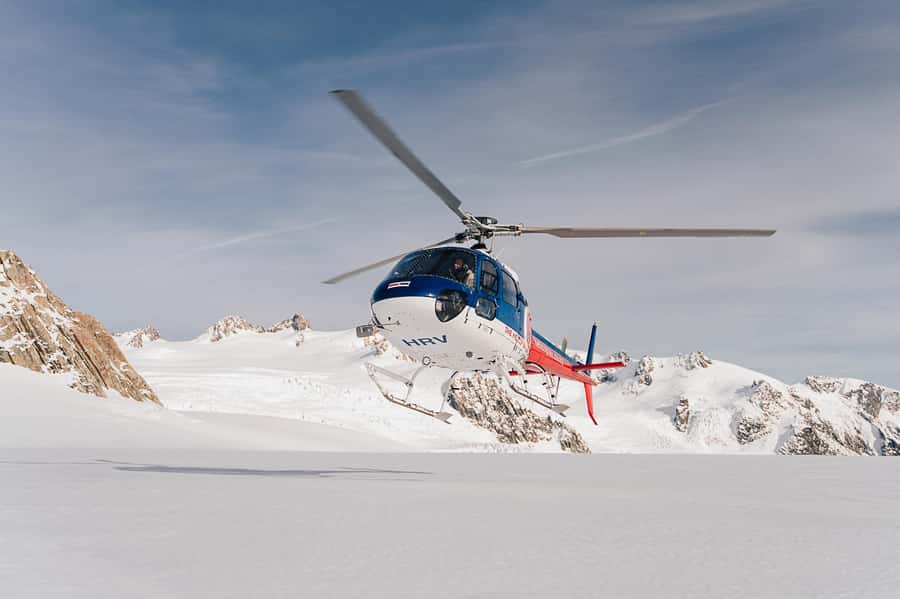
Reviewed · MOUNT COOK TOURS
Mount Cook: Mountains High 40 minute Flight
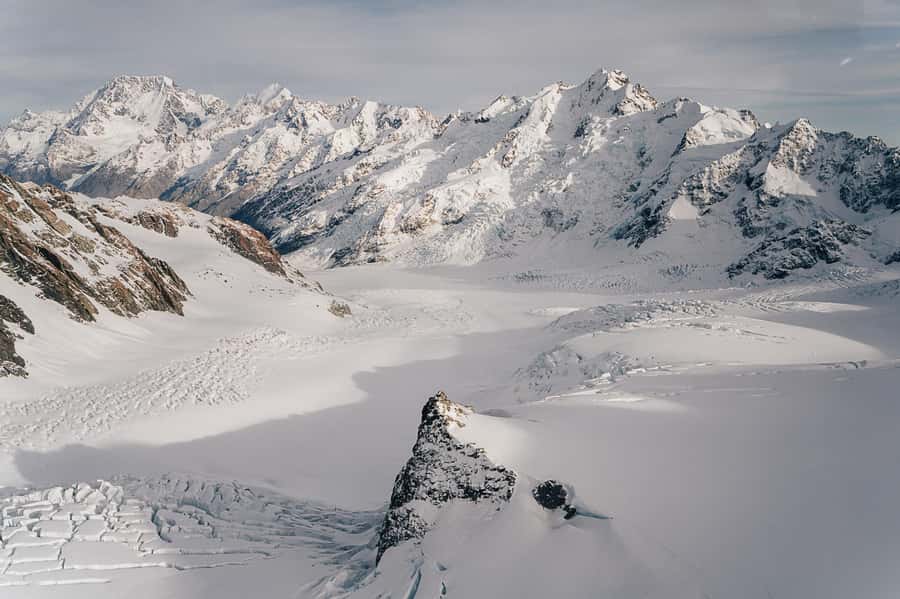
A helicopter flight over Aoraki/Mount Cook is the quickest way to grasp how much ice and wilderness fill this corner of New Zealand. From the air, you’ll pass the Hochstetter Icefall, upper Tasman Glacier, and the remote Burnett Mountains before touching down in a snowy alpine setting, if conditions allow.
I like the small six-person limit, which keeps the flight more personal and gives everyone a fair chance at a window view. I also like the alpine landing: you get more than a flyover, with time to step out, take photos, and feel the cold mountain air.
The main consideration is weather. Routes, flight times, and landings depend on wind, visibility, snow levels, and the pilot’s judgment. The 40 minutes includes the landing, so actual airtime will be less than the headline number.
Key points at a glance
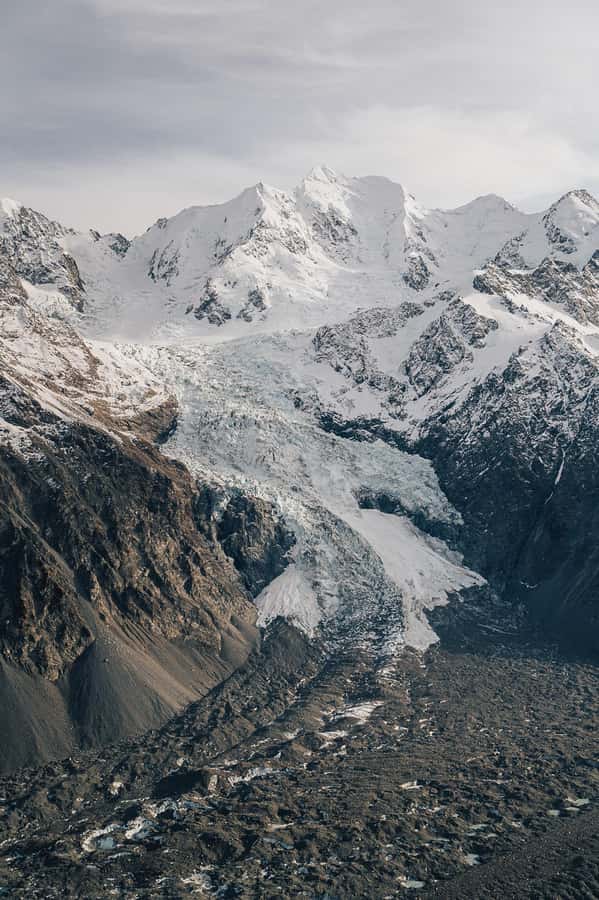
- Hochstetter Icefall from above: See one of Aoraki/Mount Cook’s most dramatic walls of broken blue-white ice.
- Upper Tasman Glacier: Fly over the high glacier country that is difficult to reach on foot.
- Snow landing, conditions permitting: Step out at a remote alpine viewpoint for photos and crisp mountain air.
- Burnett Mountains and Mackenzie Basin: The return route gives you a sharp contrast between rugged peaks and broad, dry country.
- Six people maximum: A small cabin makes the experience feel less crowded and helps with viewing.
- Village transport available: Complimentary transport can be provided to and from Aoraki/Mount Cook Village.
Why this flight gives you a better view of Mount Cook
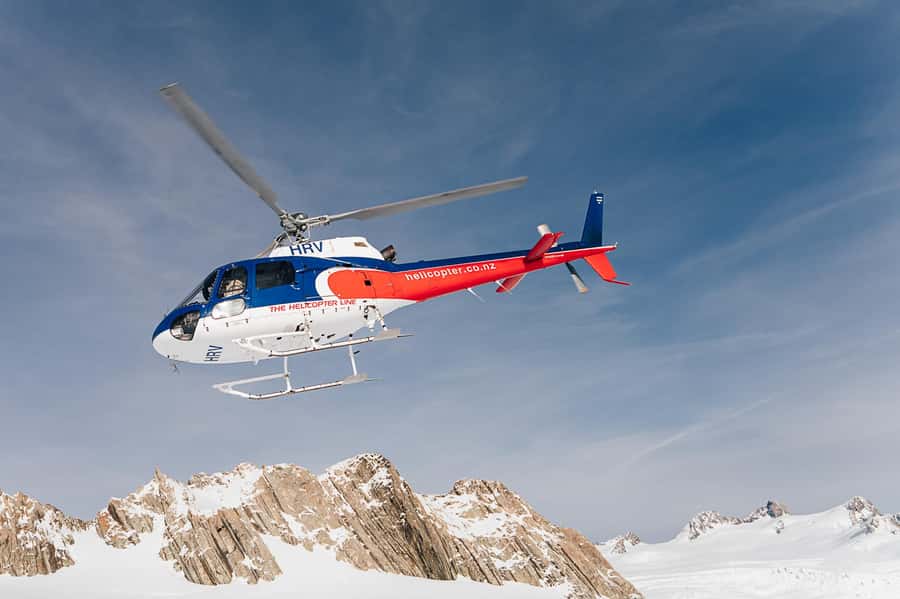
Aoraki/Mount Cook National Park is too large to understand from one roadside lookout. You can admire the peaks from the valley, but the scale changes once the helicopter lifts you above the ridges. Glaciers stretch farther than expected, icefalls break the upper slopes into jagged blocks, and the valley floor begins to look very small.
This flight is built around that change in scale. It does not simply circle one mountain and return. The route takes you toward the Hochstetter Icefall and upper Tasman Glacier, then across the Burnett Mountains and back toward the wide Mackenzie Basin.
That variety matters. You get steep alpine scenery, high glacier views, and a broader look at the dry basin below. If this is your only paid activity in the Mount Cook area, the flight gives you a strong visual introduction to the whole region.
The helicopter also solves a practical problem. Reaching high glacier country on foot requires serious time, fitness, and suitable conditions. Here, you can see remote terrain during a 40-minute outing, with an alpine landing included when snow levels make it safe.
More days out at Aoraki Mount Cook:
- Mount Cook & Lake Tekapo Day Tour from Christchurch
★ 4.9 · 483 reviews - Mount Cook: Scenic Helicopter Flight with Alpine Landing
★ 4.8 · 442 reviews - Mt Cook Small Group Scenic Day Tour from Queenstown
★ 5.0 · 407 reviews
Starting at The Helicopter Line near Mount Cook
Your experience begins at The Helicopter Line in the Mount Cook area. The supplied details also identify Glentanner Park as the flight departure point, so check your confirmation carefully for the exact meeting arrangement. If you are staying in Aoraki/Mount Cook Village, complimentary transport can be provided to and from the village.
That transfer is useful because it removes one of the small headaches of a scenic flight. You do not need to arrange separate transport if the operator can place you on its village shuttle. Still, allow enough time to reach the base, complete any check-in steps, and hear the safety instructions.
The flight is limited to six participants. That is a real advantage in a helicopter. You are not sharing the experience with a large coach group, and the cabin should feel more manageable when everyone is trying to look out at the same peaks.
A small group does not guarantee that every passenger gets the perfect view for every minute. The best viewing side can change with the route, and the pilot must balance safety, aircraft operation, and the needs of the group. Even so, six people is a far more comfortable arrangement than a packed sightseeing cabin.
Flying toward the Hochstetter Icefall
Once airborne, the helicopter heads into Aoraki/Mount Cook National Park. The first major sight is the Hochstetter Icefall on Aoraki/Mount Cook, where ice pours down the mountain in a broken, steep-sided mass.
From ground level, you often see only a portion of the high country. From the helicopter, the icefall becomes easier to read. You can see how the glacier occupies the mountain slopes, where the surface fractures, and how quickly the terrain rises above the surrounding valleys.
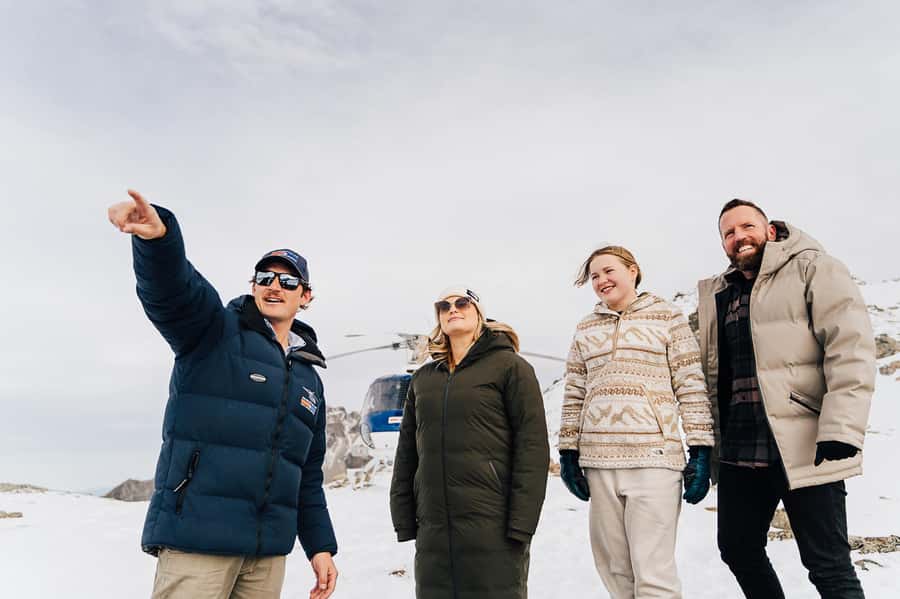
Your pilot provides live commentary in English. That matters here because the scenery moves quickly. A short explanation can help you identify the icefall, follow the route, and understand what you are seeing before the helicopter turns toward the next viewpoint.
The pilot also controls the exact path. Flight routes may change because of weather and the pilot’s discretion. Consider that a safety feature, not a flaw in the product. Mountain weather can shift quickly, and a slightly different route may provide better visibility or safer flying conditions.
Seeing the upper Tasman Glacier
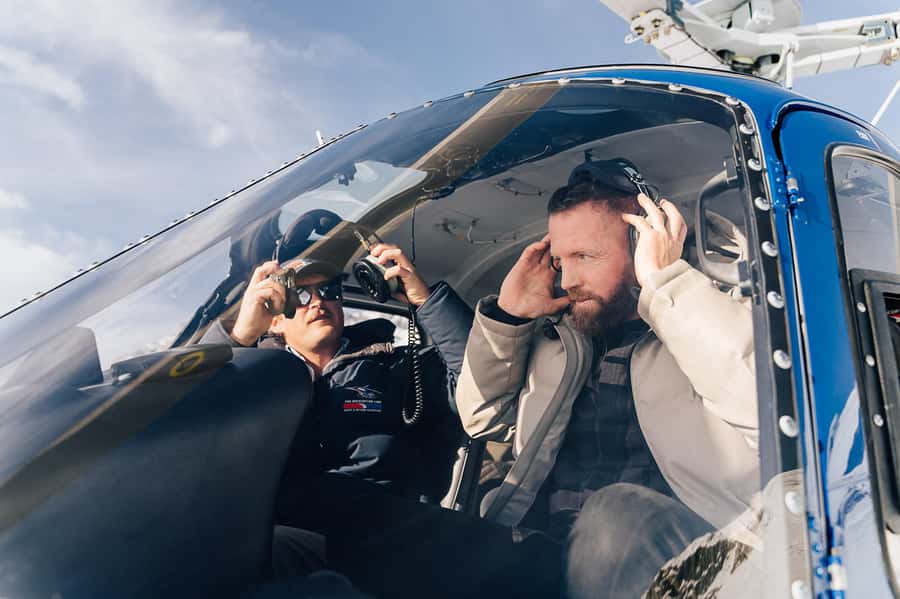
The flight then takes in the upper Tasman Glacier. This is one of the best parts for anyone interested in ice, geology, or the sheer size of New Zealand’s alpine range.
You will not be walking on the glacier during this experience. Instead, you see its upper reaches from the air and, depending on the landing site, from a nearby alpine position. That distinction is important if you are comparing this with a glacier walk or a longer landing tour.
The upper glacier is valuable because it shows the high, remote side of Aoraki/Mount Cook National Park. You are looking at terrain that is not set up for casual access. The helicopter gives you a short, controlled way to reach the edge of that world without committing to a full-day mountain activity.
The flight time is approximate and includes the landing. If you are expecting 40 full minutes in the air, adjust that expectation. Part of the outing is spent landing, getting out, taking photographs, and returning to the aircraft. That is not wasted time, but it does mean the experience is best judged as a compact scenic flight with a stop, not as a nonstop aerial circuit.
Same corner of the country, a completely different day out:
- Mount Cook, Lake Tekapo and Tasman Glacier Tour from Christchurch
★ 5.0 · 353 reviews - From Christchurch: Mt Cook Day Tour & Lake Tekapo
★ 4.6 · 331 reviews - From Queenstown: Mt Cook & Tasman Glacier Viewpoint Day Tour
★ 4.8 · 329 reviews - Tekapo Shuttle: Mt Cook Day Tour via Pukaki & Tasman Lake
★ 4.8 · 307 reviews
The alpine landing and the value of stepping outside
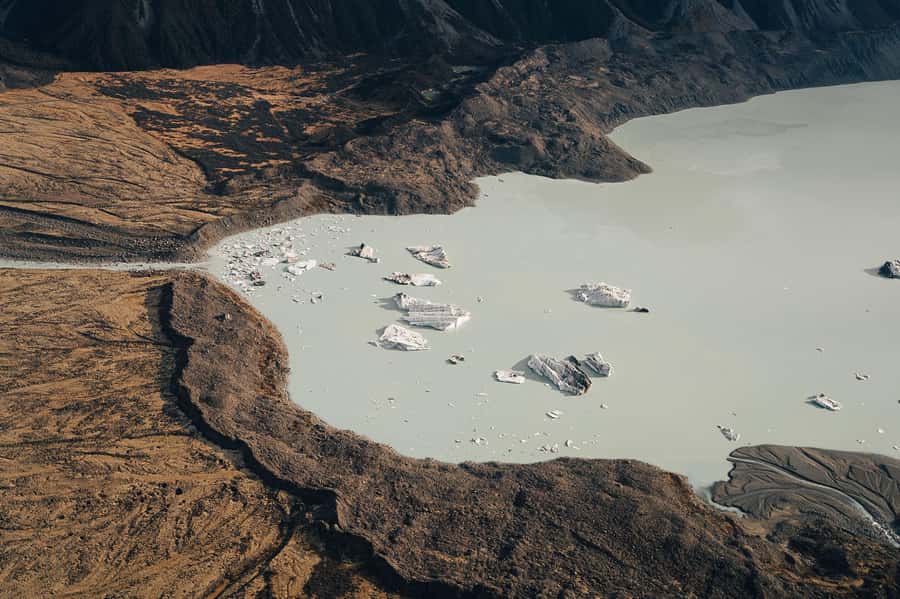
The landing is the feature that makes this flight different from a standard sightseeing loop. If snow levels are suitable, the helicopter lands at a remote alpine location, where you can step out and take photographs.
The setting should feel very different from the valley floor. You get crisp alpine air, snow underfoot when conditions permit, and a closer sense of the mountain environment. Even a brief stop can make the flight more memorable because you are not viewing everything through glass.
Bring warm clothing. This is essential, even if the day feels mild at the base. Alpine conditions can be colder, and standing outside in an exposed mountain setting is different from sitting in a sheltered cabin.
Closed-toe shoes are required. Choose practical footwear rather than fashion shoes, since the landing surface and snow conditions can vary. A camera is worth bringing, but keep it secure and easy to handle.
The landing is not guaranteed. Snow levels, weather, and safety conditions determine whether it can go ahead. If the aircraft cannot land, the pilot may adjust the route or flight plan. You should book this for the overall mountain flight, with the snow landing treated as a valuable bonus rather than the only reason to go.
Drones, selfie sticks, and tablets or iPads are not allowed. The drone restriction is straightforward: aircraft safety comes first. The other restrictions also make sense in a small helicopter cabin, where loose or extended objects can become a problem.
Returning over the Burnett Mountains
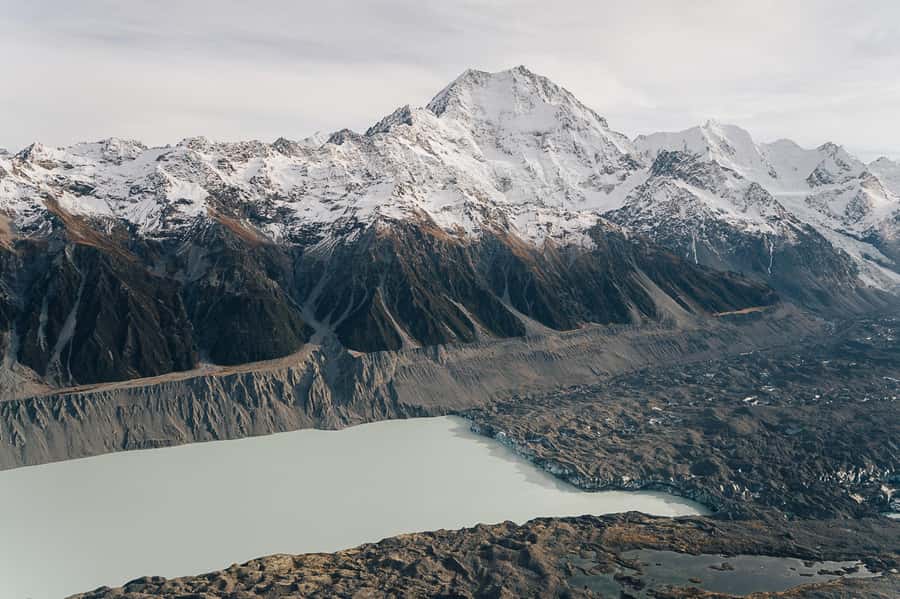
The return route crosses the remote Burnett Mountains, which face toward Aoraki/Mount Cook. This section adds a different mood to the trip. The icefall and glacier views feel close, steep, and compressed. The Burnett Mountains open the view back out.
Below them lies the expansive Mackenzie Basin, known here for its broad, arid appearance. The contrast is one of the most useful parts of the route. You see the wet, icy high country and then the much drier basin stretching beneath the mountains.
This is why I prefer this flight to a short out-and-back that focuses on one peak only. The scenery changes as you go, so you get a stronger sense of the region’s geography. You are not just collecting an aerial photograph of Mount Cook. You are seeing how the mountain range relates to the basin and surrounding ranges.
The return to the base completes the circuit at The Helicopter Line. The total scheduled duration is 40 minutes, including the landing. Starting times vary, so you need to check availability for the day you want.
What $391 means in practical terms
At $391 per person, this is a major travel expense. It is not an activity I would suggest adding casually to a crowded itinerary without thinking about priorities.
The value comes from access. You are paying to reach glacier and alpine country that would otherwise require far more time, equipment, and physical effort. You also receive a small-group flight, pilot commentary, and an alpine landing when conditions permit.
The price includes concession fees that support conservation and sustainability management. That does not make the cost small, but it does explain part of where the money goes in a protected national park.
I would consider the flight good value for you if Aoraki/Mount Cook is a central part of your South Island trip and you want one major scenic experience. It is harder to justify if you are already booking several aerial activities or if you mainly want a quick photo of the main peak.
The flight also gives you a chance to see the mountain when valley conditions are less revealing. There is no guarantee of a clear view, of course, but being above the valley can sometimes offer a better perspective than waiting at ground level.
Weather rules you should take seriously
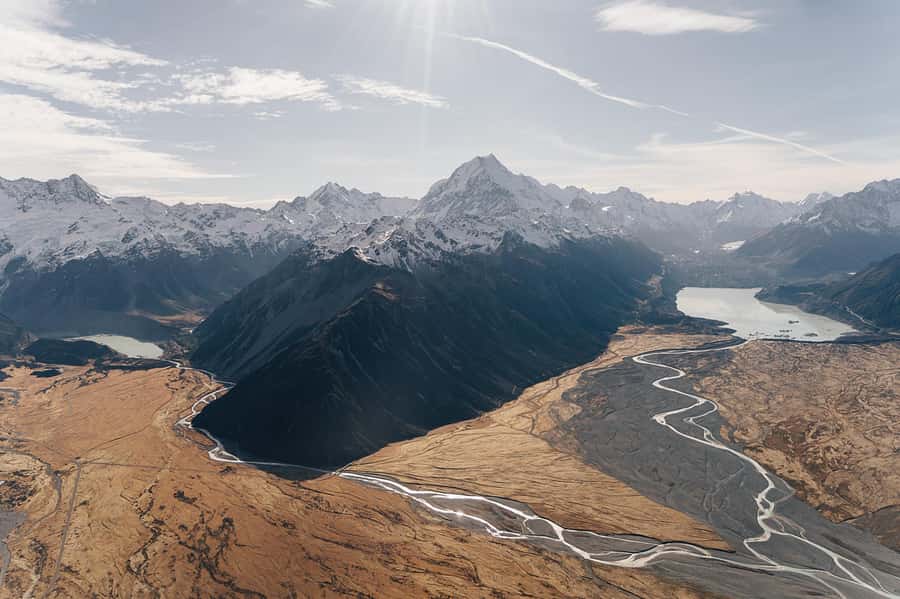
Mountain flying is never a fixed stage show. The operator may alter the route, landing, or schedule because of weather and the pilot’s judgment. Flight times are approximate, and the snow landing depends on current snow levels.
Plan this activity with some flexibility. If you have several days around Mount Cook, place the flight early enough in your visit to leave room for a change of plan. The supplied booking terms allow free cancellation up to 24 hours before departure, and you can reserve now and pay later, which helps keep plans flexible.
Confirmation is subject to availability and is expected within 48 hours of booking. Minimum passenger numbers apply, and bookings may be coordinated to meet those requirements. That means your chosen time is not necessarily final until the operator confirms it.
Do not schedule an important same-day connection too tightly. The flight itself is short, but weather can affect mountain operations. A little spare time protects the rest of your day.
Who will enjoy this most
I would recommend this flight to you if you want a high-impact view of Aoraki/Mount Cook without spending a full day on a demanding mountain activity. It suits photographers, first-time visitors to the national park, and anyone who wants to understand the area’s scale quickly.
It is also a good fit for mixed-ability groups. You do not need to be a strong hiker to see the upper glacier country, and the experience includes transport support from the village when arranged.
Families should check the age and weight rules carefully. Infants under four years old and under 15 kilograms must sit on an adult’s lap. The activity is wheelchair accessible, but you should confirm the practical arrangements with the operator before booking.
This is less suitable if you dislike flying, need a guaranteed snow landing, or want a long time on the ground. It is also not the right pick if you are looking for a hands-on glacier walk. This is an aerial sightseeing experience with a brief alpine stop.
The strongest praise attached to the operation concerns the company, pilots, and staff. That is useful when choosing an aircraft activity, since calm handling and clear communication matter as much as the views. No individual guide name is supplied, so you should expect commentary from the pilot assigned to your flight rather than a separately named guide.
Small details that improve the outing
Wear warm layers, even in summer. You can remove a layer before boarding, but you cannot add one if the alpine stop is colder than expected.
Bring a camera, but keep your equipment compact and secure. The restrictions on selfie sticks, drones, and tablets mean you should plan to use a normal camera or phone without extra extensions.
Closed-toe shoes are not optional. Choose shoes that are comfortable for standing on snow or uneven ground if the landing proceeds.
Keep your expectations flexible. The best flight may not follow the exact route described here. In the mountains, a changed route can mean the pilot is responding to visibility, wind, or safe landing conditions.
Finally, think about timing. A 40-minute flight can fit neatly into a Mount Cook day, but it still deserves a clear part of your schedule. Rushing from a walk to the base, or from the flight to another timed booking, would take some of the pleasure out of it.
Should you book this Mount Cook flight?
Book it if you want a compact but powerful view of Aoraki/Mount Cook National Park, especially the Hochstetter Icefall, upper Tasman Glacier, Burnett Mountains, and Mackenzie Basin in one outing. The small group, pilot commentary, and possible snow landing give it more substance than a simple scenic loop.
At $391, you should make it a priority purchase rather than an impulse add-on. Go in knowing that weather can change the route and cancel the landing. If that flexibility is acceptable, this is one of the clearest ways to see the remote mountain country around Mount Cook without committing to a strenuous expedition.
FAQ
How long is the Mount Cook helicopter flight?
The scheduled duration is 40 minutes. This includes the alpine landing, so the actual time spent flying is less than 40 minutes.
Where does the experience start?
The listed starting point is The Helicopter Line in the Mount Cook area. The flight information also identifies Glentanner Park as the operating departure point, so check your confirmation for the exact meeting arrangement.
Is an alpine snow landing guaranteed?
No. The landing depends on snow levels, weather, and the pilot’s discretion. Routes and landings may change for safety reasons.
Is transport available from Aoraki/Mount Cook Village?
Yes. Complimentary transportation can be provided to and from Aoraki/Mount Cook Village.
What should I bring?
Bring warm clothing, a camera, and closed-toe shoes. Warm layers are especially important if the helicopter lands in an exposed alpine location.
How many people are in each group?
The experience is limited to six participants. Minimum passenger numbers apply, and bookings may be coordinated to meet those requirements.
Just added around Mount Cook
- Queenstown to Lake Tekapo via Mt Cook One-Way Small Group Tour★ 4.5 · 13 reviews
- Queenstown to Mt Cook Small Group Tour (One-Way)★ 5.0 · 25 reviews
- Queenstown to Christchurch via Mt Cook (1 way) (Small Group)★ 5.0 · 6 reviews
- Queenstown to Christchurch One Way Tour Via Lake Tekapo & Mt Cook★ 5.0 · 10 reviews
- Mount Cook Day Tour from Queenstown★ 4.0 · 63 reviews
- Queenstown to Christchurch One-Way Tour via Mt Cook & Lake Tekapo★ 4.5 · 134 reviews
- Mount Cook Tour: Finish at Queenstown, Christchurch or Dunedin★ 5.0 · 3 reviews
- Mt Cook Tour & Ultimate Alpine Experience Combo from Queenstown★ 4.5 · 51 reviews
Mount Cook Tours, compared.
Mount Cook & Lake Tekapo Day Tour from Christchurch
Read our review →
Mt Cook Small Group Scenic Day Tour from Queenstown
Read our review →
Mount Cook, Lake Tekapo and Tasman Glacier Tour from Christchurch
Read our review →
Tekapo Shuttle: Mt Cook Day Tour via Pukaki & Tasman Lake
Read our review →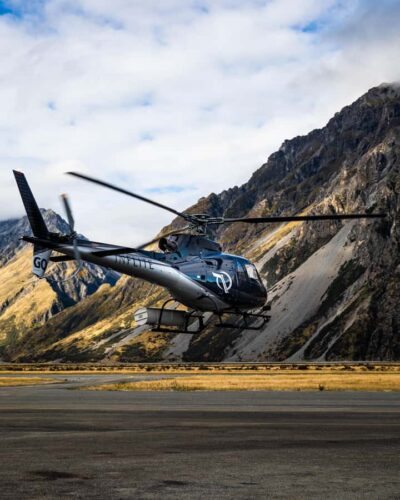
Browse the lists this tour appears in